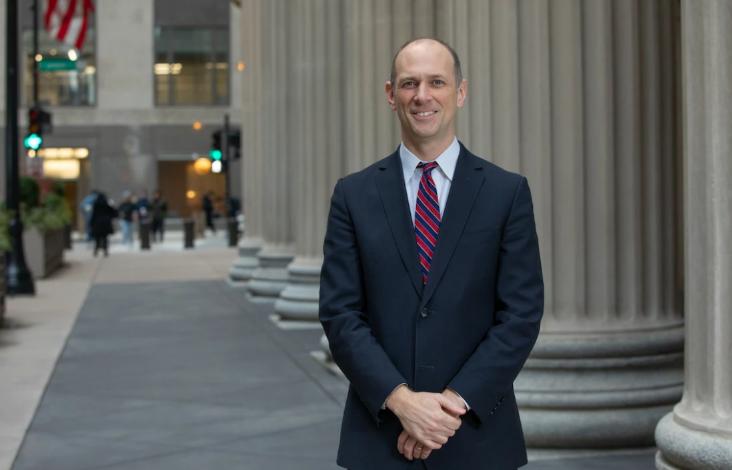
 On May 6, Austan Goolsbee, President of the Federal Reserve Bank of Chicago, issued cautious remarks on inflation, noting that it has not only failed to return to the 2% target but has also shown signs of heating up since the outbreak of military conflict in Iran.
Speaking to the press, Goolsbee said the labor market remains stable and the economy has not yet entered stagflation - a scenario of slow growth combined with high unemployment and rising prices. However, he emphasized that elevated inflation remains the Fed’s biggest challenge.
He warned that persistently high oil prices could become embedded in inflation expectations among businesses and consumers. Once expectations become unstable, it becomes significantly harder for the Fed to control prices without harming growth and employment. Additionally, the U.S.-Iran conflict has disrupted supply chains, increasing costs for intermediate goods and logistics across multiple sectors, further adding to inflationary risks.
Goolsbee also highlighted other underlying inflationary pressures, including rising core service prices (such as healthcare, education, and housing), increased spending by wealthier households benefiting from asset gains, and wage growth in AI-related industries. At the same time, weakening consumer confidence could signal risks of declining demand.
Regarding the labor market, he noted that while hiring rates are relatively low, layoffs remain subdued, indicating overall resilience. However, he cautioned that monthly job data is no longer a fully reliable gauge of economic strength. He also pointed to long-term labor shortages driven by an aging population and restricted immigration, which could constrain economic supply capacity.
On interest rates, Goolsbee said views within the Fed remain divided, with policymakers holding differing perspectives on inflation and labor market conditions. All monetary policy tools remain on the table, with no fixed path determined. He added that he supports greater clarity on how the Fed would respond to a stagflationary shock when making future rate decisions.