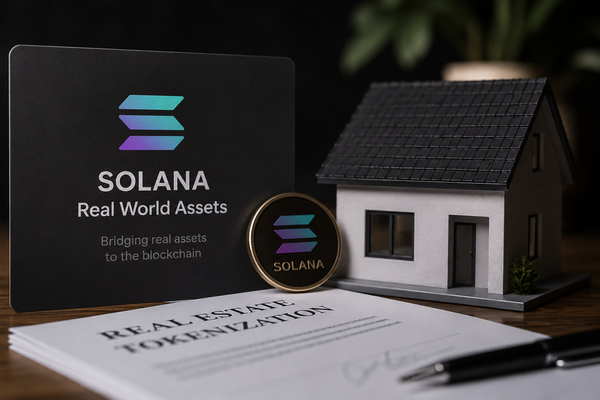
Solana-based Real-World Assets (RWA) are rapidly being utilized as collateral in the DeFi lending market, going beyond simple tokenized assets.
According to DeFi analysis platform Centora, 43.7% of Solana's active RWA market capitalization was deployed in the DeFi lending market. In contrast, the same percentage for Ethereum was only 6.1%.
This demonstrates that the RWA ecosystems of the two blockchains are evolving in different directions. The interpretation is that while RWA on Ethereum remains primarily an asset that is issued and stored, on Solana, it is used as actual collateral in the lending market and functions as a credit creation tool.
Centora analyzed, “While Ethereum’s RWA remains relatively idle, Solana’s RWA is being utilized as collateral in the actual credit market.”
Of particular note is that the competitive axis of the RWA market is shifting from "how much is issued" to "how much is used in actual financial activities." It is not enough for real-world assets, such as tokenized government bonds, gold, private credit, and fund equity, to simply be placed on-chain. Their value as on-chain financial infrastructure increases only when they are connected to collateral, settlement, lending, and liquidity provision.
Solana demonstrates strength in integrating RWA with DeFi based on low fees and fast processing speeds. For institutional investors, the ability to secure additional liquidity by utilizing tokenized assets as collateral, rather than simply holding them, is attractive.
These figures suggest that the next competitive landscape of the RWA market may be 'utilization rate' rather than 'issuance volume.' Once tokenized assets begin to move within the actual credit market, blockchain could expand beyond a simple asset ledger into a new capital market operating system.