
Evading the Specific Financial Transactions Act by Disguising It as Decentralization… "Not an Independent Exchange, but a Doppelganger of the Gates"
Fully shared order book and matching engine… "Not an independent exchange, but another flagship of Gate"
);)
);)
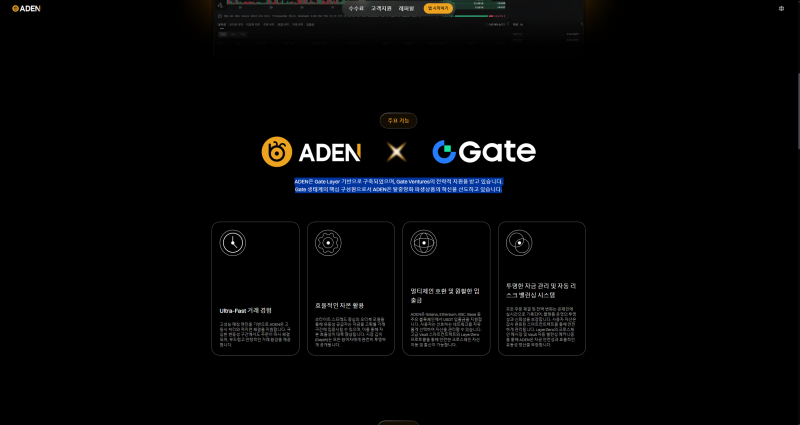
An analysis of the Aden website (https://perps.aden.io) revealed that the homepage source code was directly loading files from Gate.com. Specifically, it contained code that loads a Gate.com JavaScript file located at https://fomox-static.gate.com/static/js/const-id.js. This structure is akin to a website from a different department of a company retrieving files from the headquarters' server.
);)
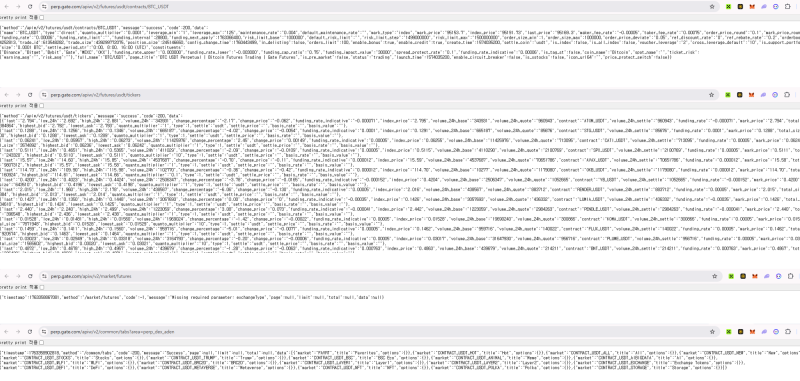
Even more decisive evidence was found in the method of processing real-time transaction data. When checking Bitcoin prices or attempting to trade in Aden, all requests were being sent directly to the perp.gate.com server. For example, when requesting Bitcoin futures contract information, it was sent to https://perp.gate.com/apiw/v2/futures/usdt/contracts/BTC_USDT, while real-time price information was retrieved from Gate.com's WebSocket server at wss://perp.gate.com/ws/dex-fex/usdt.
The most notable aspect is a specific parameter included in the API request. One of the requests Aden sends to the Gate.com server contained the code `area=perp_dex_aden`. This is interpreted to mean that Gate.com manages Aden as an 'area' within its internal system.
Simply put, this means that Aden is not an independent exchange, but merely a section within the Gate.com system. It is like a store inside a large supermarket claiming to be an independent shop.
In addition, all network requests were being sent to the same IP address (38.60.181.157), which was identified as the server address of Gate.com. No independent servers or blockchain infrastructure in the Gulf of Aden were found. Even on platforms like GitHub, where developers share code, no code related to Aden existed, confirming that it is operating in a completely closed manner.
Blockchain experts refer to this structure as a "white-label" service. It is a method of using an existing company's system as is but packaging it under a different brand. One Web3 developer pointed out, "If it were a genuine DEX, transaction history should be verifiable by anyone on a blockchain explorer, but Aden completely lacks such transparency."
Since acquiring Gate Ventures, Aden has been approaching domestic investors by promoting "unregulated free trading." However, it was revealed that in reality, it merely used Gate.com's centralized system while packaging it under the name of a DEX.
A particular concern is the possibility of regulatory evasion. Under the Specific Financial Information Act, foreign virtual asset service providers operating in Korea are required to report, but there is room to evade this requirement if they claim to be a DEX. However, claiming to be a DEX while actually operating with a centralized structure can be viewed as investor deception and an attempt to circumvent regulations.
A tax accountant specializing in virtual asset accounting consulted by Blockstreet stated, "Just because it is called a DEX does not mean it can evade regulation," adding, "Financial authorities must make a judgment based on the actual operational structure."
The virtual asset industry emphasizes that the essence of decentralization is "transaction transparency," not "regulatory evasion." The Aden case is expected to become a prime example demonstrating the risk of investors being lured by the sweet allure of "lack of regulation" without properly understanding the true nature of exchanges.
Choi Joo-hoon joohoon@blockstreet.co.kr