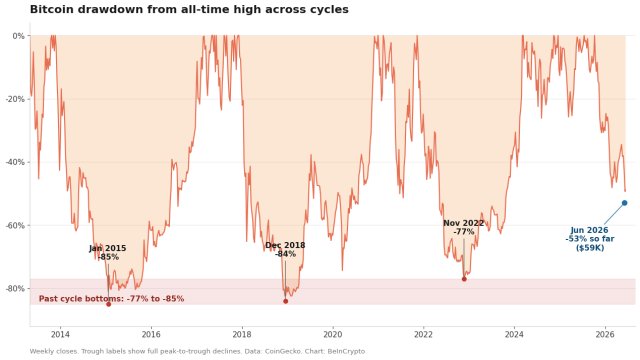
ChainCatcher reports that crypto analyst Marcel Pechman wrote that Bitcoin's sharp decline after being rejected at $82,000 on Friday, falling below $79,000, mirrored the performance of the US small-cap index, indicating that macroeconomic factors were the primary driver of this decline. The Russell 2000 index covers small and medium-sized enterprises with higher costs of capital and greater sensitivity to interest rate movements. Bitcoin's high correlation with this index suggests that the market currently views Bitcoin as a risk asset rather than a safe-haven asset.
Bitcoin perpetual contract funding rates turned sharply negative on Thursday but remained near 0% on Friday, indicating a continued lack of leveraged buying pressure – this indicator has been below the neutral threshold of 6% for several weeks, and multiple attempts to break through $82,000 have failed to boost market confidence. Macroeconomic pressures are compounding: the US-China summit outcome disappointed the market, with no concrete tariff agreement reached except for a commitment to accelerate US agricultural exports over the next three years; meanwhile, the ongoing conflict with Iran continues to weigh on market sentiment, and Brent crude oil prices jumped from $99 to $106 in the past week, further exacerbating inflationary pressures.
Furthermore, the inflation-adjusted Shiller price-to-earnings ratio shows that the S&P 500 is currently only about 5% lower than the peak of the dot-com bubble in January 2000, indicating a significant contraction in overall market risk appetite. However, the large-scale sell-off in the fixed-income market may provide medium-term support for Bitcoin. The yield on Japanese 10-year government bonds rose to its highest level in over 20 years, and the yield on Eurozone 10-year government bonds also jumped to 3.18%, a 15-year high. Analysts believe that in response to the risk of economic recession, central banks may be forced to inject liquidity, and funds flowing out of fixed income may ultimately seek other asset allocations, from which Bitcoin is expected to benefit.