For RWA entrepreneurs and project teams, the most noteworthy direction is to delve deeper into the interest-bearing properties of assets and introduce traditional financial returns onto the blockchain through structured products.
Article author and source: RWAlpha

Event time: May 18, 2026, 20:00 (UTC+8)
Event Theme: New Ways to Tokenize US Stocks – Trading Attribute or Asset Attribute?
Host: Enid Lee, Head of Business Development, ME Group
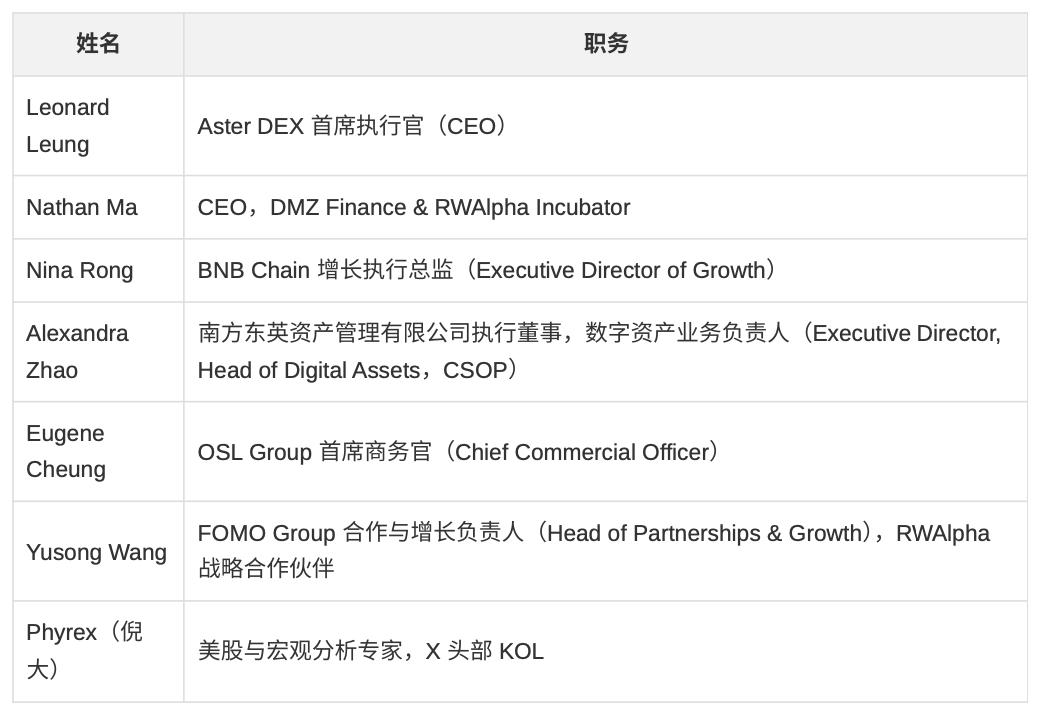
Guest lineup
Interview Transcript
I. Strategic Mistakes in the Tokenization of US Stocks: Trading Attributes vs. Asset Attributes
Host Enid Lee:
Hello everyone, thank you for participating in today's AMA. Our guest lineup is very impressive, so without further ado, let's get straight to the first segment.
First, let's hear from Nathan from DMZ Finance. DMZ Finance is the incubator of RWAlpha, focusing on the tokenization of income-generating ETFs. In a previous article, you raised the points of "trading attributes and asset attributes of US stock tokenization." Could you elaborate on these points? Also, given that the current market share of US stock tokenization is still very small, what do you consider to be the most fundamental strategic mistake in all past US stock tokenization projects?
Nathan Ma (DMZ Finance & RWAlpha Incubator, CEO):
Thank you, host. I wrote an article before, in which I first proposed the concepts of "trading attributes" and "asset attributes" of US stocks.
The term "trading attribute" refers to the fact that after tokenizing US stocks, they are primarily used for on-chain transactions—the platform hopes users will buy and sell these tokenized US stocks on the blockchain. The term "asset attribute" refers to the fact that after tokenizing US stocks, their ability to generate income as underlying assets is fully utilized, allowing holders to receive stable returns. Before writing this article, I conducted a data survey. At that time, the total TVL of all tokenized US stocks was only $1.1 billion, with the top-ranked company (such as Ondo) having over $600 million and the second-ranked company having over $400 million. However, the total market capitalization of US stocks is as high as $72 trillion, meaning that the proportion of tokenized US stocks is extremely small, only 0.0015%.
This has made me think: why, despite over a year of talk about tokenization in the US stock market and the involvement of so many large institutions, has the data remained stagnant? Until today, before appearing on Space, I discovered that the figure suddenly surged to $1.43 billion, an increase of $330 million in just one or two weeks. Upon closer inspection, the majority of the increase came from the most popular tokenized product recently—STRC.
This precisely confirms my judgment and answers the second question: the most fundamental strategic mistake in the past tokenization of US stocks was that projects tokenized the "trading attribute" of US stocks, rather than fully utilizing their "asset-earning" attribute. On-chain users can be categorized into "trading-oriented" and "yield-oriented" users. Trading-oriented users prefer high leverage and often favor perpetual contracts; however, for 1x leveraged spot US stock trading, traditional brokerages (such as Futu, Tiger Brokers, and Interactive Brokers) perform better, and on-chain platforms have no significant advantage. STRC's rapid growth in just a few weeks is precisely because it focuses on its "asset attribute"—high-yield earning.
This is also the area we focus on. Income ETFs are a huge sector with a total size of approximately $700 billion, of which index-based income ETFs alone account for nearly $130 billion, with an average annualized return of 10.4%.
We believe that in the second half of the tokenization of US stocks, the main players will be products that truly understand how to tap into the "asset attributes".
II. Perpetualization vs. Tokenization: The Fundamental Difference Between the Two Paths
Host Enid Lee:
Next, we'd like to invite Leonard, the owner of Aster DEX, to share his insights. Aster DEX primarily focuses on perpetual contract trading (Perp DEX) and has recently been actively launching a series of RWA contract trading products. We'd like to ask Mr. Leonard to elaborate on the fundamental differences between perpetualization and tokenization.
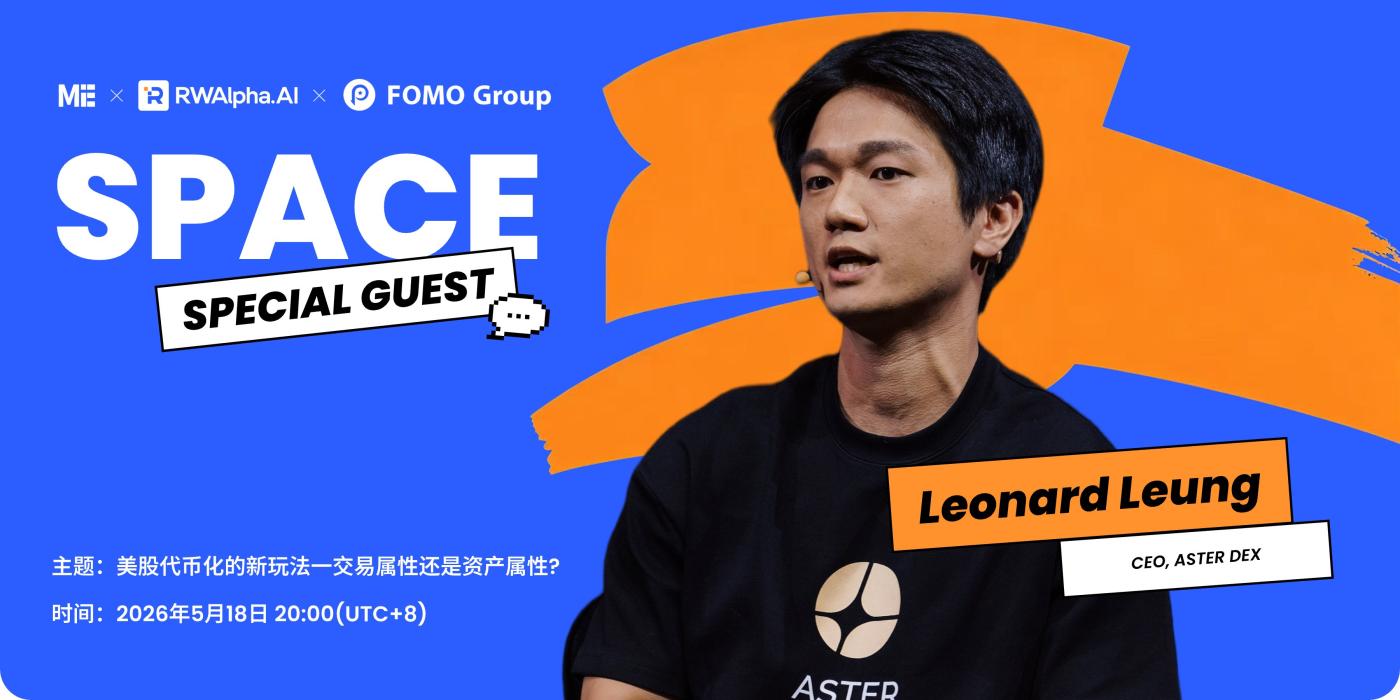
Leonard Leung (Aster DEX, CEO):
I think these are two completely different things in essence. Many discussions are comparing which one is better, but I think they solve fundamentally different problems and are not competing with each other.
Tokenization addresses the issue of ownership—moving asset ownership onto the blockchain. This involves a series of complex issues, including the legal definition of traditional ownership, custody, compliance, KYC, taxation, cross-border regulation, and exchange mechanisms. It provides a means for those who would not have been able to truly own a particular asset to acquire it.
Perpetual contracts skip the ownership step and directly address the issue of trading—allowing users to establish price exposure to a particular asset. You don't necessarily need to actually own it, but you can profit from price fluctuations. In the crypto market, high-frequency trading 24/7 is already widely accepted, and from a trader's perspective, perpetual contracts are a simpler and more suitable product.
Therefore, in the short term, most traders in the crypto space, whose primary needs are trading rather than ownership, will likely prefer perpetual contracts to tokenization. After all, in regions with well-developed financial infrastructure, most people already have very clear and robust mechanisms for holding US stocks, and don't need an additional layer of tokenization. This is why, from a trading perspective, perpetual contracts are a better product than tokenization—of course, I mainly work in this field, so I inevitably have some bias.
Conversely, if the emphasis is on the quality of the asset itself, tokenization has its unique advantages. I believe the most valuable scenario for tokenization is using tokenized assets as collateral for trading. For example, it's currently difficult to hold Tesla stock and then use it as collateral to leverage and buy BTC. However, if Aster DEX accepts Tesla tokens from Ondo on the BSC Chain, or RSTR tokens from RWAlpha, as collateral, users can simultaneously trade contracts for other tokens or US stocks—this is extremely helpful for many traders in improving capital utilization and managing risk exposure across different asset portfolios.
Therefore, both have their strengths, and as the infrastructure of both sides becomes more mature, some more interesting combinations will emerge.
III. On-chain opportunities between Hong Kong stocks and Asian assets
Host Enid Lee:
Thank you very much, Leonard, for your analysis. The comparison between perpetualization and tokenization perfectly echoes our theme today—one is a trading attribute, and the other is an asset attribute. Furthermore, many of our users are Chinese-speaking, including those in Hong Kong and overseas. I believe many are also very interested in Hong Kong stock perpetual contract products. Could you elaborate on your plans in this area?
Leonard Leung (Aster DEX, CEO):
Currently, most tokenized stocks or perpetual contracts on the market are concentrated in the US stock market. However, in this round of market activity, Eastern capital markets have also attracted the attention of a large number of global investors—not just Hong Kong stocks, but also South Korean stocks, a market that many people want to enter but is relatively difficult to access. At present, most people can only indirectly allocate South Korean assets through US stock ETFs or Hong Kong stock ETFs.
As an Asia-centric team, Aster DEX has identified this market gap. We believe the fastest way to bring Asian assets onto the blockchain is through perpetualization. Tokenization will also occur, but at a slower pace.
Therefore, we will be paying special attention to AI and technology stocks in Hong Kong that people want to trade in the near future. At the same time, we hope to bring the price exposure of some popular Korean stocks to the blockchain as soon as possible, so that everyone can trade freely in the market according to their own strategies and earn the returns they deserve.
IV. Can interest-bearing US stocks replace DeFi?
Host Enid Lee:
Thank you, Leonard, for your insightful analysis. Both Leonard and Nathan mentioned the differences in trading attributes between perpetual contracts and tokenization, as well as the potential of interest-bearing assets. Next, we'll have Mr. Ni, a highly influential KOL and in-depth observer of on-chain data, analyze the market.
Ni Da, in your opinion, many platforms are currently issuing interest-bearing US stocks (such as STRC) with interest rates as high as 11.5%, which has already outperformed many previous DeFi projects. Is there a chance that interest-bearing US stocks will completely replace DeFi in the future?
Phyrex Ni Da (US stock and macro analysis expert, top KOL on X platform):
Thank you, host. I think this is a very good direction. As Nathan always says, simply putting US stocks on-chain and tokenizing them for trading has its limitations. The comparison of Nvidia's trading volume in traditional markets and on-chain is a very telling example.
Currently, more users are looking to leverage their investments in US stocks. While high leverage in US stocks is extremely difficult with traditional brokerages, it's relatively easy in the cryptocurrency space—whether on-chain or on exchanges. Compared to Altcoin, US stocks are less manipulable, fairer, and more influenced by the macroeconomy, thus offering greater analyzability.
As for DeFi, it has recently faced skepticism for two main reasons: First, people are gradually realizing that many projects are simply "printing air," and their tokens will quickly lose value; second, if you are unclear about the source of DeFi yields, you may become the target of exploitation. Coupled with the risks of hacking and project rug pulls, people are increasingly reluctant to keep their funds on-chain for the long term.
Interest-bearing US stocks fundamentally solve this problem. Traditional US stocks pay dividends monthly, while an increasing number of on-chain products are distributing returns daily or weekly, significantly reducing the time funds are tied up. More importantly, the source of their returns is very clear—normal dividends or payouts from regulated stocks. As long as we select high-quality targets, the overall annualized return can easily reach 15% to 16%. In addition, the RWAlpha platform itself is backed by corresponding real-world asset purchases. In case of special circumstances, assets can be traced back to their original state through compliance mechanisms such as KYC and AML, which is far more secure than purely on-chain assets.
Therefore, I believe that interest-bearing US stocks are very likely to gradually replace DeFi products that use "air printing" as their core narrative in the future.
V. BNB Chain's RWA Deployment
Host Enid Lee:
Thank you, Professor Ni. You just mentioned that RWA's mechanism can solve some pain points of traditional methods. We'd also like to know in which ecosystems these RWA projects are most active. We'd like to ask Nina from BNB Chain to share her insights. RWAlpha was first deployed on BNB Chain. What are your thoughts on the asset attributes of tokenized US stocks? What support can BNB Chain provide for RWA projects?
Nina Rong (Executive Director of Growth, BNB Chain):
Thank you, host. BNB Chain is very optimistic about the tokenization of US stocks. This year, we have had a very close partnership with Ondo, and BNB Chain currently handles approximately 80% of Ondo's trading volume.
We have observed that the crypto market is gradually converging with traditional finance (TradFi), while traditional finance is also extending into the crypto space—the NYSE and DTCC are actively exploring blockchain technology, and the SEC has also given it explicit support. We believe that blockchain will become the underlying infrastructure for future financial transactions and products.
What BNB Chain can do for RWA ecosystem projects is to deeply integrate RWA assets with our existing DeFi protocols, such as using RWA as underlying collateral for lending. We have over 4 million users trading on BNB Chain every day, and we hope these users can access more high-quality traditional assets, while also helping projects with asset distribution.
VI. Tokenization Exploration by Hong Kong ETF Issuers
Host Enid Lee:
Thank you, Nina, for your overall presentation. Next, please welcome Alexandra from CSOP Asset Management. CSOP Asset Management is the largest ETF issuer in Hong Kong. What explorations are you currently undertaking in the tokenization business?
Alexandra Zhao (Executive Director of Digital Assets, CSOP, CSOP, CSOP Asset Management):
Hello everyone. CSOP Asset Management offers approximately 70 products in Hong Kong with highly diversified strategies, ranging from standardized products with a basket of stocks to leveraged stock ETFs. We recently launched a physical gold ETF.
Regarding asset attributes, we have many related products, such as high-yield, low-volatility ETFs, and the covered call actively managed ETF (code 2802). Covered call products have recently performed exceptionally well in the market. Their core concept is to integrate dividends and option premiums into the cash flow, which is then distributed monthly by the manager. This type of product offers very high returns and can be directly subscribed to on the Hong Kong Stock Exchange.
We are currently also working on tokenization. In the Hong Kong market, several products are preparing for tokenization, the first of which will be a money market fund ETF. Subsequently, our representative products—including leveraged stocks, gold, and high-dividend funds—will gradually move to the blockchain based on market demand.
Hong Kong regulators have established a relatively clear framework for tokenized assets. As asset managers, we can collaborate with licensed virtual asset trading platforms (VATP) to conduct market-based tokenization business. Recently, the SFC also released new regulations regarding the secondary market liquidity of tokenized assets, further clarifying the relevant pathways.
For ETF issuers, our core strategy remains to offer a diversified product portfolio—whether trading or asset allocation—for investors to choose from, starting with basic, standardized products and gradually moving towards more complex offerings.
VII. Wall Street's Entry and OSL's Compliance Strategy
Host Enid Lee:
Thank you, Alexandra. Hong Kong's regulations have indeed pointed out a clear path for institutions. Next, please let Eugene from OSL share his insights. You have extensive institutional business experience in both traditional finance and the crypto market, having previously served as BD for CMC China and VP of Institutional Business at Bybit. What are your thoughts on the trend of Wall Street giants like the NYSE and Nasdaq starting to tokenize US stocks?
Eugene Cheung (Chief Business Officer, OSL Group):
Thank you, moderator. I believe this is a very positive trend. Traditional financial infrastructure is being "swept up"—because new blockchain-supported trading venues, whether on-chain or off-chain, can provide 24/7 trading services. This forces traditional financial institutions to embrace new customer needs and further optimize their products and services. Ultimately, the beneficiaries are the vast majority of users. This is also truly putting the original intention of blockchain into practice—to further optimize our current financial infrastructure, whether for trading or financing.
Host Enid Lee:
From the perspective of the crypto market, OSL is a very well-known licensed exchange in Hong Kong. What are your plans for collaboration with US stock tokenization projects that have both trading and asset attributes?
Eugene Cheung (Chief Business Officer, OSL Group):
As a compliant exchange, we are more readily accepted and collaborated with institutions, especially licensed ones. We have always played a "bridge" role—connecting traditional financial institutions with the on-chain world through our compliance framework.
What we are currently doing is a lot of tokenization work for money market funds. The core goal is to enable users to use stablecoins to purchase traditional products, allowing these traditional products to fully realize their asset attributes on the blockchain.
I'd like to add that asset attributes and trading attributes are not entirely contradictory; sometimes they complement each other. For US stocks to fully leverage their asset attributes, enabling 24/7 trading (e.g., hedging over weekends) would allow their value to be more fully realized. We consistently emphasize leveraging the intrinsic value of tokenized assets, rather than tokenizing for the sake of tokenization itself.
SFC recently announced policies allowing tokenized assets to be traded on the secondary market, and we are actively exploring further compliance pathways.
8. Trading users also have interest-earning needs: Exploring the combination of USDF and RWA on Aster DEX
Host Enid Lee:
Thank you, Eugene. We've also noticed a large number of trading users on Aster DEX using perpetual contracts, and the platform also offers the stablecoin USDF with substantial staking rewards. Leonard, in your observation, do even highly active trading users have a genuine need for stable income? Is Aster DEX considering introducing RWA returns into interest-bearing products like USDF?
Leonard Leung (Aster DEX, CEO):
No one dislikes higher returns. As long as the risk of earning interest is low, most users will be interested in extra income. For professional traders, capital utilization is a very important factor affecting overall profitability, so a product that allows idle funds to continuously generate returns is something everyone needs.
Previously, our USDF primarily employed a low-risk Delta Neutral (market neutral) strategy. However, in the current market conditions, the returns of this strategy have significantly decreased. During a bull market, investors may not have paid much attention to RWA returns because other on-chain opportunities offered higher returns; but when the market returns to normal levels, RWA returns will become more attractive.
We are currently considering how to leverage on-chain products like Tokenized STRC to generate additional income for users. Of course, we need to clearly explain the costs and risks involved. However, now is a good time to launch such a product—after multiple market cycles, expectations for APY have become more rational, unlike during the bull market when a 20% to 30% return was considered normal. Furthermore, recent security incidents have increased the focus on the compliance of the underlying assets and the authenticity of the income source, which is precisely where on-chain US stock yield-generating products have an advantage. We are exploring this and hope to launch such a product within the next month.
IX. The Origins of FOMO Group's Compliance Capabilities and its Collaboration with RWAlpha
Host Enid Lee:
Thank you, Mr. Leonard. Through several different market cycles, the products launched by the project team and the users have a mutually influential and iterative relationship. Next, I would like to invite Mr. Yu Song from FOMO Group to introduce the development history of FOMO Group, especially its compliance capabilities and licensing arrangements, and how the two parties reached this cooperation agreement.
Yusong Wang (Head of Partnerships and Growth, FOMO Group):
Hello everyone. FOMO Group was founded in 2015 and has been operating for approximately 11 years. Headquartered in Singapore, we initially focused on payments, primarily providing cross-border remittance and payment services to off-chain businesses, operating under an MPI license issued by the Monetary Authority of Singapore (MAS).
In 2023, we expanded from the payment business to the capital market, leveraging our traditional license advantages to strategically position ourselves in the RWA sector.
Currently, our core business covers three segments:
First, payment license business. This is our traditional strength, mainly including cross-border remittances and digital asset payments. We are also one of the first financial institutions in Singapore to obtain a DPT (Digital Payment Token) license.
Second, capital markets business. Through our subsidiary CapBridge, we focus on brokerage and custody services and hold a Singapore CMS license, which allows us to conduct securities and fund distribution and compliant custody services—a key foundation for our partnership with RWAlpha.
Third, the RWA tokenized secondary market. Our subsidiary, One Exchange, is an RWA tokenized secondary exchange holding an RMO license in Singapore. From on-chain issuance to secondary market trading, we have essentially established a complete chain internally encompassing fund inflows, asset custody, and on-chain transactions—a combination of capabilities that is quite rare in the Asian market.
The partnership with RWAlpha was a perfect match. Both parties have been deeply involved in their respective fields for many years, and their technologies and underlying infrastructures are quite mature. RWAlpha has profound insights into on-chain technology and the RWA sector, while we have complete infrastructure in compliance, custody, and distribution channels, forming a highly complementary partnership.
10. The Birth Story and Product Roadmap of RWAlpha
Host Enid Lee:
Thank you, Mr. Yu Song. RWAlpha successfully completed its first dividend payout on May 7th, which I'm sure everyone was very excited about. Could Mr. Nathan share the story behind RWAlpha's creation, as well as its future development plans and product roadmap?
Nathan Ma (DMZ Finance & RWAlpha Incubator, CEO):
Thank you, host. We are also very grateful to FOMO Group for establishing a strategic partnership with us and for jointly building a very robust compliance system that covers the entire operational chain from OTC and securities firms to digital asset custody (including Fireblocks institutional-grade services).
Before discussing the roadmap, I'd like to first talk about the background of RWAlpha's creation. DMZ Finance previously spent over two years working with QNB (Qatar's largest financial institution).
The National Bank of Dubai and Standard Chartered Bank have partnered to launch the first tokenized money market fund product in Dubai – QCDT (T-Bill Token). This is also the first T-Bill Token accepted as collateral by Bybit and has received significant promotion from BNB Chain.
In this process, we have come to a profound realization: T-Bill Tokens and income-generating ETFs are essentially both "stable interest-bearing assets," but their focuses differ. T-Bill Tokens emphasize "stability," and are therefore widely used as the underlying asset for stablecoins or as collateral on exchanges—people primarily utilize its "stability" rather than its "interest-bearing potential."
Income ETFs, on the other hand, focus more on "stable income generation"—providing higher returns while maintaining asset stability. Here are some figures: Index-based income ETFs have a scale of approximately $130 billion, with an average scale of $10 billion per product and an average annualized return of 10.4%; high-dividend ETFs (more stable) have a scale of approximately $220 billion and an average annualized return of 14.2%; the entire income ETF sector has a total scale of approximately $700 billion.
This is precisely the core logic behind our incubation of RWAlpha—targeting the $700 billion Income ETF sector. My prediction is that with the rise of tokenized income ETFs, their TVL will soon surpass the current size of approximately $15 billion in tokenized money market funds (T-Bill Tokens)—because the underlying assets of Income ETFs are as high as $700 billion, and even if only 10% goes on-chain, the number will far exceed that of money market fund tokens.
Regarding the product roadmap, we have three main lines:
First, the continuous expansion of our product portfolio. Our first pilot product, RAI, is a portfolio product based on Nasdaq ETFs, with an underlying asset size of approximately $12 billion and a highly competitive (double-digit) annualized return. Our second product, RSTR, is a customized product based on STRC. Going forward, we will also launch products based on different underlying assets such as the S&P 500, gold, oil, and Bitcoin Treasury Preferred Stock, covering high, medium, and low-end portfolios with varying stability and profitability, forming a complete product matrix.
Secondly, customized services for institutions and large platforms. This is one of RWAlpha's core competitive advantages. When tokenizing RWA, the two biggest concerns for the platform are: first, whether the underlying assets have been genuinely and fully purchased; and second, whether the token's NAV setting and minting/burning mechanism correspond one-to-one with the underlying assets. We can fully open up to institutions and large platforms, demonstrating our transparency and compliance, which is our core differentiating capability.
Third, we will continue to deepen our efforts in building the BNB Chain.
XI. Conclusion: The integration of DeFi and RWA – a direction worth watching in the second half of 2026
Host Enid Lee:
This year, the DeFi market has experienced extremely volatile fluctuations, with some DApps losing up to two-thirds of their total value (TVL), posing a severe test to on-chain finance narratives. However, the RWA (Real-Time Asset Wafer) sector has bucked the trend, with real yield and compliant assets becoming the most discussed topics. Finally, we would like to invite our two guests to share their perspectives on the integration of DeFi and RWA, and the directions worth watching in the second half of 2026.
Phyrex Ni Da (US stock and macro analysis expert, top KOL on X platform):
I actually "deeply hate" DeFi, which is an extremely contradictory state—I am deeply involved in it, yet I am dissatisfied with many of its problems.
The yields offered by current on-chain DeFi are no longer good enough. Many are essentially "printing air with air"—simply staking and printing their own tokens. For many users, the APY seems high, but by the time they actually want to sell their tokens, the value has often shrunk significantly. This is also why...
What is DeFi experiencing a temporary cooling-off?
Interest-bearing US stocks operate on a completely different logic. They are centered on the performance of regulated companies, delivering real, auditable profit distributions. Stock selection, financial statement analysis, and performance evaluation—these are all based on solid evidence, not fabricated out of thin air; they are backed by real underlying assets and performance.
The strong performance of the AI sector in the past two years has driven the rise of the entire US stock index. RWAlpha's product portfolio includes indices such as the S&P 500 and Nasdaq 100, ensuring the basic appreciation potential of assets; coupled with high-dividend targets, under the premise of relatively controllable price fluctuations, the overall annualized return can easily reach double digits. Such products have already outperformed most USDT/USDC stablecoin yields; their stability and structured design are also far superior to Altcoin staking—the latter may superficially offer double-digit annualized returns, but the token price often shrinks significantly, and the actual return is far less than the on-paper figure. Furthermore, the RWAlpha platform itself is supported by the purchase of real assets and has a complete KYC/AML compliance mechanism. In case of special circumstances, the original assets can be traced back, which is a guarantee that pure on-chain assets do not have.
Yusong Wang (Head of Partnerships and Growth, FOMO Group):
My views are highly consistent with Professor Ni's. This round of DeFi volatility is not unexpected—the problem of narrative ceilings is exposed every market downturn. The returns from on-chain arbitrage and token incentives are very weakly supported by real value, and the fundraising sector is always the first to be hit by fluctuations. The core advantage of RWA assets lies in their predictability, auditability, and real underlying support. This is exactly what the market needs. I believe that in the second half of 2026 and even into 2027 and 2028, funds will continue to flow towards RWA. The most noteworthy area is AI-related equity assets—unlisted or soon-to-be-listed AI companies such as OpenAI, Anthropic, and SpaceX.
Global retail and high-net-worth clients have a strong demand for this type of asset, but traditional channels have almost no access to it, and RWA fills this gap.
A bolder scenario: once RWA is fully open to Web3, on-chain trading institutions could even use off-chain assets as cross-hedging tools to optimize overall returns in a more efficient and lower-cost manner. DeFi remains important, but it will no longer be an isolated narrative; instead, it will be deeply integrated with RWA to jointly build the next generation of on-chain financial systems.
Host Enid Lee (summarizing):
Thank you to all the guests for participating in today's AMA. It's truly rare to have so many professionals sharing their years of accumulated market experience and industry insights in just one hour; the content was packed with valuable information.
Today's discussion answered a core question: How exactly should US stock tokenization be done? In the second half of US stock tokenization, the main players will be those who truly understand how to uncover the "asset attributes." For RWA entrepreneurs and project teams, deeply exploring the interest-bearing properties of assets and introducing traditional financial returns onto the blockchain through structured products will be the most noteworthy direction.
Whether you're a newcomer to the field or a Web3 OG, if you have a strong interest in RWA, feel free to follow RWAlpha for the latest updates.
*Note: This article is based on a recording of the conversation "A New Way to Tokenize US Stocks—Trading Attribute or Asset Attribute?" on Space. The content does not constitute any investment advice.