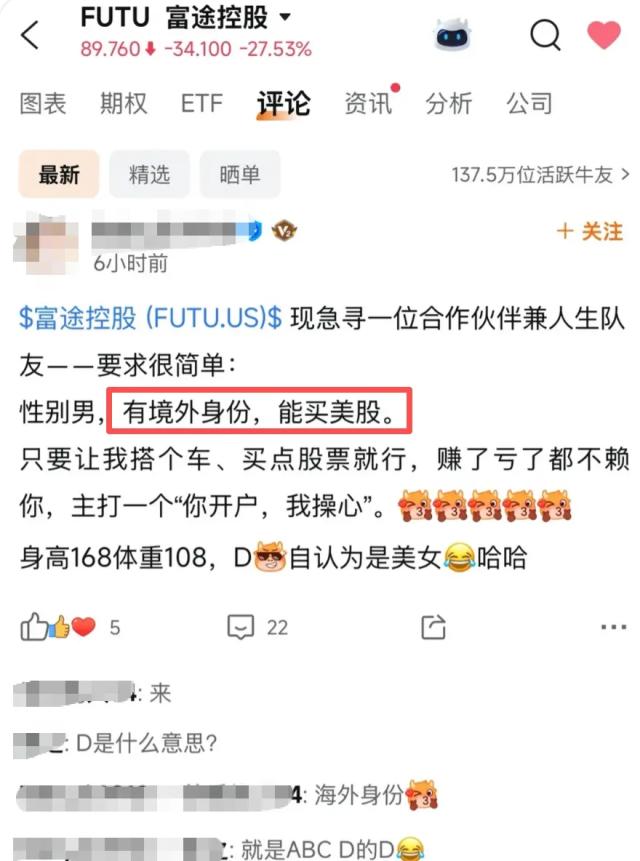
Micron stock price doesn’t make sense right now, and the numbers make that hard to ignore. MU closed at $751 on May 22, trading at a P/E of 35.46, while the consensus price target from 39 Wall Street analysts sits at just $518.47, implying a 30.96% downside from current levels. And yet, 35 of those same analysts rate it a Buy. That split points to a real Micron stock valuation gap, one rooted in how the market prices the AI memory demand vs supply picture heading into the back half of the decade. Wall Street analysts also project AI capital expenditure topping $1 trillion in 2027, with memory chips sitting at the center of that buildout.
Also Read: Who Isn’t Buying Micron Stock? Goldman, Erste Group & BTIG Speak Out
Micron Stock Analysis Reveals AI Memory Demand vs Supply Gap
The CEO Has Already Said the Quiet Part Out Loud
Micron stock price doesn’t make sense partly because the supply side is already broken, and the company’s own CEO has said exactly that in public. At the time of writing, Micron’s entire HBM production for 2026 sits under binding contracts, fully sold out. CEO Sanjay Mehrotra has also been direct about what that means for the customers trying to get more product.
Sanjay Mehrotra, Chairman, President and CEO of Micron Technology, stated in the company’s fiscal Q2 2026 earnings release:
“Micron set new records across revenue, gross margin, EPS, and free cash flow in fiscal Q2, driven by a strong demand environment, tight industry supply, and our strong execution, and we expect significant records again in fiscal Q3. In the AI era, memory has become a strategic asset for our customers, and we are investing in our global manufacturing footprint to support their growing demand.”
And in a separate CNBC interview, Mehrotra also said:
“AI is in very early innings; you just saw at GTC how much advances are being made in AI. And memory is a strategic asset; you need more memory, you need faster performance memory in order for AI to be able to deliver its full capabilities.”
Mehrotra also stated that Micron currently satisfies only around 50% to 66% of customer demand for high-bandwidth memory. Most semiconductor companies right now would love to have excess inventory. Micron instead has customers asking for nearly twice as much product as the company can deliver.

The Supply Math Wall Street Keeps Getting Wrong
A thorough Micron stock analysis makes the inconsistency pretty hard to miss. Global DRAM production capacity grows at only 17 to 21% per year. Even the most optimistic scenario out there, every single announced and under-construction plant from Samsung, SK Hynix, Micron, CXMT, and Nanya all fully online by 2030, still puts total new DRAM capacity at roughly 150% growth. That’s the ceiling. That’s the best case.
Meanwhile, analysts still estimate Nvidia will grow at an annual rate of around 40% through 2028, putting the company above $500 billion in annual revenue. AMD and Broadcom also each expect datacenter revenue to grow by more than 50% in the near term. Micron itself forecasts the HBM total addressable market growing at a 40% annual rate through 2028, rising from $35 billion in 2025 to approximately $100 billion by 2028, two years earlier than previously anticipated. And right now, AI demand for DRAM and NAND heads toward consuming more than 50% of the entire industry’s total addressable market this year alone.
You cannot simultaneously believe AI hardware demand compounds at 40% annually and that the memory supply chain, growing at 21% per year, handles it comfortably. The math does not work, and the Micron stock valuation gap is the market’s way of pretending otherwise.
MU Stock Price: A Consistency Problem No One Wants to Talk About
The Micron technology stock valuation analysis gets even harder to wave away when you look at where Micron trades relative to its peers. At a P/E of around 35 to 37x, MU sits well below the peer average of 75x and the implied fair multiple of 68x. Nvidia, AMD, and Broadcom all price as AI infrastructure companies. Micron still prices as a commodity cyclical, largely because institutional trading systems carry decades of memory sector volatility in their logic and most of those same systems keep running today, largely unchanged. When a supply-risk headline surfaces, automated selling kicks in, not because fundamentals changed, but because the pattern fits an older template.
There are really only two internally consistent reads available here. One: AI demand is overstated, the buildout slows sharply before 2030, and analysts are assigning unjustified high multiples to compute names. Two: AI demand is real and durable, the buildout continues, and Micron stock price doesn’t make sense at current levels precisely because the market never applied its own AI logic to the memory supply chain that makes all of it run. Wall Street already took the second position on AI broadly. It just never followed that logic one step down the supply chain, and that gap also sits at the center of every serious Micron stock analysis being written right now.