The percentage of ETH being Staking has reached a record high, while the amount of ETH on exchanges continues to decline.
These two developments indicate that the amount of ETH available for sale is shrinking. If this trend continues, Ethereum 's circulating supply could become tighter, especially as demand recovers.
- The percentage of ETH being Staking has reached 32.4%, the highest level ever.
- ETH reserves on exchanges have decreased from over 33 million to approximately 14.9 million.
- Outflows from exchanges and Staking trends are simultaneously reducing the amount of ETH available for quick transactions.
ETH Staking reaches new high.
The percentage of ETH currently locked in Staking has risen to 32.4%, the highest level recorded to date.
This trend shows that more and more investors are choosing to lock up ETH rather than holding it in a tradable state. Compared to the beginning of 2021, the current Staking rate has increased sharply, at times hovering near 0%.
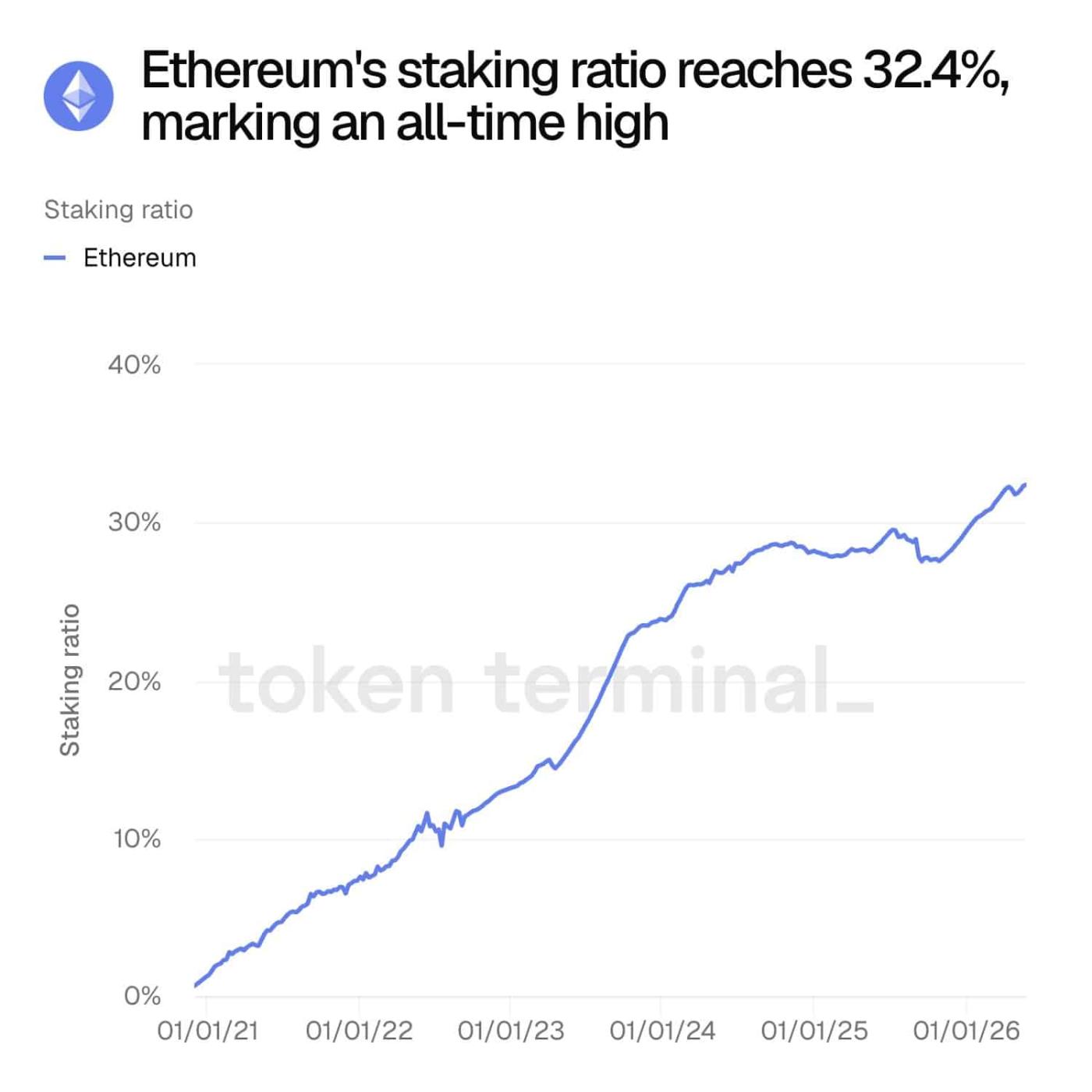
This upward trend hasn't been entirely linear, as there have been periods of stagnation and correction. However, the overall trend remains that more ETH is being put into Staking over time.
ETH reserves on exchanges have decreased sharply compared to 2021.
Currently, the amount of ETH held on exchanges has decreased to approximately 14.9 million ETH, down from over 33 million ETH in 2021.
This means that the amount of ETH that can be sold or traded immediately has narrowed significantly. Combined with increased Staking , the proportion of ETH held for longer periods is now much larger.
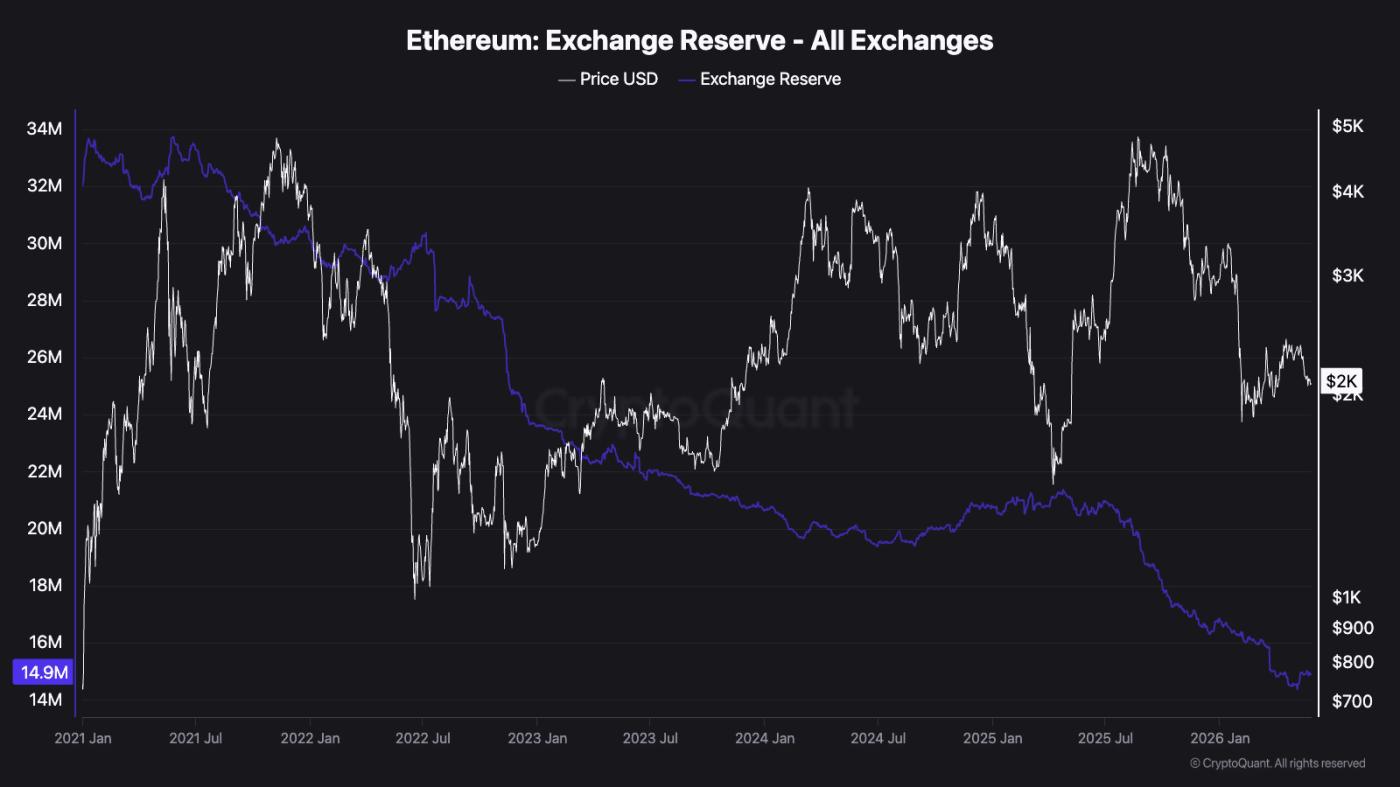
In the context of decreasing supply on exchanges, Ethereum may be more sensitive to increased market demand. This is a factor often monitored along with liquidation and transaction flows.
The outflow of ETH from exchanges reinforces the pressure of tightening supply.
Ethereum has also experienced several periods of negative net flow, meaning that the amount of ETH leaving exchanges is frequently greater than the amount deposited.
This development aligns with the trend of ETH holders shifting to self-custody, Staking, or long-term holding. Consequently, the remaining amount of ETH available for quick sale on exchanges will further decrease.
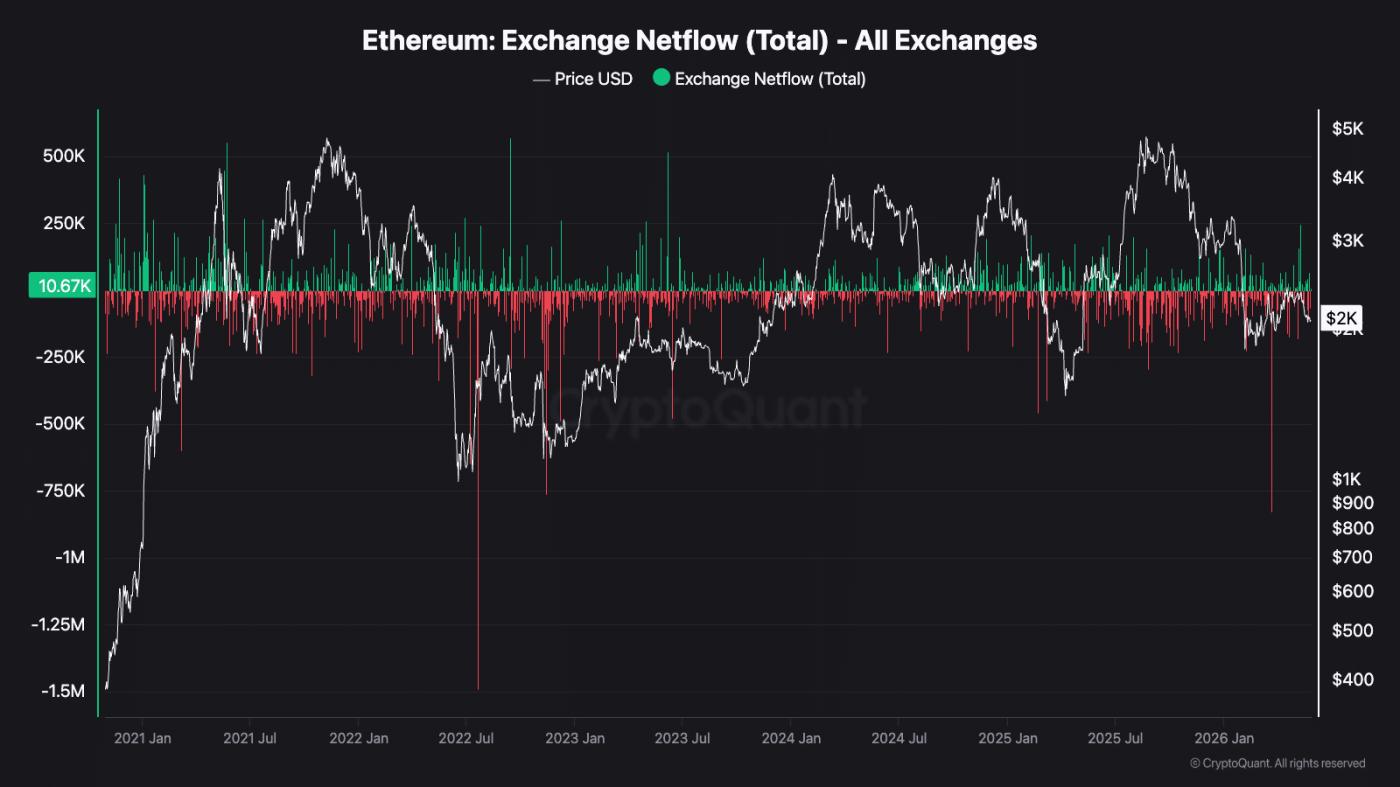
With such a supply structure, the price of ETH will depend more on demand and liquidation rather than solely on the amount of ETH held on exchanges. Current data does not yet show significant selling pressure from the circulating supply.
Summary
ETH is showing two signals simultaneously: Staking has surged to record levels, and the amount of ETH on exchanges has sharply decreased. If this trend continues, the market may face lower circulating supply in the near future.