Chatting is dead!

Just over the weekend, the FT released a collective whistleblower report from more than a dozen current and former OpenAI employees—
ChatGPT is about to undergo its biggest redesign since its launch in 2022.
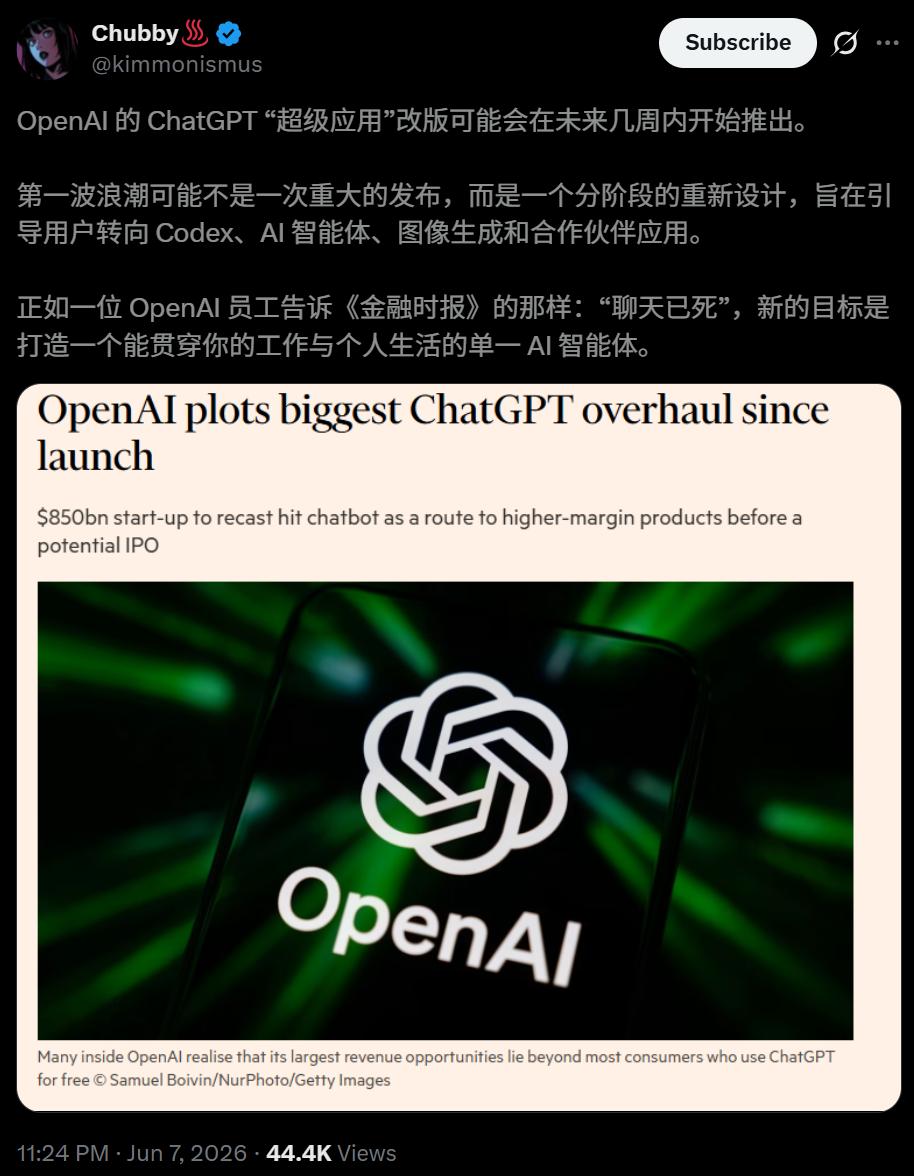
Five days ago, ChatGPT surpassed 1 billion monthly active users. It took only three years to achieve this figure, making it the fastest in history.
However, to everyone's surprise, OpenAI turned around and sentenced this successful chatbot to death.
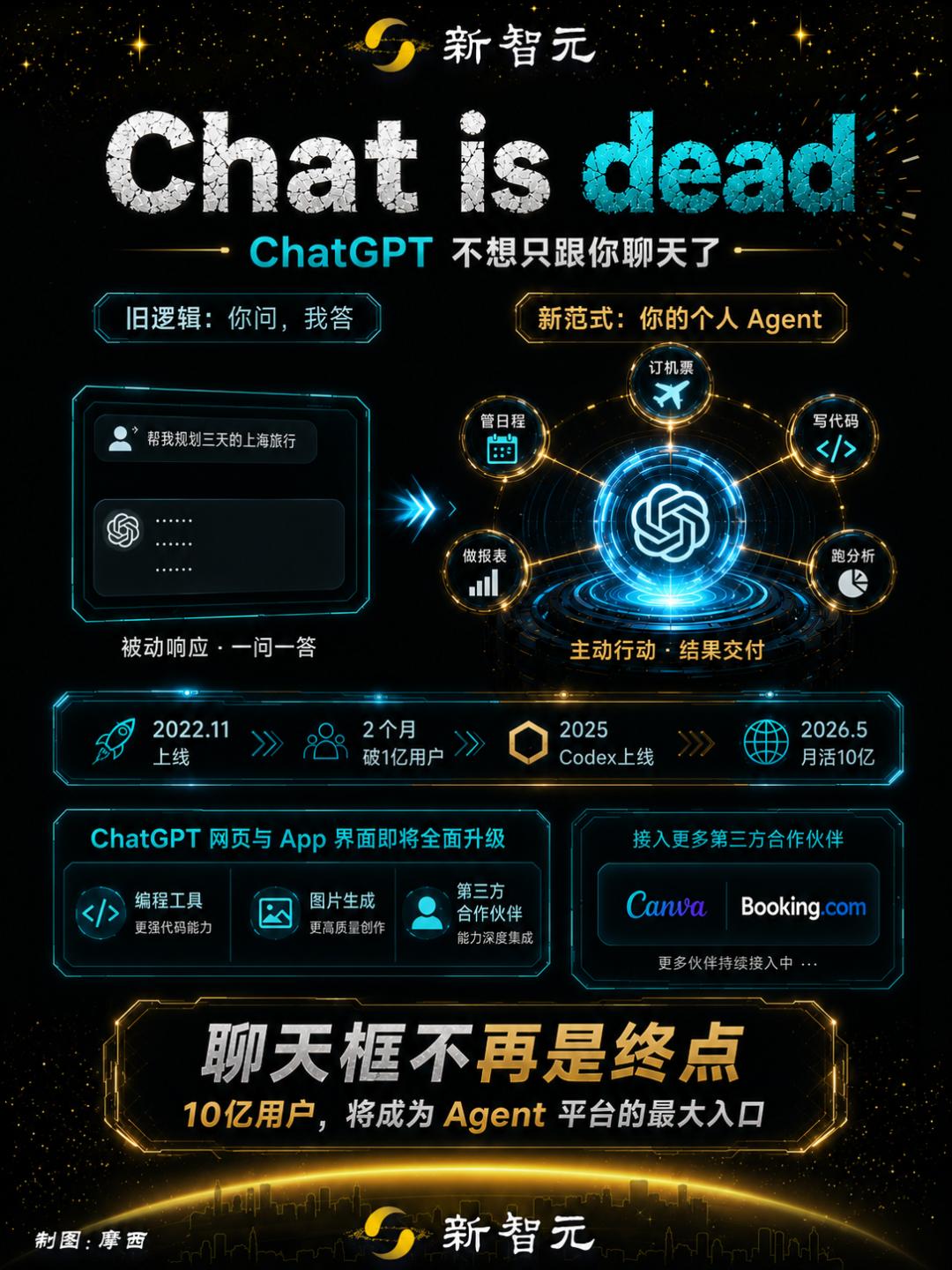
ChatGPT doesn't want to just chat with you anymore.
Over the next few weeks, the interface you open every day will change.
ChatGPT's web and app versions will undergo a complete redesign. The clean, simple chat boxes will disappear.
Programming tools, image generators, and third-party partner portals will all be crowding in. Canva is in it, and Booking.com is in it too.
In response, Thibault Sottiaux, Head of Core Products at OpenAI, stated:
What we're going to create will transcend existing interface forms. It will give you a personal agent that can help you in every aspect of your life and work. You can talk to it on your phone, computer, browser, and even in your car.
For the past three and a half years, ChatGPT's core logic has been "you ask, I answer." You type in a sentence, and it gives you a text.
This logic fueled a phenomenal growth curve.
- Launched in November 2022, it surpassed 100 million users in two months, making it the fastest-growing consumer app in history.
- In 2023, GPT-4, the plugin store, and the enterprise edition all experienced explosive growth.
- In 2024, it will include everything: voice chat, built-in search, and a $200 Pro plan.
- In 2025, Codex will be launched, ushering in the Agent era;
- 1 billion monthly active users in May 2026.
But there is a growing sense within OpenAI that this curve cannot support the valuation of a trillion-dollar company.
The new logic is "You say, I'll do it."
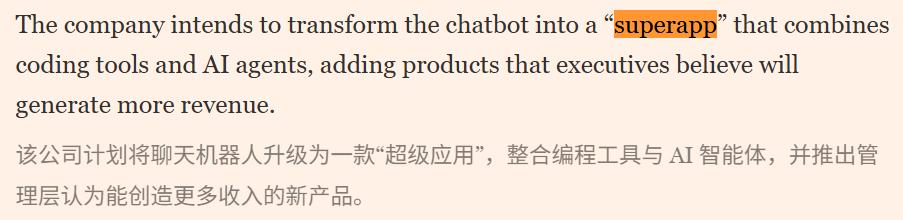
Booking flights, managing schedules, writing code, generating reports, and running data analyses—ChatGPT aims to transform from a chat object into a hands-on agent.
According to Alex Embiricos, Head of Enterprise Products at OpenAI:
When AGI arrives, I don't think there will be many different brands. There will probably only be one entity that you can talk to and that can do anything for you.
Codex takes over, ChatGPT people step aside.
Prior to this, Thibault Sottiaux was actually the head of Codex.
In the organizational restructuring in May, he was promoted to head the entire core product and platform team, with oversight covering consumers, businesses, and developers.
Nick Turley, who led ChatGPT to 900 million weekly active users since 2022, was transferred to the enterprise product line.
In other words, the people who work on Codex are now managing ChatGPT, not the other way around.
As Greg Brockman wrote in an internal memo, "Invest in a unified agent platform," rather than "upgrade ChatGPT."
At the Intelligence at Work launch event a few days ago, the OpenAI product manager made it clear to everyone:
We just need to install Codex into ChatGPT, it's that simple.
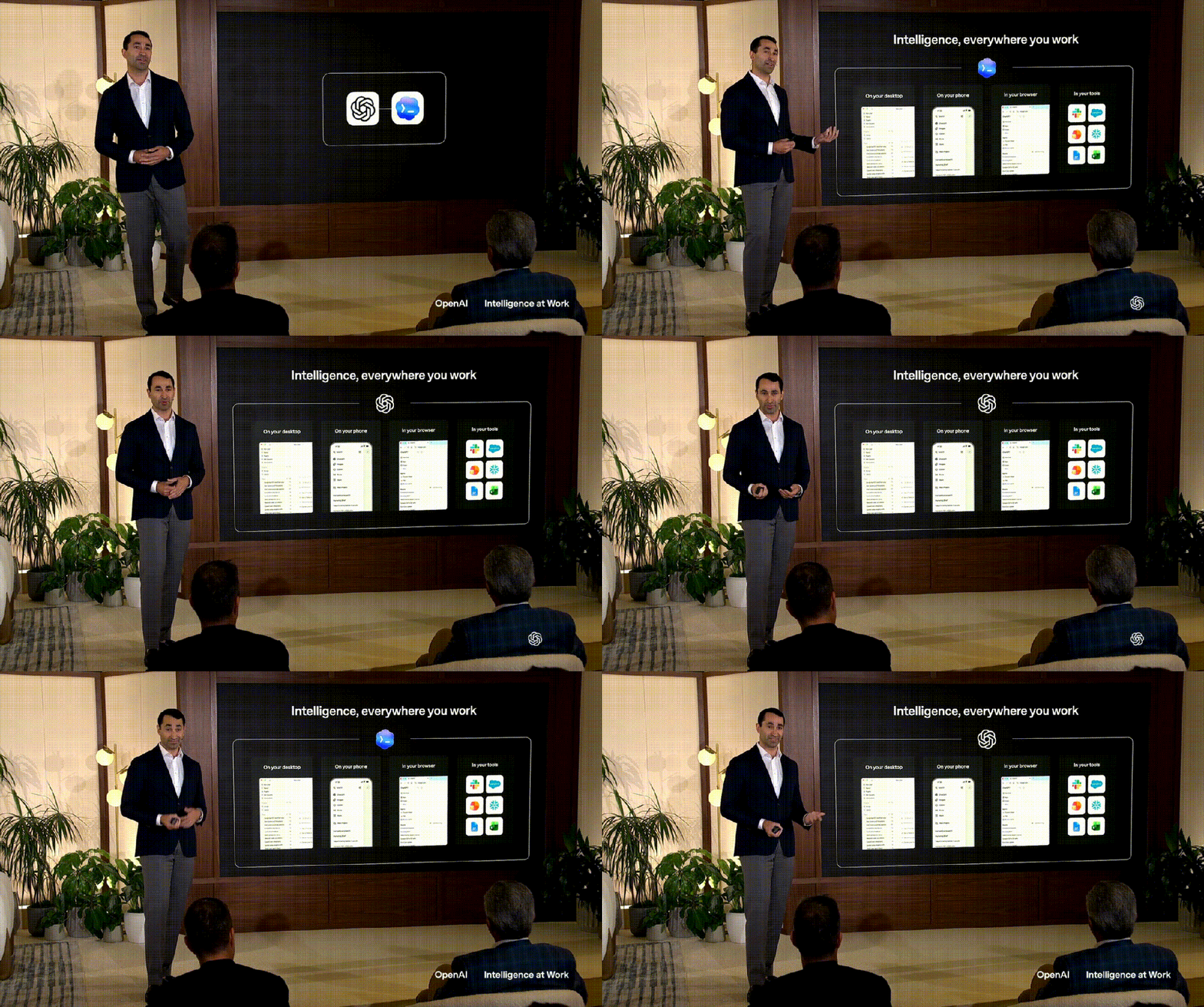
ChatGPT, Codex, and Developer API were merged into one team.
ChatGPT, which cannot be coded, is merely a chat interface; Codex, without a consumer interface, is merely an engineer's tool. The two must be combined.
Super apps are really fighting for distribution rights.
When ChatGPT helps you book a hotel, does it use Booking or Expedia? When it helps you create a poster, does it choose Canva or Figma?
Whoever decides this ranking will hold the power to distribute traffic in the next generation.
OpenAI is doing more than just AI assistants; it's taking business away from search engines and app stores.
This is not speculation. OpenAI has already started running ads to free users on ChatGPT, and its annualized ad revenue has surpassed $100 million within six weeks.
The true value of a super app lies not in the number of features it has, but in capturing that moment when the user's intention is generated.
Codex's growth data speaks for itself.
The first scenario for the commercialization of agents is writing code because code has a repository, tests, PRs, bugs, and a delivery cycle, allowing companies to calculate ROI clearly.
Compared to asking "help me come up with a marketing idea," Codex's ability to fix bugs, run tests, and write internal tools makes it easier to get into a company's budget.
In February of this year, after Codex launched its desktop app, its user base skyrocketed from 800,000.
1.6 million in early March, 4 million by the end of April, and 5 million by the end of May—a six-fold increase.
Currently, 20% of Codex's users are not developers, and the growth rate of knowledge workers is more than three times that of developers.
OpenAI has also launched dedicated plugins for these users in vertical scenarios such as banking, investment research, sales, and design.
It's fair to say that when a "programming tool" starts serving bankers and designers, it ceases to be a programming tool. Codex is evolving into an agent platform that covers all knowledge work.
The ChatGPT chat window now only has one function: the entry point; the rest are all running agents.
The future of ChatGPT is the future of Codex.

GitHub data can provide further evidence.
In 2025, the total number of code commits on GitHub was 1 billion. In 2026, this number is projected to reach 14 billion.
The number of pull requests initiated by AI agents jumped from 4 million in September 2025 to 17 million in March 2026.
The code is no longer written by humans, but by machines, and Codex and Claude Code are vying for the entrance to this new world.
The scenario OpenAI least wanted to see has happened.
The product needs to be redesigned, the organization needs to be restructured, but all of this points to the same name.
Of the 1 billion monthly active users, only 50 million are paying customers. The paying customer rate is less than 5%.
The real money-makers for OpenAI are its 2 million enterprise customers, who contribute about 40% of its revenue, with a target of reaching 50% by the end of the year. The 1 billion free users are just the top layer of the funnel.
Over the past few months, OpenAI has been drastically cutting everything that isn't generating revenue.
Sora was cut, the shopping checkout function was cut, and the scientific research department was also cut.
But what really alarmed OpenAI was the name that was catching up from the outside.
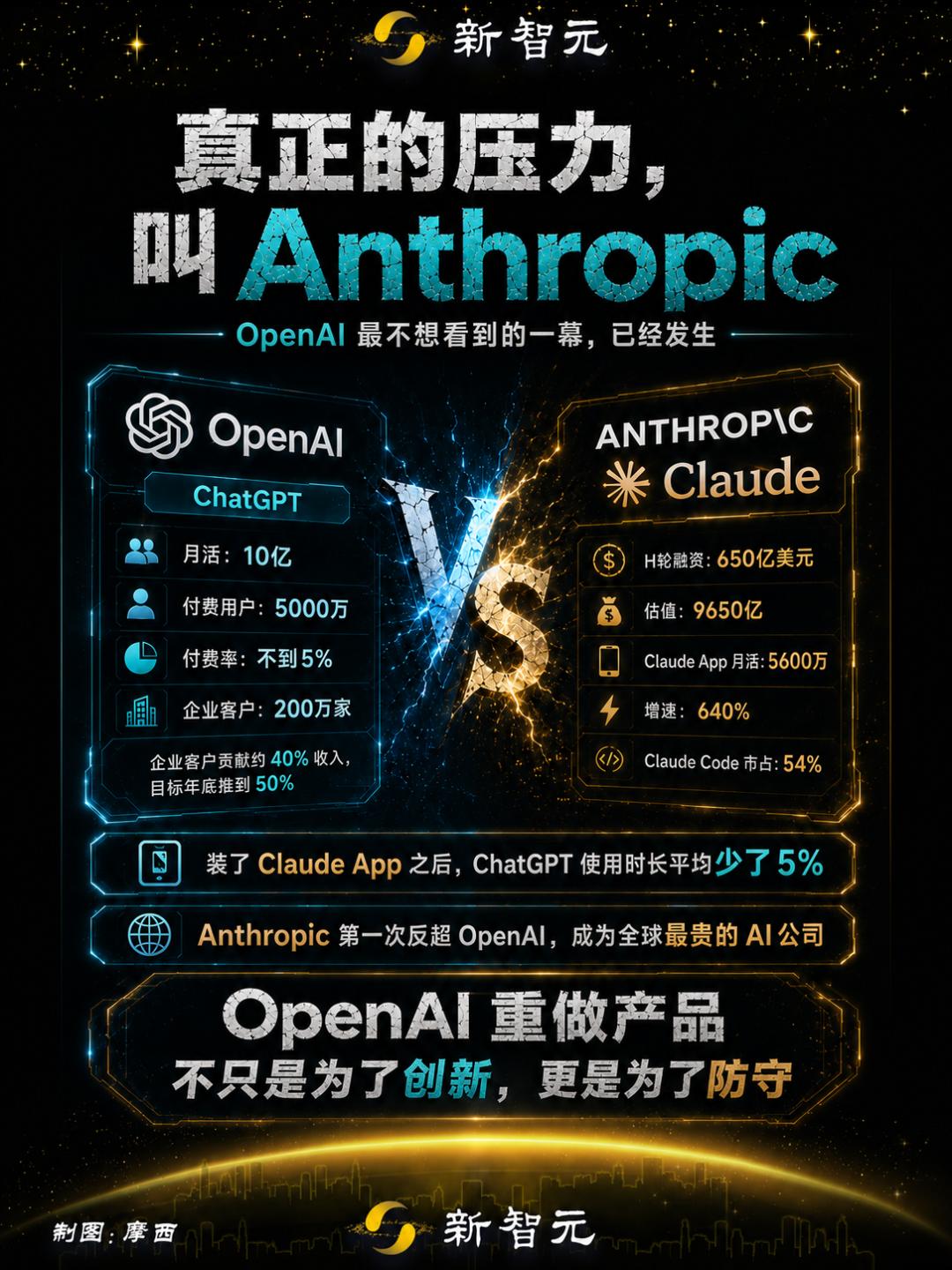
On May 28, Anthropic announced the completion of a $65 billion Series H funding round, valuing the company at $965 billion. OpenAI's valuation in March was $852 billion.
Anthropic has overtaken OpenAI for the first time to become the world's most expensive AI company.
Valuation is just the most superficial level of pressure.
On the revenue side , Anthropic's annualized revenue has surpassed that of OpenAI.
It took just over a year for ARR to grow from less than $1 billion to over $30 billion. Some analysts are even more aggressive, saying that ARR had reached nearly $47 billion by the end of May.
On the user side , ChatGPT's 1 billion MAU growth rate is only 62%. Claude App has only 56 million monthly active users, which is less than a fraction of ChatGPT's size, but its growth rate is 640%.
Furthermore, after US users installed the Claude App, their average ChatGPT usage time decreased by 5%.
In the programming tool arena, Claude Code has captured 54% market share, with 112K stars on GitHub, compared to only 74K for Codex CLI. Claude Code now accounts for about 10% of public GitHub commits, up from just 4% at the beginning of the year.
On May 13, the two teams engaged in a textbook-perfect close-quarters battle.
OpenAI is offering Claude Code's enterprise customers two months of free access to Codex, practically screaming "Come defect!"
A few hours later, Anthropic retaliated by increasing the weekly usage limit for Claude Code by 50%.
Jenny Xiao, a former OpenAI researcher and partner at Leonis Capital, analyzed the situation and stated:
About a year ago, OpenAI's strategy was to go all in, while Anthropic's strategy was to make money first. Now the two are converging because they are both rushing to IPO, and investors are concerned with money, not dreams.
September vs. October: Two trillion-dollar IPO races
This convergence ended on Wall Street.
On May 22, OpenAI secretly filed its S-1 prospectus with the SEC.
Goldman Sachs and Morgan Stanley are the lead underwriters, with a target valuation exceeding $1 trillion. The IPO is expected to begin as early as September and will be the largest technology IPO in history.
Eleven days later, Anthropic also secretly submitted its S-1, aiming for October.
For the first time in history, two AI companies with valuations approaching one trillion dollars are rushing to IPO in the same quarter.

But OpenAI's financial story is not easy to tell.
Monthly revenue is approximately $2 billion, or $25 billion annually, but for every $1 earned, $1.22 is lost.
The company told investors that it does not expect to achieve positive cash flow before 2030.
Therefore, "super apps" are the only way for OpenAI.
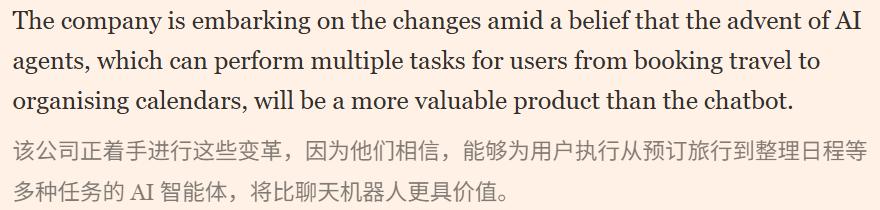
ChatGPT, as a chat tool, has a very thin business model.
95% of users get it for free, and the remaining 5% pay $20 a month. Using this model to tell a profit story with a trillion-dollar valuation, no investor will buy it.
However, if ChatGPT becomes an agent platform, enterprise customers will pay for automated workflows, developers will pay for API calls, and partners will pay for traffic entry points.
With 1 billion users, it becomes the world's largest sales funnel.
"Chat is dead" is perhaps the stark truth forced out by the countdown to the IPO.
ChatGPT, its name itself contains its own paradox.
In the name ChatGPT, G stands for Generative, P for Pre-trained, and T for Transformer.
But what truly made the world remember it was the first word: Chat.
Chatting, conversations, one sentence from you, one sentence from you. This interaction method is so simple that it allowed a large language model that was originally only used by researchers to gain 100 million users in just three months.
OpenAI now says that chatbots are dead, and agents are the future.
But when you open something called "ChatGPT" and find that it wants you to write code, book hotels, do data analysis, and integrate with more than a dozen third-party services, you might think, "I just wanted to chat with it in the first place."
Two trillion-dollar IPOs, one in September and one in October.
OpenAI has 1 billion users but is deeply troubled by monetization anxieties, while Anthropic has only 56 million users but its growth rate is overwhelming.
Who has become the person they want to be? Q4 will reveal the answer.
References:
https://www.ft.com/content/ca0f5f5e-fb9a-41a0-a2a9-0127e15b7db9?syn-25a6b1a6=1
https://x.com/kimmonismus/status/2063643307381543039
This article is from the WeChat official account "New Zhiyuan" , author: ASI Revelation, editor: Moses, and published with authorization from 36Kr.