GPT-5.6, released this month!
Just now, OpenAI launched a series of unexpected attacks.
ChatGPT's familiar model codenames have been completely removed and replaced with "Intelligence" (or "Intelligence Level").
The WSJ exclusively reports that OpenAI is planning a significant reduction in API pricing, preparing to engage in a price war with Anthropic.
Following this, Chief Scientist Jakub Pachocki personally announced that the new model, codenamed 5.6, which "significantly surpasses" its predecessor, will be available this month.
Price cuts, redesign, new model – a crazy Wednesday.
But all of this combined doesn't compare to the single sentence Ultraman leaked in the internal Slack chat—
If AI's recursive self-improvement takes off quickly enough, the benefits of delaying its market launch will actually be greater.

With an IPO valued at 852 billion, Ultraman says he's not in a hurry.
The current situation is that everyone is rushing to go public.
Anthropic secretly filed its S-1 application with the SEC on June 1st, while SpaceX AI is already on its roadshow with a valuation of $1.77 trillion. OpenAI followed suit and filed its own application on June 8th. The three companies have a combined valuation of approximately $3.6 trillion, equivalent to France's entire annual GDP.
Investment banks are giving consistent advice: whoever goes public first will define the valuation framework for the AI sector for investors.
The advantage of being the first to act is something that every military strategist must fight for.
However, at this moment, Ultraman raised a variable that no one had publicly discussed:
The faster AI recursively improves itself, the greater the benefit of delaying the IPO.
Because technology and the world can change in unexpected ways, there may be good reasons to start a private company during that time.
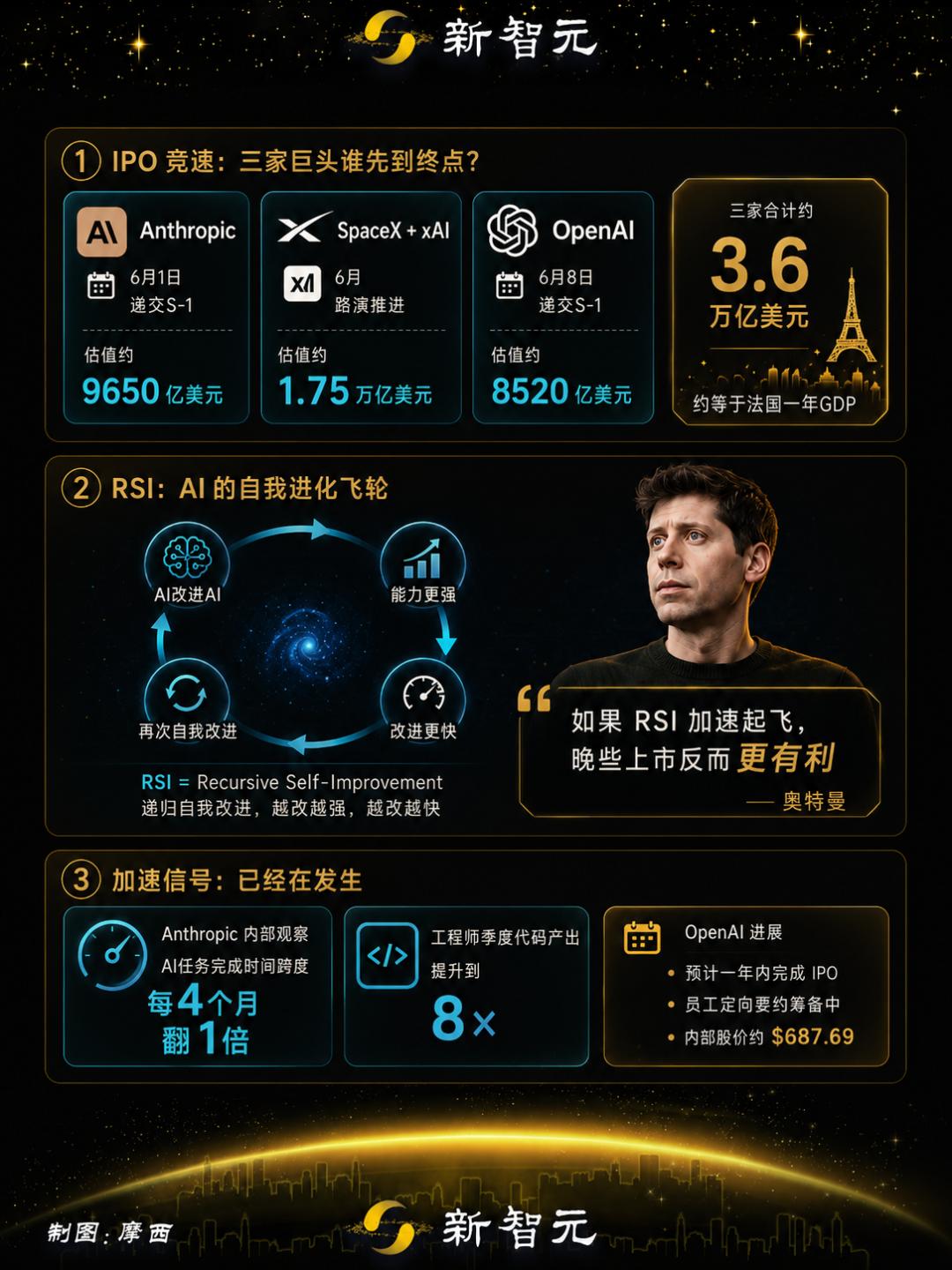
He didn't mean he "didn't want to go public," but rather that once AI develops to the point where it can self-improve, the entire rule of the business world could be overturned. At that point, private companies will have far greater flexibility than publicly traded companies.
Anthropic's data indirectly confirms this judgment.
Their internal reports show that the time it takes for AI tasks to complete is doubling every four months, and engineers' quarterly code output has surged to eight times what it used to be.
With each generation lasting 7 weeks, is RSI still far away?
On the same day that Ultraman said this, his chief scientist was demonstrating to everyone that that day might be much closer than imagined.
GPT-5.4 was released on March 5, followed closely by GPT-5.5 on April 23, a six-week interval.
GPT-5.6 is scheduled for June, which will be another 6 to 7 weeks.
This is a steadily accelerating curve, and the leaps in ability between generations show no signs of slowing down.

Overseas communities have already thoroughly investigated the "leak" of GPT-5.6.
Starting in mid-May, developers discovered traces of GPT-5.6 routing in the Codex backend logs, internally codenamed iris-alpha.
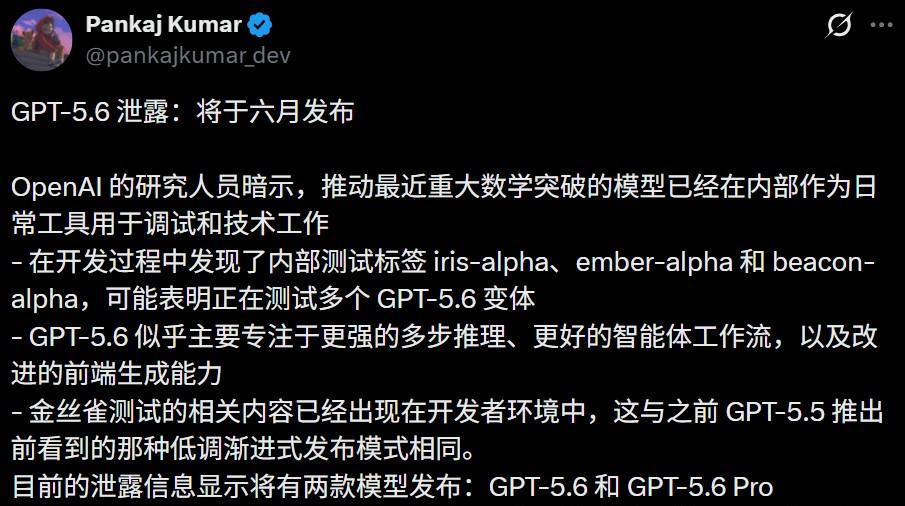
Subsequently, ember-alpha, beacon-alpha, and then kepler and kindle appeared.
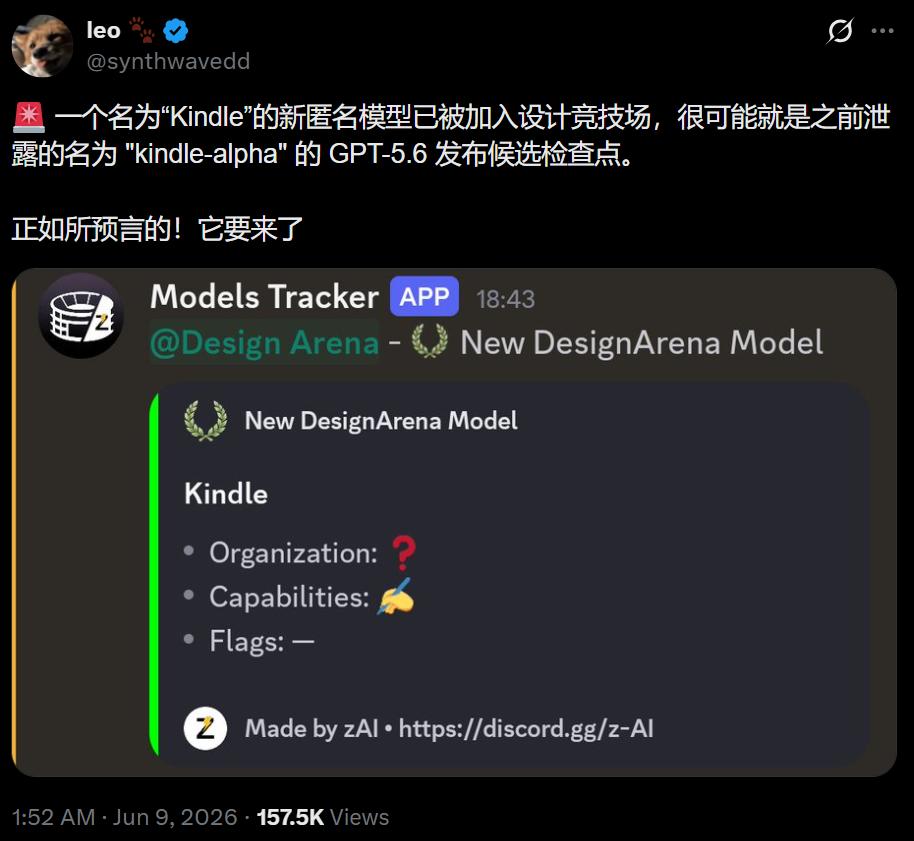
By early June, kindle-alpha had been confirmed as the current release candidate.
An anonymous model called "Kindle" was discovered on Design Arena. After several rounds of testing, it was determined that this was the public test version of Kindle-alpha.
The Kindle version was later removed, but the existence of GPT-5.6 is now a certainty.
Currently, the most discussed topics in the community are improvements in two areas.
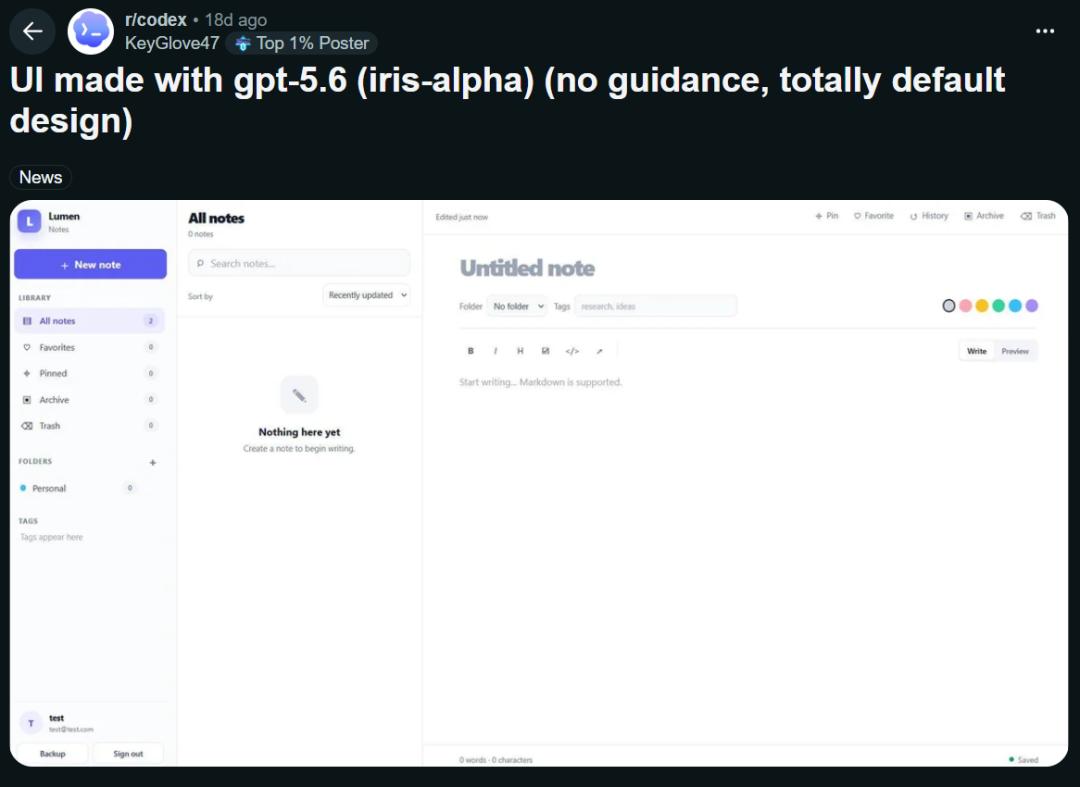
The first is front-end generation capability. Without the need for complex prompts, the model can directly output a clean, near-commercial-grade UI.
A leaker used the earliest iris-alpha checkpoint to generate a screenshot of a note-taking app called Lumen Notes with zero guidance. The app features a lavender color scheme, grid alignment, and clear hierarchy, making it look like a mature SaaS product.
The second is the ability to use aggression coding.
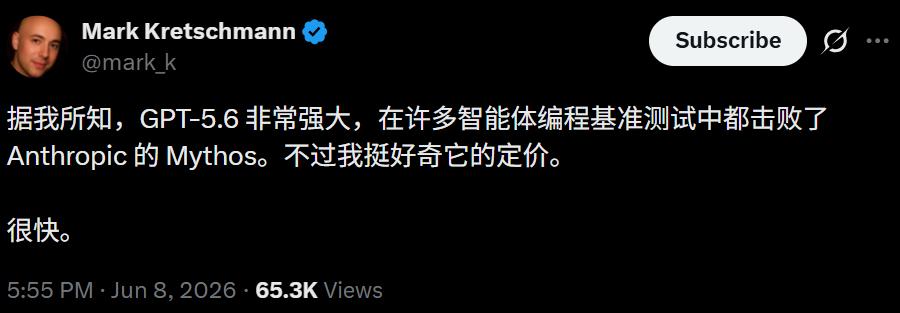
Renowned developer Mark Kretschmann stated on Weibo, "To my knowledge, GPT-5.6 is very powerful, outperforming Anthropic Mythos on multiple agentic coding benchmarks."
Altman stated at a recent event that enterprise customers are becoming increasingly sensitive to the cost of using AI.
Therefore, price may be one of the most critical variables for OpenAI going forward.
Anthropic's newly released Fable 5 and Mythos 5 have API pricing of $10 per million input tokens and $50 per million output tokens, roughly double the pricing of existing Opus tokens.
GPT-5.5 is currently priced at $5 and $30, which is already half the price.
Moreover, according to the WSJ, OpenAI is even considering further significant price reductions, proactively launching a price war with Anthropic.
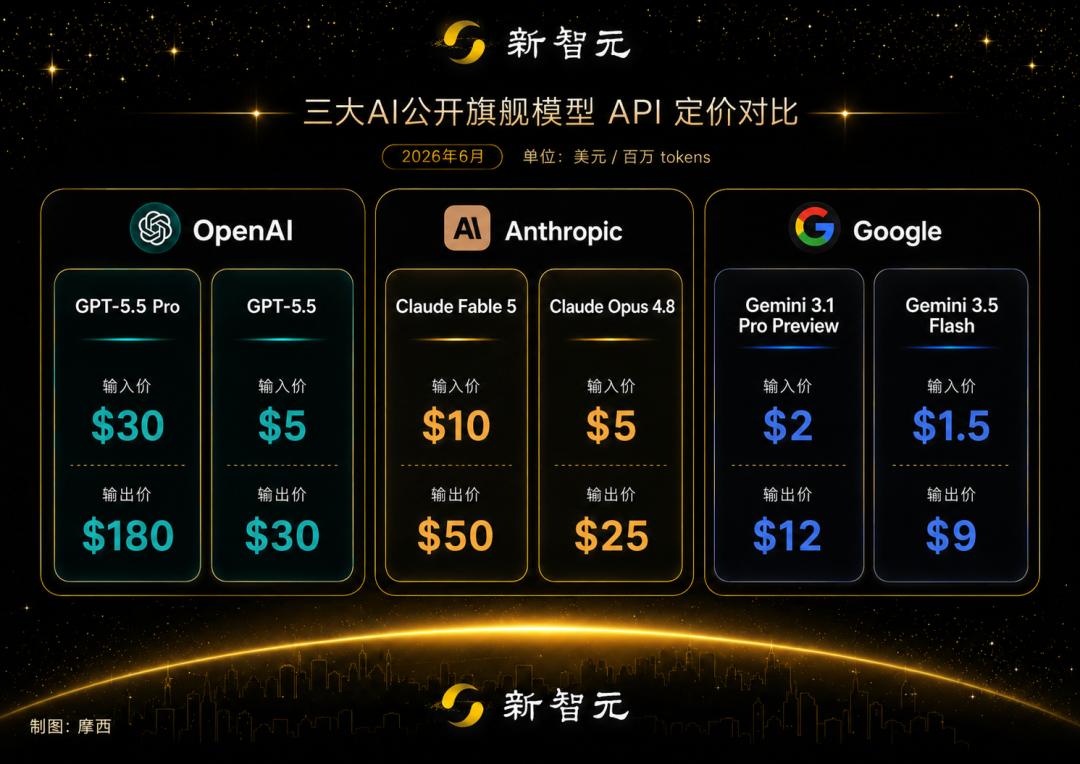
If GPT-5.6 brings both capability upgrades and price reductions, it would be a powerful combination for Anthropic.
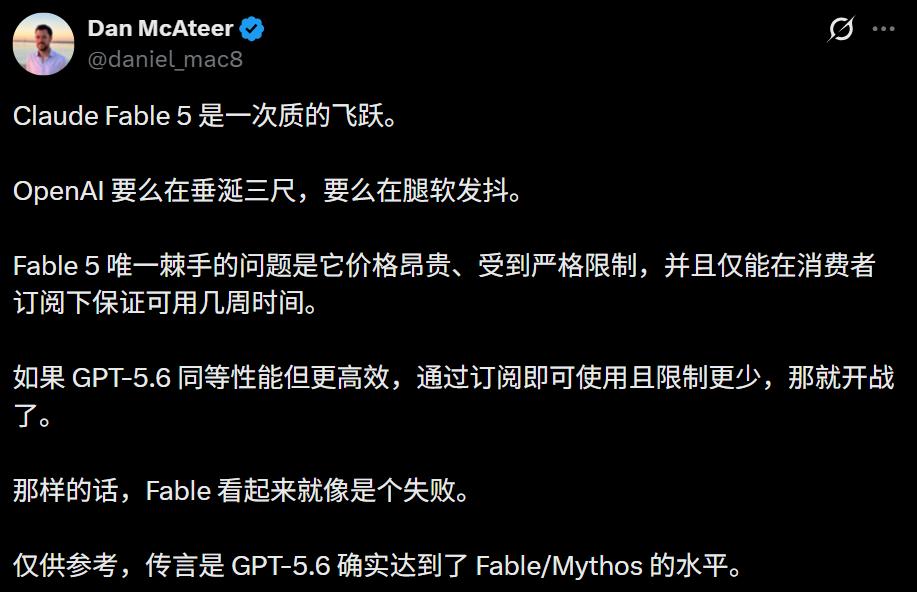
From "Choosing a Model" to "Choosing Intelligence"
Meanwhile, the product side was also busy.
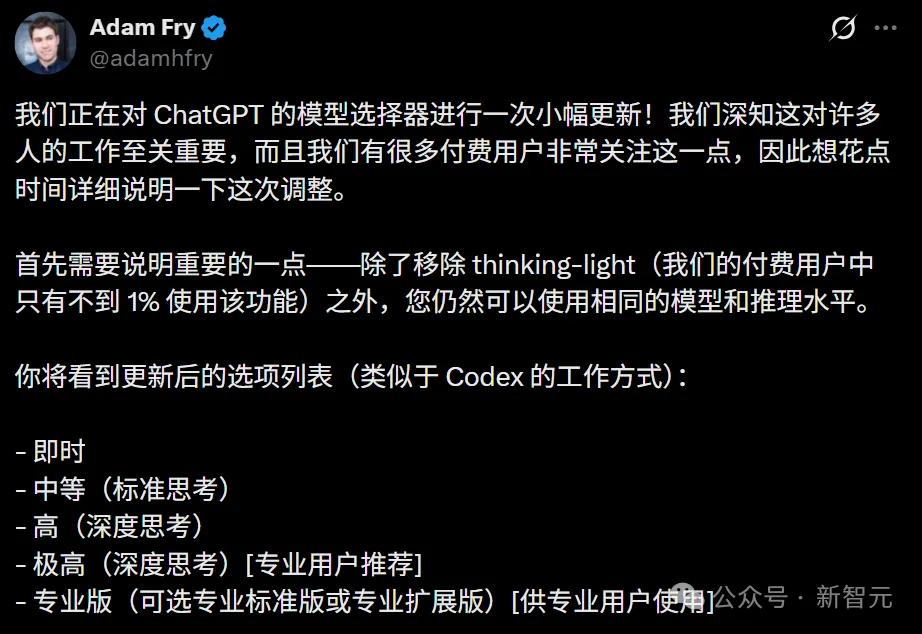
On June 10, Adam Fry, product lead at OpenAI, announced on Facebook that ChatGPT's model selector has been officially redesigned and will be rolled out to Plus and Pro users worldwide.
Previously, when you opened ChatGPT, you would be greeted with a long list of model names.
Thinking-Light, Thinking-Standard, Thinking-Extended, Thinking-Heavy, plus Pro Standard and Pro Extended—six or seven options are laid out densely, instantly triggering a surge of choice anxiety.
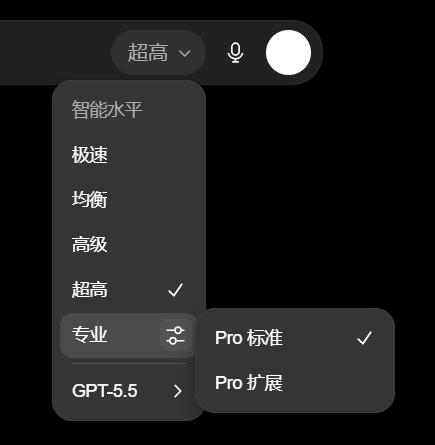
Now all of that has disappeared, leaving only one word: Intelligence.
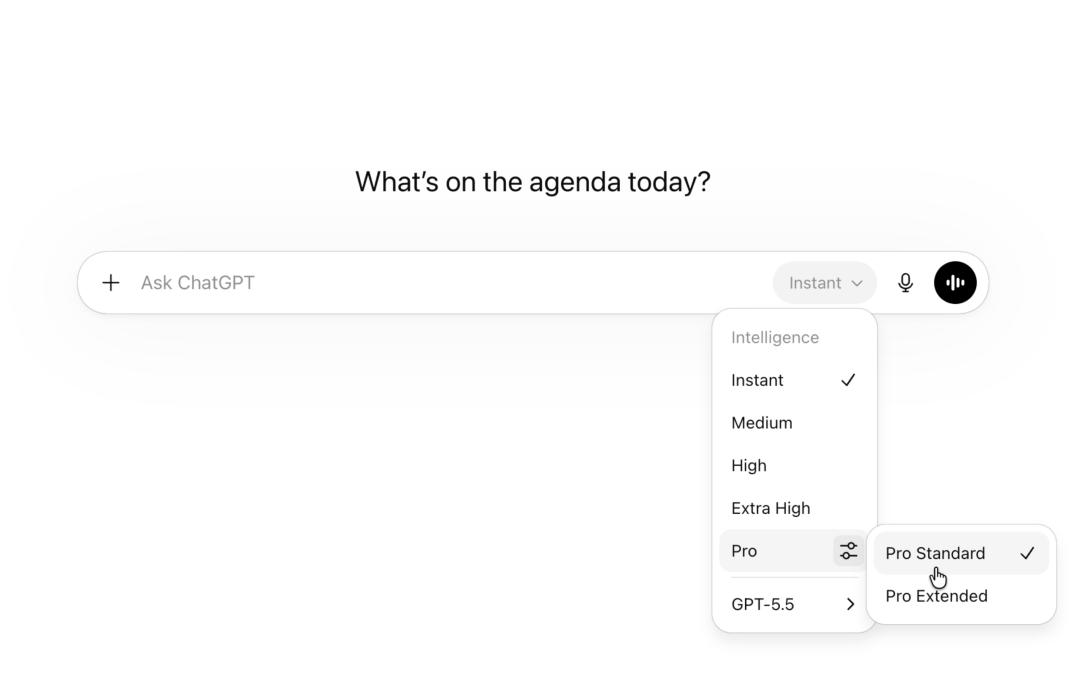
The six speed settings are arranged in a row from low to high: Instant, Medium, High, Extra High, Pro Standard, and Pro Extended.
In other words, the focus has shifted from "which model you want to use" to "how smart you want the AI to be."
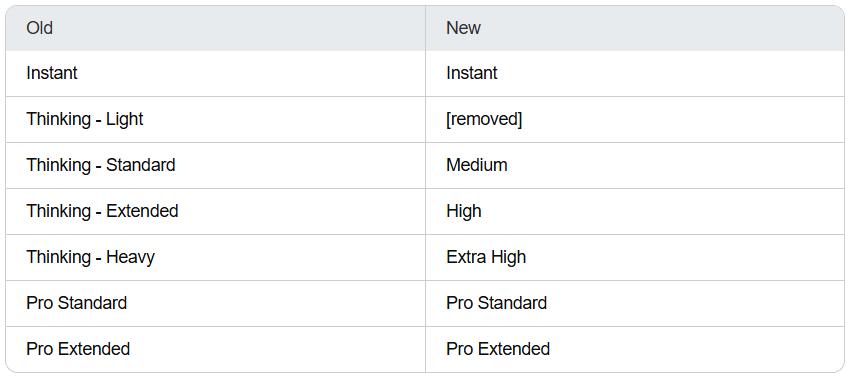
Thinking-Light was discontinued because less than 1% of paid users used this tier. Thinking-Standard was renamed Medium, Thinking-Extended was renamed High, and Thinking-Heavy was renamed Extra High. Pro Standard and Pro Extended retained their names but were moved to a secondary menu within the Pro tier.
A new model is released every 7 weeks. The product interface is changed on the same day. A price reduction is prepared on the same day.
Every acceleration signal makes Ultraman's statement about RSI seem less like a hypothesis and more like a foreshadowing.
The faster, the more prophetic this statement becomes.
Once AI learns to improve itself, the priority of going public may need to be re-evaluated.
Within 24 hours of his statement, Anthropic's Claude Fable 5 topped the new Agent Arena leaderboard with an 11.2% net overall gain, marking the largest margin of victory in the leaderboard's history and leaving GPT-5.5 in fourth place.
In June, three flagship models clashed head-on: Fable 5, Gemini 3.5 Pro, and GPT-5.6. They were competing on the same set of capabilities: inference, encoding, agent, and front-end generation.
But the real competition may not be at this level.
Whoever IPOs first gets funding from Wall Street. Whoever achieves RSI first gains the power to rewrite the rules.
The former's advantage is measured in years, while the latter's advantage may be measured in days.
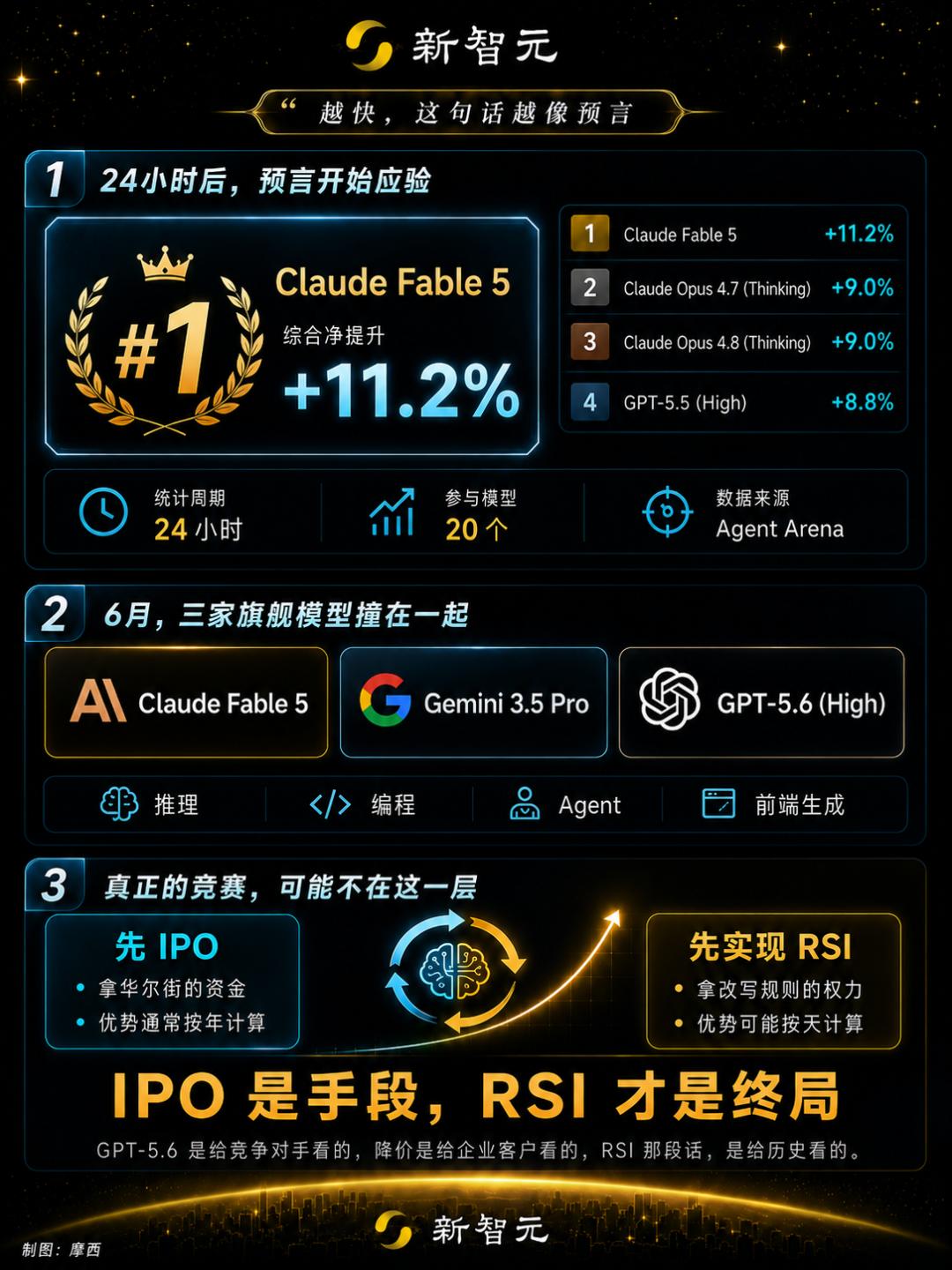
Once a company's AI truly establishes a self-improvement cycle, its lead will widen exponentially, making it impossible for later entrants to catch up, no matter how much funding they receive.
This is probably the true meaning of Ultraman's line: IPO is the means, RSI is the end result.
GPT-5.6 is for competitors, the price reduction is for enterprise customers, and the RSI statement is for historical perspective.
References:
https://www.theinformation.com/briefings/exclusive-openai-preps-new-ai-model-expects-go-public-within-next-year?rc=epv9gi
https://x.com/adamhfry/status/2064768231903285451?s=20
This article is from the WeChat official account "New Zhiyuan" , edited by Moses, and published with authorization from 36Kr.