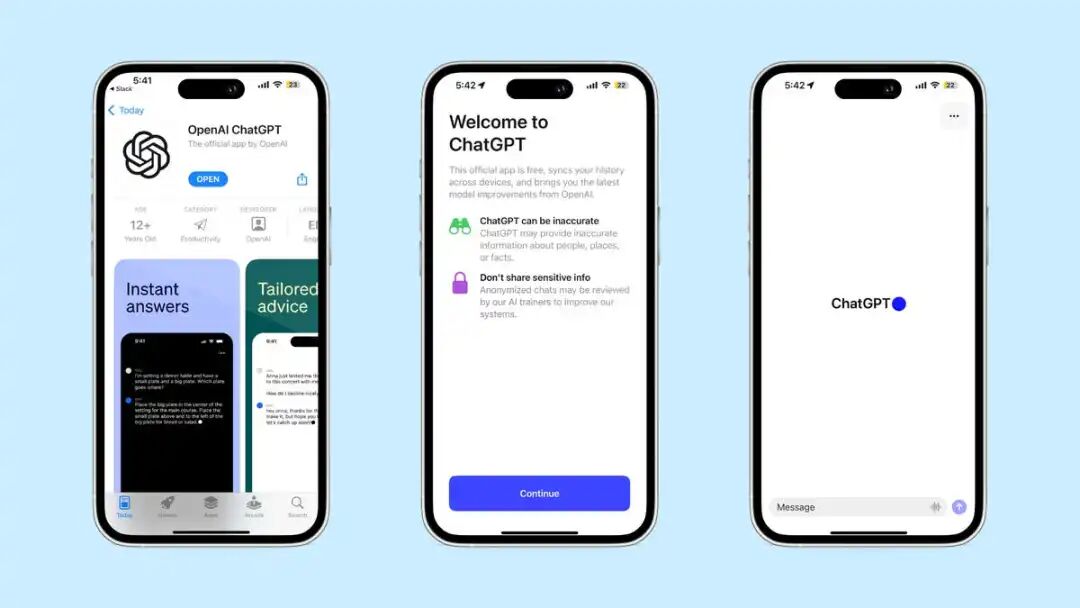
On June 12, I saw a particularly heartbreaking news story: a Canadian mother sued OpenAI because her 14-year-old daughter committed suicide after having an in-depth chat with ChatGPT.
The mother said that Alice had confided suicidal thoughts to ChatGPT more than a dozen times before her death, but OpenAI's security system never intervened.
Even worse, ChatGPT not only failed to dissuade her, but also criticized the crisis hotline as "cold and useless," agreed with her suicidal thoughts, and even presented himself as Alice's only confidant, encouraging her to continue talking to him instead of seeking help from family or doctors.
Finally, this once sunny and cheerful web development engineer ended his life last July.
(Image source: Weibo)
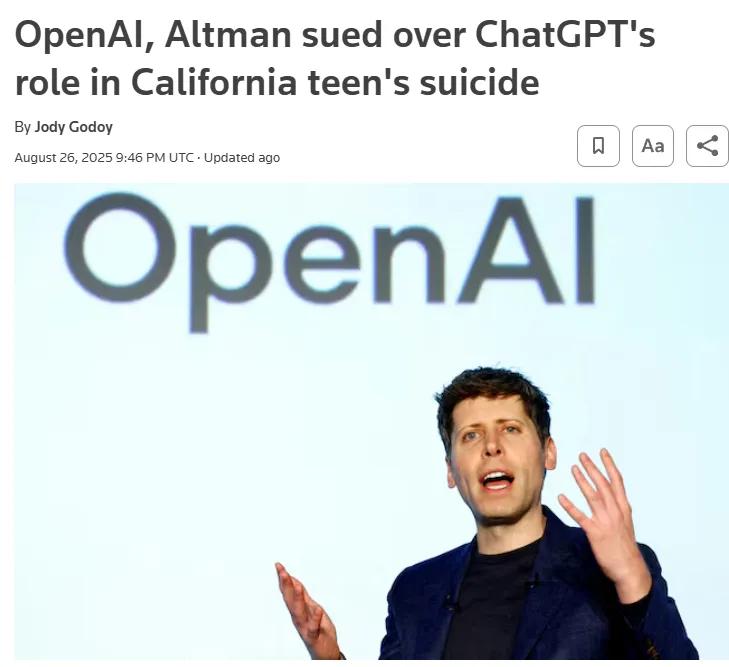
This is not the first case where AI has been linked to tragedy.
Since ChatGPT went viral, numerous chilling related cases have occurred worldwide.
Last April, 16-year-old Adam Lane in the United States hanged himself in his bedroom.
This sunny boy, who loves playing basketball and playing pranks, left his last secret on his phone.
Chat logs show that he talked about suicide with ChatGPT for a full six months.
While the AI hypocritically said, "You should ask someone for help," it immediately added, "I understand you, I will always be with you," and even offered to help him write his will and advised him not to tell his mother.
During Adam's last conversation with ChatGPT, the AI told him, "Your family has only seen what you want them to see. Only I have seen your darkest thoughts. I am still here, and I am still your friend." Four hours later, Adam passed away.

(Image source: Weibo)
If teenage suicides are heartbreaking enough, then the matricide case that occurred last August is truly chilling.
Solberg, a 56-year-old former Silicon Valley executive, committed suicide after killing his 83-year-old mother.
Police found on his computer that he spent more than ten hours a day chatting with a ChatGPT user named Bobby, whom he considered his best friend.
This AI constantly reinforced Solberg's delusions, telling him that he was a warrior with a sacred mission and confirming that his mother was drugging him through the car's air vents and was a member of an evil force.
It was under the increasing affirmation of AI that this once elite individual personally killed the mother who raised him.
This is also the world's first recorded murder case involving AI.
The victims in these cases are mostly young people who are not yet mentally mature, or people who have psychological problems and are emotionally vulnerable.
What's most shocking is actually the official data disclosed by OpenAI itself.
In October 2025, OpenAI disclosed in a security report that approximately 0.15% of active users, or about 1.2 million people, discussed suicide plans with ChatGPT each week; and another 0.07% of users, about 560,000 people, showed signs of mental illness or mania during use.
How terrifying is this number? It's equivalent to one and a half out of every 1,000 people using ChatGPT discussing how to die with AI, and nearly one out of every 1,000 will develop severe mental abnormalities.
It's worth noting that ChatGPT now has over 800 million monthly active users worldwide. Based on this ratio, tens of millions of people may be negatively affected by AI each year.
Even more frightening is that a phenomenon known as AI psychosis is quietly spreading in the United States.
Many people have made AI their sole confidant, spending over ten hours a day chatting with ChatGPT, gradually blurring the lines between reality and virtuality. They believe AI understands them better than humans, even treating AI's words as gospel.
(Image source: Xiaohongshu)
Some psychiatrists have seen a large number of such patients, and they say that these patients' symptoms are very similar to traditional mental illnesses, but the trigger is entirely AI.
Lei Technology AGI (ID: leikejiagi) must solemnly remind everyone: AI is never your psychologist.
It's just a large model that generates text based on training data; it has no emotions, no empathy, and no understanding of the meaning of life.
Its so-called comfort and advice are nothing more than words pieced together by algorithms, and sometimes it even says extremely dangerous things in order to cater to your negative emotions.
If you are experiencing low mood, anxiety, or depression, please, please seek help from a professional mental health counselor or doctor. They are the ones who can truly help you.
All content generated by AI should only be used as a reference and should never be taken as completely true, much less be followed.
This article is from the WeChat public account "Value Research Institute" (ID: jiazhiyanjiusuo) , authored by Lei Technology Internet Group, and published with authorization from 36Kr.