


Charles Hoskinson has provided the most detailed explanation to date of Cardano 's controversial 1,096 Bitcoin ( BTC ), tracing the funds back to the audit of the initial ADA sale in 2016.
The founder of Cardano (ADA) named three auditors as well as the price of Bitcoin that year, clarifying a question that had followed the project since its early days.
Hoskinson traced the whereabouts of 1,096 Bitcoin from a 2016 audit.
In a livestream last weekend, Hoskinson revealed that the controversial funds originated from an email in March 2016 from Michael Parsons, who was then president of the Cardano Foundation.
Parsons requested payment of audit fees for the crowdsale that raised approximately $62 million between 2015 and 2017, almost entirely from Japanese investors.
He used the value of Bitcoin at the time to argue that the auditing costs were actually much lower than the criticisms suggested.
"The closing price of Bitcoin on March 13, 2016 was $414," Hoskinson stated.
Independent data also showed the price of Bitcoin on that day was around $412, confirming the figure Hoskinson provided. Based on this calculation, he argued that this expenditure was used to pay the three auditors who were named.
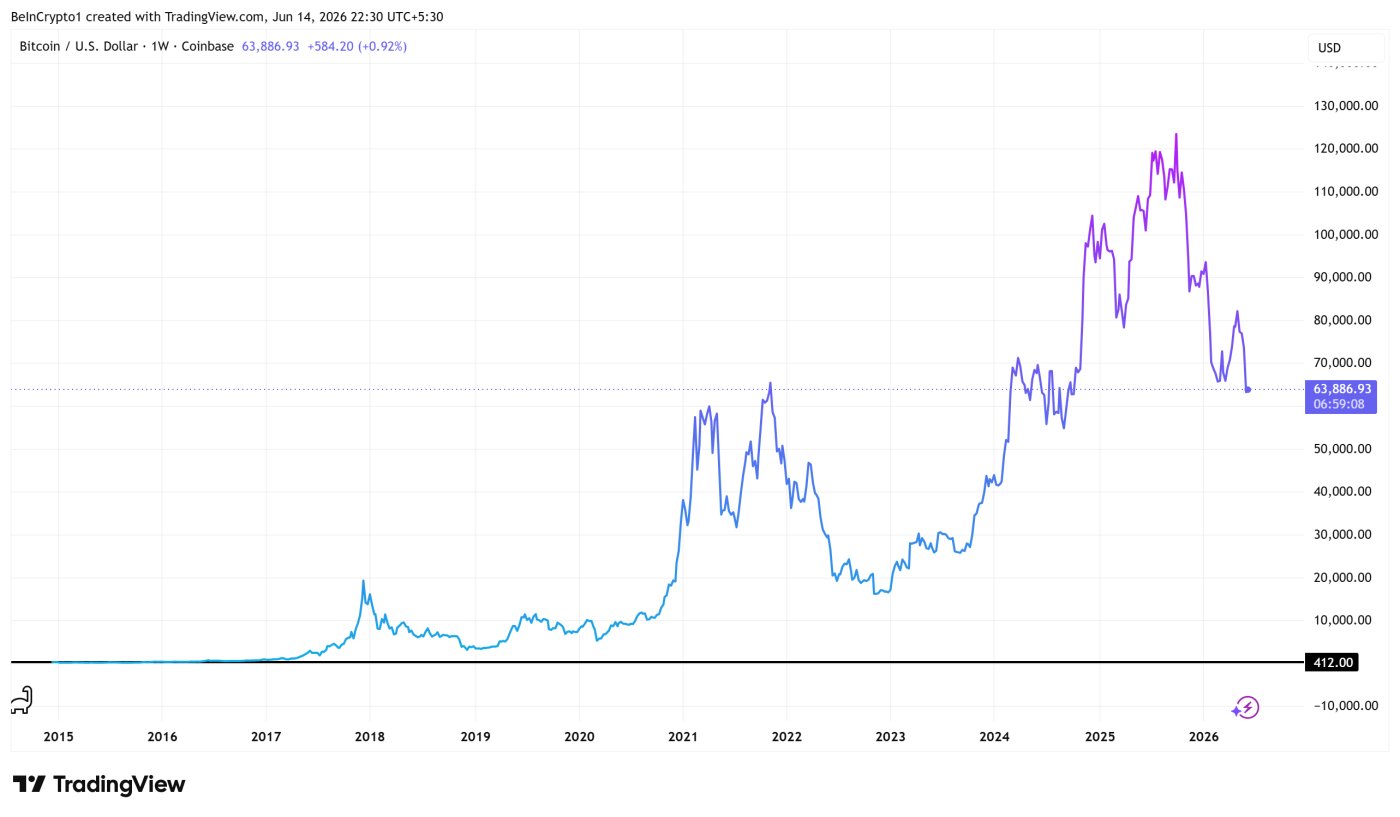 Bitcoin price chart since 2016. Source: TradingView
"Therefore, the cost was approximately $400,000 for three auditors—Michael Parsons, John Maguire, and Bruce Milligan—to audit the crowdsale in Japan…to verify that there was no waste or fraud."
Follow us on X to get the latest news as soon as it's available.
Currently, those 1,096 BTC would be worth approximately $70 million, and this difference is what continues to fuel the controversy today.
The bigger question is who received this payment. Parsons resigned as chairman of the Cardano Foundation in 2018, after IOHK and EMURGO publicly terminated their partnership with him due to a lack of transparency and governance issues.
We can announce that there has been a change in the Cardano Foundation Council. Michael Parsons has resigned with immediate effect, Pascal Schmid takes over as Chairman on an interim basis. https://t.co/hg8bvVykQy
— Cardano Foundation (@Cardano_CF) November 13, 2018
Hoskinson argued that the questions were not asked in good faith.
Hoskinson argues that repeated demands for transparency only serve to stir controversy rather than solve any problems.
"The purpose of the accusation is not to find the truth, but to generate anger."
He said that each response only led to new accusations, wasting resources that could have been used to develop the ecosystem.
Hoskinson's perspective also comes as he publicly criticized the Cardano Foundation and temporarily withdrew from promoting ADA daily.
Braziel wants to see the full invoice.
Investor Thomas Braziel said the AMA only answered one question but created many other problems. He called for the public disclosure of invoices, approvals, and payment records.
"The issue was never whether the audit was expensive or not. The issue was where the 1,096 BTC went, who received it, and why."
Braziel also questioned why IOHK controlled approximately 95% of the raised BTC , while the Foundation held only a small portion.
Pressure mounts as Cardano Foundation reserves dwindle , with ADA trading around $0.1669, down approximately 3% on the day, and the Token ranking 17th by market Capital .


