Cryptocurrency is not the only way to save Virunga, but part of a larger ecological business model.
Author | Adam Popescu
Compilation | GaryMa Wu said blockchain
In eastern Congo, the AK-47, an old Soviet weapon that sells for as little as $40 on the black market, is used by militias to seize land, timber, ivory and rare minerals that have long been the region's hope and curse.
But this man in military uniform is not a militiaman. He is a rare authority figure in this largely lawless region: a ranger who usually patrols the Virunga National Park, known for endangered mountain gorillas.
But today, his work is different. In Luviro, a small village just outside the park, he is watching over the world's first bitcoin mining farm run by a national park and run on clean energy. It’s a gamble that has excited many who work in and around the park, and drawn skepticism from experts wondering what cryptocurrency has to do with protecting the environment\animals.
On this sweltering day in late March 2022, security guards paced in front of 10 shipping containers filled with thousands of mining machines. They buzzed in the midday heat. Suddenly, a shiny thing flickers on the horizon. As a Cessna circled nearby, he adjusted his beret and hurried to the nearby dirt runway.
Emmanuel de Merode, a 52-year-old pilot who is in charge of the park, emerged from the plane on a dangerously steep and short runway. Man, come here for a routine check. With one hand clutching the strap of the bag, De Merode salutes the Ranger, who stands upright in the sun with his chest out, with the other. He was clean-shaven, gray-haired, and the only one without a weapon. Behind him, the wing of the Cessna is riddled with bullet holes, patched with duct tape.
De Merode strode past a barking jungle dog and into one of the 40-foot, chrome-green shipping containers. Inside, a team of technicians in mesh vests monitors the miners surrounded by wires, laptops and body odor.
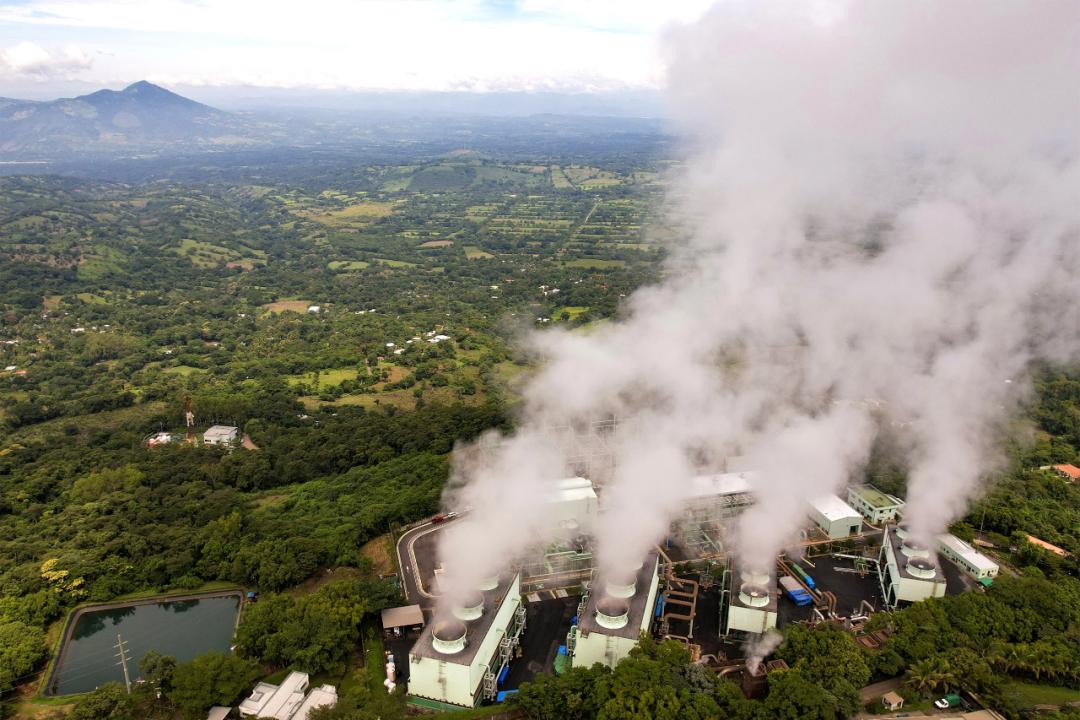
The machines spend their days poring over complex math problems and are rewarded with thousands of dollars worth of digital currency. They are powered by a massive hydroelectric plant sitting on the same hill, making the shipping containers a 21st century cathedral of green technology, surrounded by greener rainforests.
In many ways, the existence of this operation is impossible. Just being in a volatile region known for corruption and growing deforestation, where foreign investment is as scarce as the power grid and stable government, presents its own set of problems. "Internet connectivity, climatic conditions affecting production and working in isolation and so on.” Dozens of rebel groups are also threatening nearby. Violence is high here, and people have been deeply scarred by years of militia activity, missile attacks and machete attacks.
This is a pivotal time for Africa's oldest protected park. After four years of disease outbreaks, lockdowns and bloodshed, Virunga is desperate for money and the region is desperate for opportunity. The Congolese government provides only about 1 percent of the park's operating budget, leaving it largely self-reliant. That's why Virunga is betting big on cryptocurrencies.
Still, Bitcoin is generally not about environmental protection or community development. It is often assumed that the opposite is true. But here, it's part of a larger plan to turn Virunga's coveted natural resources, from land to hydropower, into benefits for parks and locals. While mining methods like these may be unconventional, they are profitable and green.
Proceeds from bitcoin sales are already helping pay for parks, as well as infrastructure projects such as roads and pumping stations. Elsewhere, electricity from the park's hydroelectric plant supports modest commercial development.
That’s how to build a sustainable economy tied to the park’s resources, de Melod says, though the mine itself is a happy accident.
"We built the power plant and thought we would gradually build the network. Then we had to close tourism in 2018 because of a kidnapping. Then in 2019 we had to close tourism because of Ebola," he explained. In 2020, the rest is coronavirus history. For four years, all of our tourism revenue, which used to be 40% of park revenue, collapsed.”
He added: "It's not what we expected, but we have to come up with a solution. Otherwise our national parks would have gone bankrupt."

The park started mining in September 2020, when most of the world was locked down, he said: "Then the price of bitcoin skyrocketed, we were lucky, but only once."
During this visit in late March, the Congolese miners spoke to Director Le in French about their progress. With bitcoin currently trading at about $44,000, Demerode expects to make about $150,000 a month, close to what the tourism industry earned at its peak.
The looming question now is whether their luck has run out.
About a decade ago, Virunga rose to prominence with a famous Netflix film that showed the park battling an insurgent invasion and the threat of Big Oil. These dangers are back, jeopardizing everything.
The Congolese government recently announced plans to auction oil leases in and around the park. It's early days, but if drilling starts, it will mean the destruction of life and vital wildlife habitat. It is no exaggeration to say that the health of the planet will be at stake: the Congo Basin is the second largest rainforest in the world after the Amazon and is an important carbon sink.
Meanwhile, a militia group known as the M23 has taken over the park's gorilla section and ransacked the town as it battles Congolese troops. In the past, the M23 avoided direct confrontation with the Virunga, but that appears to have changed over the past few months.
On top of that, the recent debacle of FTX and the subsequent ripple effects that shook the entire crypto industry means that de Merode's gamble sounds like an all-or-nothing one. But he pointed out that every day of mining is pure profit, so no matter how much the value of Bitcoin fluctuates, as long as it is positive, it is profitable.
Faced with these threats, de Melod believes that Bitcoin mining farms can still be their trump card. He's neither an altruist nor a crypto crook, he's a pragmatist willing to risk everything.
If the park can stick around, it might succeed.
A "special solution" in a "confusing place"
The first thing you notice about this piece of land in the Democratic Republic of the Congo is its greenness, a sea of emeralds fed by abundant rainfall and fertile volcanic soil. Virunga is bordered by the Congo Basin on one side and Uganda and Rwanda on the other. Its 3,000 square miles are home to half of Africa's land animals, including about a third of the world's last mountain gorillas.
Some 5 million people live just outside the park; most have no electricity to cook, light or heat their mud-walled homes. In addition, 80,000 people live in the park. Many settled here before Virunga was created in 1925, when the country was still under Belgian colonial rule; others were refugees fleeing recent violence.
This is why the park is an important source of charcoal (makala in Swahili) and food, although farming, fishing, hunting and logging are illegal. The park is often stripped of its resources: Between 2001 and 2020, Virunga's tree cover fell by almost 10 percent, and de Merode estimates that Virunga loses $170 million a year in trees and ivory. But for the locals, the other option was being unable to pay the local warlords, or starving to death. These are perfect conditions for corruption.
"Congo is a difficult place to make moral judgments."
"The Congo is a bewildering place and it's difficult to make moral judgments," said Adam Hochschild, author of "King Leopold's Ghost," which documents the tragic 19th-century rule of the Belgian monarch. The situation is complicated by Congo's "vast territory, its people speaking hundreds of languages and its colonization to extract wealth," he said. "In this situation, it is difficult to have a just and equitable society."
Congo, which has almost as many displaced people as Ukraine, has suffered decades of conflict despite decades of UN peacekeeping operations. Much of the park's stolen profits go to armed rebel groups, which some locals have joined for lack of better options. Some are remnants of past wars, most notably the 1994 Rwandan genocide. Others may be linked to ISIS. The largest of these is the M23, a well-armed Tutsi-led group that the United Nations says Rwanda supports. (Rwanda denies this, but its economy relies heavily on Congolese resources.)
As a result, Virunga may be the only UNESCO site where its staff are regularly buried: since 1996, more than 200 rangers have been killed, an average of one per month. Cherubin Nolayambaje, who has been a ranger for eight years, calls ranger "the most dangerous job in the world".
Virunga's nearly 800 rangers, including about 35 women, regularly encounter armed rebels in the park, as well as civilians who farm or live illegally there. Samson Rukira, an activist in the nearby town of Rutshuru, added that many locals don't even know the park's boundaries. While protecting the environment requires community engagement to solve problems, "we're not in an area that's safe, which means rangers may not be able to have a conversation," he said.
De Melode was sympathetic to the community's complaints that individuals were denied access to the park's vast wealth. "Thousands, possibly millions, suffer the short-term cost of our hope to turn this park into a positive asset. If we fail in this, it will do more harm than good. But we firmly believe that this ecosystem, this Parks can be turned around."
His plan hinges on three hydroelectric plants that have opened since 2013 in Mate Bay, Mutwanga and Louvero; a fourth is under construction. Theoretically, if you can power your home, you don't need to chop down trees for cooking. Electricity supports new jobs and businesses such as coffee houses and chia seed production. Of course, there are also bitcoin mining farms.
"This is the misconception we most want to correct: Virunga is only about wild animals, it's a community about wild animals. Our role is to try to make that happen," continued De Merode. In this world, he says, One of the most troubled countries, where conservation is impossible without local support.
Belgian Prince Partners with 'Bitcoin Indiana Jones'
The solution arose in a majestic French chateau in the Loire Valley, nearly 4,000 miles from Virunga and a world away. In February 2020, crypto investor Sébastien Gouspillou arrived at the Château de Serrant around noon, expecting a pitch from a showrunner.
"In France, it's very common to rent a chateau, and it's about the same price as a hotel," he explained.
Instead, he was greeted at the door by a princess whose family had owned the castle since the 18th century. A few minutes later, she went to Gouspillou's lunch date: her little brother, Emmanuel de Merode.
The director of Virunga Park was born in a Belgian noble family in Tunisia. At the age of 11, he spent time in Kenya with legendary lion master George Adamson. Later, he trained as an anthropologist. In 1993, he came to Congo to help rangers in Garamba National Park and research the bushmeat trade for his doctorate. In 1999, he traveled to Lopé National Park in Gabon, where he worked on acclimatization of gorillas and establishment of ecotourism. There he realized: "You have to work there for 20 or 30 years to be really successful. I want to go to eastern Congo."
De Merode came to Virunga in 2001, at a time when the civil war was in full swing. He quickly realized the importance of the work of rangers, as they were often unpaid. Together with famed fossil hunter Richard Leakey (later to become his father-in-law), he began fundraising to support their wages.

He became the park's superintendent after a group of gorillas were killed in 2008 and photos of the execution-style murder sparked international outrage. In the chaotic aftermath, Virunga's then-chief was arrested and state officials vowed sweeping change; perhaps nothing more radical than a Belgian prince taking leadership positions in the former Belgian colony.
De Mérode became famous immediately. Two months into his tenure, he crossed enemy lines to negotiate and protect staff when rebels attacked the park's headquarters in Ruman Gapo. After regaining control, he fired hundreds of rangers, arrested top military officers, and then re-recruited and trained them. Wages increased; rations and equipment improved. Morale was high and animal numbers eventually rebounded.
But in April 2014, the story was almost over. De Melod traveled to Goma to give evidence against Soco, the British oil company accused of bribing officials. He was driving back to the park alone when the gunman opened fire on his car. He fought back, rushed into the forest and hid. But a bullet hit him in the chest, breaking five ribs and penetrating a lung. Another pierced his stomach, and he said: "Through the liver, the diaphragm, the lungs, and out the back."
Finally, farmers on motorcycles drove over to help. When he finally arrived in Goma, he had to translate between Indian and Congolese doctors who lacked a common language. Since there was no x-ray machine available, doctors cut down the middle of his body.
Two days later, while he was still recovering, Virunga premiered at the Tribeca Film Festival. The documentary, later acquired by Netflix, focuses on the park's struggle to survive the siege of the M23 and Soco. The film was executive produced by Leonardo DiCaprio and was nominated for an Academy Award. It also made de Mérode and his colleagues international heroes.
That's what Gouspillou thought of de Merode in the first meeting. At the Château de Serrant, the two ended up talking for four hours. De Melode is in a bind: desperate to figure out how to use excess electricity in Virunga to fund a park that is rapidly losing money. Gouspillou aspires to do something important.
On the train home, Gouspillou said: “I googled and found out he was a hero and I wanted to help. We used to buy electricity to mine, which wasn’t very efficient. The money might go to the oligarchs in Kazakhstan. Longa, we see it saving the park."
Gouspillou, who likes to call himself Bitcoin Indiana Jones, entered the crypto space after working in real estate investing. Although he has no whip, no fedora, prefers jeans, and is bald, he has a reputation for taking risks. His firm, Big Block Green Services, is known for putting together controversial projects: advising El Salvador's "Bitcoin City" and preparing another crypto project in the Central African Republic.
With Gouspillou's help, Virunga bought second-hand servers in early 2020 and began building a bitcoin mine. Like hydroelectric plants, construction is painstaking. Getting containers and bitcoin mining rigs from Goma meant two days of driving down dirt roads through rebel-held jungle.
"The Italian ambassador is killed on the road we walk every day," Gouspillou said. When he got to Louvello, he found bullet holes in his bungalow that de Merode hadn't told him about. "I didn't tell my wife either," quipped Gouspillou.
Around this time, the death toll at the park rose sharply. In April 2020, 12 rangers, a driver and 4 civilians were killed in the worst attack in Virunga's history. In October, another ranger was killed, in January 2021, another in October, and another in November. De Meloude described it as "our most difficult year".
However, these difficulties were overcome and by September 2020, the Luviro mine was operational.
A local job posting hired nine Congolese cryptocurrency miners who scored well in a questionnaire competition. Most of them have heard of Bitcoin before, but their initial impressions are not always positive due to the scams that exist in the area. Now many of them have crypto wallets.
"It's a completely new field," said Ernest Kyeya, 27, a graduate of Goma University in electrical engineering who currently works at the mine.
He added: "It took me a little time to get used to the terminology, understand the operation of the miner, and manage to repair and maintain it. But I was treated as part of a team, not a simple worker. This responsibility gave me confidence."
The miners worked 21 consecutive days and then took 5 days off. Our place isn't "premium," Kyeya says, but we like what we do. He added: "It's not the same as in the city. Everything has to be planned. But it's worth it. It's an honor to work here, 13 hours a day, sometimes more because in the jungle we don't have There are other things to do."
Ten containers are now powered directly by the factory's 4-meter turbines. Each container can hold 250 to 500 mining machines. Virunga owns three containers and all proceeds will go to fund various park services. The other seven belong to Gouspillou. He pays Virunga for electricity, and the bitcoins he mines are owned by him and his investors.
De Merord estimated that the mine generated about $500,000 in revenue for the park last year, when the pandemic had cut off most other sources of income.
Capitalizing on the popularity of the digital ape, the park partnered with NFT project CyberKongz to auction off the gorilla NFT through Christie's, giving the park another $1.2 million. Some of that money was used to buy two of the three containers the park owns.
"That's why we're getting through the pandemic," said De Merode.
Bitcoin as a savior
“When Emmanuel saw the money, he was very surprised. I’m sure of our success,” Gouspillou said, speaking quickly when the conversation turned to the sustainability of cryptocurrencies.
Not everyone is so sure. Nor are all Congolese supporters of radical development. Even if some people do benefit, most won't get jobs. Years of war and foreign exploitation have also weighed heavily on locals, who often praise the park and curse it in the same sentence.
Meanwhile, for the international community, the idea of Bitcoin as a savior has perhaps never been so hard to sell.
Much of this criticism has to do with the vast amounts of electricity required to mine bitcoin, which is typically generated from fossil fuels. The director general of the European Central Bank recently called bitcoin mining an "unprecedented source of pollution." Also, connections are often expensive; for example, seven of the largest cryptocurrency mining farms in the United States use the same electricity as all homes in Houston. (Cryptocurrency companies in the US are not legally required to report CO2 emissions).
Many communities, especially in developing countries, are also exploited by international cryptocurrency miners, some of whom take advantage of weak local regulations or tax incentives, suck up electricity, damage their surroundings, and disappear into the next hot spot.
“The main problem is that the benefits are always very limited compared to the costs. Miners overcommit , but failed to deliver.”
The key, he said, is to recoup the investment, which means running miners 24/7. "The local community is usually better off without them," he concluded.
Peter Howson, assistant professor of international development at Northumbria University, who conducted the research with de Vries, agrees that Congo's clean energy could be used more efficiently. “In the Democratic Republic of the Congo, bitcoin miners are outcompeting more productive forms of green industrial development. These industries may employ fighters, poachers, and illegal loggers. Even the largest bitcoin companies Only a handful of people are employed. These are very precarious jobs with no security of contracts. Is this a good model? No. They should be putting the water and electricity to good use.”
Dutch political ecologist Esther Marijnen, who has worked in Congo since 2013, has made similar arguments, arguing that Luviro's mines are contrary to environmental protection, and questioning what the gorilla sanctuary has to do with cryptocurrencies. For all the development going on in Virunga, especially around hydropower, she noted that the park has failed to bring widespread stability or employment.
"What's the goal? Is it rural electrification so people around the park can use electricity to improve their relationship with the park? Or is it to attract business?" she asked.
Jason Stearns, founder of NYU's Congo Research Group and a former UN investigator who considers de Merode a friend, warns that militias could also benefit from hydropower, so it doesn't necessarily causing the militants to drop their guns. "I admire Emmanuel's tenacity and willingness to think outside the box, but this ideology that free markets will bring peace goes against what has been going on in Congo for the past 20 years," he said.
Still, Gouspillou insisted that bitcoin mining “can be a force for development.” In fact, he sees Virunga's project as a potential model: "People say it's bad for the environment, but here it's clean energy. It's a formula that can be replicated."
Because the mine relies on rivers, there are no fossil fuels here, and Luviro's lack of customers means there is no local electricity demand, he added.
Michael Saylor, co-founder of investment firm MicroStrategy, agrees, calling Virunga's model "an ideal high-tech industry for a country that has a lot of clean energy but can't use it to export products or provide services." .” To this end, de Melode is in discussions with national parks in other states to turn their waterways into hydroelectric supplies.
Peter Wall, CEO of Argo Blockchain, which operates a hydroelectric mine in Quebec, noted that “85% of mine operating costs come from electricity,” meaning that even low-power mines can be profitable. “I think (the Virunga mine) is the first, I haven’t heard of any national parks mining. At the end of the day, you need three things: power, machinery and capital.” Virunga has all three .
Still, all cryptocurrency mining farms, including Luviro, need to deal with the plummeting price of the currency. Bitcoin alone is down more than 70% from last year's highs. Then came the FTX debacle, which lost $32 billion overnight. All this, combined with the tainted record of cryptocurrency mining, could turn off key donors that places like Virunga rely on.
But de Melode said: “It’s still a very good investment in the park. We’re not guessing at its value, we’re generating value. If you buy bitcoin and it goes down, you lose money. We’re using excess energy to create Bitcoin and monetize something that otherwise has no value. That’s a big difference.”
Even if bitcoin fell to 1% of its value, the 10 containers would still be profitable, he said.
De Merode wanted the system to be self-sustaining in nature, which is one reason why the park built so much infrastructure. He kept smiling when I asked him what would happen to the mine if something happened to him.
“What if I crash? That’s okay, the digital wallets are managed by our finance team. We’re unlikely to be hoarding Bitcoin for more than a few weeks anyway, because we need money to run the park. So, if something happens to me, Or our CFO loses his password, and we’ll give him a hard time, but it won’t cost us much.”
A desperate bet on the future
De Merode emphasized that cryptocurrencies are not the only way to save Virunga, but are part of a larger ecological business model. Other green investments in Virunga, including coffee and chocolate growing, could have an annual impact on GDP of as much as $202 million by 2025, according to a 2019 report by Cambridge Econometrics, a British economic consultancy.
"What we're trying to demonstrate is that a green economy means diversity, that hundreds of different industries can rely on sustainable energy for a long time, and that it's a healthy society. It's not like just oil," de Melode said.
About 100 miles south of Rutshuru, you can see the plan in action from the top of the tower at the Mate Bay hydropower plant, where power lines snake into the town of Rutshuru. It's not a metropolis, but it's successful in many ways. In this place, that vision has been working, even if that success has been incredibly tenuous. This area has become the center of the territory claimed by the M23 movement. Still, when I visited this spring, the RUSA soap factory was producing 5,000 bars of soap a day, and the equipment was purchased with Virunga-backed microloans. From ear to ear, owner Christopher Bashaka said the job would be "impossible" without hydroelectric power.
At a corn factory a few minutes away, Elias Habimana sheds his leather jacket, grabs a giant calculator, and shows me how he's saved thousands of dollars: Hydroelectric power lets him forego costly power generation machines, employing 30 people.
"De Merode made it possible, it's much easier now," he said.
A park-run chocolate factory near Beni offers cocoa farmers a fair price and a legitimate market. Virunga Park produces 10,000 bars of chocolate a month, and that number will continue to grow, as Virunga has partnered with Ben Affleck's East Congo Initiative, to US stores.
According to de Merode, electricity from the Virunga dam has created more than 12,000 jobs; and since the average Congolese family has at least five members, one job is a huge one in a place where desperation drives activism. Stabilizer. Gouspillou noted that none of the core members of Congo’s encryption team were militias, but some of the temp workers involved in the construction were militias.
At the park's headquarters in Rumanjapo, the stakes of the experiment are starkly on display. Near the confiscated charcoal pile and gorilla cemetery is the grave of the first female ranger. The widows made stuffed animals and rifle slings in a workshop with dozens of stars engraved with the names of those who died. "My husband loves this place," a woman named Mama Noella told me. After her father died, she worked as a casual worker to support five people, until she learned a craft here: "It gave me value, it gave me hope."
On my last morning at the park, the shelling started early. The next day, as the M23 moved towards the army, missiles streaked across the sky, engulfing Virunga staff and thousands of Congolese.
A few days after I left, de Melod ordered the evacuation of Rumangapo. Matt Bay is next. Fighting engulfed Rutshuru and Matebe later that week when a United Nations helicopter crashed in militia-held areas. Through it all, the park staff stayed. By luck or divine magic, M23 retreated to the hills.
However, this respite is short-lived.
By midsummer, fighting resumed, with several towns captured as rebels swept into Goma. The government has announced its own oil ambitions, and in August, US Secretary of State Antony Blinken announced plans for a joint survey of the mining area.
Since then, a hydropower station has been shelled and a high-voltage line to Goma has been hit. The M23 continued its bloody campaign in Rutshuru and captured Rumangapo in October, reliving de Merode and his crew for an occupation reminiscent of the one that drew Virunga a decade earlier. Terrible scene for the audience.
In early January, the M23 announced its withdrawal from Ruman Gabo, but park staff warned that they had withdrawn from other occupied territories in recent months, only to return quickly, and that insurgents were still present in the area. And even if the M23 did retreat, various other rebels remained; just a few weeks ago, around Christmas, a group called the Mai-Mai killed two rangers.
Meanwhile, Gouspillou continued to convince people of the future of cryptocurrencies, traveling to Ghana to attend the inaugural Africa Bitcoin Conference and waiting for things to cool before returning to Luviro.
De Merode is still waiting, Kyeya and Mbavumoja are still hard at work, and Luviro's mining rig is still working non-stop. After so much good and bad luck, le directeur is stuck in a small team and, as he put it in a WhatsApp call at the end of August, “let’s get out of the way”.