In the narrative rotation, it seems that the market has found the next narrative direction-RWA. The full name of RWA is Real World Assets (Real World Assets), which refers to the digitization of any physical assets in the real world and tokenization of them through blockchain technology, so that they can be exchanged in a lighter and intermediary-free way. Ways to confirm and circulate. The digital USDT, USDC and other products are an important application of the RWA track.
Of course, we have seen the application of RWA assets in some old DeFi protocols, such as the synthetic asset protocol Synthetix, MakerDAO which introduced RWA support for DAI, and so on. Next, let's talk about other applications of the RWA track.
Not investment advice.
Swarm Markets
Swarm introduces assets such as stocks and government bonds in the traditional financial field into the encrypted world, and it is regulated and compliant. Platform users need to go through a simple KYC review before they can trade on the platform. At the same time, Swarm provides broader support for other RWA asset owners. RWA asset owners can use the API and smart contract solutions provided by Swarm to include real estate, carbon credits, private shares, stocks and bonds, etc. Diversified RWA assets are introduced into the encrypted world and tokenized and traded in a regulated environment.
On April 5th, Swarm launched a new token economics, aiming to drive the value growth of its native token SMT by burning unallocated token rewards and increasing token rewards.
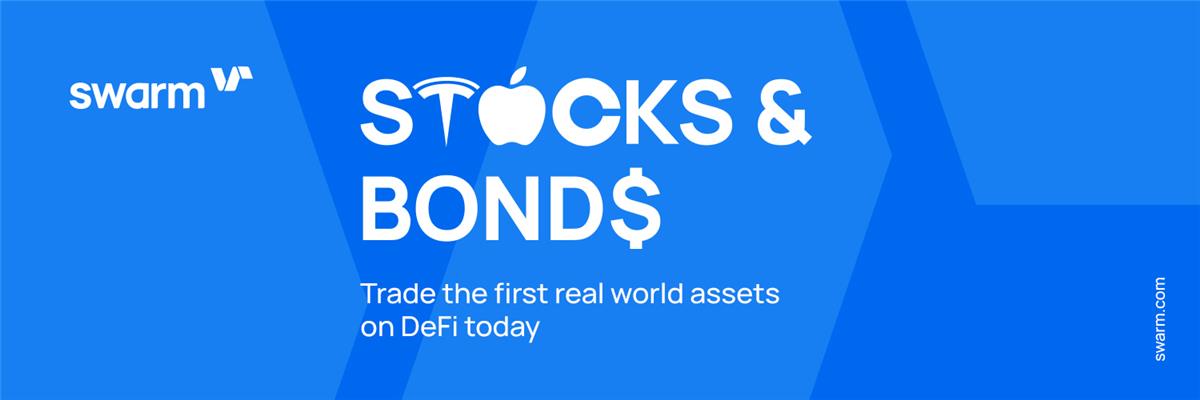
Reasons for attention: Swarm introduces investment products in traditional finance to facilitate global investors to trade at any time. More importantly, the API and smart contract solutions it provides will also facilitate the adoption of RWA assets.
LandX
LandX introduces agricultural financing into a broader decentralized encryption market. Investors in the global field can use LandX to invest in agriculture in other regions. These financing will be used to improve the productivity of farmers in the agricultural field. Through financing, farmers can work and irrigate more efficiently, thereby increasing the yield of agricultural products per unit of land and improving soil structure. Funds raised through LandX will be used for education, agricultural monitoring technology, and sustainable farming tools and equipment. And investors will also reap the rewards brought about by agricultural development-just like Buffett and Bill Gates invested in farmland.
Reasons for attention: LandX solves the problem of difficult financing for farmers. By introducing a new form of encrypted financing, farmers can conduct rapid financing and docking, thereby promoting the sustainable development of agriculture.
Enjin
Enjin is a blockchain protocol focused on building an NFT ecosystem. It supports individuals, businesses and developers to create, trade, distribute and integrate NFTs into the virtual world. We can think of Enjin as a comprehensive product suite that NFTizes other assets. Initially, Enjin was widely used in blockchain games. With development, Enjin will integrate more assets and turn them into NFTs.
Reason for attention: Most RWA assets are built on NFT. Enjin provides Web2 with a comprehensive product suite for NFTizing other assets, which will open up the exposure of Web2 assets to NFT.
Flux Finance
Flux Finance brings broader access to U.S. Treasury assets to the crypto world. Stakeholders can lend Stablecoin by staking OUSG, an asset that tokenizes U.S. treasury bonds through Ondo Finance, while lenders can obtain interest income and Liquidity certificates, such as fUSDC, by providing USDC and DAI. Through the integration of Flux Finance and more DeFi protocols, fToken will be applied in a wider DeFi world. This means that Flux Finance provides both borrowers and lenders with higher capital efficiency - the borrower can borrow cash flow on the basis of US Treasury tokens, and the lender can also obtain higher returns through fToken.
Reasons to pay attention: Flux Finance has introduced U.S. Treasury bond assets into the Web3 world, further enhancing capital efficiency and injecting new Liquidity into the DeFi world.
Blocksquare
Blocksquare is a real estate tokenization solution built on Ethereum and IPFS. All types of businesses - from startups to large corporations - can use Blocksquare's API solutions to digitize and fragment all their real estate and provide transaction services. The real estate owned by the enterprise will be partially or fully divided into 100,000 tokens for investors to invest in, ultimately reducing the investment threshold for real estate.
Reasons to pay attention: Blocksquare introduced real estate into the Web3 world. In order to solve the problem of real estate investment threshold, it also digitized and fragmented real estate and provided transaction services.
Chromia
Chromia is a platform that combines blockchain and data sharing libraries, allowing people to build decentralized applications based on the real world. In addition to its application in the field of DeFi and gaming, its adoption in the RWA track is LAC PropertyChain. LAC PropertyChain is a land management initiative established in Latin America and the Caribbean, sponsored by the Inter-American Development Bank. It is powered by the Chromia blockchain to facilitate transparent, simple and secure transactions of land assets.
Reasons to watch: We can see Chromia gaining a lot of adoption in the Web2 world, and in addition to LAC PropertyChain, Chromia is also supporting Lingon (a platform for issuing and managing digital certificates), CapChap (a legal startup that records shareholder registries and corporate actions) and Relational Blockchain Nebula, an infrastructure service dedicated to promoting the adoption of blockchain technology in Europe, provides blockchain technology support.
at last
The application of RWA assets in the field of encryption has always been considered as the driving force for its further adoption. After all, compared to other industries, the encryption industry is still niche. To achieve substantial development, the industry needs new funds and users to enter, and RWA assets are one of the most important solutions at the moment. However, it should also be noted that, unlike previous on-chain assets, introducing off-chain assets into the chain needs to face issues such as transparency audits, compliance, and supervision. Only when the off-chain world deeply realizes that blockchain technology can bring RWA assets More convenience such as disintermediation, Liquidity, and ownership confirmation can usher in the adoption of larger-scale RWA assets in the encrypted world.