Panoptic Protocol, a permanent, oracle-free, and timely settlement option trading protocol built on the Ethereum blockchain, is the world's first protocol that allows any asset pool in the Uniswap v3 ecosystem to conduct permissionless option trading . Panoptic's mission is to develop a trustless, permissionless, composable options product and overcome the challenging task of building an options trading protocol on the Ethereum blockchain.

options
Option is one of the most used and traded tools in traditional finance. It is an agreement that gives the holder the right (not the obligation) to buy or sell an asset at a specific price at a certain time in the future.
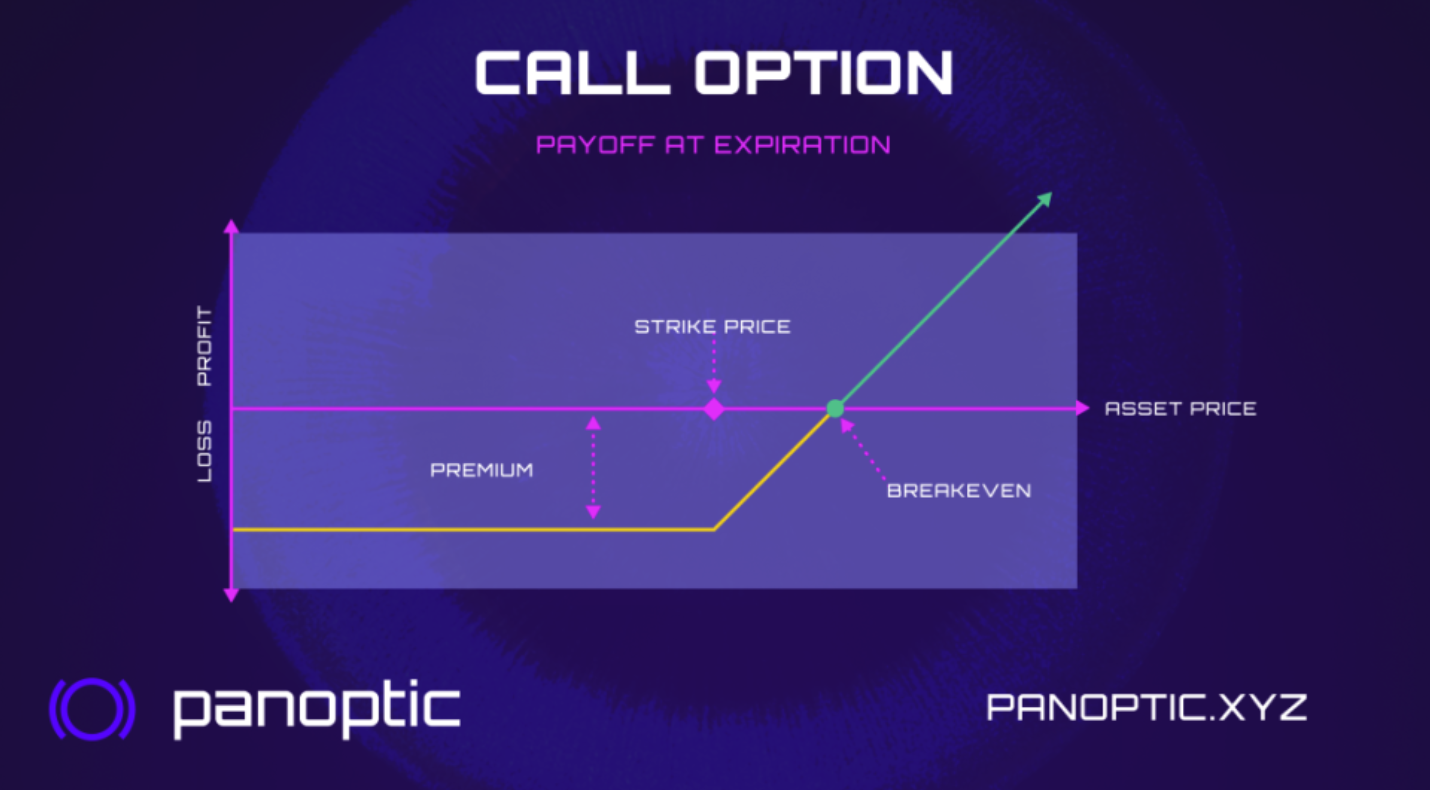
Options can be used to hedge portfolios and forecast asset values, and to build synthetic positions in a capital-efficient manner. In the traditional financial field, options are widely used for hedging and speculation, while in the cryptocurrency field, options can be used to protect the default risk of lending agreements, DAO financial risk management, etc. In summary, options are a versatile tool that provides traders with the ability to manage risk and generate profits.
- By buying or selling options, traders can speculate on the price movement of securities in a capital-efficient manner. This is done by taking a long or AirDrop position, so the trader does not have to own the underlying asset.
- Options can also be used to manage portfolio risk by hedging against potential losses in other investments.
- Options can generate income by writing options contracts.
The decentralized options market allows users to trade options contracts without the need for a centralized institution. The development of this market can be traced back to 2017, when DApps on Ethereum first became popular. As of now, the development of the decentralized options market is still in its infancy, but it has become an area of great interest, playing an integral role in providing users with diversified ways to earn.
At present, some major decentralized exchanges, such as Uniswap and Balancer, have begun to support options trading. Compared with the centralized option market, the decentralized option market has the advantages of decentralization, transparency, and security. However, the decentralized options market also faces challenges such as low Liquidity, poor user experience, and loopholes in smart contracts.
Panoptic-related agreements
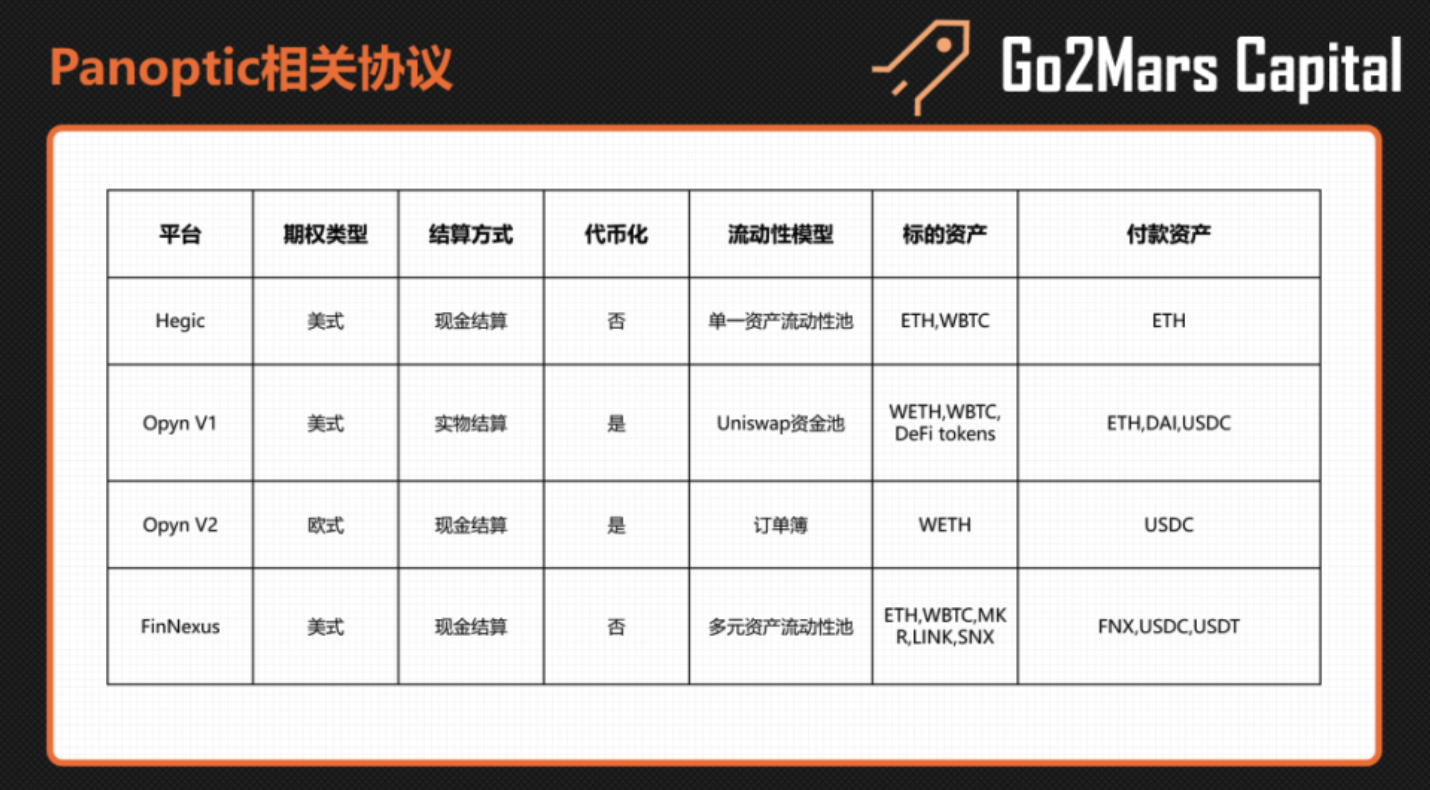
Hegic
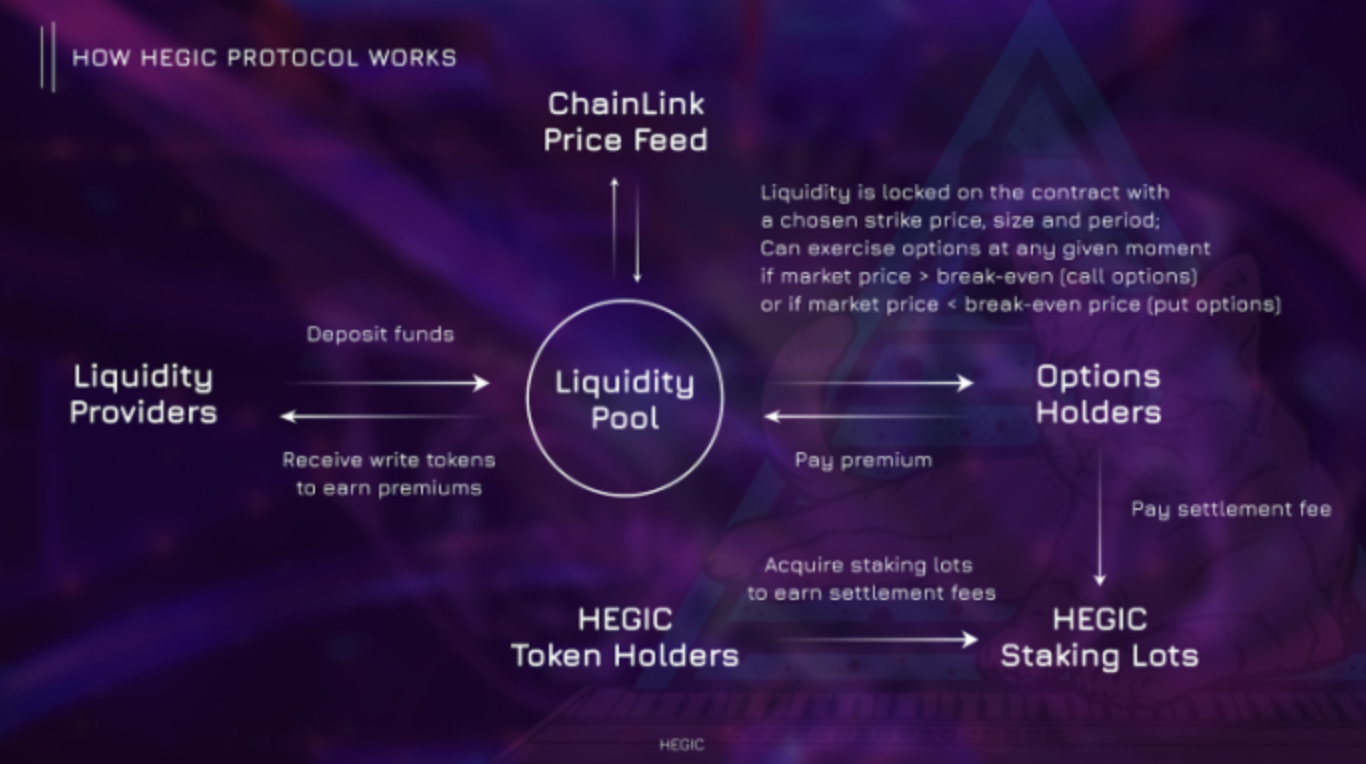
Hegic is an on-chain option trading protocol on Ethereum that provides American options for ETH and WBTC, and ETH and WBTC fund pools provide guarantees for Bullish options and Bearish options. The native token of the protocol is HEGIC, and Hegic does not require users to buy and sell Bearish and Bullish on the platform.
Incentives
- Liquidity Provider will receive Yield Farming rewards (80% of the total rewards or 963,847,200 HEGIC) within 2 years during the process of providing Liquidity to the pool. Rewards will be distributed in proportion to the total Liquidity in the pool.
- Option holders will receive a utilization rate reward (20% of the total reward or 240,961,800 HEGIC) during the two-year period of holding the option and using Hegic. Rewards are distributed in proportion to the total value and duration of options purchased.
- Hegic staking will also distribute rewards indirectly. LP rewards obtained from IBC contributions will be distributed to lockers.
advantage
- Easy-to-use user interface.
- Simplified pricing model.
- An exercise-only option (ITM).
- HEGIC can be obtained by establishing option contracts.
- Providing Liquidity to option buyers earns HEGIC.
shortcoming
- If your option is not in the yield state (OTM), the user will not be able to exercise the option due to the negative value of the option.
- The maximum duration of the contract is 28 days, and time decay accelerates at this time.
- There is no option chain pricing view.
- Multi-stage strategies are not supported.
opyn
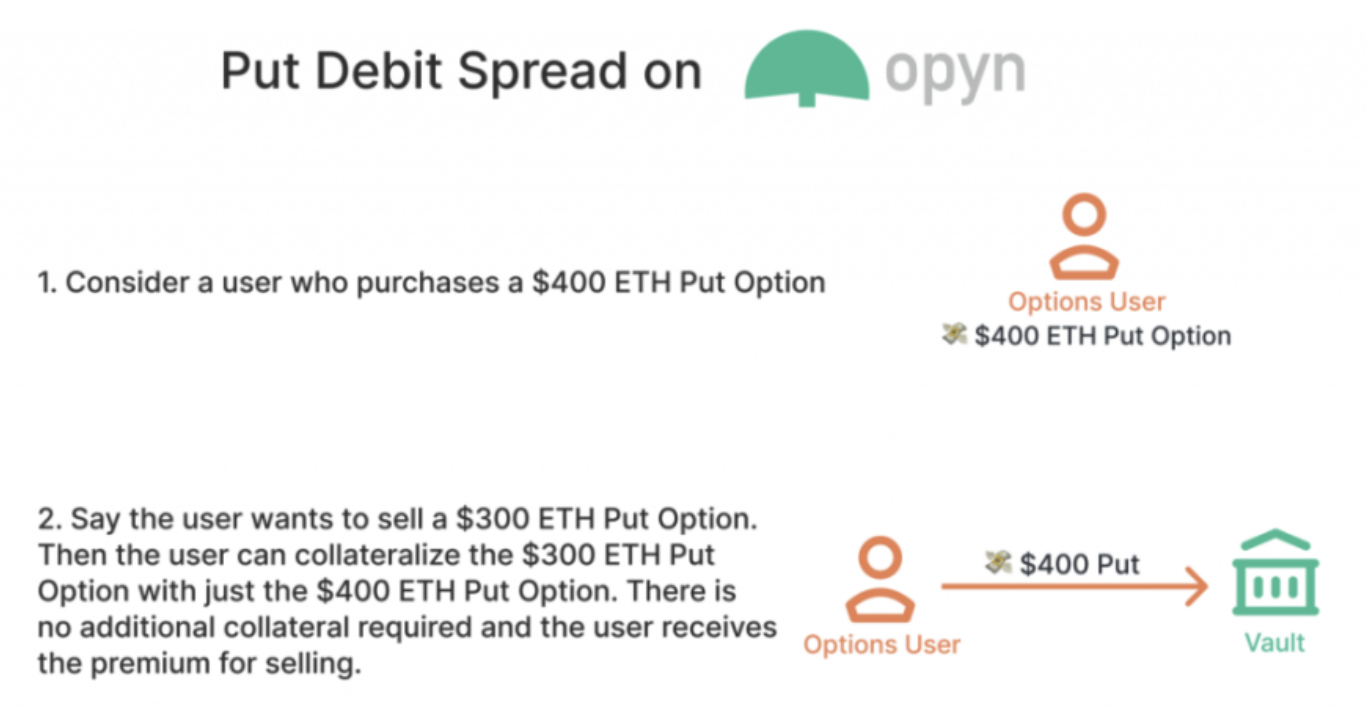
Opyn is a decentralized options platform for hedging risk or earning a premium by trading DeFi options on ETH and ERC-20 tokens via feeds from Compound and Chainlink. Unlike Hegic, which obtains Liquidity through its peer-to-pool model, Opyn relies on the Liquidity of AMM on Uniswap. Opyn options, called oTokens, are ERC-20 compatible and can be traded on any DEX. The name and symbol of an oToken are determined by the underlying, strike price, collateral, and expiration date.
The first version (V1) of the agreement provides users with the function of buying and selling American options, which can be exercised at any time before the delivery date. Users sell options by locking the underlying asset as collateral and creating tokenized options in the form of oTokens. On December 29, 2020, Opyn launched version 2 (V2), which added features such as automatic execution and fast minting, which is an innovation to the fast loan concept popularized by the lending platform AAVE . This version provides European options through the order system, and provides users with a decentralized alternative to Deribit (currently the most popular centralized options platform).
Incentives
- Earn yield and governance tokens with collateral like AAVE ’s aToken and Compound’s cToken.
- Lower margin requirements resulting from greater capital efficiency due to the use of option spreads to reduce collateral requirements.
advantage
- Traditional option chain view (UI).
- Ability to build multi-stage strategies.
- European-style, cash-settled options are automatically exercised at expiration.
- The intrinsic value of the option will be paid by the Collateral asset of the option series (for example, the Bearish option is USDC, and the Bullish option is the underlying asset).
shortcoming
- Options cannot be exercised before expiration.
- The only tradable instrument is WETH-USDC.
- Restricted strike price and expiration date.
- The gas price for buy and sell transactions cannot be changed on the Opyn UI.
Fin Nexus
FinNexus is a decentralized Cross-chain DeFi protocol that provides options products for Ethereum and Wanchain users. With FinNexus, minted option tokens can be sold directly to capture premiums. The protocol's native token, FNX, is "the network token for the entire FinNexus protocol stack." Pooled Liquidity, like its competitor Hegic, has an advantage in that it automatically accumulates Liquidity from all market participants simultaneously. Anyone can become an option writer as long as enough collateral is deposited into the contract.
advantage
- Long-term option options for various underlying assets.
- Option payments use USDT, USDC and FNX.
- Option writers (i.e. short sellers) have reduced risk due to Multi-Asset Single Pools ('MASP').
- Options contracts are created by depositing sufficient collateral into the contract to generate FPO tokens.
- Through the USDC pool, options are traded and settled in Stablecoin. This is closer to the trading habits of options traders, and it is easier to differ from
- Pursue revenue-generating strategic partnerships whose financial performance is typically measured in U.S. dollars.
- The basic call and put options introduced in V1 form the basis for many other option strategies such as straddles and straddles.
shortcoming
- MASP is the sole counterparty to writing, exercising and trading options contracts. To minimize option concentration risk, option pools should consist of many options.
- Income options (ITMs) must be exercised to receive a gain.
- FinNexus option tokens will be tradable anytime until 5 hours before expiration, after which trading will cease.
- Options that expire beyond 30 days are not offered.
- In order to ensure that all option contracts are fully collateralized, there is a minimum collateralization ratio (MCR) in the agreement, and when the fund pool is full, all withdrawals will be suspended.
How Panoptic Options Differ from Traditional Options
As a novel and promising protocol, Panotic Protocol tries to overcome the shortcomings of existing protocols and provide a more flexible and efficient decentralized options trading platform. Instead of using a clearing house to settle options contracts, the Panoptic protocol uses Liquidity Provider positions in Uniswap v3 as the basic building block for trading long and short options.
Panoptic allows users to access new and improved features in options trading:
- Panoptic options never expire and are perpetual.
- Anyone can deploy an options market on any asset in a permissionless manner.
- Panoptic enables anyone to act as a Liquidity Provider to lend their funds to options traders.
- Options have unique properties such as breadth, new concept of monetary meaning, user-defined units of measurement, etc.
- Pricing is path-dependent and does not involve counterparties (such as market makers).
- The premium on open interest is not affected by volatility expansion.
- Lower collateral requirements and purchasing power respond to market activity.
- Purchasing power requirements do not change over time.
- Commissions are paid only once when a position is opened.
- Bad accounts will be liquidated by external users.
- External users can enforce multiple top positions far beyond the actual price.
Design of the Panoptic Protocol
Core idea
perpetual option
Perpetual options (also known as XPOs) are a type of financial Derivatives that give investors the right (but not the obligation) to buy or sell an asset at a specified price at any time. This is in contrast to traditional options, which have a predetermined contract expiration date. Perpetual options give investors the flexibility to exercise their options at any time. Intuitively, a perpetual is a (traditional) options contract with a very short expiration date that rolls continuously until it expires. Perpetual options are uncommon on traditional financial exchanges. However, they can be traded over the counter.
How it works: Driven by a liquidity premium, whereby buyers of options pay no fees upfront to open positions, but pay fees on a block-by-block basis to keep their positions open. This is the model used by Panoptic. Liquid premium-driven perpetual options (Panoptions) do not require a price oracle.
Advantage:
- Flexibility: Perpetual options offer investors the flexibility to exercise options at any time, allowing them to take advantage of market volatility and manage risk more effectively.
- Portfolio diversification: Adding perpetual options to a portfolio can help improve diversification and potentially enhance returns.
- Leverage: Perpetual options allow investors to take a position in an underlying asset with relatively little upfront capital, offering them the potential for higher returns.
- Reduced counterparty risk: Perpetual options are traded on decentralized exchanges, and they are less susceptible to counterparty risk than traditional options traded on centralized exchanges.
No oracle required
A key difference between conventional option pricing in traditional finance and panoptic is how the premium is calculated. The pricing of panoptic options does not require the user to pay the option fee in advance, but depends on the path dependence, and gradually increases in each block according to the closeness of the spot price to the option exercise price. While this may create additional uncertainty for the option buyer, one advantage of the path-dependent pricing model is that certain options may not pay anything even if held for a few days.
Instant settlement
Panoptic Protocol adopts the instant settlement method, that is, the settlement of option transactions is carried out immediately after the transaction is completed, making option transactions more efficient and convenient.
Uniswap v3 integration
What is the relationship between Panoptic and Uniswap v3?
The core idea of Perpetual Options is that Uniswap v3 Liquidity Provider positions can be regarded as tokenized short-term Bearish options. This core result emerges from the simple observation that providing centralized Liquidity in Uniswap v3 yields the same returns as Bearish puts.
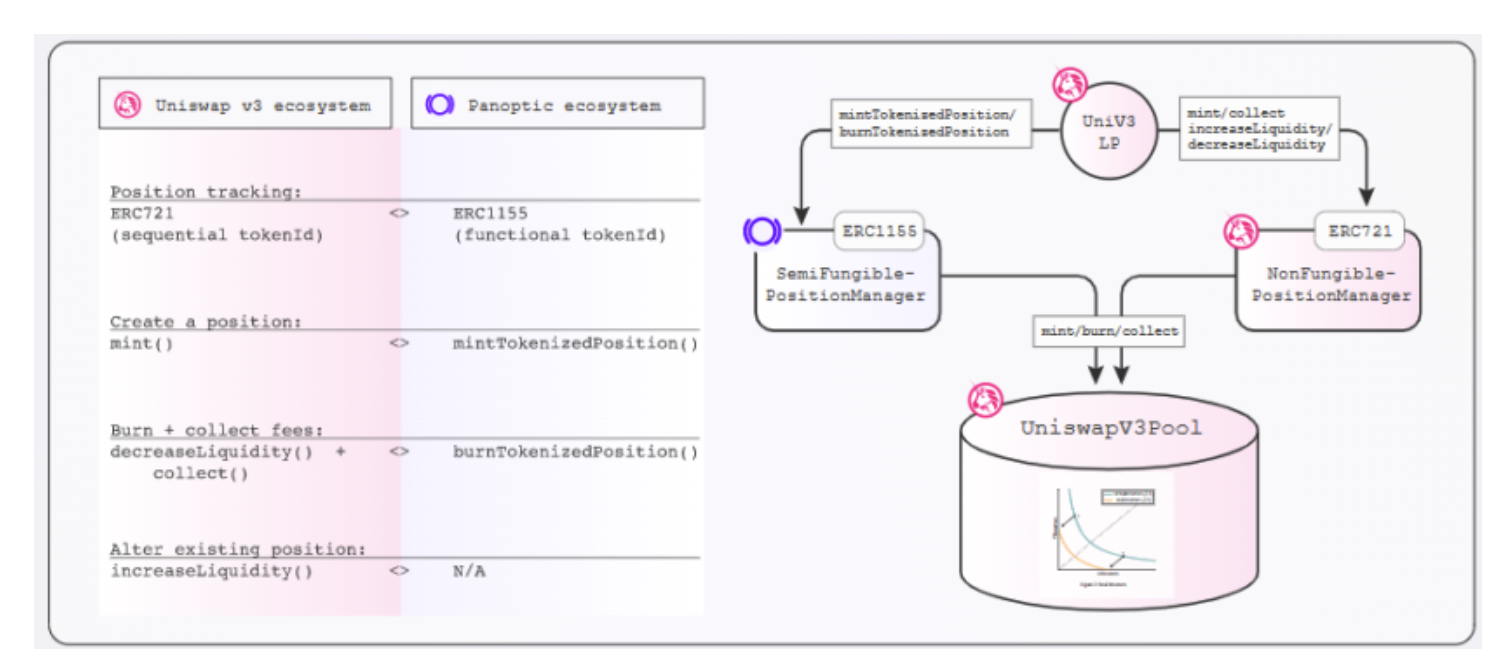
This means that Uniswap v3 LP tokens can be used as the basic building blocks of options contracts. While users can already sell options by providing Liquidity in a smart contract in a Uniswap v3 pool, Panoptic is capital efficient by facilitating the minting of LP tokens as long/short Bearish and Bullish option casting.
The main participants
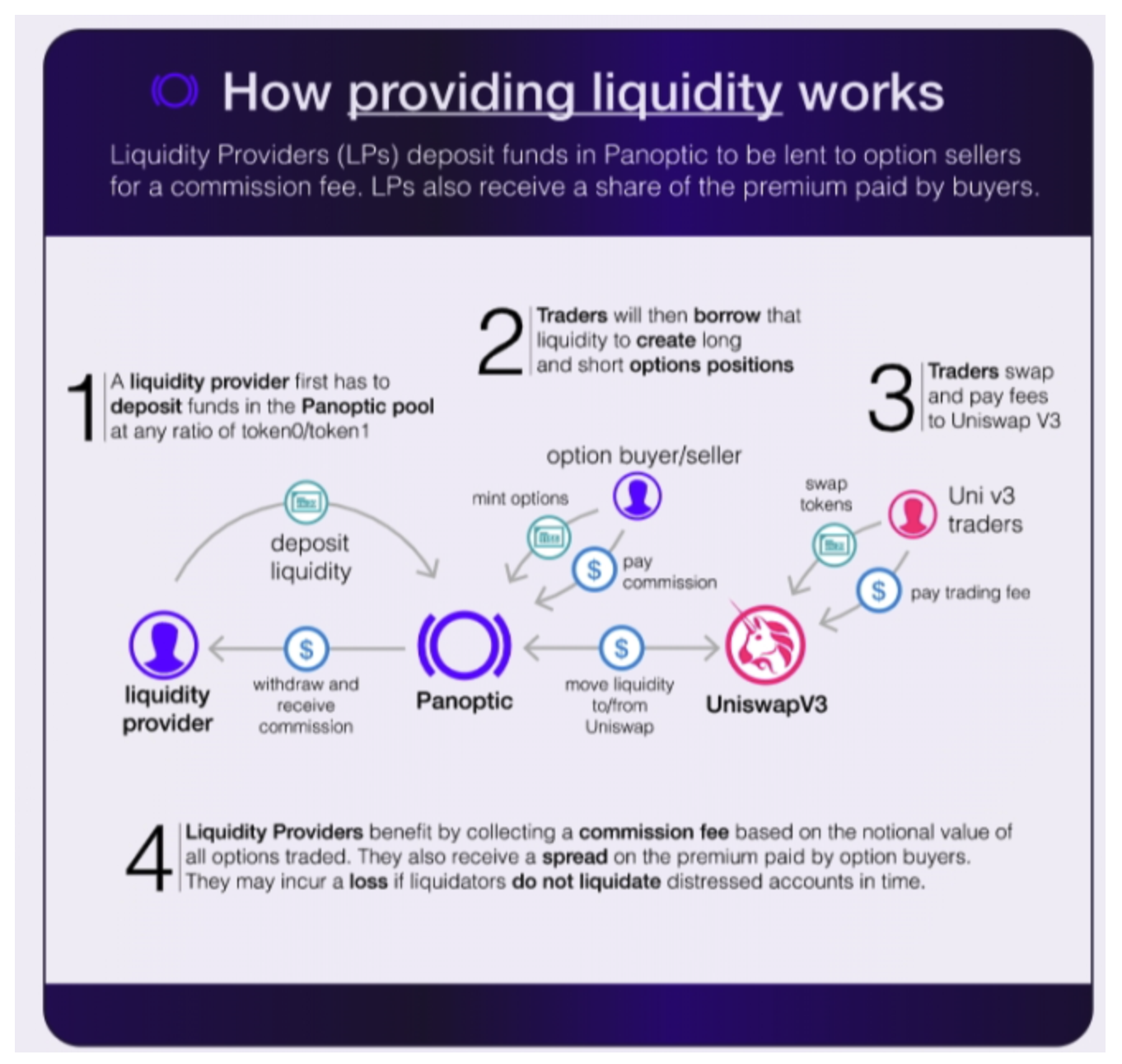
Panotic Liquidity Provider(PLP): Provides alternative Liquidity for the options market. This Liquidity will be loaned out to options traders, allowing them to trade with leverage. Funds can be deposited into the Panorama Pool in any proportion.
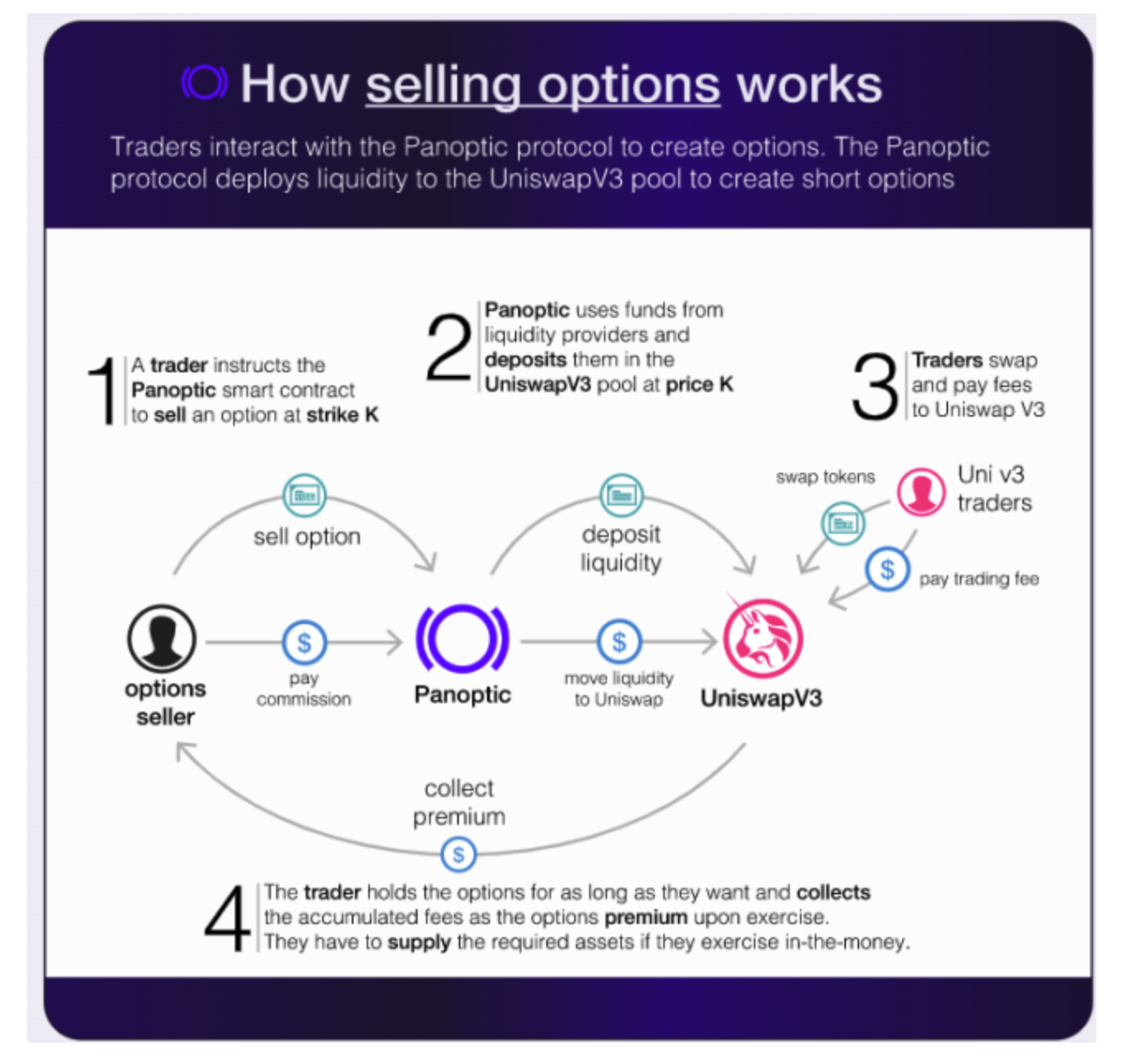
Option seller: Sell options by borrowing Liquidity at a fixed commission and relocating it to a Uniswap v3 pool. Sellers must deposit collateral and can sell options with a notional value of up to five times their collateral balance.
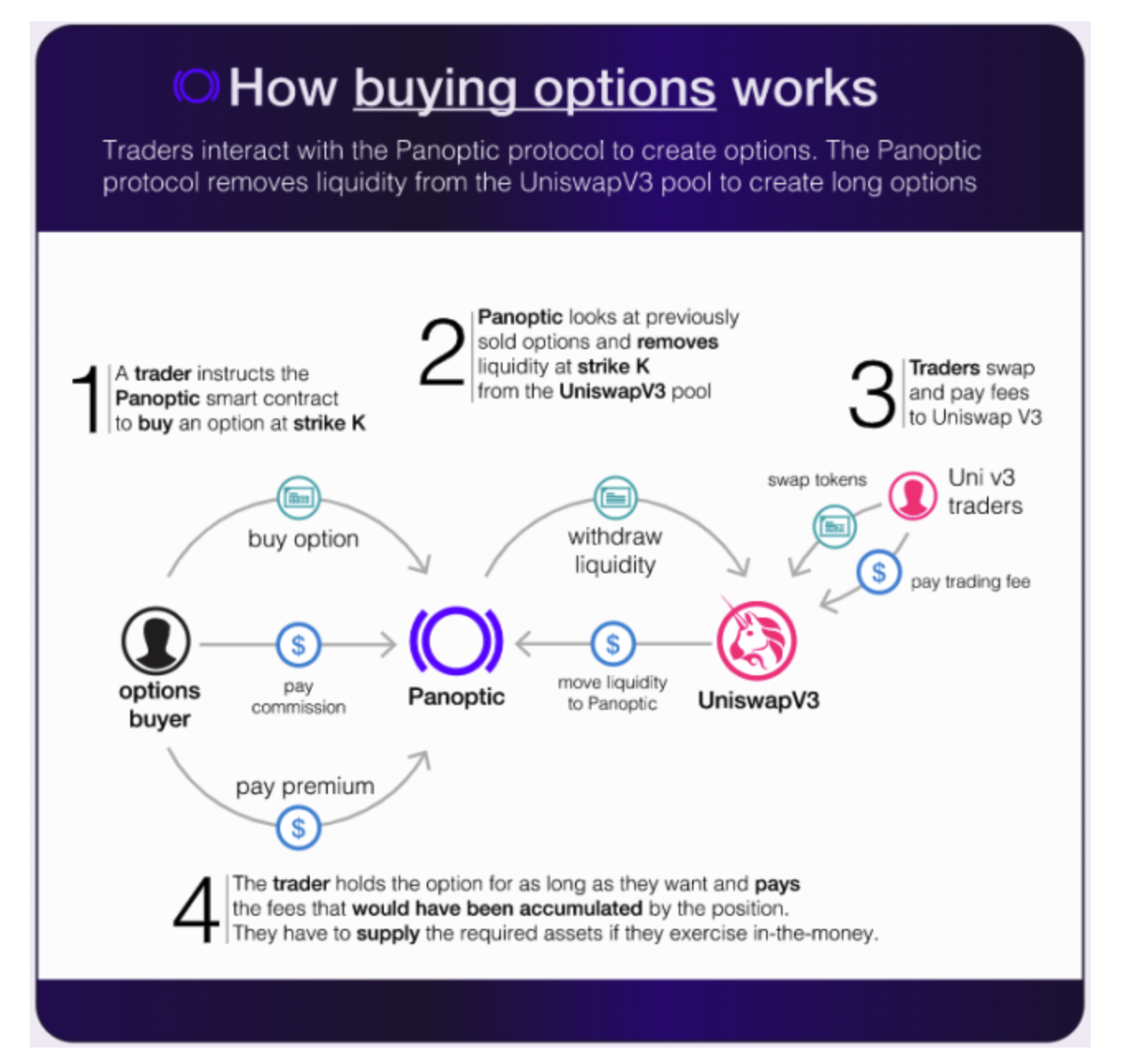
Option buyers: Buy options by paying a fixed commission fee by moving Liquidity from the Uniswap v3 pool back to the Panoptic smart contract. The buyer must also deposit collateral (10% of the notional value of the option) to cover premiums that may be paid to the seller.
Liquidators: Ensure the health of the protocol by liquidating accounts with collateral balances below margin requirements. The liquidator will receive a bonus proportional to the amount of funds required to pay off the bad position.
Option attributes
- Strike Price: The strike price of an option is determined when the option is purchased, and it is the price at which the option holder will buy or sell the asset in the future. The higher the strike price, the higher the value of the option, but also the higher the risk.
- Exercise Ratio: The exercise ratio is the percentage at which the option holder buys or sells the asset when the option is exercised.
- Leverage: Leverage is the ratio between the capital employed by the option holder and the notional value of the option.
cost model
Margin
In traditional finance, certain types of accounts, such as IRAs or Level 1 trading accounts, require that all options be fully collateralized. Specifically, users in an IRA account can only sell cash-secured calls or covered puts, which means users must collateralize the notional value of the underlying position in cash (for cash-secured calls), or have the underlying Stock (for Bullish calls). Undercollateralization can be handled by reducing the purchasing power requirement of the asset. Level 4 trading accounts at traditional financial firms allow users to sell naked Bearish and calls with 5x less Bullish than level 1 account users. For Portfolio Margin accounts, the collateral requirements can be even smaller, requiring approximately 10-15 times less collateral than Level 1 accounts.
Panoptic uses built-in leverage similar to Level 4 trading accounts to mint undercollateralized options. Collateral requirements follow the guidelines outlined by CBOE and FINRA, which for selling Bearish can be summarized as follows:

Commission rate
Commission Fees: In traditional brokerage firms, a fixed commission is charged when a position is opened and closed. With options, however, no commission is payable if the user lets the option expire. In Panoptic, since options never expire, commissions are only paid when new positions are struck.
The commission value to be paid is the commission rate multiplied by the number of options. Commission rate starts at 60bps when pool utilization is below 10%. When the pool utilization reaches 50%, the commission rate (linear) drops to 20bps. When the pool utilization rate is higher than 50%, the commission rate remains at 20bps. The commission rate is higher at times of low pool utilization to ensure that Panoptic Liquidity Provider receive reasonable returns even when trading activity is low.

Mechanism analysis
technical details
smart contract
Panoptic smart contracts can directly interface with the core contract of Uniswap v3 to establish an options market.

The Panoptic protocol is audited to the highest security standards by leading blockchain security firms.
Performance
- Transaction speed: Panoptic Protocol adopts the instant settlement method, so that the settlement of option transactions is carried out immediately after the transaction is completed, thereby improving the transaction speed.
- Transaction costs: Panoptic Protocol's transaction costs include option premiums and Liquidity Provider fees. The premium of the option is paid by the option holder, while the handling fee of the Liquidity Provider is shared by both parties to the transaction. Compared with traditional option trading agreements, Panoptic Protocol has lower transaction costs.
- Transaction size: The transaction size of Panoptic Protocol depends on the position of Uniswap v3's Liquidity Provider(LP). Since Uniswap v3 Liquidity Provider can provide larger positions, the transaction size of Panoptic Protocol is relatively large.
Limitations and Risks
Although Panoptic Protocol has the advantages of permanence, no need for oracle machines, instant settlement, and Uniswap v3 integration, it still has certain limitations and risks. Although its price comes from the price updated after each transaction in Uniswap, it is immune to the risk of price manipulation by oracle machines, but the behavior of LPs in the pool can also attack the agreement price.
Roadmap
At present, the Panoptic protocol is still in its early stages. According to the official website Roadmap, the protocol will launch the Mainnet in September this year. Currently, the project team is using OpenZeppelin for security audits.

Summary
Panoptic solves the problem of insufficient Liquidity of on-chain options by building on the Uniswap V3 ecosystem, and optimizes transaction speed and transaction costs. Panoptic allows users to open long and short Bearish or Bullish options for any Uniswap v3 trading pair that exists. In addition to buyers and sellers, Panoptic has introduced a new role of "Liquidity Provider". Options buyers and sellers must redistribute Liquidity in the Uniswap pool to generate new options. Panoptic uses commissions to motivate users to provide Liquidity to greatly improve its capital efficiency.
Generally speaking, Panoptic Protocol is an efficient, low-cost, and highly Liquidity option trading protocol with great potential and advantages. Panoptic provides reference and inspiration for other decentralized financial protocols, promotes the development and growth of the entire decentralized financial market and creates a level financial competition environment.