


In the blink of an eye, more than half a year has passed. The market has gradually entered a deep bearish state, gas has dropped to 7, and even the most active hair-raising party on the chain has been reduced a lot.
The colder the market, the more you need to remind yourself not to slack off, and never say "I knew it earlier" when it comes to the next airdrop.
I have sorted out some projects that I have been tracking over the past six months and analyzed them from two aspects: technology development and airdrop strategy. Due to my limited personal energy, I am unable to write down all the projects thoroughly. I hope to share my experience with everyone.
The currently organized projects cover L2 public chain, modular public chain, infrastructure, cross-chain, zk track, social track, and Binance track. Almost every track will make a big profit.
However, time is limited, and there are still many outstanding projects such as Ceremic and Caldera that have not been completed. I will continue to update this article after completing the work at hand. If you are willing to provide me with some motivation, you can mint the nft of this article on Linea. , eat two fish for one.
1. Popular public chains
zkSync
Technology progress :
zkSync is transitioning from era to Boojum. Boojum is based on the stark proof system, with higher tps and faster sequencer. The upgraded zkSync can also implement a zk stack similar to op stack, providing zkL2 services to a large number of users.
At the same time, from the release of the first NFT airdrop to the recent disclosure of the first NFT market called blockframe built by its own sub-team, zkSync has recently been committed to building an NFT market on its own chain. Unlike the traditional NFT market, blockframe will support the function of private transaction NFT based on zk features.
From a conceptual point of view, zkSync is the closest to the zk rollup in native Ethereum development. Its credo declaration is placed directly on the Ethereum main network without any sense of violation. As for the answer to why it is nicknamed zkRug, I don’t want to give too much. Intervene in ecological development and allow projects to grow freely and wildly.
Airdrop :
Lulling one's hair has become a prominent science of web3, and zkSync is even more prominent among the prominent sciences. Currently zkSync has 4 million addresses, far more than the wallets at the time of the arbitrum airdrop. Although no one is sure what the airdrop rules are, based on the remarks of the founder and related personnel, zkSync’s airdrop will definitely be different from op and arb, and the screening rules will be more intelligent and more beneficial to real users. Creating valuable tx will make your wallet significantly different from the witch wallet.
Also note that you must save your bullets . After upgrading to boojum, zkSync will also update more powerful functions such as gas payment, on-chain privacy, off-chain computing, etc. Making full use of those functions may be the key to victory in the end .

Linea
Technology development :
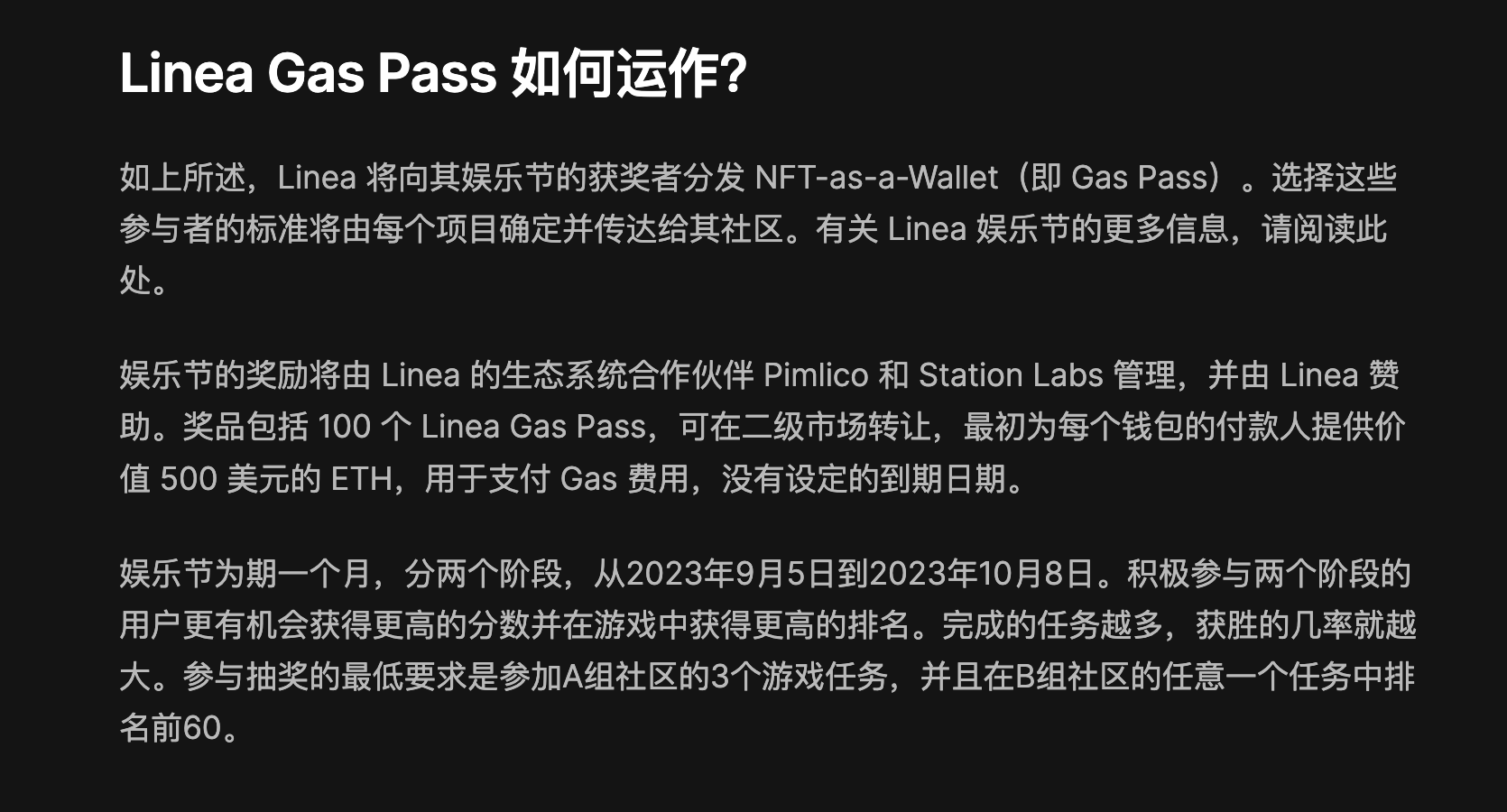
Different from other L2s, Linea exuded a special temperament at the beginning: not only did he have a strong background in Consensys and the support of many projects, but compared to other L2s, he paid more attention to the ecology and had more of an Ethereum OG flavor—— Not only focusing on the infrastructure construction of Ethereum, but also focusing on theoretical implementation, such as promoting the implementation of erc6551, carrying out Linea Gas Pass activities, promoting Cancun upgrades, etc.
Airdrop :
Linea's temperament is so unique that his airdrops may also rewrite the L2 airdrop model. Yes, it's just a rewrite, it shouldn't be an innovation.
It may be a shortcut to pay more attention to Linea's various activities.
Starknet
Technology development :
Starknet is a non-evm compatible L2 using the cairo language. The stark positive mechanism used is widely recognized as the most efficient and most difficult to develop.
For Starknet, there are several key points in development: 1. Cairo language upgrade v2 2. Complete the sorter and prover in the zone center 3. And the decentralized validator 4. Expansion 5. Account abstraction
The technology used by starknet is undoubtedly strong, and there is no doubt about the team background. However, because the steps have been too big, the current performance is only slightly better than the mainnet, and the stability is not as good as the mainnet.
Coin issuance :
It is rumored that the token will be unlocked in November, and it is also true that the institution will unlock it in November. The only unknown thing is whether Starknet is really ready to officially issue the token in November given its current status. If the time is not ripe, the project side is fully capable of delaying the issuance of coins.
I mentioned on Twitter before that the real factors that determine the issuance of coins are: 1. The stability and maturity of the chain 2. Ecological maturity 3. The patience of investors/institutions 4. Regulatory pressure
Currently starknet only accounts for 3. As for the delay in the plans in the roadmap circulating on the Internet, it actually has little to do with whether the currency is issued. Reducing fees and fee markets does not have to be done using strk as a token.
In general, speculating on the timing of coin issuance is meaningless for Starknet. What we can do now is to complete our operations before the November node; if the currency is not issued in November, we need to be prepared for a protracted war.

2. Cross-chain
LayerZero
Technology progress :
The difficulty L0 currently encounters is that it is surrounded by ambush from all sides.
There is direct competition from Chainlink's Ccip, and there are other cross-chain new technologies launching ZK and cross-chain, and they are also involved in lawsuits. The technology itself is not even advanced, and it is only after the recent integration of Polydedra that it can be considered as catching up. One step ahead of our friends and businessmen.
Airdrop :
I don’t think the recent lawsuit against L0 by FTX has much to do with the issuance of currency. For a company of L0’s size, they should have channels to know that they will be sued and be prepared in advance. If L0 has a plan to issue coins, then the impact of the lawsuit must have been calculated long ago, and they may even need to harvest a wave of leeks to cover the lawsuit expenses.
However, the time of L0’s currency issuance is still a mystery to everyone. The founder has been releasing news through various channels since returning from travel and is preparing to issue the currency, but the actual currency issuance has not been officially announced.
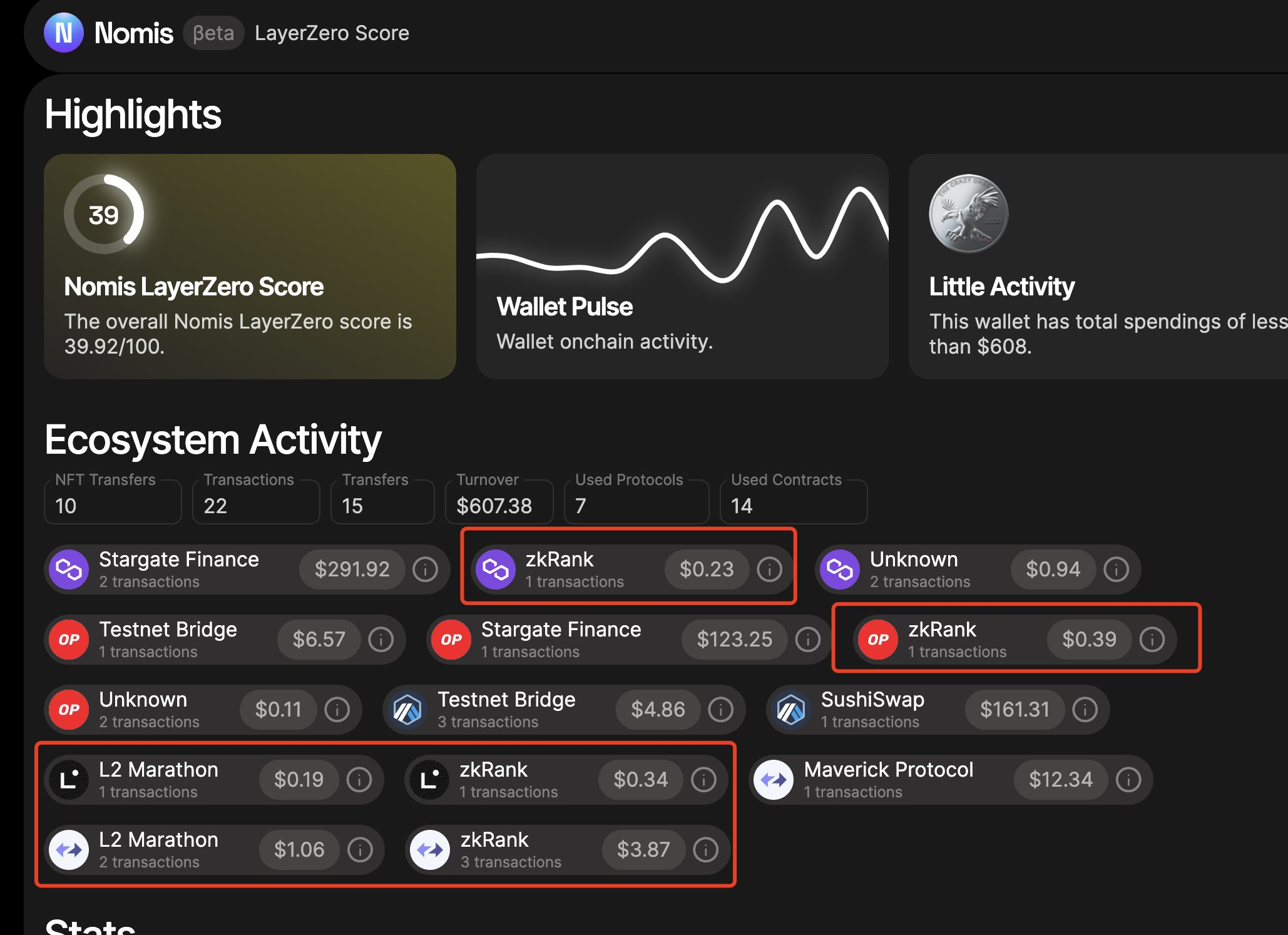
There are currently more and more projects using L0 technology. In addition to the traditional stargate and crocodile, now sushix mav testnetbridge rndr tevaera zkrank l2marathon have been included in the wallet score of nomis. Nomis will definitely not be the standard for airdrops, but it can help users understand the L0 protocol they have used and facilitate subsequent interactions.
Bungee and Li.FI
Bungee and Lifi both belong to Xiaomao, so they were not qualified to be included in this article originally, but since L0 is mentioned, I will mention them by the way.
Bungee itself is just an aggregator. It is not technically difficult, and it has a certain market share. It is possible not to issue coins. However, in order to keep up with the narrative, they are currently developing a data layer for messaging. After the technology is completed, it may be able to compete with L0, so there is still an opportunity to issue coins.
For users, L0 can be used in the bungee anyway, so it is not difficult to eat two things with one fish.
Lifi is one of the few cross-chain bridges that has not yet issued coins. It has recently been connected to zksync, so it can be used occasionally.
3. Modular Blockchain

EigenLayer
Technology progress :
EigenLayer (EL) is a recent superstar project, taking the leading position in both modular and LSD tracks. Its main function is to provide security for various projects by re-staking eth. Based on this feature, EL can provide multiple services such as data availability, decentralized sorter, light node cross-chain, zk cross-chain, oracle machine, etc.

Many star projects such as Mantle, Polyhedra, altlayer, and Espresso will adopt or have adopted EL as an operator.
The key work of EL is carried out around AVS (Active Verification Service). The main task of AVS is to verify the integrity and accuracy of data. In a later upgrade, EL will enable operators to register with EigenLayer and allow heavy staking to be delegated to these operators.
Operators will then be able to interact with EigenLayer and give operators and re-participants the option to validate these service modules.
Airdrop :
EL is developing in an orderly manner according to its roadmap. It will complete the operator's mainnet deployment in Q4 this year, and the entire service will be deployed to the mainnet later next year.
EL technically requires native tokens to fully operate, which means that tokens will definitely be issued in the last stage (probably Q1 next year), but it does not rule out the possibility of tokens being issued in Q4 due to lack of money or other factors.
The number of airdrops should also be determined based on the pledge amount✖️time. It is unclear whether it will be a parabola with more pledges and smaller returns, so you can try multiple numbers and small amounts (above 0.5eth) to pledge.
As for income, EL’s last round of financing was valued at US$500 million. If this amount can be reached when the currency is issued, and if the airdrop tokens account for 50% of the total circulation during the currency issuance, it will be a very considerable and stable income.

Celestia
Technology development :
As a modular blockchain, Celestia (cel) has taken a completely different path from eigenlayer. The goal of cel is to build a scalable data availability layer that verifies the security of data through light nodes on the community. Light nodes do not validate transactions, they only check whether consensus is reached on each block and whether the block data is available to the network.
Currently, cel already has a complete development kit to help users release a modular public chain; at the same time, cel has also cooperated with op stack and dysmension.
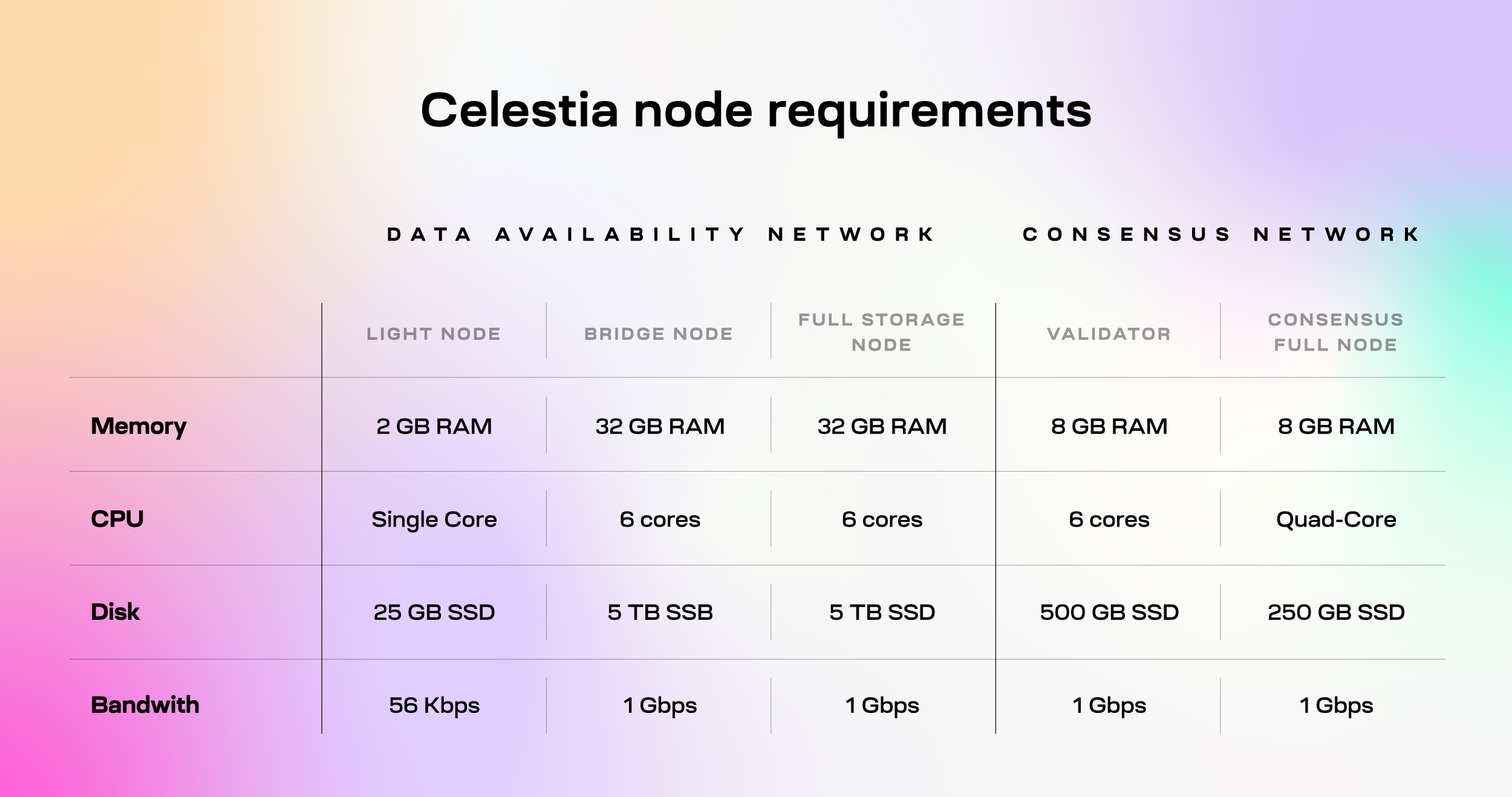
celesitia has just completed their largest Blockspace Odyssey incentivized testnet to date, and the mainnet should be launched within the year.
Airdrop :
The involution of the test network has ended. If the mainnet goes online smoothly, the airdrop should be ushered in soon.
4. Infrastructure
aztec
Technology progress :
After zkmoney was withdrawn, many people were concerned about the progress of aztec. I have been tracking this privacy L2, which has raised more than 100 million yuan. At present, the project is still a long, long time away from the full version.
aztec has designed 10 milestones for itself. Currently, only the first one is close to completion, and the other work is slowly advancing. At least the fee estimation/calculation part must be advanced before it is possible to issue coins. And in the current state, although there are sporadic projects entering the development and deployment of the aztec network, it is still too early for ordinary users to enter the market.

Airdrop :
As the only privacy L2, aztec is still very interesting, but I personally estimate that it will be at least Q1 next year before ordinary users can enter the market. That’s fine, too many L2s are already busy, so the next heavyweight airdrop should come later.
lit protocol
Lit raised 13 million. It is an encryption protocol that has been ignored by many people. It is mainly used to read and write data between blockchains, state machines and off-chain platforms, and has conditional decryption and programming signatures. Sounds abstract, right? So he was ignored...
Generally speaking, LIT provides MPC wallet technology that can store personal privacy information. Any developer can use this technology to create an MPC wallet or support LIT's MPC technology on their own protocol. The use cases are as follows:
DeFi : Conditional trade execution, recurring payments, liquid staking solutions, and more.
Infrastructure : cross-chain bridge, off-chain data oracle, privacy protection transaction and AA wallet signer.
Sovereign Data : Verifiable credential issuance and selective disclosure of user data.
Web3 Social : Private data in social applications, token-gated video streaming, decentralized chatbots, and on-chain reputation building.
Gaming : Wallet abstraction, condition-based rewards and private data in multiplayer games.
**Token Gating for Web2 Applications: **Token-based access control for Shopify, Zoom, Google Drive, and WordPress.

Airdrop :
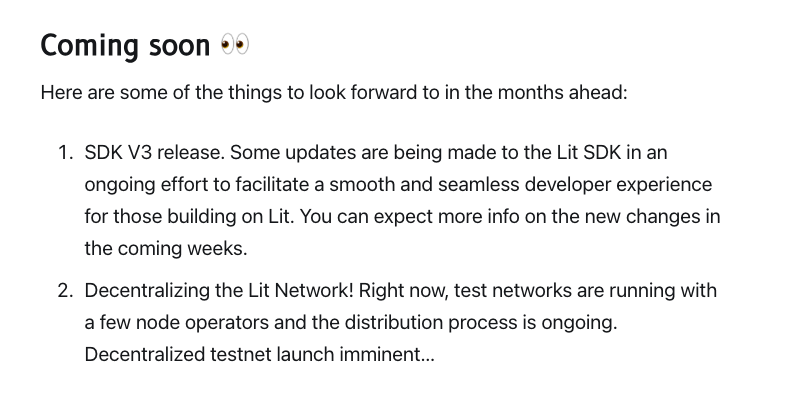
Currently, LIT is preparing to complete the final decentralization work. In addition to participating nodes, LIT seems to have only released one Genesis NFT, which may have some value.
Espresso
Technology progress :
Espresso was originally a privacy network that raised 300 million yuan. It may be due to regulatory issues, or it may be that sequencers are more promising. In short, they have now switched to decentralized sequencers. Although public chains such as op arb zksync will have their own decentralized sequencer solutions, there will be many L2s that require decentralized sequencers in the future, so this direction is definitely not wrong.
Currently, Espresso has launched a decentralized sequencer test network based on op stack and poly zkevm. Aztec's sequencer also considered Espresso before, but in the end I chose to do it myself.
The sequencer is a very complex system that requires nodes to participate in the work and a certain amount of eth pledge, so we have also seen the cooperation between Espresso, eigenlayer, and raas service provider Caldera.

Airdrop :
Projects that build decentralized sequencers will definitely issue coins. The possible ways to participate are to become service area nodes and pledge eth. These are relatively early days. We will take a look at the progress of the project early next year.
5. zk track
Polyhedra
Technology development :
After I introduced this project in detail on Twitter, it was integrated by L0 not long after, which shows that its technology does have certain advantages.
The progress of the project has not changed much, the main thing is to improve their original technology.
https://twitter.com/YourAirdropETH/status/1662667234542764032
Airdrop :
It already has the conditions to issue coins, so the project team probably just wanted to pick a good time. Unless there is any inside information about the specific time, there is no need to guess.
The way to participate in this project is also very simple, just fuck galxe hard.
zklink
Technology progress :
This is a highly customized, small-scale zk rollup for transactions. The project has raised 20 million yuan. It has launched the mainnet and started a five-week galxe event. The project will most likely issue coins shortly after the event ends, that is, before the end of the year. , and it should be that zklink and zkex under the ecology issue coins at the same time.
Airdrop :
zklink’s airdrop focuses on three aspects:
Galxe points, currently the easiest way to get high scores is to brush the transaction amount, but the wear and tear is large.
Generally, exchanges prefer airdrops related to transaction volume, so this part will most likely be linked to zkex.
Weekly blind box, zklink has five tasks in total. After each week's task, users who hold OAT for that week will be given a blind box. The blind box is divided into 5 levels. The higher the level, the higher the airdrop value will be.
The blind box will most likely be linked to zklink. The most expensive blind box currently is about 10u.
Task OAT can be obtained by completing the task. This is probably the least valuable.
In addition to this Odyssey event, the project team will also convert the following old points into new points: Old Loyalty Points, Old Loyalty NFTs, Zealy Points Weekly quizes, OATs Sograph, OAT Dunkirk, OAT on Galxe Dunkirk, OAT on Aki Network Community Calls and AMA OATs
In other words, the old OAT will have a certain value, and it should be more valuable than the new batch, because the value of the new OAT has been diluted by points and blind boxes.
6. Binance Investment
Although Binance does not have strong investment capabilities, as the launchpad and launchpool of the strongest CEX in the universe, it still has a strong money-making effect, so let’s talk about the many projects that Binance invests in and may be listed on.
Dappos
Technology progress :
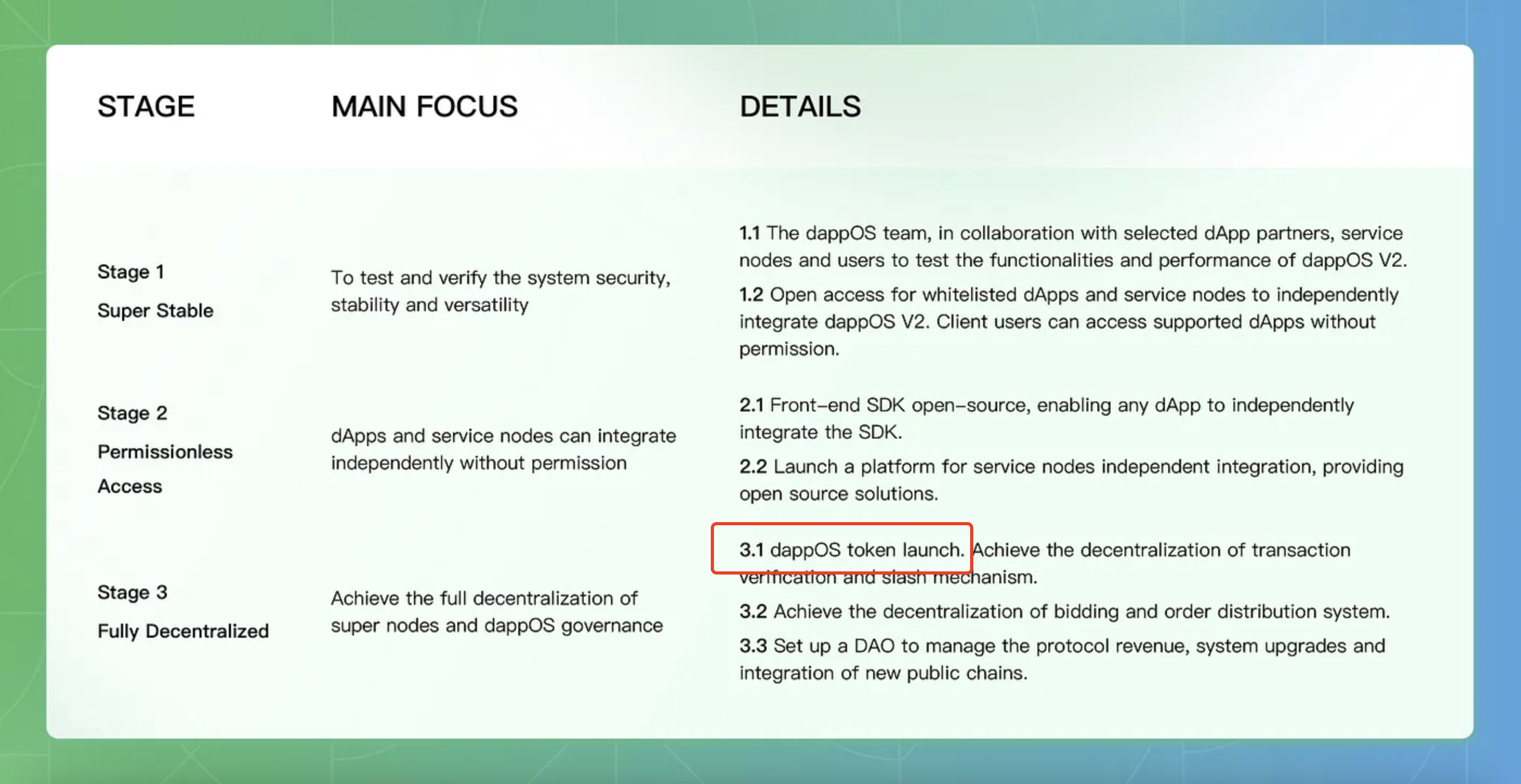
The Dappos team may not necessarily be the one with the strongest technology, but it must be the best at telling stories. The project has gone through two major versions. When it was first launched, the narrative of dappos was to break the pattern of users operating back and forth between multiple chains. Through SDK, virtual wallets and dApps, it not only provides developers with one-click multi-chain Deployment also helps users easily access any dApp. This narrative quickly became outdated. In the newly launched V2 version, dappos updated the idea and became the first operation protocol centered on intent (from the paradigm paper). Users can use a multi-chain unified account to confirm different chains with a single signature. complex and interdependent transactions.
The intention of the project to issue currency is very obvious. There is a high probability that the currency will be issued this year, and it may be directly listed on Binance.
Airdrop :
Currently, v2 only integrates one perp that can be used. There are some minor bugs in gas usage, and the handling fee is also very high. So there are two options for the Mao Mao Party:
The louder the waves, the more expensive the fish. Go ahead and bet on his airdrop in October
When the version is optimized, there may be an Odyssey
Both options have their own pros and cons, and it’s always right to just go for it if you don’t need money.
Helio
Technology progress :
Binance invests in stablecoin projects and decentralized/unstable currency projects. Adjust the value of assets by over-collateralizing them.
Airdrop :
This project is also very simple, just participate in galxe, and the funds required are not high. If you use dappos, you can just put the funds into bsc and eat two things.
7. Social track
Lens
Technology progress :
The build of Lens feels a bit unhurried. The entire project only had some basic functions when it was released last year. Now V2 has powerful functions such as Open Actions, Collective Value Share, 6551 wallet, and the Lego building blocks function of socialfi. It has begun to take shape.
Airdrop :
There are also some problems with the lens. Although there are already many dapps in the lens ecosystem, most of the projects seem to be aimed at grants and financing, with no intention at all.
Therefore, there are indeed some projects that can interact and definitely issue coins, such as phaver, orb, etc., but for projects of the size of lens, none can drive the entire ecological operation. Before the project to build the "Lego" system comes out, The possibility of issuing coins is very small. Personally, I estimate that Lens may need another round of financing before it can issue coins.
Farcaster
Technology progress :
Farcaster is generally very low-key and reserved. It is currently like a small circle of web3 geeks, and vitalik is also very active in it. Since it is still in the closed beta stage, I don’t have any more information and can only wait for the further opening of the project.
For those who have applied for an account, they can participate in projects under the ecosystem.
https://www.farcaster.xyz/apps
Friend Tech
Technology progress :
Friend Tech is so popular, not only does it make money, but it also airdrops PUA.
As for how to use it to make money, there are various methods on the Internet. At present, I have summarized the following:
Priority will be given to new institutions, followed by new super KOLs.
Mutual brushing of trumpets
Looking to buy native kol and hodl on ft
Below is a tool set, which is very useful.
https://twitter.com/justapein/status/1700785270243950624
Finally, I would like to make a bold guess. Friend Tech is currently just an application, but if you want to get to the bottom, will you come up with some new ways to play? For example, the current so-called 33 gameplay is all voluntary by players. If friend tech launches their own ve33 to provide composability for socialfi, it will probably be more interesting.
Airdrop :
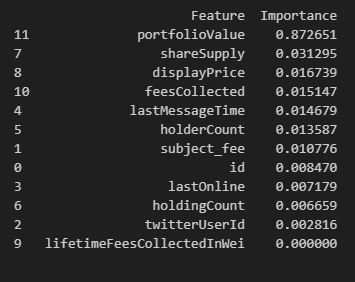
Focus on points. The current points rules are as follows:
Conclusion
Finally, I would like to say a few words that have nothing to do with airdrops.
In the last bull market, we saw the Lego building blocks of defi, with different defi protocols nested into each other, creating huge leverage and wealth.
What will we see in the next bull market? What I see is that different infrastructures of the blockchain are combined and collaborated with each other at a lower level. If one day, we see a suture monster of eigenlayer+espresso+zk stack+lens+friend tech, don’t be surprised. Don't doubt him, be bold and enter more, that's how the bull market comes about.






