On the evening of November 22 , according to reactions from many community members, the cryptocurrency trading platform SafeTrade was suspected of being unable to withdraw cash, and the recharge was not credited. Many people suspect that SafeTrade, which has attracted attention for its mining currency transactions, may not be safe.
Users cannot access accounts, SafeTrade is suspected of running away
It is reported that SafeTrade is a centralized cryptocurrency trading platform established in 2018. According to SafeTrade’s official website, the platform mainly trades PoW mining coins such as SMH and QUBIC, and currently has 53 currencies and 102 trading pairs.
Recently, the concept of mining coins has become increasingly popular, and Safetrade, which has multiple PoW mining coins, has also attracted more and more attention. However, SafeTrade currently has an unsafe problem.
After many doubts in the community, SafeTrade announced on the official Discord that although the platform update took a little longer, it is now close to completion, and the main wallet will soon fully resume services, and more services will be restored one after another. Subsequently, SafeTrade announced on its official Twitter today that it would resume $QUBIC deposit and withdrawal services.
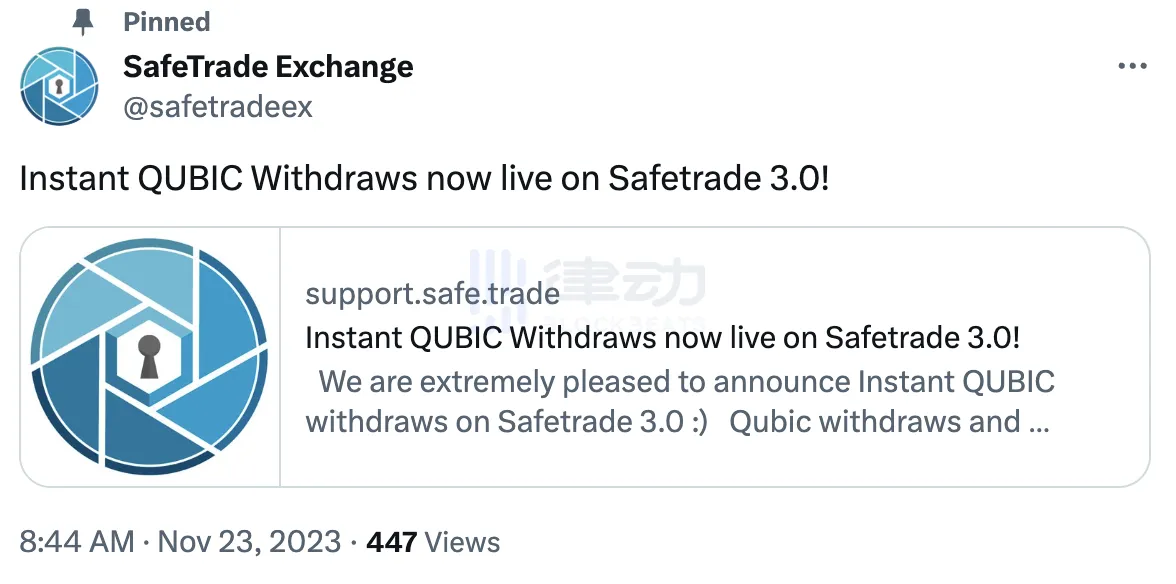
However, in public channels, many users can still be seen saying "cannot access my account." At the same time, there are many voices saying, "When will $SPACE withdrawals take effect? Why haven't deposits and withdrawals of other currencies resumed yet?"
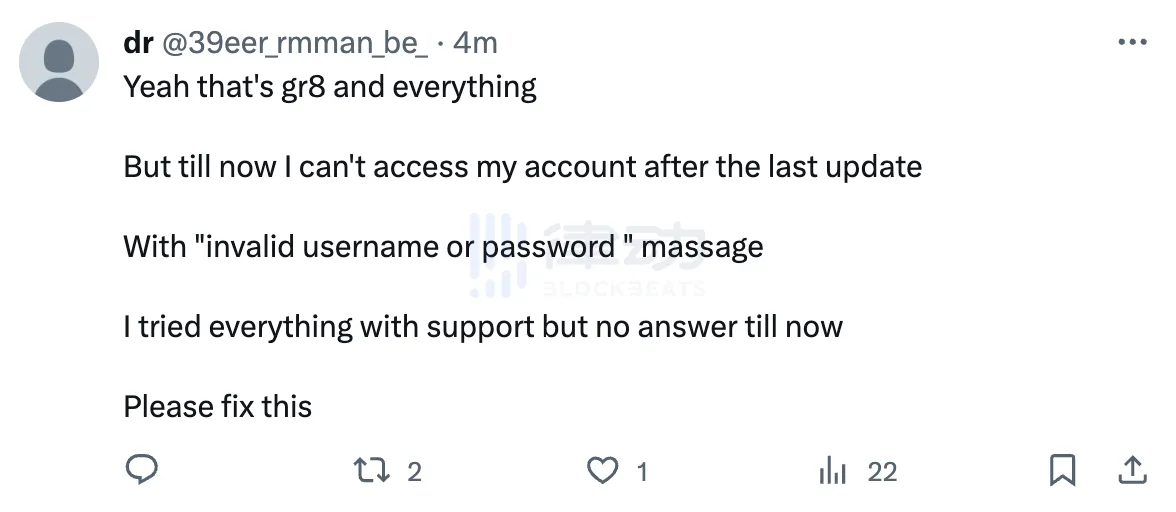
In fact, in this incident, many people questioned SafeTrade as being suspected of running away. On November 22 , according to MistTrack monitoring, SafeTrade Exchange was suspected of rug pull. SlowMist founder Yu Xian said that the affected funds are estimated to be at least US$6.6 million.
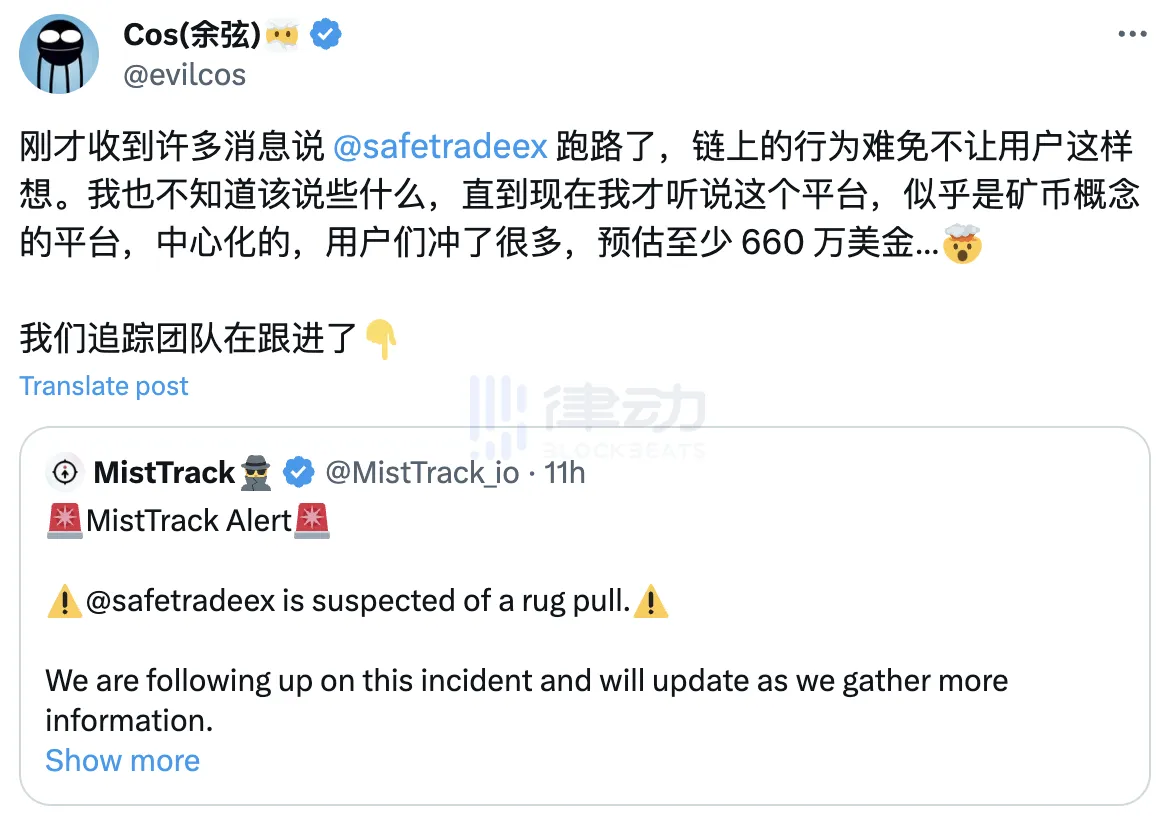
The community opens a rights protection group, SafeTrade had previously closed the trading channel
According to BlockBeats observation, in this SafeTrade incident, the community KOL Ed_x block diary ( @Ed_x0101 ) who continues to follow SafeTrade dynamics and many community members tracked more information about SafeTrade. In the SafeTrade rights protection group, many community members provided SafeTrade related information including transaction records, address tracking, etc.
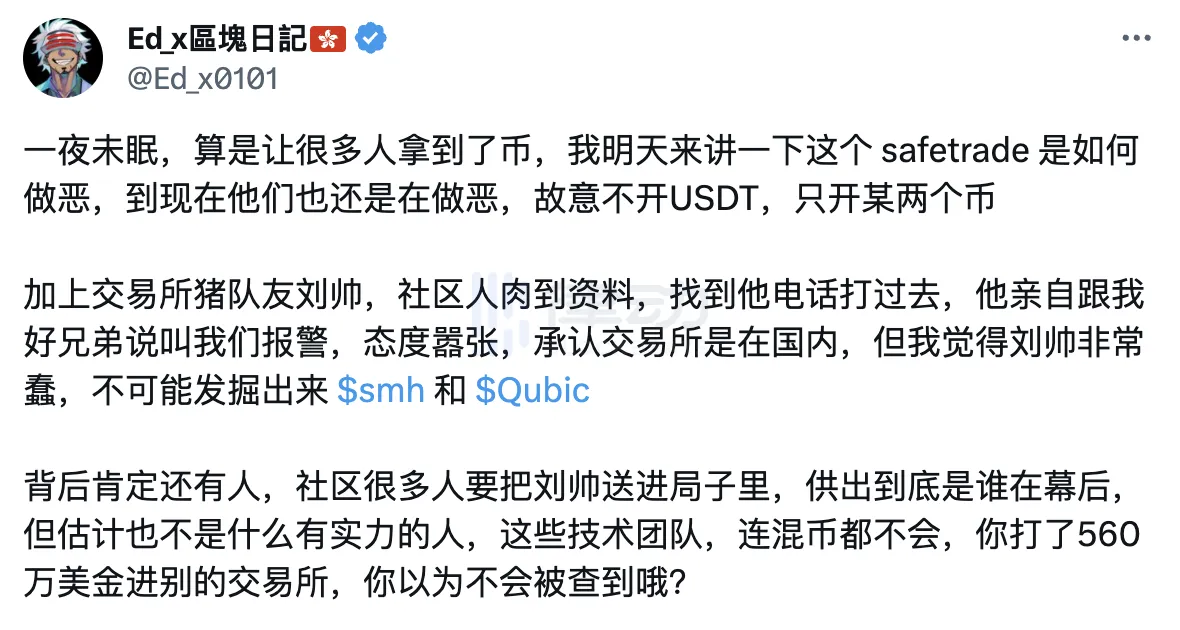
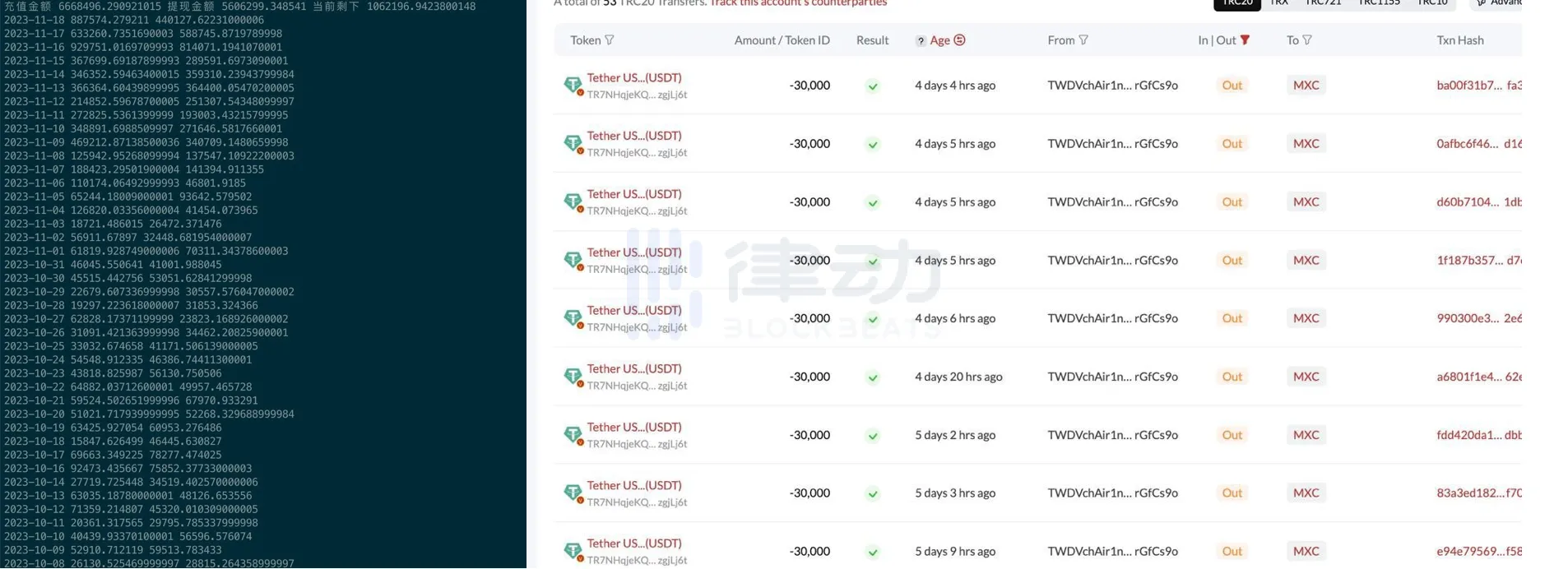
For example, the Ed_x block diary ( @Ed_x0101 ) attached the transaction record of a suspected SafeTrade address on the social platform, and stated that SafeTrad had withdrawn "90% of the user's USDT."
"Many users haven't received U yet. They said it would be maintained for 6 days, but they were found to have transferred funds directly into MEXC... Facts have proved that there is no so-called maintenance, they just want to run away, but they can't run away, so they are fooling around. I don’t know how to use coins... Attached is the record of evil done by the project side. 90% of user funds in USDT were withdrawn, and then 1.7 million US dollars went into MEXC. If you were to maintain it, would you be so sneaky?"
In fact, it is not just this incident that SafeTrade has been questioned by users. SafeTrade had security issues long before the concept of mining coins really took off.
On November 12, due to too many people buying QUBIC and the server being temporarily unable to handle it, SafeTrade closed the trading channel. The next day, when Qubic officially issued an article explaining how to purchase QUBIC, a large number of users stated in the comment area that the funds they transferred to the platform could not be received.
In addition, there are many doubts about the platform in the community. Among them, "the trading platform is too small and looks strange" is the main concern of users. A user bluntly said in the community, "I want to trade QUBIC, but I don't trust SafeTrade at all" and said that he would rather conduct over-the-counter transactions than put money into the exchange.
Related reading: " From third-tier exchanges to Binance contracts, the mining coin gold mining "production line" behind KAS "
BlockBeats reminds that for some exchanges and project parties whose information is relatively opaque, users need to pay more attention to protecting the safety of their funds during transactions to prevent being involved in security incidents and causing damage to funds.