China's digital renminbi (e-CNY) has been implemented in offline scenarios since the beginning of last year, and HSBC (China), Hang Seng Bank (China), Standard Chartered Bank (China), and Fubon Bank One went one step further on the 27th. It has been announced one after another that it has connected to the digital RMB interconnection platform and officially launched “digital RMB business”.
Digital RMB APP already supports binding
According to the Chinese media "21st Century Economy", as the first batch of foreign banks to participate in the digital RMB business pilot, these four banks have accessed the digital RMB beta APP. Currently, the APP supports binding of these four foreign banks. Debit card (called debit card in Taiwan), this also increases the list of banks that support binding debit cards in the APP to 51.
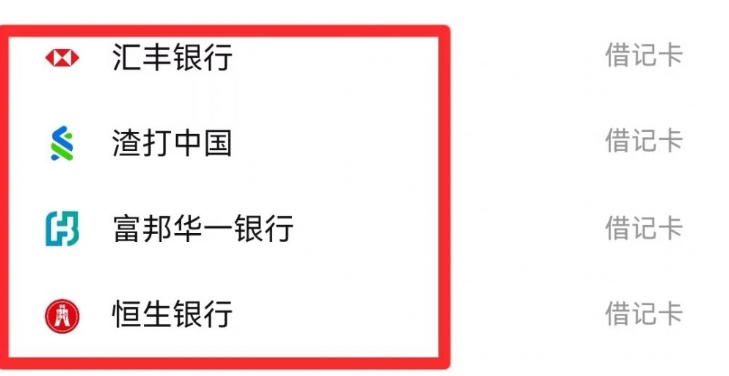
Among these 51 banks, 31 support the "no need to enter card number, quick card binding" function, including China's six major state-owned banks, multiple joint-stock banks, city commercial banks, and Internet banks.
What can the digital RMB APP do?
According to Hang Seng China, after the digital RMB business is launched, Hang Seng China personal customers can bind a Hang Seng China bank card in the Digital RMB APP to redeem and redeem digital RMB. They can also use the Hang Seng China Mobile Banking APP to make digital RMB payments. To recharge the RMB wallet, use the digital RMB wallet for offline payment or online payment on the e-commerce platform.
Taiwan-owned Fubon Bank said:
We will continue to focus on the development needs of featured industries and leverage our own cross-border advantages to further expand the application of digital renminbi in corporate scenarios and cross-border trade, such as smart contracts, cross-border payments, supply chain finance, etc., allowing corporate customers to It can accept digital RMB, effectively expand the use scenarios of digital RMB, and respond better and more flexibly to the diverse digital service needs of enterprises.
It is understood that the operating structure of digital RMB is a 1+10 two-tier operating model, that is, the People's Bank of China, as the issuing institution, and 10 designated operating institutions including the six major state-owned banks, China Merchants Bank, Industrial Bank, WeBank, and online merchants, jointly build digital RMB The issuance layer and exchange layer.
The layout of many foreign banks
In addition to the four foreign banks mentioned above, there are many other foreign banks that have successively laid out the digital RMB circulation layer.
In May this year, BNP Paribas (China) announced that it would cooperate with the Bank of China-China Electronics Co., Ltd. operating agency to promote the inter-bank business scenario of digital RMB wallets. The bank will conduct system docking with the Bank of China, carry out direct business cooperation, and launch online A series of basic functions around digital renminbi such as public wallets meet the business needs of enterprises such as digital renminbi payment.
In June this year, Kasikornbank (China) announced the implementation of its corporate digital RMB business.
In July this year, DBS Bank launched an enterprise digital RMB payment solution in China and completed the first merchant digital RMB payment transaction; UOB China announced in September that it would join hands with UnionPay Commerce Co., Ltd. to launch an enterprise digital RMB payment transaction. Collection solution, and has successfully implemented the first digital RMB collection transaction.