This article deeply explores the development trends in the field of Bitcoin inscriptions and looks forward to the development of inscriptions under ecological empowerment.
Written by: Stanley, Kernel Ventures
Reviewer: Mandy, Joshua, Kernel Ventures
TLDR:
This article provides an in-depth exploration of the development trends in the field of Bitcoin inscription and the characteristics of each protocol.
- Analyze the protocols on the Bitcoin chain such as Ordinals, BRC20, Atomical, RGB, and Pipe, and other PoW chains, such as Dogechain and Litecoin, as well as the Ethereum chain Ethscriptions and Evm.ink, and the Solana chain SPL20 protocol, in terms of rates and divisibility , scalability, and user aspects, especially highlighting the low rate and high scalability of the RGB protocol.
- With the market and product deduction of the Inscription Ecosystem, the completion of the wallet-side infrastructure, and the launch of the Bitcoin chain AMM DEX, more functions such as lending and derivatives may appear in the future. UniSat's open API interface can produce a lot of tool projects.
Overall, this article explores the dynamics of the Bitcoin inscription field in detail, looks forward to the development of inscriptions under ecological empowerment, and provides readers with a comprehensive understanding and outlook.
Inscription market background
market background
Since the emergence of the Bitcoin Ordinals protocol in January 2023, BRC20, Ordinals assets, etc. have set off a wave on the Bitcoin chain. Some people call it "the world of retail investors" because of the Fair Launch mode of BRC20 and other inscriptions, all chips are made by Retail investors cast it by themselves, with no institutions, no project parties, and no rat warehouses. The minting cost of Ordi is about 1 dollar per piece. After being listed on the Gate exchange, it rose to 20,000 dollars per piece. The exaggerated increase caused the popularity of the BRC20 protocol to continue to rise, attracting many Ordinals players to pour into BRC20, and also caused the Bitcoin chain to Gas continues to rise, and the lowest confirmed gas at the peak even reached 400 s/vb, breaking through the highest gas in three years.
This article will take this as a starting point to discuss the current inscription ecology of various protocols on various chains, and look forward to the development trend of inscription under ecological empowerment.
Data overview
It can be seen intuitively from the 3-year Bitcoin block fee chart that in May-June and November this year, the fee rate soared. This also reflects the enthusiasm of users for the Inscription protocol, not only the BRC20 protocol, but also various Protocols developed based on the Bitcoin network were all released at this stage, bringing a wave of "Bitcoin Summer".
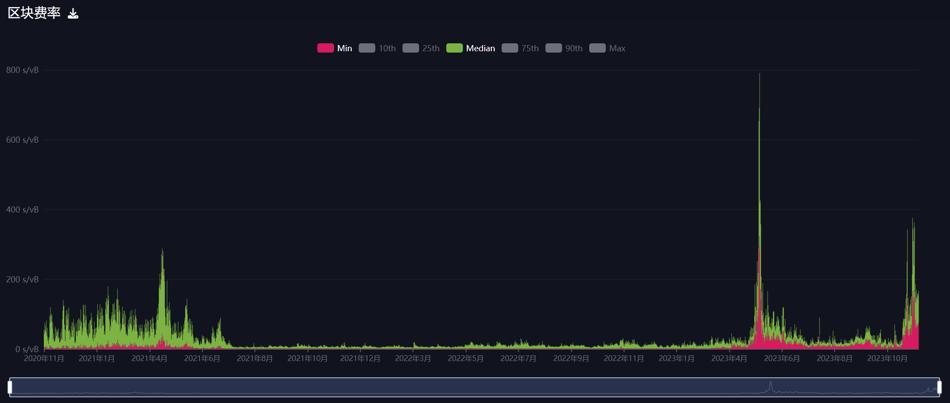
Bitcoin rate in the past three years, image source: Mempool.space
Judging from the casting data of Inscriptions, the number of castings tends to be stable and remains at a high number.
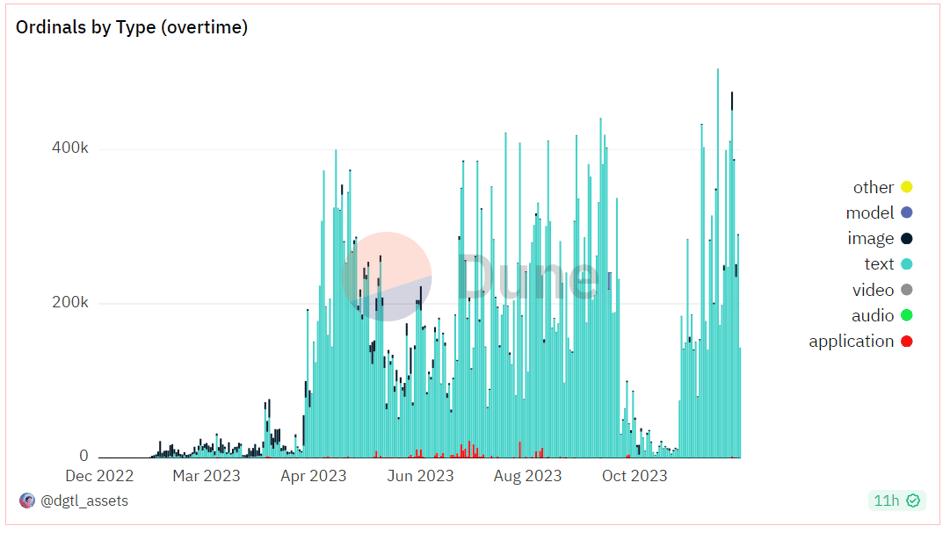
Ordinals inscription casting quantity, image source: Dune @dgtl_asserts
Track analysis
This article will classify each chain and analyze the inscription protocols on its chains.
Bitcoin chain
Ordinals / BRC20 Protocol
On January 21, 2023, Bitcoin developer Casey Rodarmor launched the Ordinals protocol, which can inscribe metadata onto the Bitcoin chain and give it an inscription number. In March of the same year, Twitter user @domodata released the BRC20 protocol, which evolved the minting of tokens into the chaining of strings. On November 7, Binance launched BRC20 leader $ORDI, promoting -20232023202320232023-1 -Significant rise, with a single-day increase of nearly 100%.
As the first protocol in the inscription ecosystem, Ordinals also has many problems:
- BRC20 only supports four-character tokens, which has great limitations.
- The casting name will be attacked by sophons, and the casting transaction will be easily snatched away.
- Ordinals protocol will cause huge redundant data to the Bitcoin network
For example: BRC20’s casting inscription, after the casting is completed, tokens can be sent through transfer inscriptions, and the original casting inscription will become an invalid inscription, which will greatly cause data occupation. This is why some early Bitcoin geeks do not want to support Ordinals. s reason.
Atomic protocol
The Atomic protocol's ARC20 uses one satoshi to represent the deployed token, and removes the four-character limit, making the gameplay more diverse. Unique project: Realm. Each registered text of Realm is a prefix, and finally has the pricing power of all suffixes. In terms of basic functions, the field can be used as a transfer payment address (payment name); in terms of expanded usage, there are various usage scenarios such as building communities/DAOs, identity verification, social profiles, etc., which are fully in line with our development concept of DID.
However, ARC20 and $ATOM are still very early and need to wait for the wallet and market to improve.
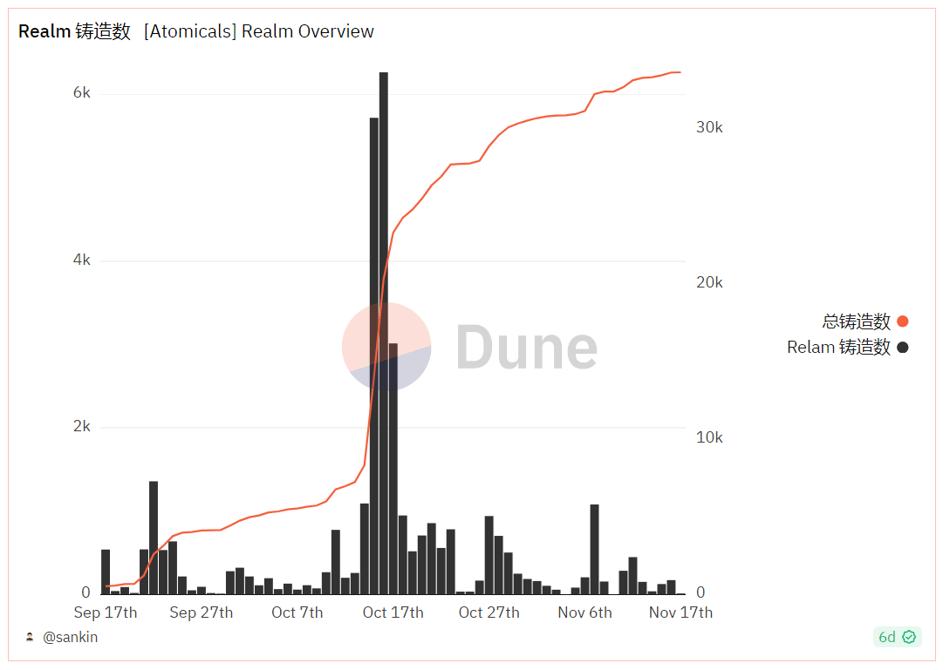
Realm minting quantity, image source: Dune @sankin
Pipe protocol
Casey, the founder of Ordinals, proposed an inscription implementation method specifically for issuing FT, namely Rune, which can directly write Token data in the UTXO script, which includes the Token's ID, output and quantity. The implementation of Rune is very similar to ARC20, and the token transfer is directly handled by the BTC mainnet. The difference is that Rune writes the number of Tokens in the script data.
The idea of Rune was just an idea, and the founders of #Trac wrote the first usable protocol based on it and released PIPE. Due to Casey's high reputation, PIPE inherited the hype inherited from BRC20 and quickly completed the first wave of hype. Rune's legitimacy is stronger than BRC20, but it is still difficult to be accepted by the BTC community.
RGB protocol
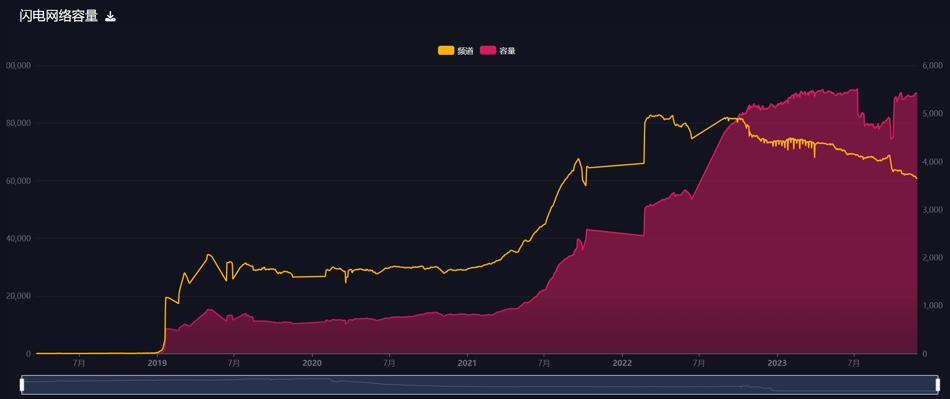
Lightning Network Capacity, Image Source: Mempool.space
As the Ordinals protocol improves the ecology of the Bitcoin network, more and more developers and project parties are paying attention to the Lightning Network because of its extremely low handling fees and 40 million TPS.
RGB is a smart contract system based on BTC and Lightning Network. It is the ultimate expansion method, but its progress is slow due to its complexity. RGB converts the state of a smart contract into a short proof and engraves the proof into the BTC UTXO output script. Users can check the status of the smart contract by verifying this UTXO. When the smart contract status is updated, a new UTXO is created to store the proof of this status change.
All data of the smart contract is completely under the BTC chain and is run by a dedicated RGB node. The RGB node itself records the complete data of the smart contract and handles the calculation volume of the transaction. Users can verify the certainty of contract status changes by scanning the UTXO of the entire BTC chain.
RGB can be regarded as the L2 of BTC. The advantage of this design is that it uses the security of BTC to guarantee smart contracts. However, as the number of smart contracts increases, the demand for UTXO encapsulated data will also increase, which will eventually become unavailable. Avoid creating a lot of redundancy in the BTC blockchain.
As of 2018, RGB is still in the development stage, and there is nothing to speculate about. Frontida, the issuing company of USDT, is an important promoter of RGB. They have always said that they will re-issue USDT on BTC RGB in large quantities.
In terms of products, Bitmask is currently used by mainstream wallets. This wallet supports Bitcoin and Lightning Network recharge, and supports RGB-20 and RGB-21 format assets. It is also the wallet with the most users on the market. Bitlight Labs is also currently developing the RGB network. The goal of this project is to build its own wallet system, write its own smart contracts, and build DEX. Currently, the project has acquired BitSwap (bitswap-bifi.github.io) and is preparing to connect it to the RGB network.
The biggest advantage of the RGB protocol is its low handling fee and extremely high scalability. Once upon a time, the development of smart contracts on the Bitcoin network was difficult and no one cared about it. However, as the Ordinals protocol has increased the ecological popularity of the Bitcoin network, more and more developers will try smart contracts on the RGB network. This smart contract is It is written in Rust language and is not compatible with Ethereum, so the learning cost is high, and the technical level needs to be evaluated later.
For more information on the technical aspects of the RGB protocol, Kernel Ventures has introduced it in detail in previous articles .
Other POW chains
When the inscriptions on the Bitcoin chain were very popular, other Pow chains had the same origin and the same root, and were also based on the UTXO transfer and spending model, so Ordinals were migrated to some leading POW public chains. This article uses market acceptance and development completeness. Take the higher Dogechain and Litecoin as examples for analysis.
Dogechain
The Drc-20 protocol is a protocol based on Ordinals on the Dogecoin chain. Its function is similar to the Bitcoin chain, but it is popular due to its low transfer fees and strong meme attributes.
Litecoin
The same goes for the LTC20 protocol, which is a protocol based on Ordinals on the Litecoin chain. This protocol has received retweets and attention from Litecoin officials and founder Li Qiwei. It can be said that he is "from a distinguished family". The trading markets Unilit and Litescribe; the development completion of the wallet Litescribe is also relatively high, and the current first token -20232023202320232023- 3- Listed on Gate exchange.
However, there was no index before the protocol. After the index was launched, an additional issuance bug appeared. It has been fixed and is worthy of attention. It can also be seen intuitively from the figure that after the launch of the LTC20 protocol, the gas fee on the Litecoin chain skyrocketed.
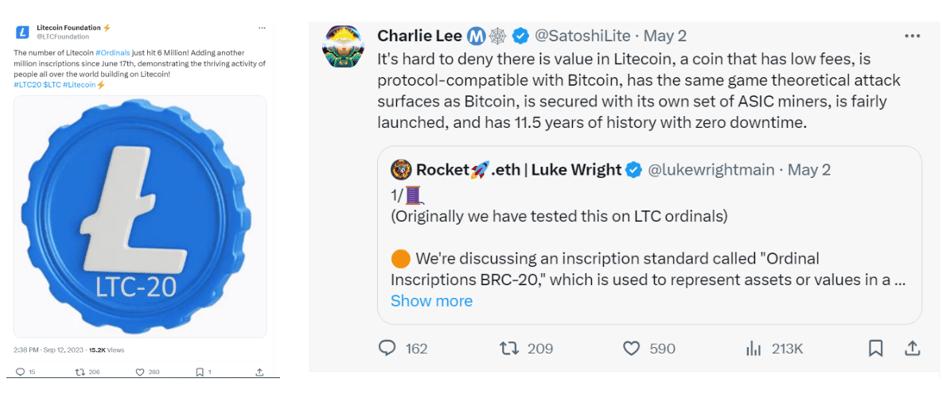
Image source: Twitter Li Qiwei @SatoshiLite
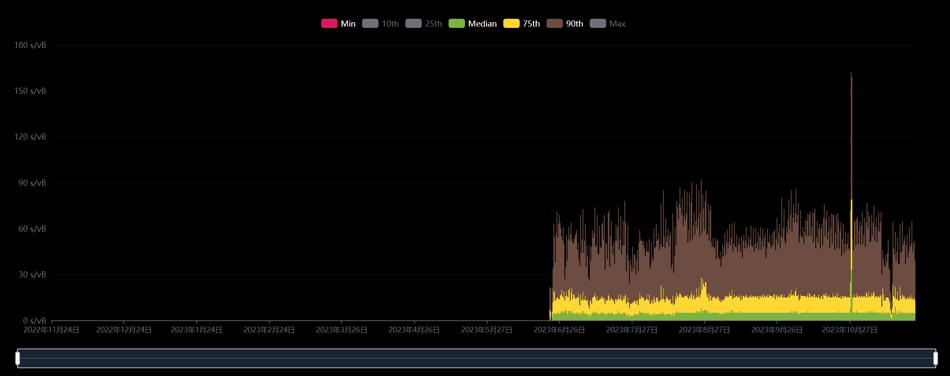
Litecoin rate in the past year, image source: Litecoinspace
Ethereum chain
Ethscriptions
So far, the transaction volume of the Ethscriptions trading platform Etch has reached 10,500 ETH, and the first token Eths has been sold for 4,300 U.S. dollars. The new cost on June 18 was less than 1U. Those who have never left the market have already More than 6000 times the profit.

Eths transaction data, image source: ETCH Market
A new Ethereum expansion solution proposed by Tom Lehman on August 8. Using Ordinals-like inscription technology and using Calldata expansion to reduce the gas fee of the Ethereum main network and make ecological applications high-dimensional, this is Ethscriptions.
The core of Eths is Ethscriptions Virtual Machine (ESC VM), which can be compared to EVM (Ethereum Virtual Machine). The smart contract "Dumb Contracts" in ESC VM frees Eths from the limitations of inscriptions as NFT hype, enters the realm of functionality and practicality, and officially enters the base layer to compete with L2 solutions.
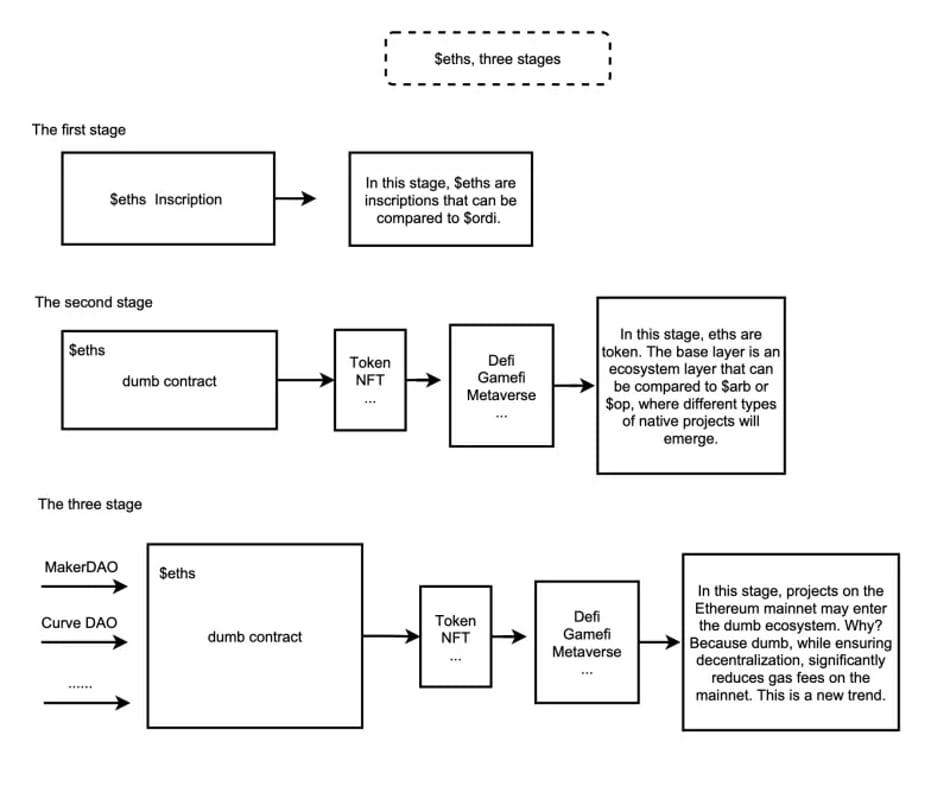
Dumb Contracts running logic, image source: Ethscriptions ESIP-4 proposal
"Eths is another idea of the second layer of Ethereum. The second layer is a separate chain and can close the backdoor. Eths is traded on the Ethereum mainnet, and the gas fee is as cheap as the second layer. Swap, Defi, and Gamefi on the mainnet are all It can be implemented on Eths. The most important thing is that it runs on the main network and cannot close the backdoor. It is safer and more decentralized than the second layer." Excerpted from the Eths community.
This new L2 narrative is actually not easy to write. First of all, the token split is still in progress. The current inscription is still NFT and cannot be split into FT.
As of the latest news, the FacetSwap official website (https://facetswap.com/) has launched the split function. However, after experiencing it, it was found that the current mainstream trading market does not support the split inscription, and you can wait for later adaptation. The currently split inscriptions can be swapped, Add Liquidity, etc. in Factswap. All operations are parsed by a virtual address (non-existent address) 0x000....Face7. Users only need to build the message into IDM. Send the hexadecimal data of the message to the address ending in Face7, and you can perform operations such as approve and transfer. Since it is relatively early, its development needs to be observed later.
Other EVM chains
Evm.ink
Evm.ink migrates the protocol standards of Ethscriptions to other EVM chains, allowing other chains to cast inscriptions and build indexes for other EVM chains. The recently popular POLS, AVAL, etc. all use Evm.ink, which is the standard of Ethscriptions, for index identification.

POLS casting data, image source: Dune @satsx
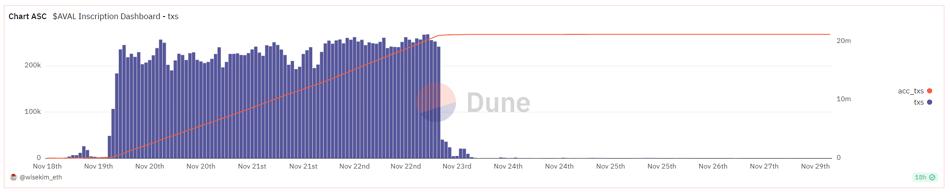
AVAL casting data, image source: Dune @helium_1990
The total amount of POLS and AVAL is both 21 million. POLS has 80,000+ currency holding addresses, and AVAL has 23,000+ currency holding addresses. The casting progress is about 2-3 days. It can be seen that currently everyone is interested in low-cost Layer 2 inscriptions. They are more interested in participating. Because of its low cost and high return, some long-tail users of the BTC and ETH chains will experience spillover. Not only these two chains, but also the Heco chain, Fantom chain, etc. have experienced a surge in gas fees, all related to the inscription.
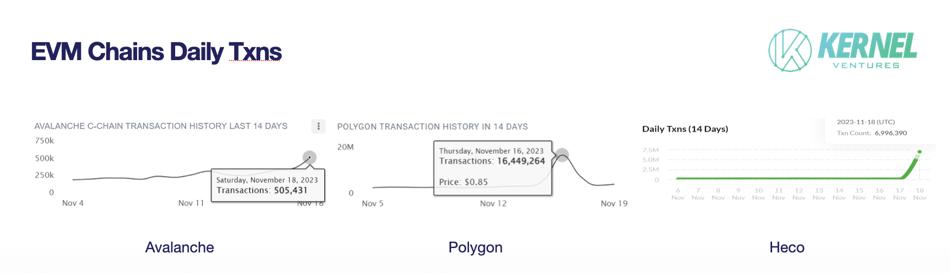
Number of daily transactions on the EVM chain, image source: Kernel Ventures
Solana chain
SPL20
The Solana inscription started at 4 a.m. on November 17th and was completed at 8 a.m., with a total of 21,000 pieces. Different from other networks, the main body of the inscription is NFT, and the Index Content is the inscription. NFT can be created through any platform, and the index will use the hash of the image (file) to determine whether to include it. The second point is the built-in text. Only the hash and built-in text that match both will be recorded as valid inscriptions. Images are off-chain data, and text is on-chain data. Currently, the main printing platform uses IPFS, and other printing platforms use AR.
The biggest flaw of Solana Inscription is the same as Eths, splitting. If it cannot be split, it is essentially an NFT and cannot have the liquidity and operational convenience of a token, let alone the vision of future Dex Swap.
The founder of the protocol is the founder of TapPunk on the Tap protocol. The team of Liberplex (https://www.libreplex.io/), the largest proxy printing platform at present, is very active. Since its launch, the team has made rapid development progress and has completed operations such as hash indexing and inscription attribute (immutability) changing functions. And he will write code and answer questions live on the official Discord. The trading market Tensor (https://www.tensor.trade/) has also been connected, and the current development progress is rapid.
The first inscription - 20232023202320232023-4- has a casting cost of about 5 dollars, and the highest price in the secondary market is 14 SOL. As of writing, the floor price is 7.4 SOL, equivalent to 428 dollars. The single-day transaction volume exceeded 20,000 SOL, equivalent to about 1.2 million US dollars. The transaction volume The turnover rates are all active.
core comparison
Core protocol comparison
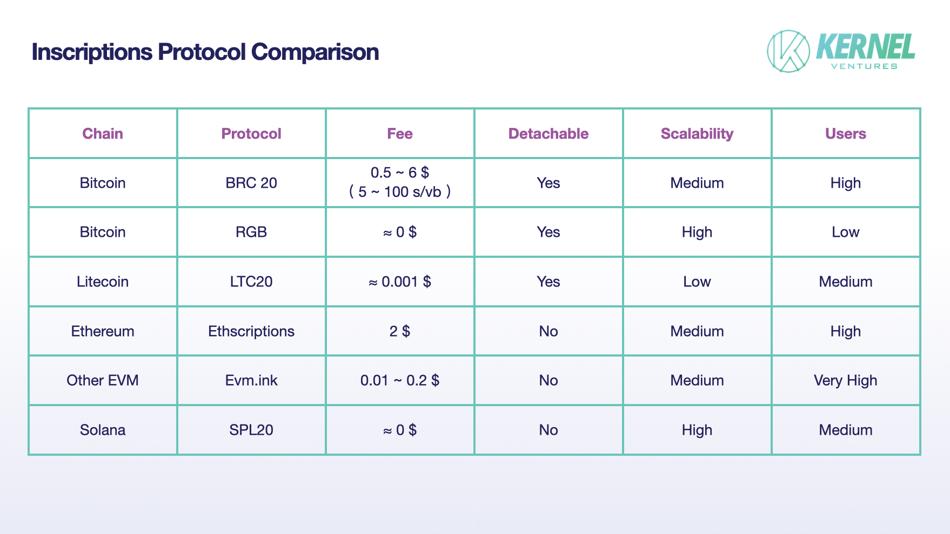
Comparison of mainstream inscription protocols, image source: Kernel Ventures
This chart compares the current mainstream inscription protocols in four dimensions: rate, divisibility, scalability, and number of users. It can be seen intuitively from the figure that the RGB protocol has the optimal rate, based on the 0 rate of the Lightning Network, making transactions almost cost-free.
- In terms of splitability, the recent Solana and EVM protocols cannot be split, pending subsequent development.
- In terms of scalability, the smart contract function of the RGB protocol brings great scalability to it. Solana’s current scalability needs to be discussed, but the team and the Solana Foundation have expressed support. I personally think the scalability will not be too bad.
- In terms of users, due to its natural low Gas properties, the EVM chain has smaller trial and error costs for users, so there are more users. BRC20 is the first inscribed token and ranks first in terms of legitimacy, so it has a large number of users.
Protocol Token Data Comparison
Comparison of protocol tokens, image source: Kernel Ventures
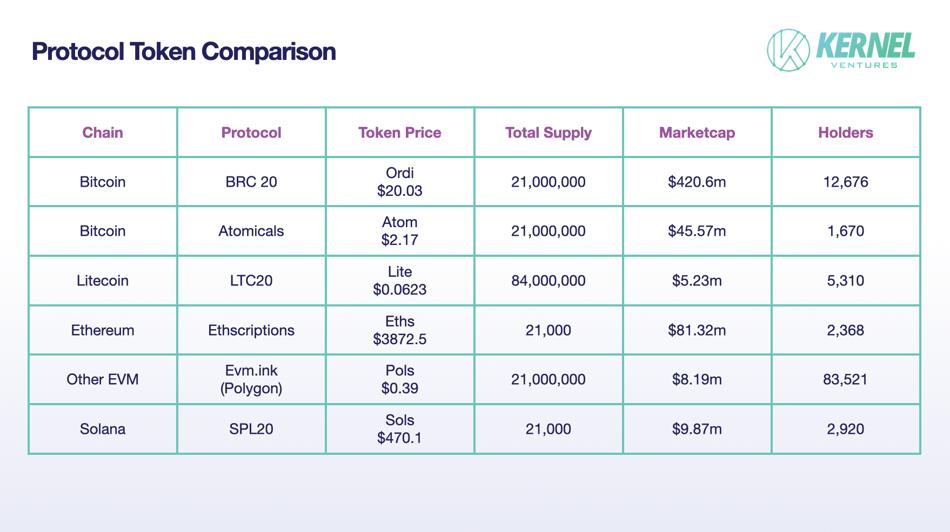
From the analysis of the mainstream tokens of each protocol, it can be seen that the current market value of mainstream tokens is around US$600 million, and other small market capitalization currencies are not included. And Ordi accounts for 80% of the total market value, so there is huge room for development of other protocols, and protocols such as RGB are still being improved and no tokens have been issued.
From the perspective of the number of currency holders, Pols and Ordi dominate, while other protocols have fewer currency holders, and the Eths & Solana inscriptions have not been split, so we will wait for later developments before conducting currency holding analysis.
Innovation and risk analysis
At present, the biggest use of Inscription is Fair Launch. Users can get fair opportunities to participate in the project, but the development of the Inscription track cannot only stop at Fair Launch.
The recent development of the inscription track has shown significant vitality and innovation. The growth of this track is mainly due to the key technological advancements of Bitcoin such as SegWit, Bech32 encoding, Taproot upgrades and Schnorr signatures. These technologies not only improve the Bitcoin network transaction efficiency and scalability, and also increases its programmability.
For example, if the smart contract in the RGB protocol is built on Bitcoin's Lightning Network, not only will the TPS be extremely high (40 million), but it will also be backed by Bitcoin, the largest blockchain ecosystem.
In terms of risks, you need to pay attention to some Launchpads, such as Rug's Ordstater a while ago. Due to the success of MUBI and TURT, many Launchpads have emerged on the market. Some platforms directly Rug Pull after IDO. Please read the white paper carefully and research the background before participating in the project, and do not blindly follow the KOL into the project with FOMO.
The future of inscription ecology
Market deduction
Galaxy Research and Mining predicts that the market value of the Ordinals market will reach US$5 billion by 2025. At that time, the number of inscriptions was only 260,000, but now the number of inscriptions has reached 33 million, an increase of 126 times in just half a year. Moreover, the market value of $Ordi has reached US$400 million, and the market value of $Sats has also reached US$300 million. It can be seen that the prediction of the entire inscription market is still far underestimated.
Product Deduction
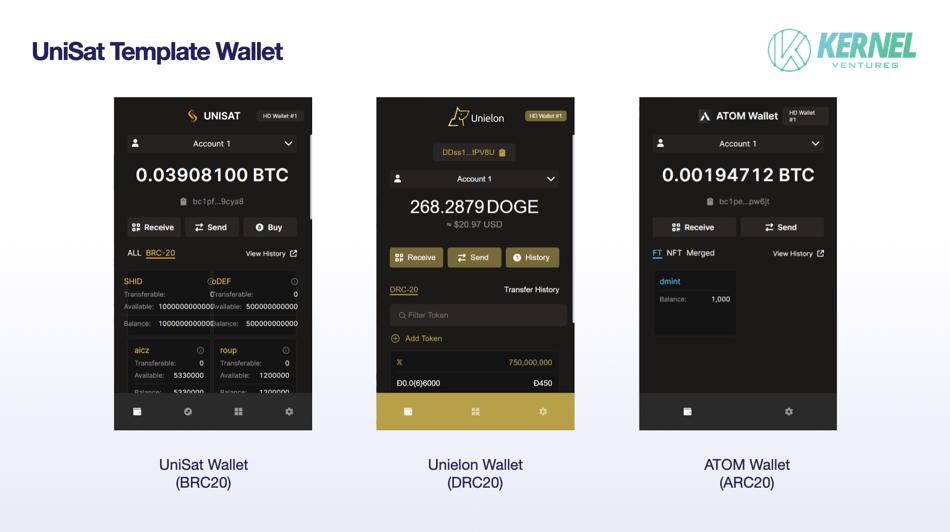
Currently, BRC20 trading activities are mainly concentrated on OKX and UniSat. This year, the Web3 wallet promoted by OKX has a good experience in BRC20 asset transactions, and the complete infrastructure of the wallet has further smoothed and shortened the entry path of "aunt speculators", allowing them to smoothly enter this new market. With the emergence of various other protocols, different protocols have emerged with different trading markets and their own trading wallets, such as Atomics, Dogechain, Litecoin and so on. However, the wallets currently on the market are all modified versions of UniSat, which are modified based on UniSat's open source. When we compare Bitcoin (POW) with Ethereum, we can compare various protocols to various chains. The essential difference is only in the Chain ID. Therefore, future products may be UniSat that is connected to different protocols. When needed, it can To switch between different protocols, you can operate it directly in the wallet, similar to the switching chain of the Metamask wallet.
Comparison of wallets across protocols, picture source: Kernel Ventures
Track deduction
As funds continue to pour into the inscription market, users are no longer satisfied with the hype of memes and begin to turn their attention to inscription-based applications. UniSat also brings innovation to BRC20. Through BRC20-Swap, users can exchange BRC20 tokens as easily as AMM DEX. As the first product to improve the ecological liquidity of Ordinals, it is expected to release the potential of the Bitcoin DeFi ecosystem. More features such as lending and derivatives may appear in the future. Recently, UniSat has also opened an API interface, which is very friendly to small developers. It can call many functions, such as automatic batch scanning, monitoring inscriptions and automatic mint, which can generate a lot of tool projects.
The handling fees of the Bitcoin network are relatively expensive. For the second layer of Bitcoin such as Stacks and RIF, although the handling fees have been reduced, there is no user base and the infrastructure is not complete enough. Therefore, Bitcoin's EVM is a good narrative.
For example, BEVM is a Bitcoin ecological Layer 2 project based on the Ethereum network. The Native Token on the chain is also BTC. Users can use the official cross-chain bridge to cross Bitcoin to BEVM through the mainnet. BEVM's EVM compatibility makes it The threshold for building applications on the EVM chain is extremely low, and Defi, Swap, etc. can be migrated from other chains.
However, there are still many issues that need to be considered for Bitcoin's EVM, such as whether cross-chain past assets can ensure decentralization and cannot be issued additionally, etc., the node sequence consensus issue of the EVM chain, and how to synchronize Txns to the Bitcoin network ( Or decentralized storage), because the threshold of the second layer of Ethereum is low, the security will also be reduced accordingly. This should be the primary issue that everyone who is currently paying attention to Bitcoin EVM should consider.
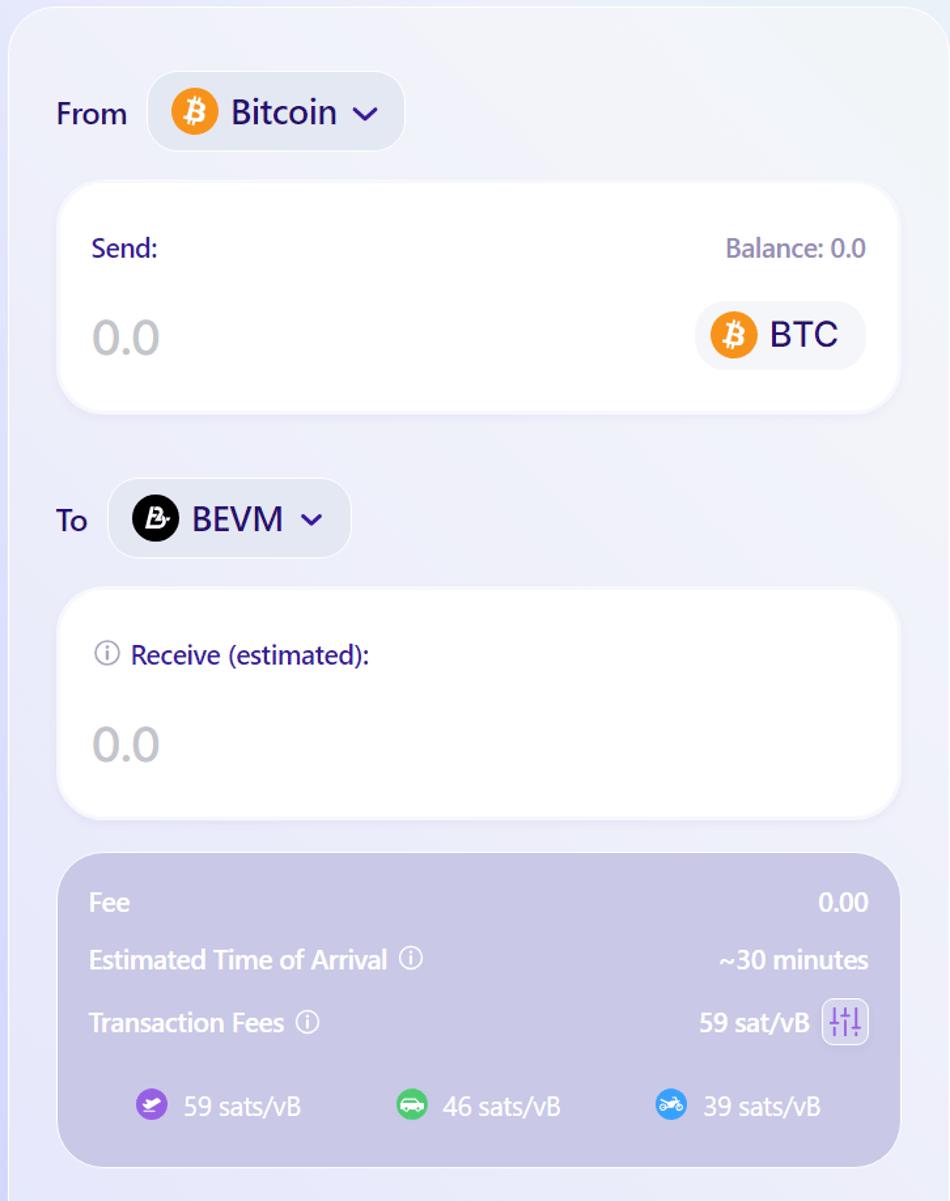
Image source: BEVM Bridge
Summarize
This article provides an in-depth study of the development trends in the field of Bitcoin inscription and the characteristics of each protocol. By analyzing the protocols on the Bitcoin chain such as Ordinals (BRC20), Atomic, RGB, and Pipe, and other POW chains, as well as the Ethereum chain Ethscriptions and Evm.ink, and the Solana chain SPL20 protocol, we compared their rates and divisibility , scalability and user differences, it is concluded that detachability is still a bottleneck at present, and the development of RGB in other Bitcoin on-chain protocols is relatively comprehensive and promising.
In terms of the background of the inscription market, starting with the Ordinals protocol, inscription protocols such as BRC20 set off a wave, which was jokingly called "the world of retail investors." The data overview such as the Bitcoin block fee chart and the number of Ordinals inscriptions minted were analyzed, and the development trend of the inscription ecology was glimpsed.
In terms of track analysis, by comparing the core elements of mainstream inscription protocols, such as rates, divisibility, scalability, and number of users, the similarities and differences between them are demonstrated. Finally, through comparison of protocol token data and comparison of core protocols, a comprehensive analysis was conducted on the market value and user distribution of each mainstream protocol. In the summary, innovation points and risk analysis were mentioned, emphasizing the vitality and innovation in the field of inscriptions.
Looking to the future, the inscription field is expected to continue to witness continuous technological innovation and promote the practical application of more complex functions. The booming market is expected to maintain steady growth, providing more opportunities for investors and participants. At the same time, it is expected that more creative projects and protocols will emerge to further enrich the inscription ecosystem of Bitcoin and other public chains. Miners' income may also increase, as the inscription field provides them with new income opportunities.
References:
Bitcoin block-fee-rates (3 year): https://mempool.space/zh/graphs/mining/block-fee-rates#3y
ESIP-4: The Ethscriptions Virtual Machine: https://docs.ethscriptions.com/esips/esip-4-the-ethscriptions-virtual-machine
A comprehensive scan of the inscriptions industry: https://www.theblockbeats.info/news/47753?search=1
Litecoin block-fee-rates (1 year): https://litecoinspace.org/zh/graphs/mining/block-fee-rates#1y