In the last issue of this year, we will quickly sort out the changes that will occur on the chain in 2023. We’ll delve into the evolution of ecosystems like Bitcoin, Ethereum, derivatives, and stablecoins, and how these changes are paving an exciting path for the future of the cryptocurrency space.
executive Summary
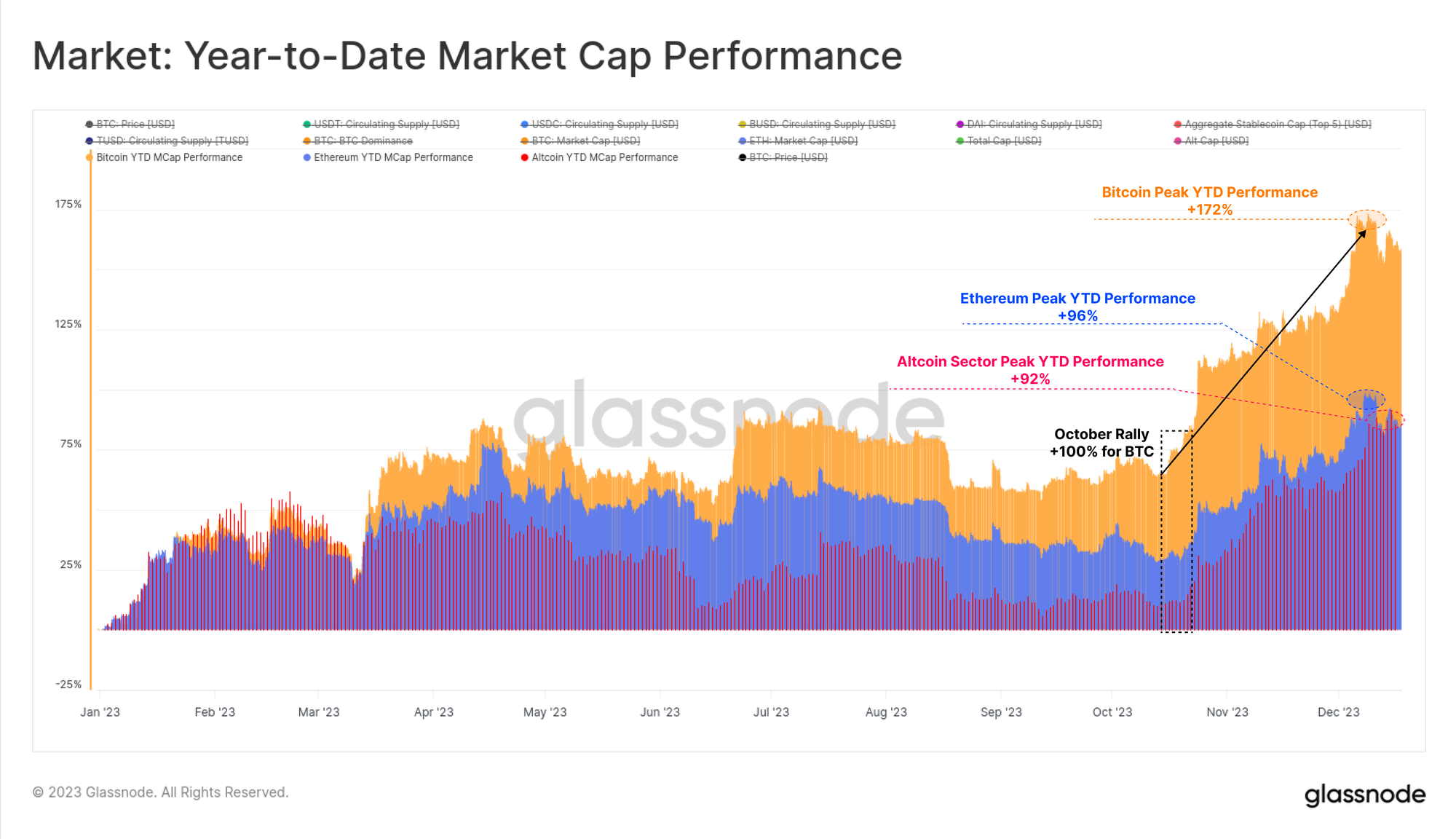
- 2023 is a year full of miracles for digital assets. The price of Bitcoin rose by more than 172%, with a correction of less than 20%. Bitcoin, Ethereum and stablecoins achieved net capital inflows.
- This year, the market broke multiple important technologies and on-chain pricing models, especially in October, which became an important turning point for institutional capital flows.
- The supply of Bitcoin currently held by long-term holders is near all-time highs, and most coins are currently in the black.
- The market structure has undergone significant changes, such as Tether re-establishing its dominance in the stablecoin space, CME futures surpassing Binance, and the options market experiencing significant growth.
In this final installment of the year, we take a quick look back at the changes happening on-chain in 2023. We’ll take a deep dive into developments in the Bitcoin, Ethereum, derivatives, and stablecoin ecosystems, and how these changes are paving the way for the future of the cryptocurrency space.
2023 is a year of extraordinary achievements for digital assets, with Bitcoin’s market value growth reaching a peak of 172%. The rest of the digital asset ecosystem is also performing strongly, with Ethereum and the broader Altcoin market cap growing by more than 90%.
This highlights Bitcoin’s gradually growing dominance, which usually occurs after a recovery from a long-term bear market (such as 2021-2022). Ethereum, in particular, has had a relatively slow start, with the ETH/BTC ratio falling to multi-year lows around 0.052 despite the successful release of the Shanghai upgrade and growth in its second-layer ecosystem.
Although digital assets have significantly outperformed traditional assets such as stocks, bonds and precious metals throughout the year, the rally since late October accounted for the majority of the annual gain. This started with a breakout of the psychologically important $30,000 price level, as well as multiple important pricing levels.
Market characteristics: shallow price corrections and corrections
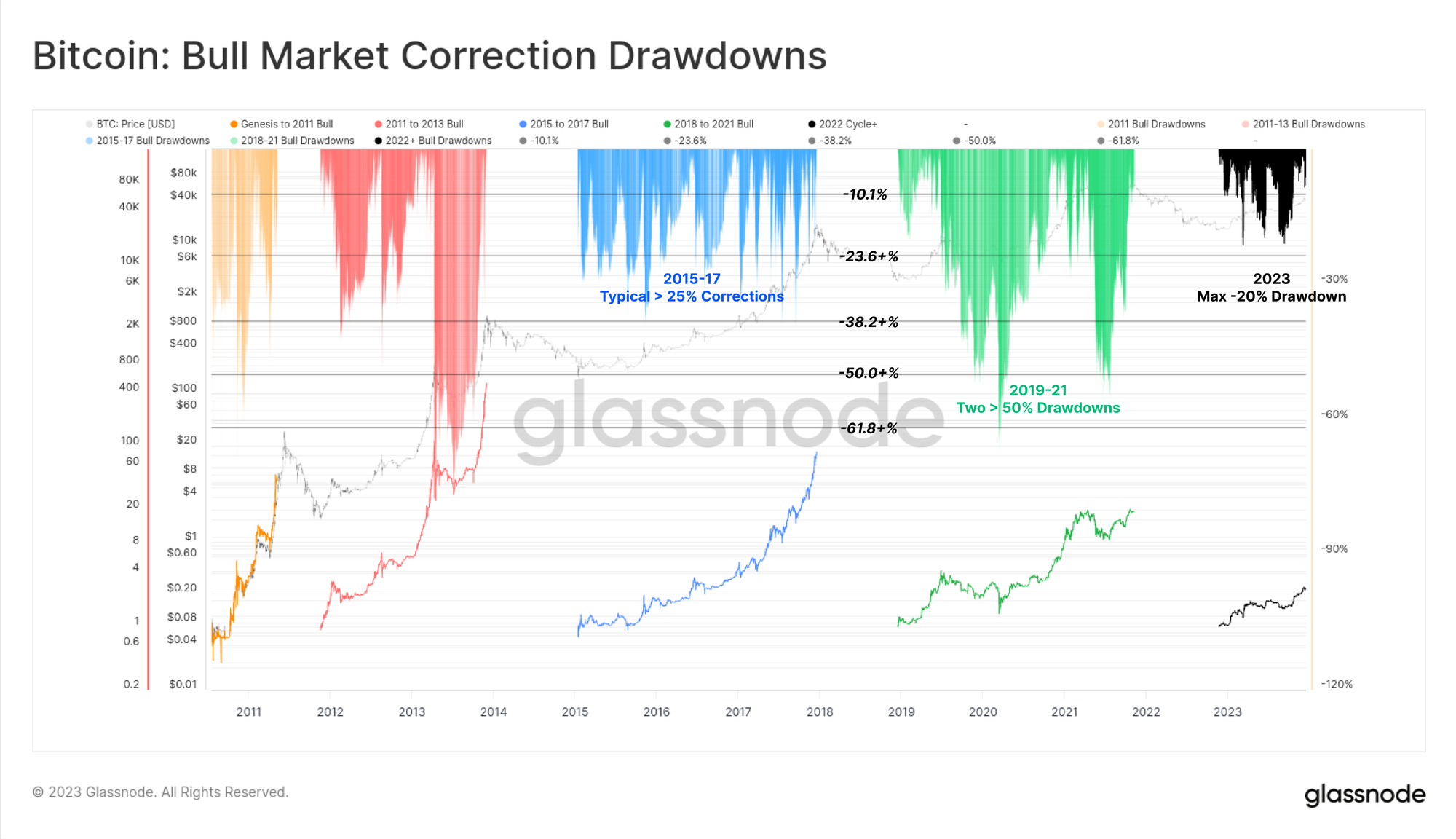
One of the hallmarks of the 2023 market is that all price pullbacks and corrections will be unusually mild. Historically, Bitcoin usually experiences a correction of at least 25% during the recovery period of a bear market or an uptick in a bull market, and there are even examples of more than 50%.
But in 2023, the deepest correction only brought prices 20% below local highs, a phenomenon that demonstrates the strength of buyer support throughout the year and the good balance of overall supply and demand.
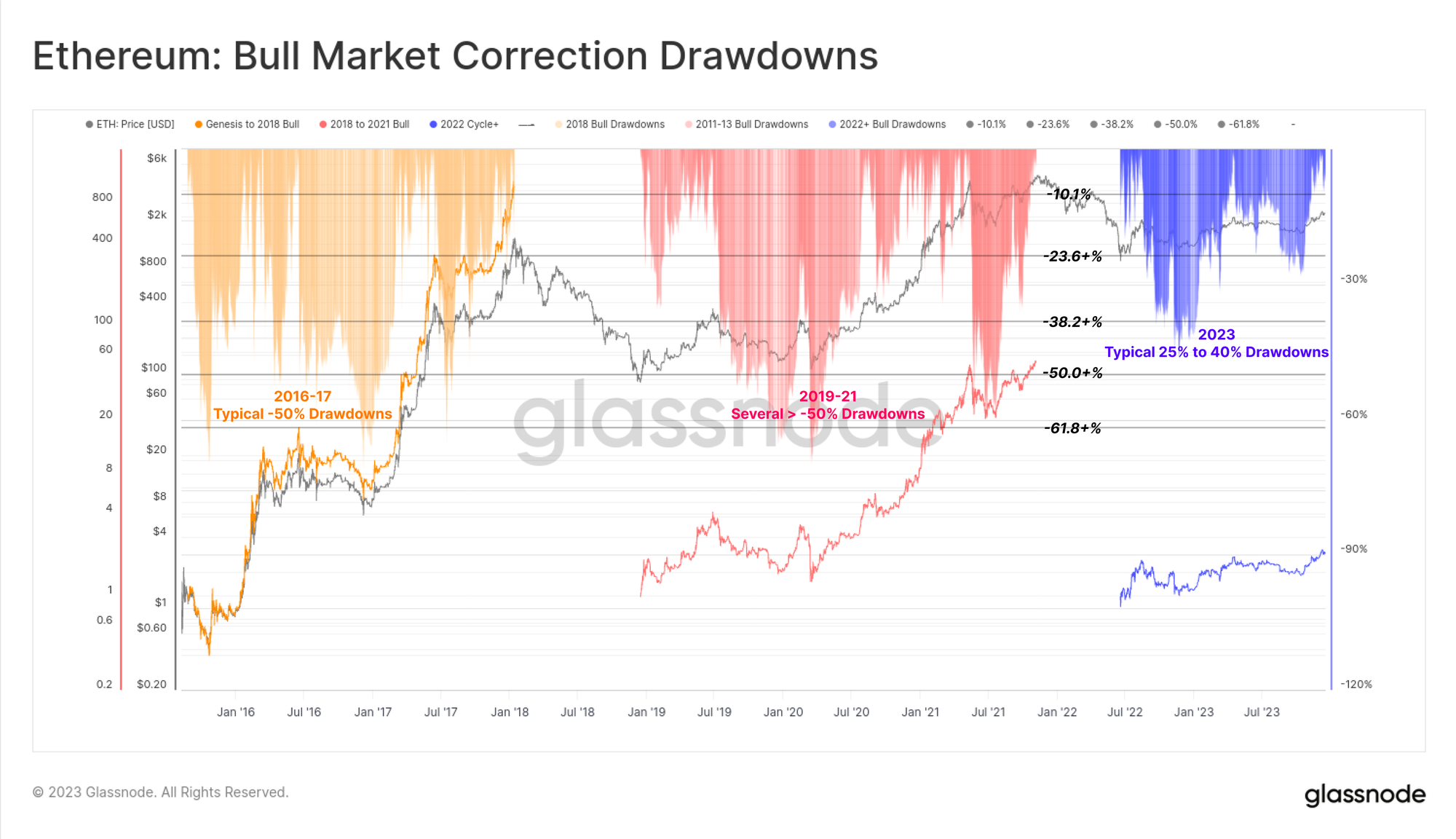
Meanwhile, Ethereum has also experienced relatively shallow price corrections, with the deepest reaching 40% in early January. Although Ethereum’s performance has been slightly sluggish relative to Bitcoin, this also constitutes a positive backdrop: it is encountering a relatively resilient demand flow due to the reduction in supply caused by the merger.
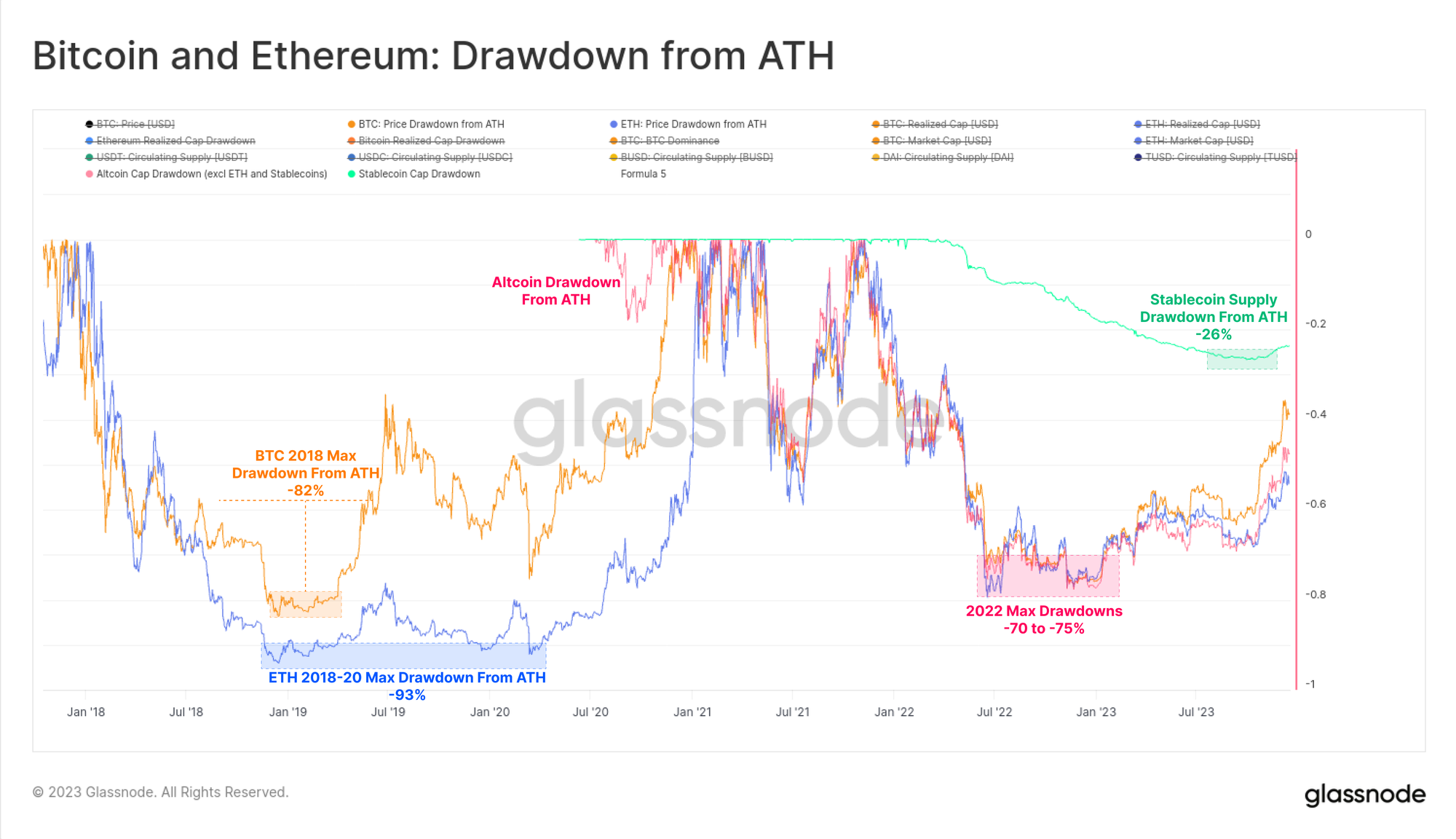
Looking back at the bear market in 2022, it seems slightly mild compared to the bear market from 2018 to 2020. Most major digital assets fell 75% from their all-time highs in early 2023. The strong rebound from the lows has significantly recouped their losses. Currently, the distance between major assets and their all-time highs is: Bitcoin (BTC) -40%, Ethereum (ETH) -55%, Altcoin excl ETH and Stablecoins) -51%, and Stablecoin supplies -24%.
From an on-chain data perspective, the Realized Cap of Bitcoin and Ethereum provides an excellent tool for tracking the recovery of capital inflows into both assets. The overall decline in realized market capitalization during the 2022 bear market is similar to previous cycles, reflecting net capital outflows of 18% for Bitcoin and 30% for Ethereum.
However, capital inflows have been relatively slow to recover, with Bitcoin Realized Cap now over 715 days since its peak (ATerH). By comparison, it has typically taken about 550 days to achieve full market capitalization recovery in past cycles.
Breaking through the $30,000 resistance level
The Bitcoin market has overcome multiple technical and on-chain pricing models this year, which have helped us understand just how strong its performance has been.
Earlier this year, a short squeeze in January sent the market above realized prices that have effectively capped prices since June 2022
🟠. The advance also broke above the 200-day moving average 🔵 until it encountered resistance at the 200-week moving average 🔴 in March.
Bitcoin price subsequently consolidated between the 200-day moving average 🔵 and the real market average price 🟢 until August, which resulted in one of the least volatile periods in Bitcoin history (see WoC-32 and WoC-39). Immediately afterwards, a rapid deleveraging event took the price from $29,000 to $26,000, below both long-term technical price averages mentioned above.
The October rally was a real game changer, reviving all remaining price models and breaking above the key psychological level of $30,000. Bitcoin has since reached a yearly high of $44,500 and is consolidating around $42,000 at the time of writing.
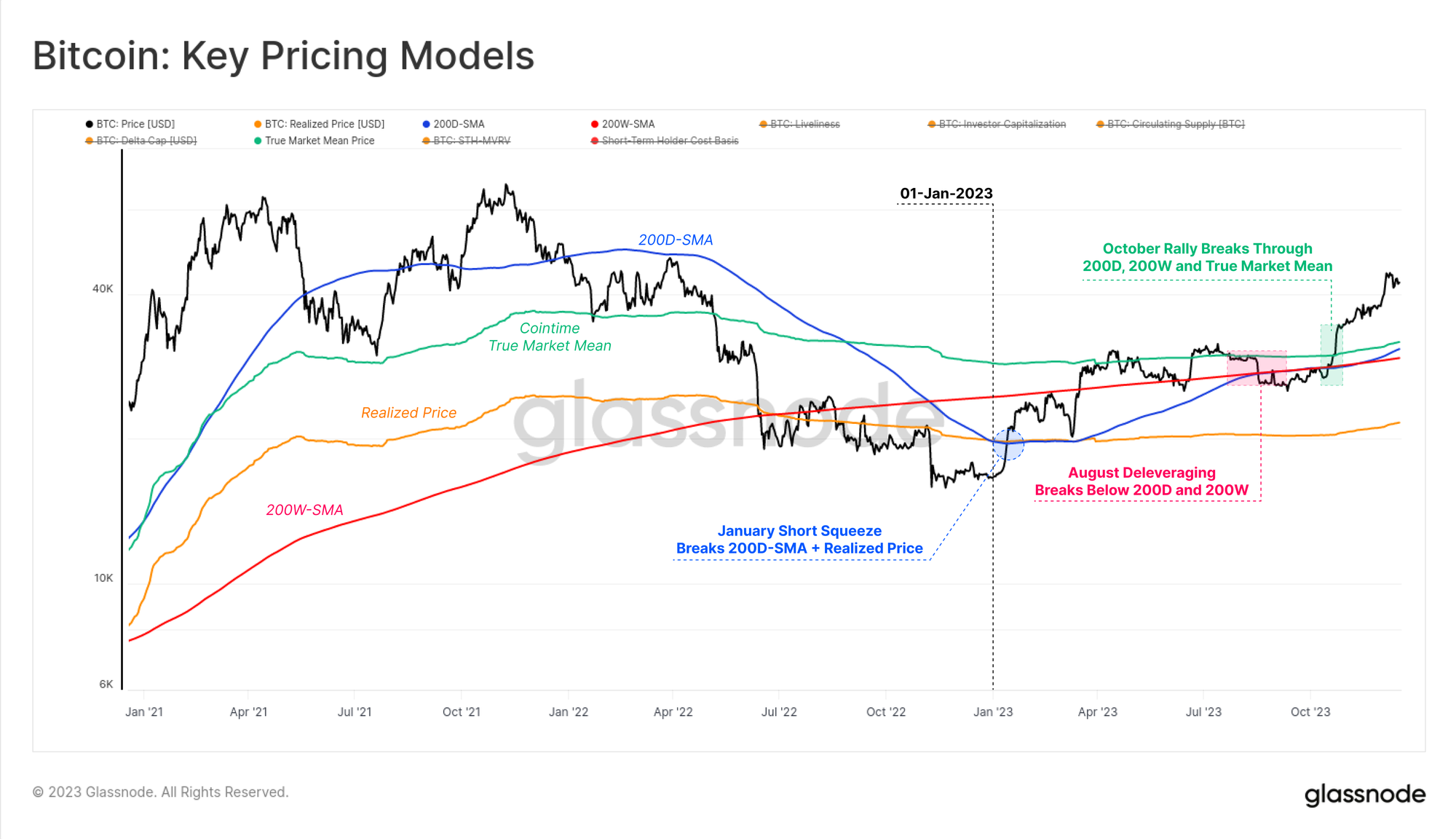
Readers may notice a common thread throughout this article, which is that capital flows, market momentum and performance have accelerated since the end of October. In WoC-49, we explored this in relation to Bitcoin price breaking through the $30,000 level, which we described as transitioning from an "uncertain recovery" phase to an "enthusiastic uptrend."
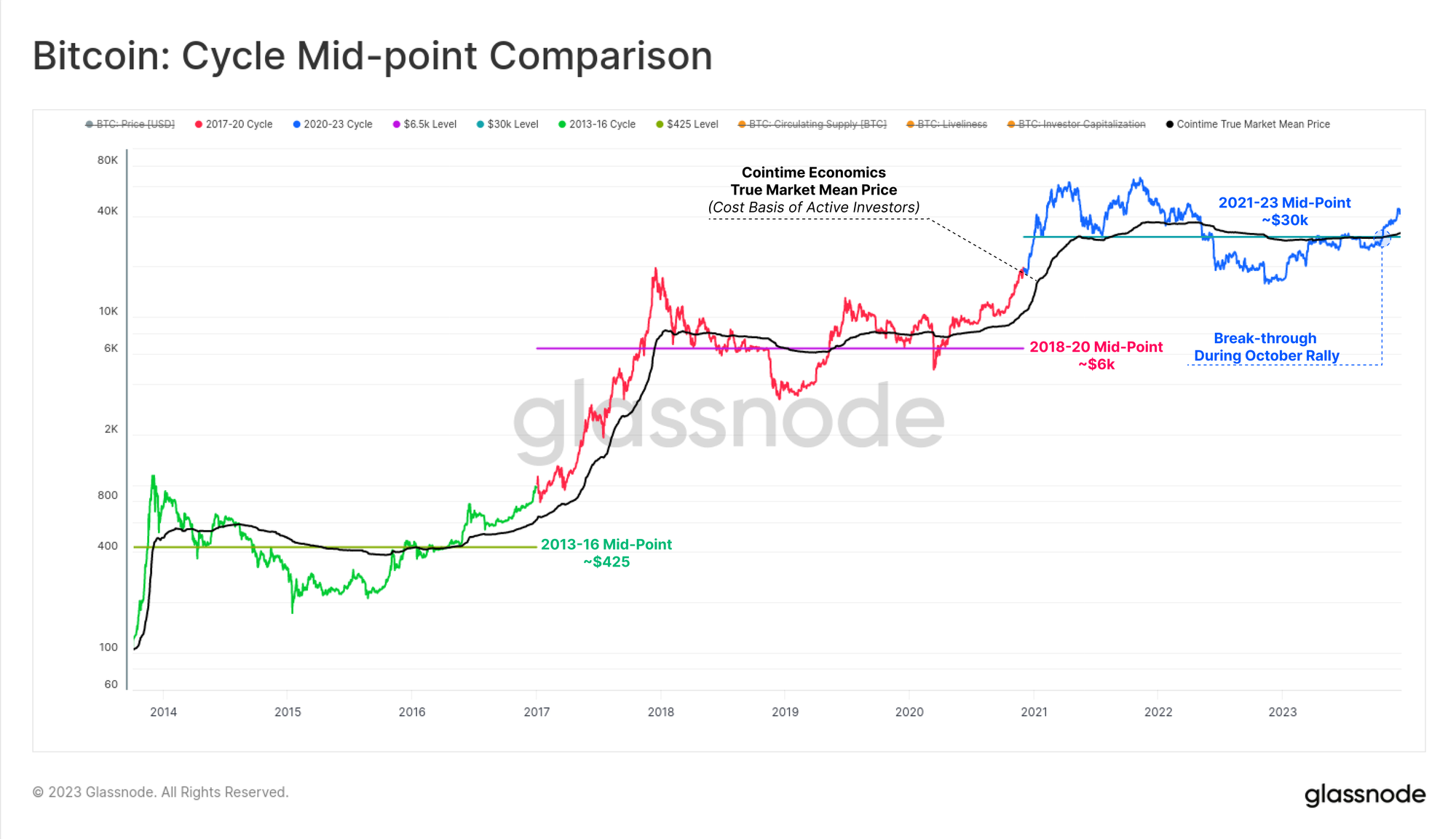
Notably, October’s rally broke through two important levels that had marked such transitions in previous cycles:
- Technical Market Midpoint: Acts roughly as support during early bear markets and as resistance during late bear markets. This cycle, $30,000 was the last major support area before a series of sell-offs and a breakdown in FTX.
- Cointime real market average price: reflects the cost basis of active investors. This model was developed in our Cointime Economics research in partnership with ARK Invest.
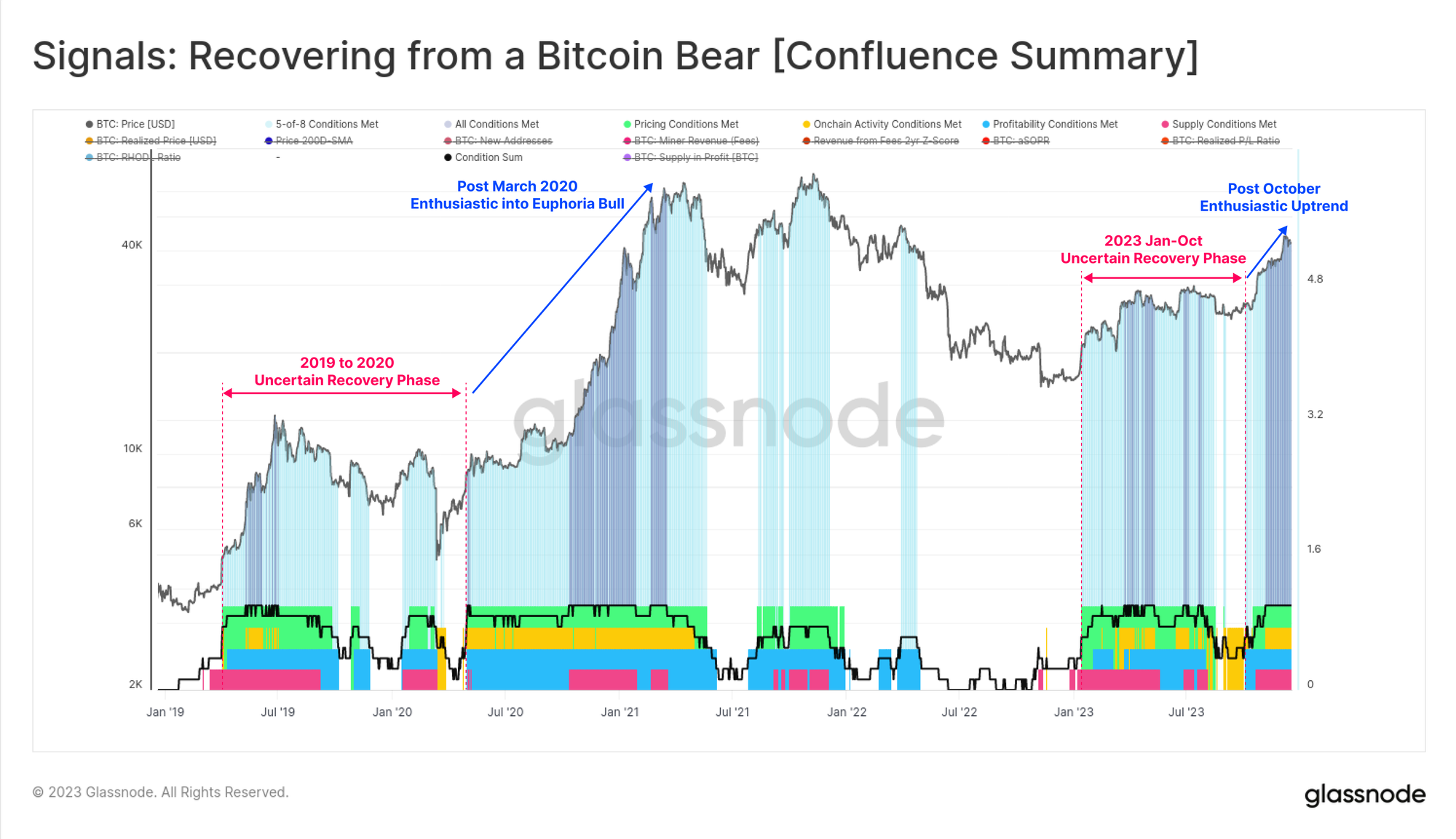
We can also see a significant change of character across our “Bitcoin Bear Market Recovery Signal”, with all eight indicators having moved into positive territory since October. Readings for much of 2023 have been mixed, very similar to the 2019-2020 period.
With all eight indicators now active, this suggests that from multiple angles and across several areas of the Bitcoin market structure, the market has moved into positive territory typically associated with a strong uptrend.
Growth in transaction volume, fees and inscriptions
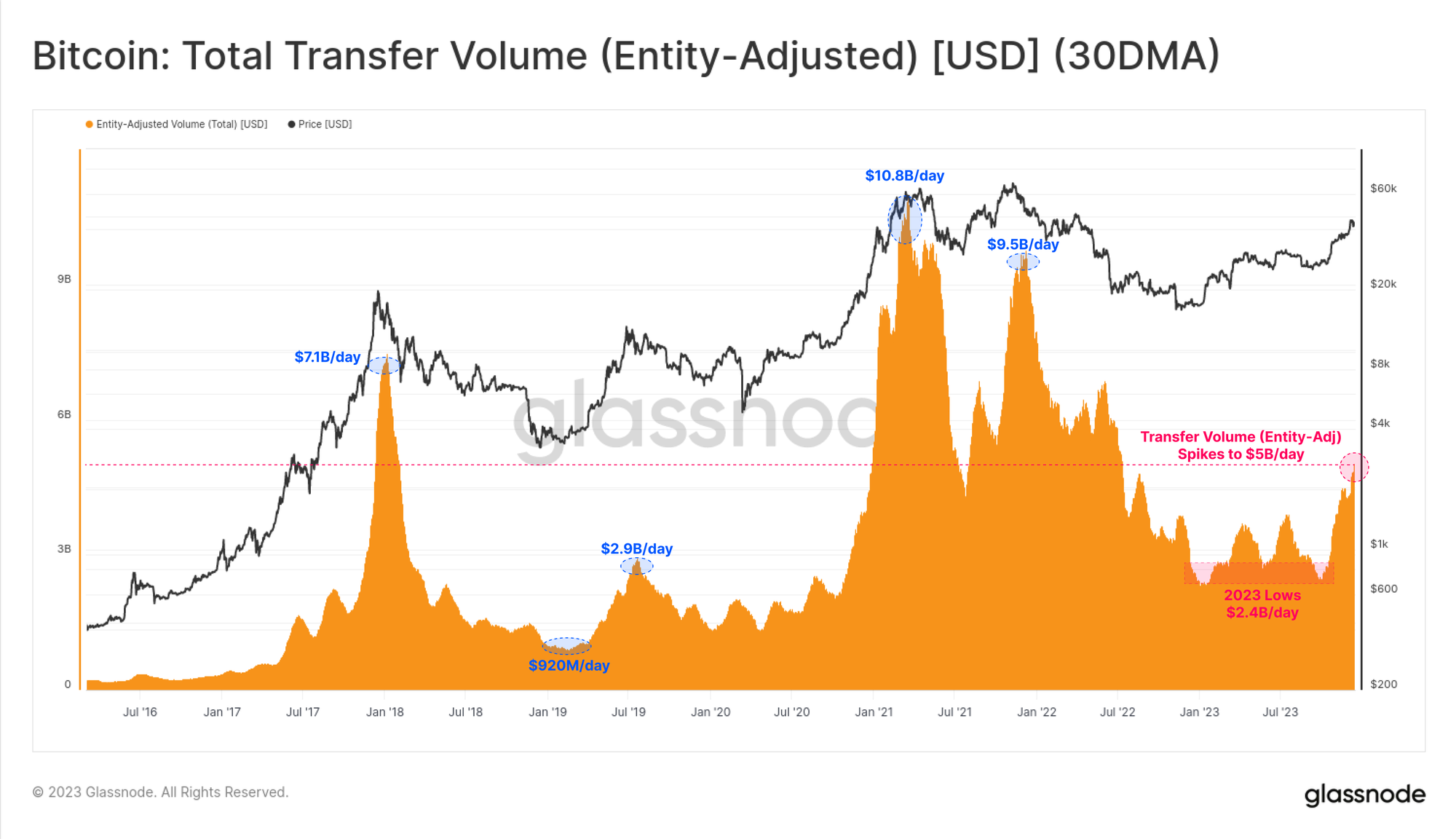
Supporting the view that the market staged a shift in October, Bitcoin trading volume had been relatively stagnant before then. The October rally pushed Bitcoin transfer volumes from $2.4 billion per day to more than $5 billion, the highest level since June 2022.
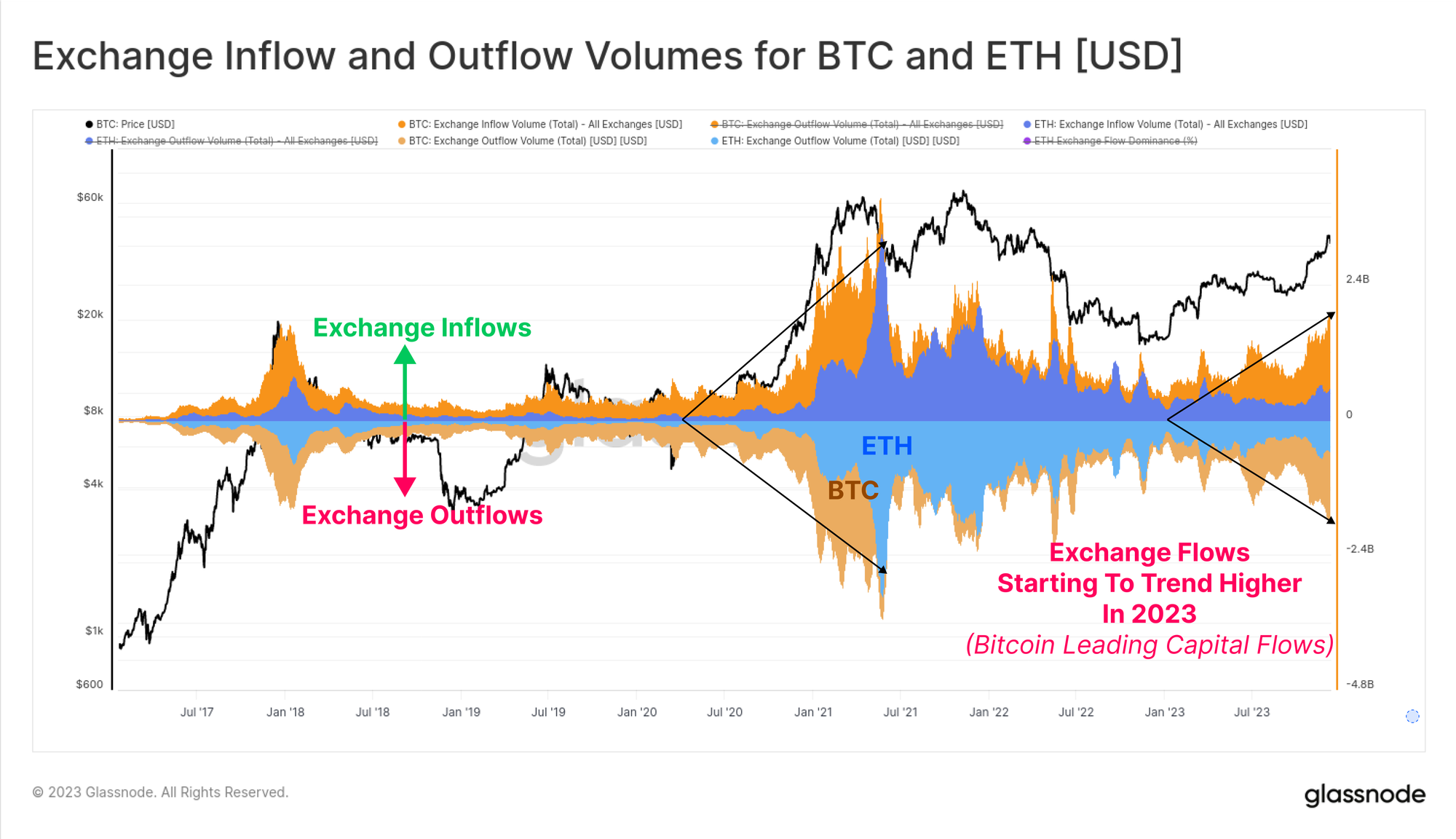
We can also see exchange inflows and outflows for BTC and ETH increasing throughout the year, indicating a general expansion in spot trading interest. Notably, BTC transaction volume is growing significantly faster than ETH, which is consistent with observations of rising Bitcoin dominance. BTC typically leads the recovery of investor confidence after prolonged bear markets, and this chart helps visualize this phenomenon.
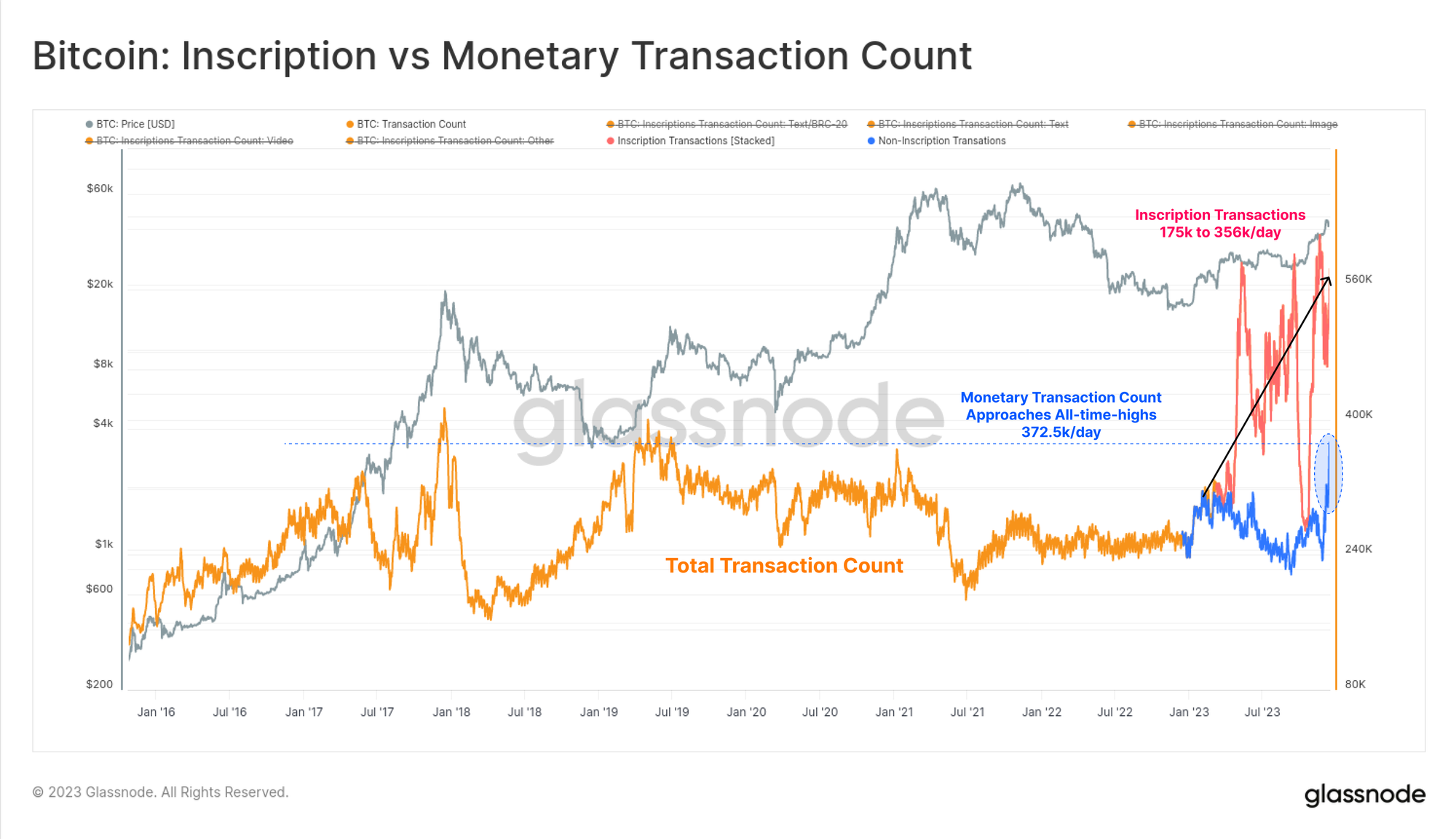
Bitcoin transaction count reached new all-time highs this year, largely due to the unexpected rise of Ordinals and Inscriptions. These transactions embed data, such as text files and images, into the signature portion of the transaction.
Therefore, we can now evaluate two types of Bitcoin transactions:
🟠 Total transaction count (unfiltered)
🔵 Currency trading, reaching new multi-year highs, almost hitting an all-time high of 372.5k per day.
🔴 Inscription trading, adding 175k to 356k transactions per day on top of classic currency trading.
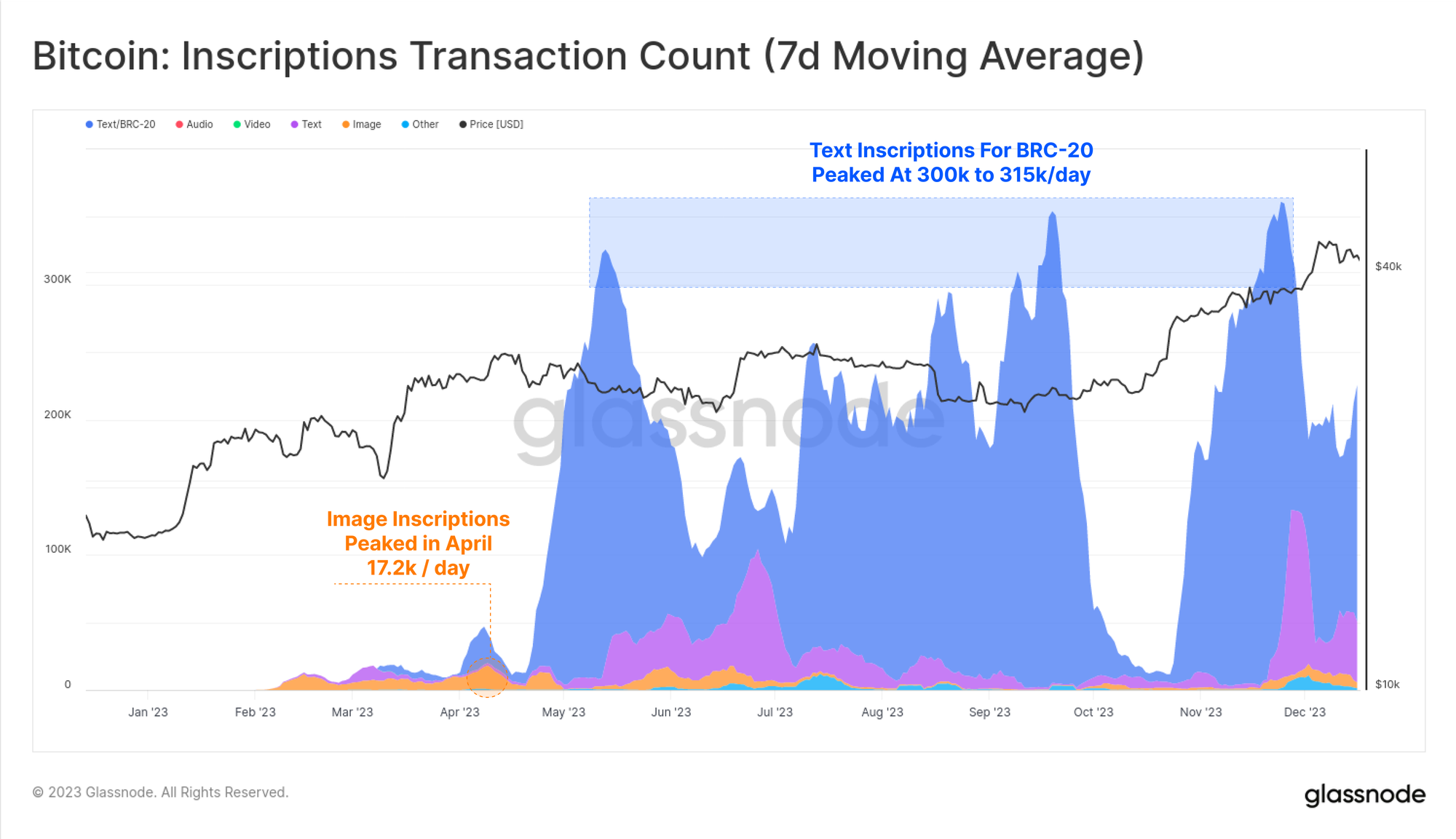
Most of the inscriptions are primarily in the form of text and are closely tied to an emerging token standard called BRC-20 🔵. At its peak, the Bitcoin network had over 300,000 daily inscriptions, a number that far exceeded the image-based daily peak of 17.2 thousand in April 🟠 (with increased fees due to larger image files) , the cost of engraving images is also higher).
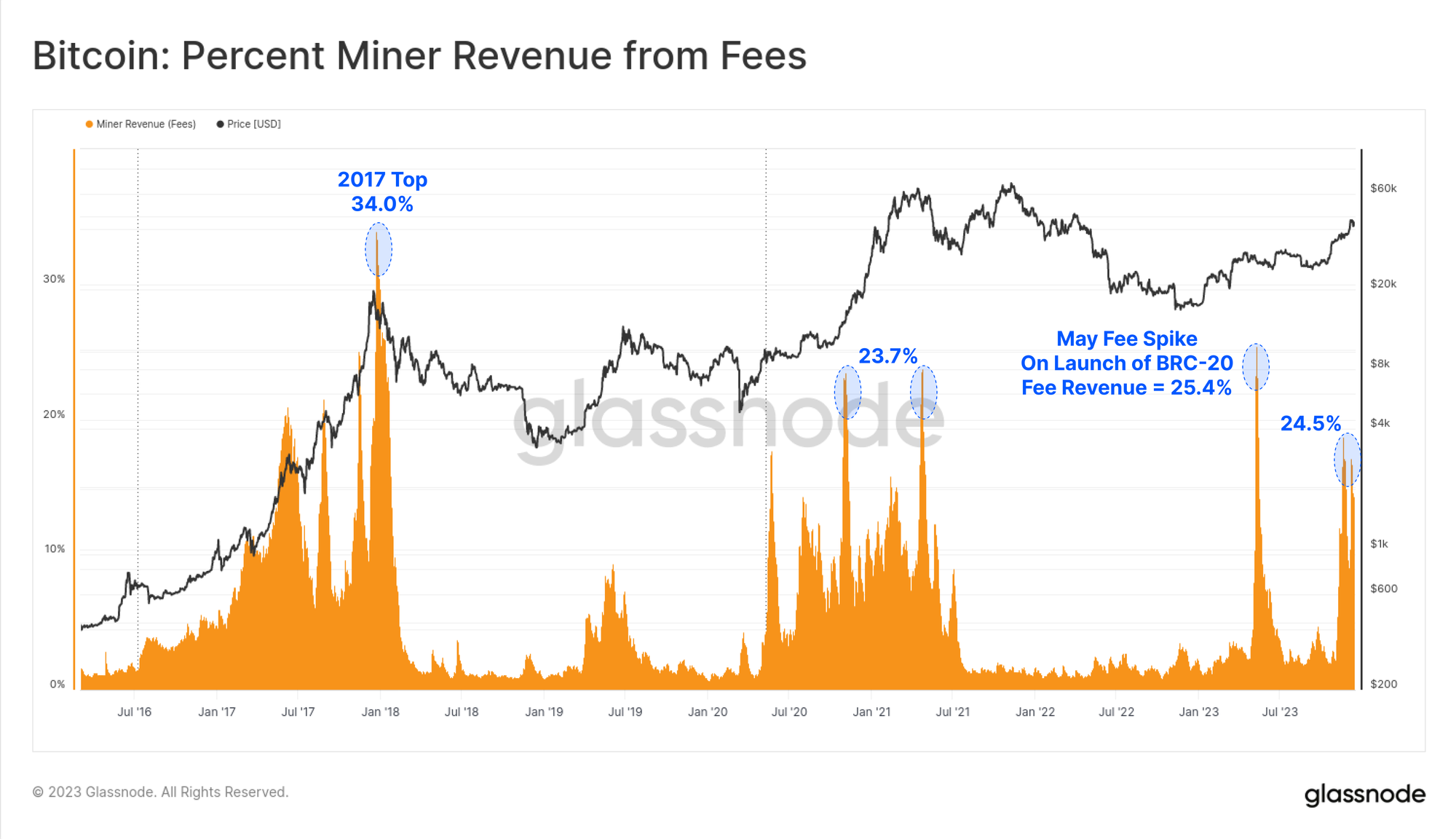
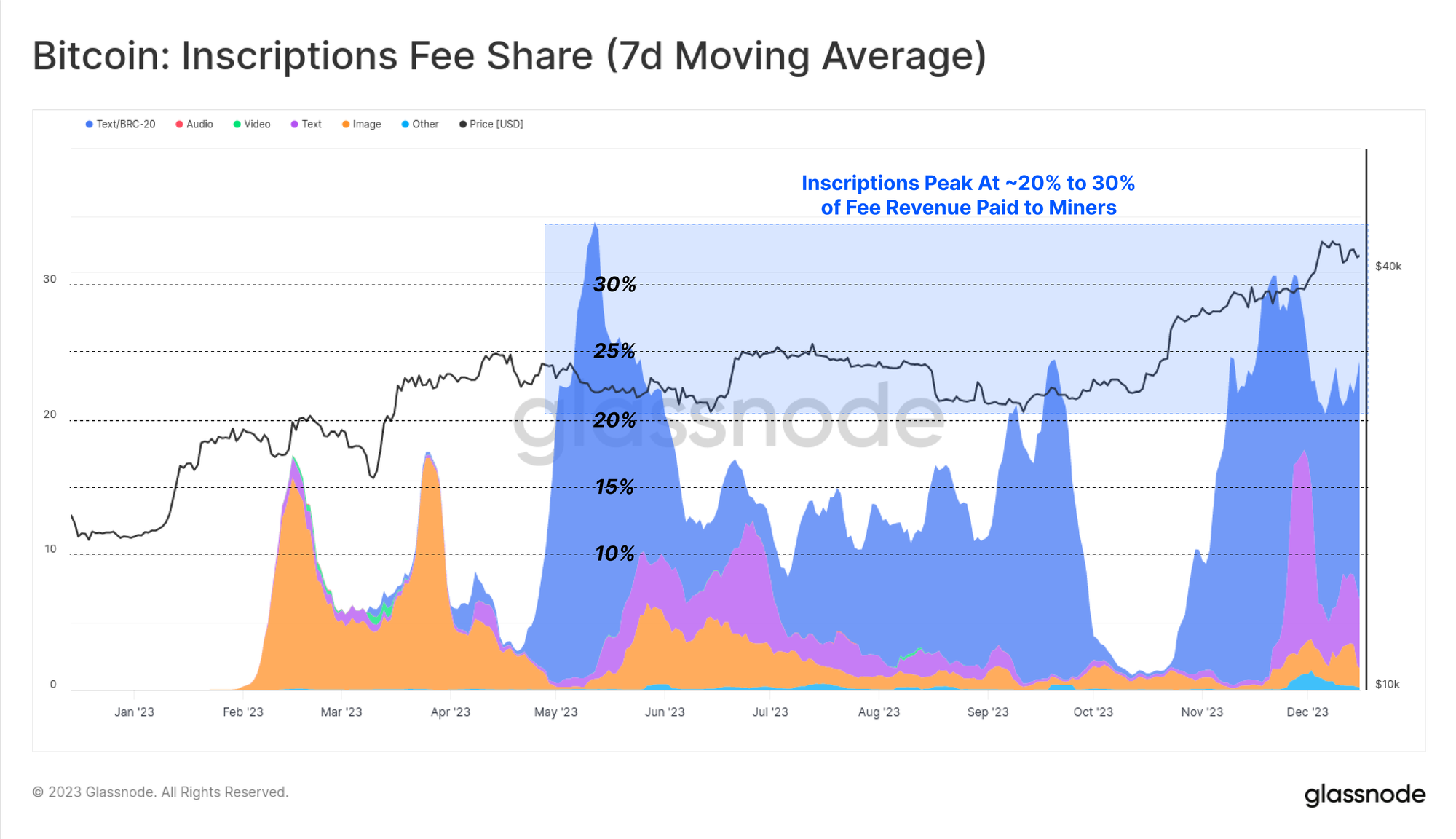
Due to the emergence of this new buyer of Bitcoin block space, the revenue miners receive from fees has increased significantly, with several blocks in 2023 even exceeding the 6.25 BTC subsidy. This year has seen two major fee spikes, with fees now accounting for about a quarter of miners’ revenue. This is comparable to the bull market mania phases of 2017 and 2021.
Interestingly, although inscriptions account for approximately 50% of confirmed transactions, they surprisingly only occupy approximately 10% to 15% of the block space. This is due to the small size of the text files and details related to SegWit data discounting (we discussed this topic in WoC-39).
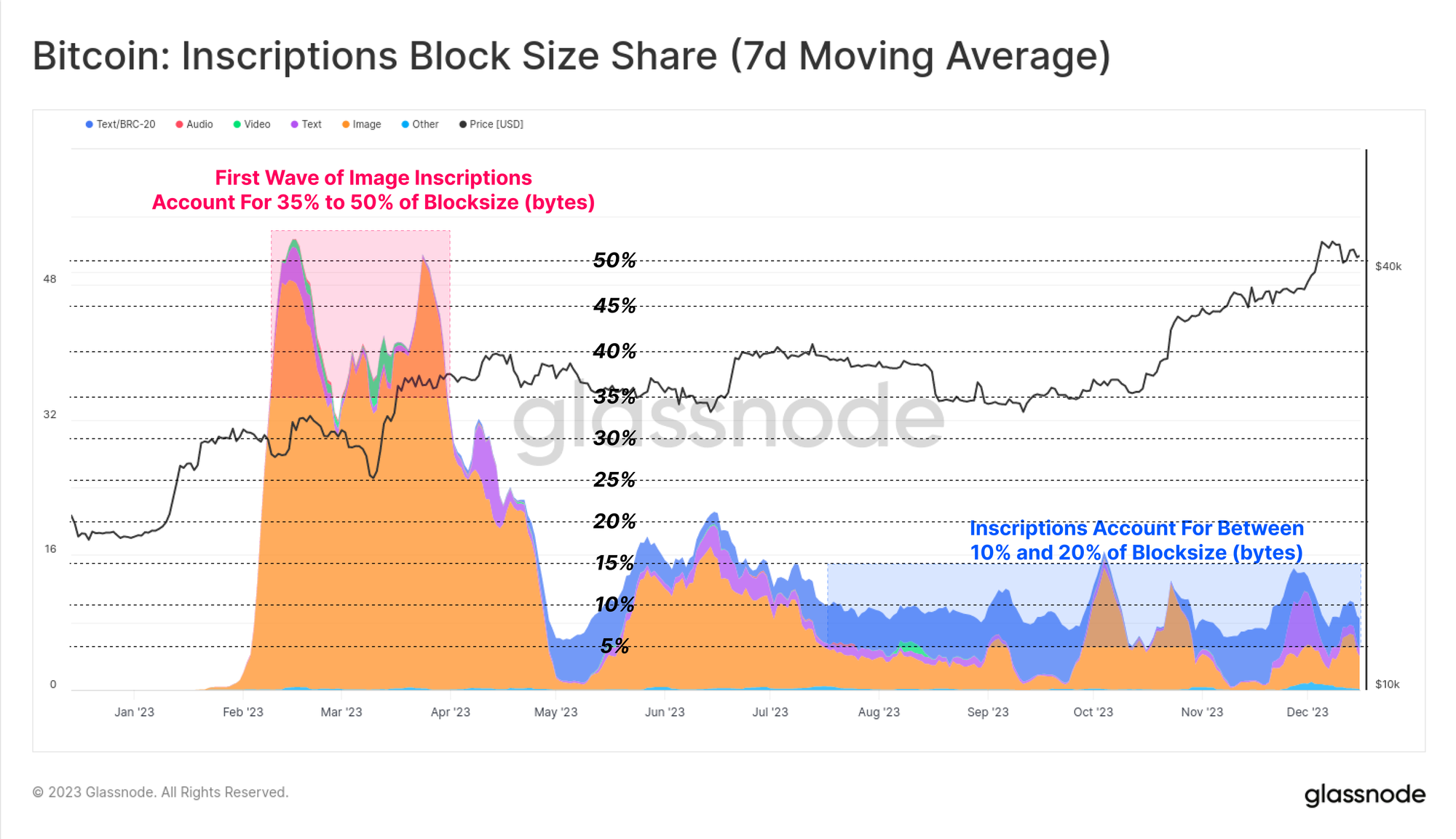
This year, Inscription has generated 15% to 30% of total transaction fee revenue for miners. This highlights the counter-intuitive nature of SegWit discounts, where Inscription transactions occupy a minority share of the block space (measured in bytes), paying a significant portion of fees, but also account for roughly half of all confirmed transactions.
In effect, inscriptions and SegWit data discounts enable miners to fit more transactions (paying more fees) into the same maximum size block. If demand for Inscriptions continues, its impact on miners’ income could significantly improve miner economics, especially as the fourth halving approaches.
Ethereum bridging, staking and Shanghai upgrade
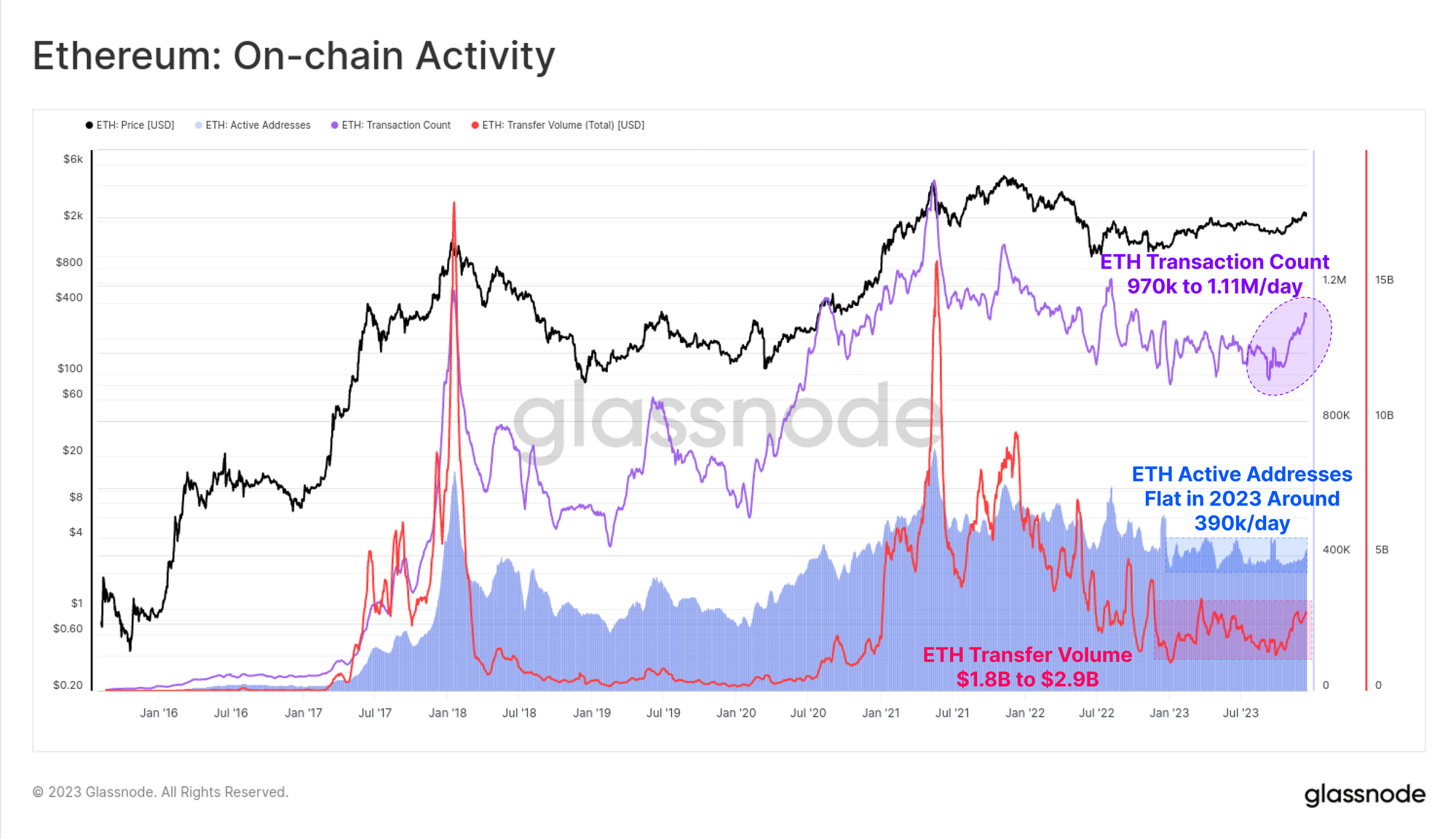
For Ethereum, on-chain activity has slowed somewhat this year, with October once again marking a significant turning point.
- The number of active addresses remains relatively stable at approximately 390,000 per day.
- Recently, the transaction count increased from 970,000 to 1.11 million per day.
- Ethereum transfer volume rose from $1.8 billion to $2.9 billion per day.
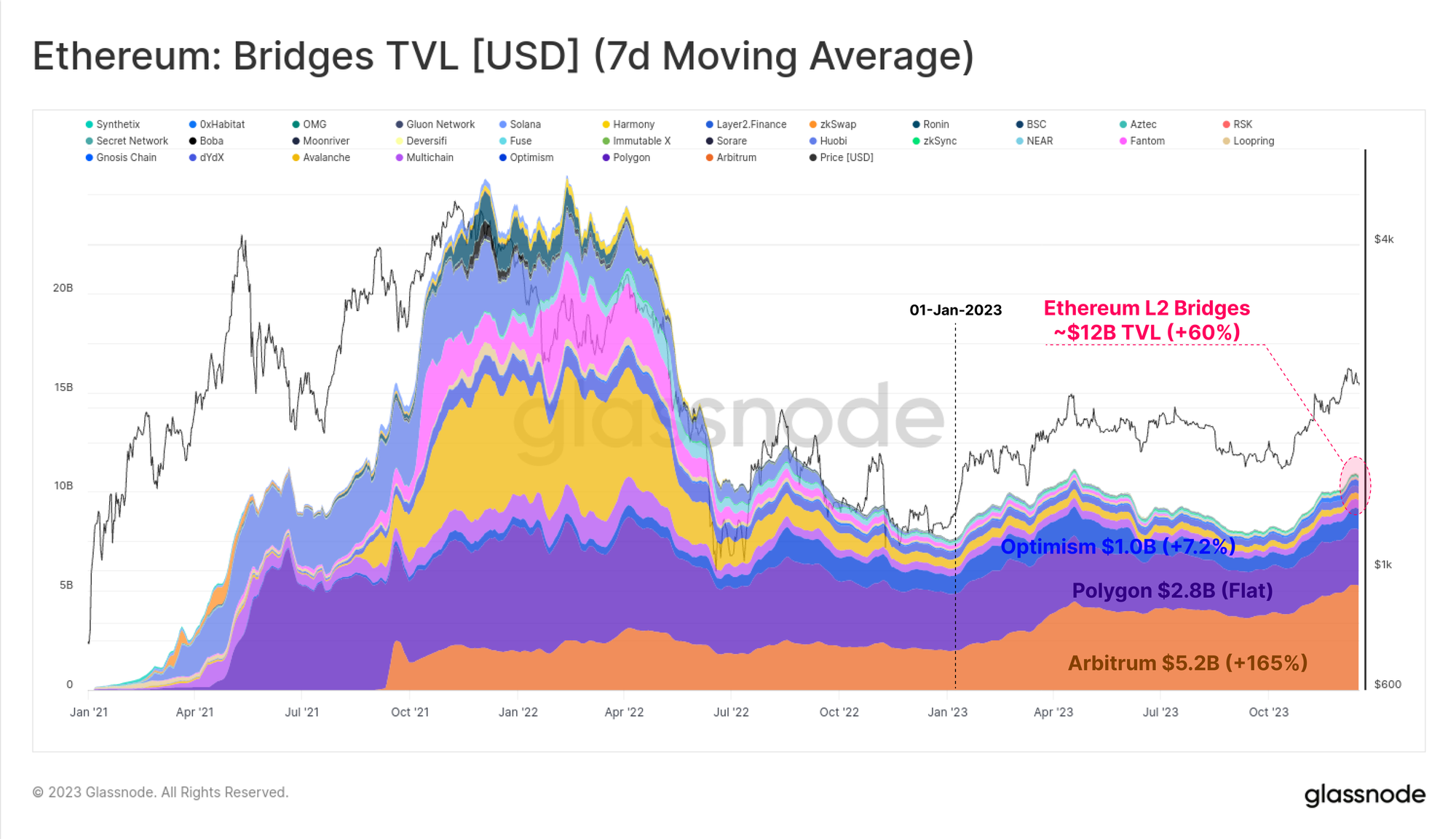
While Ethereum’s market price is often lower than the overall digital asset space, its ecosystem continues to expand, mature, and grow. In particular, the total value locked in the second-tier network has increased by 60%, with bridge funds now exceeding $12 billion.
These second-layer networks work to expand Ethereum’s block space while anchoring data and final confirmations to the main Ethereum chain to ensure security.
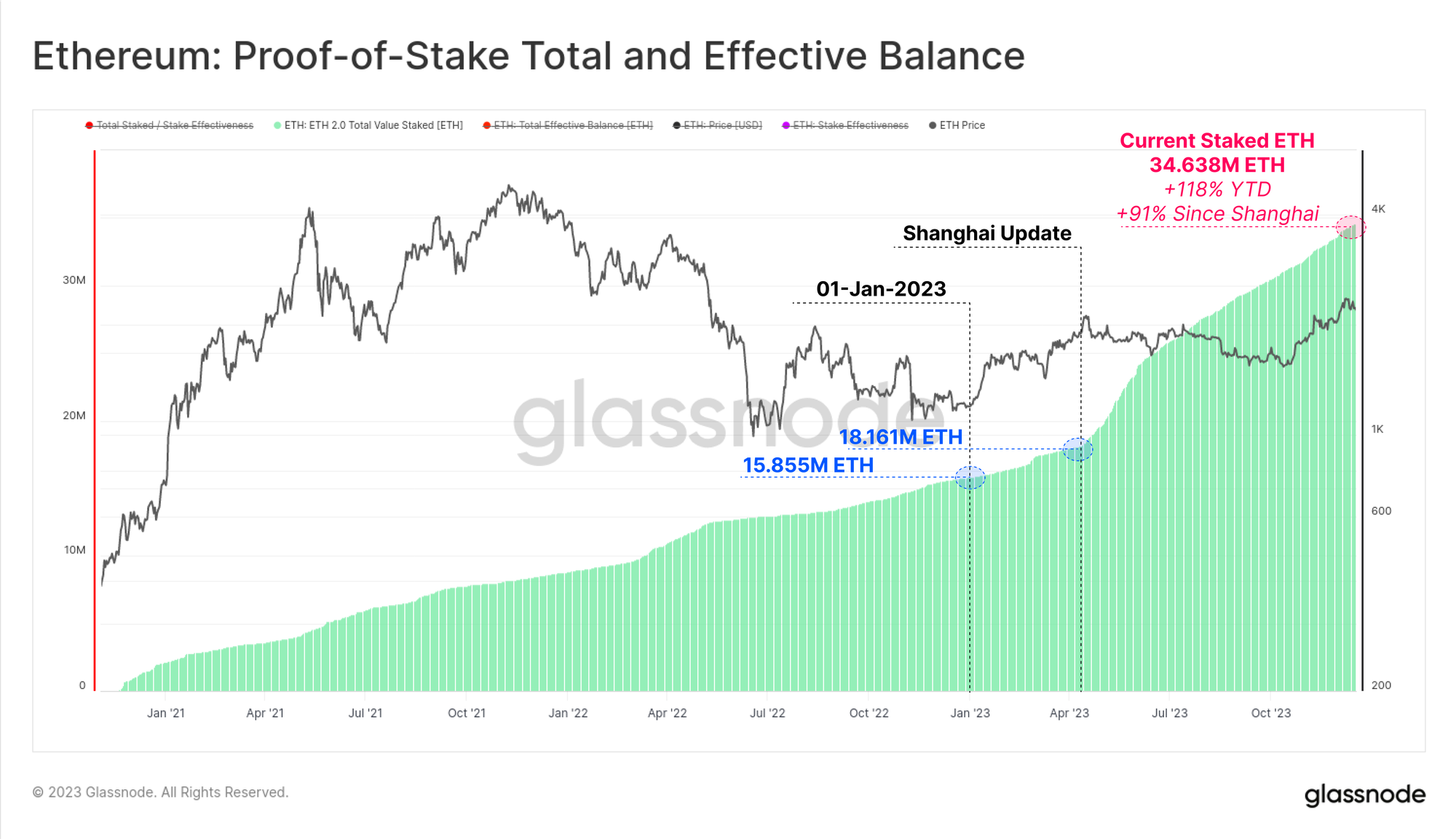
Another key area of growth for Ethereum is the total amount of ether staked through the new proof-of-stake consensus mechanism. So far this year, the amount of pledged Ethereum has increased by 119%, with more than 34.638 million Ethereum now locked in the pledge agreement. The Shanghai upgrade, successfully launched in April, allows stakers to withdraw funds and adjust their staking strategies and settings for the first time since the launch of the Beacon Chain in December 2020.
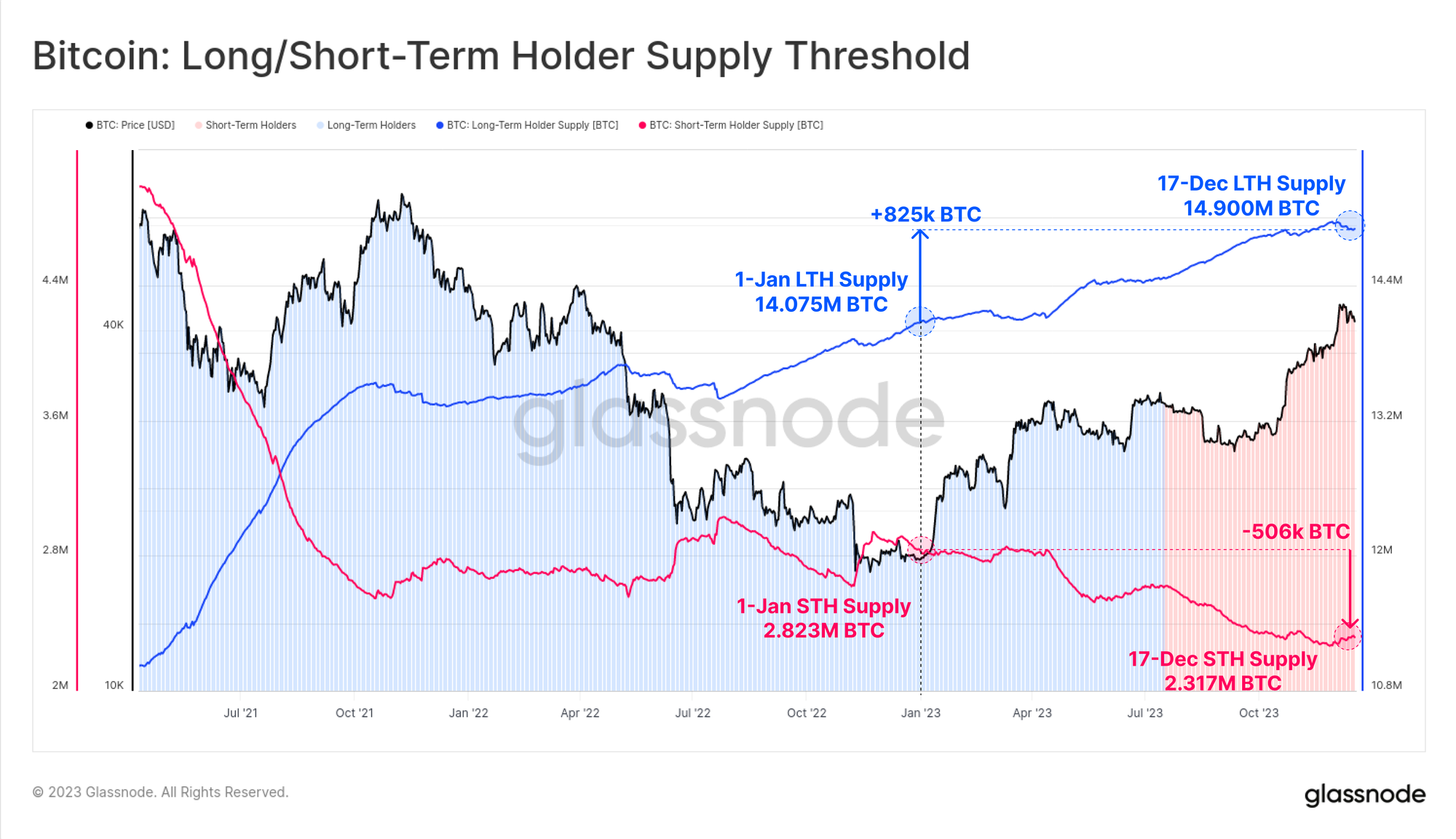
Long-term perspective: Bitcoin’s price performance has been impressive, but a large amount of Bitcoin remains dormant, held in investors’ wallets for the long term. Of the total circulating supply of 19.574 million Bitcoins, more than 14.9 million (76.1%) are not circulating on exchanges and have not moved within 155 days, an increase of 825,000 Bitcoins this year. This reduces the supply for short-term holders to an actual all-time low of just 2.317 million Bitcoins.
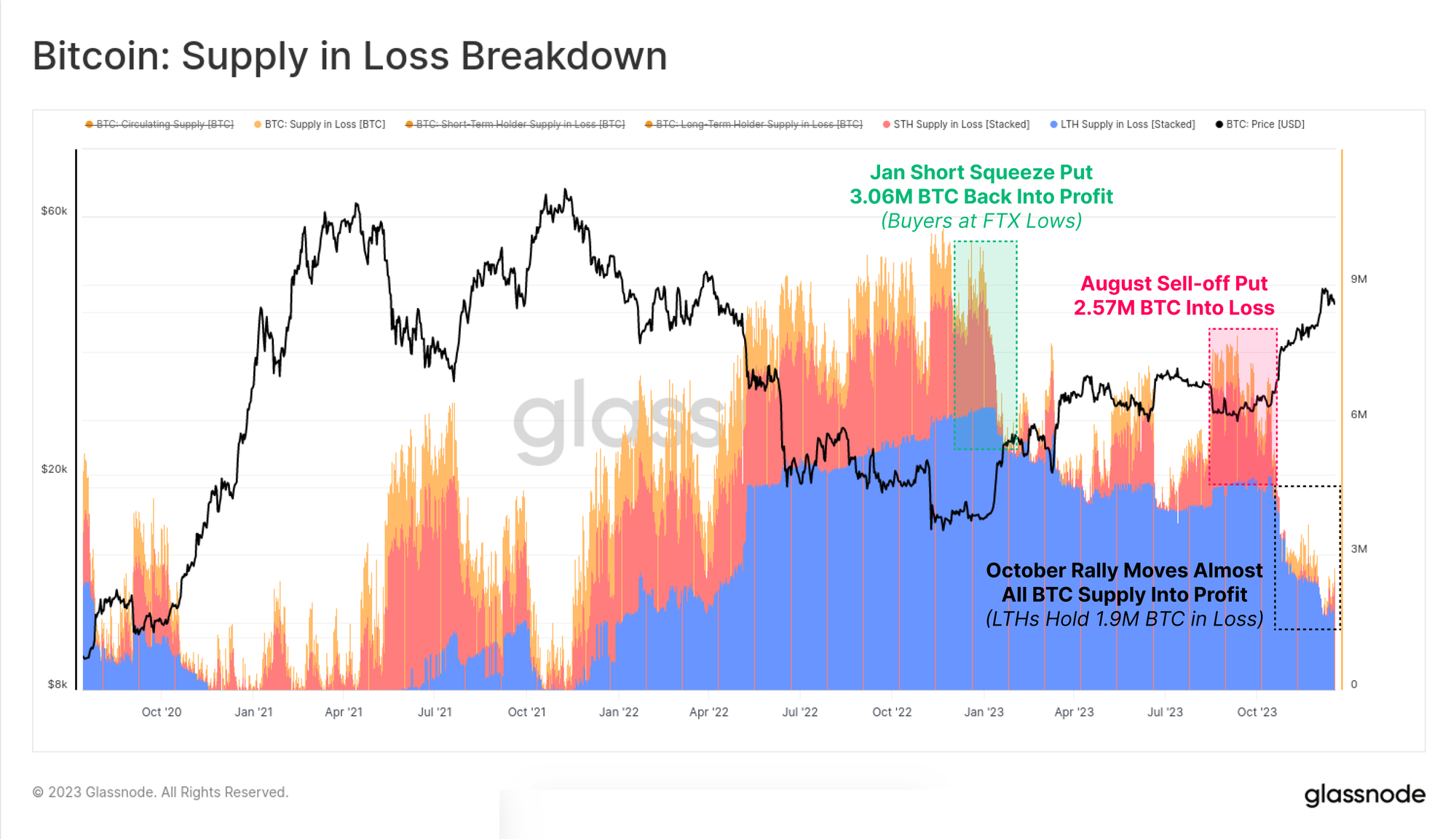
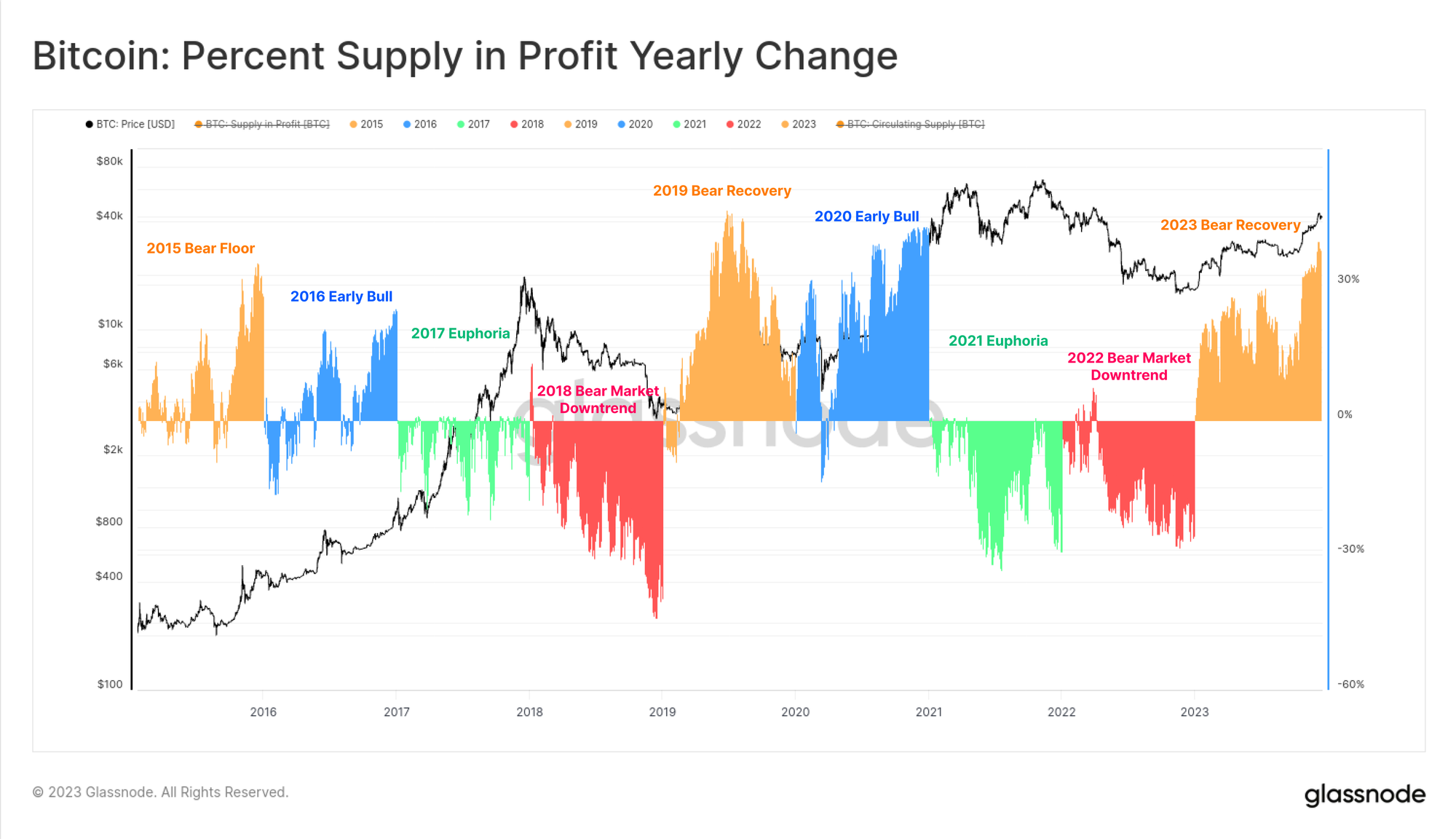
As the market has risen, most investors' coins have returned to profitability, whether due to changing hands or rising prices beyond their cost basis. The chart below shows that the total amount of “losing” coins held has dropped to approximately 1.9 million Bitcoin, mostly held by long-term holders who purchased near the 2021 highs.
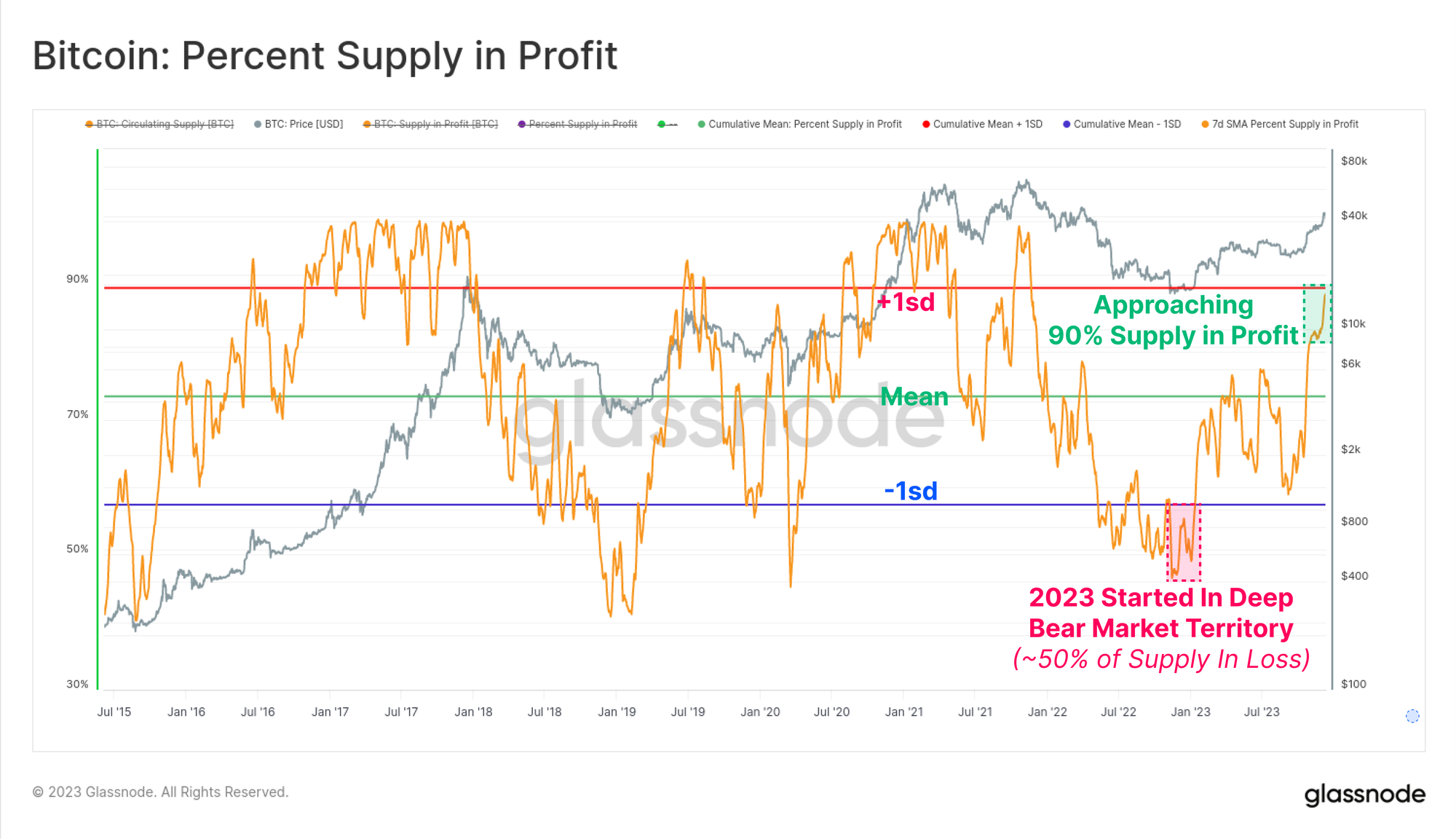
On the other hand, the supply holding "profitable" status now exceeds 90% of the circulating supply, with October's rally taking it above historical averages. Considering more than 50% of the supply is in the red at the start of 2023, this is one of the fastest recoveries in history (second only to the 2019 rally).
The chart below visualizes the percentage change in profitable supply for each calendar year since 2015. While the year-by-year breakdown is not perfect, the traditional four-year Bitcoin cycle allows us to uncover some interesting patterns:
- Bear market bottoms/recoveries witness the largest increases in profitable supply as coins that sold off near the lows return to profitable territory.
- In the early days of a bull market, a general uptrend made most coins profitable and drove the rally to new highs.
- The euphoria of the late bull run, with the market at all-time highs, resulted in slightly positive to negative readings as all coins were already in the black and the market was close to drying up.
- Major bear markets follow market highs, with a large number of currencies falling into losses. Although simple in construction, this framework does highlight the similarities between developments in 2015-16, 2019-20 and so far in 2023.
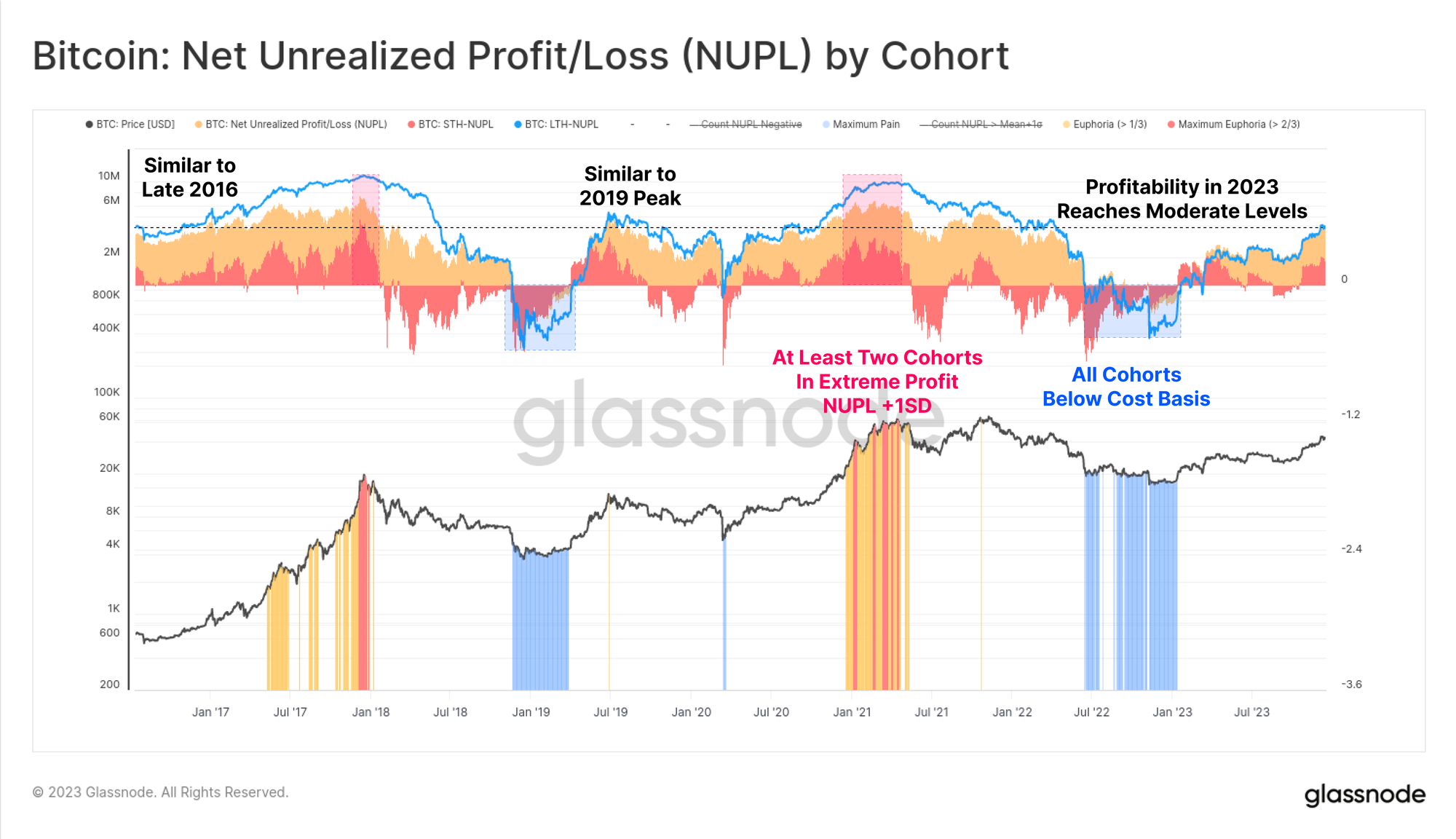
Finally, when it comes to investor profitability, in 2023 the status of long-term holders, short-term holders and ordinary holders will be changed from unprofitable to moderately profitable. Each group's net unrealized profit (NUPL) metric hasn't reached feverish highs yet, but is also comfortably above the respective group's break-even levels.
The maturation of derivatives markets
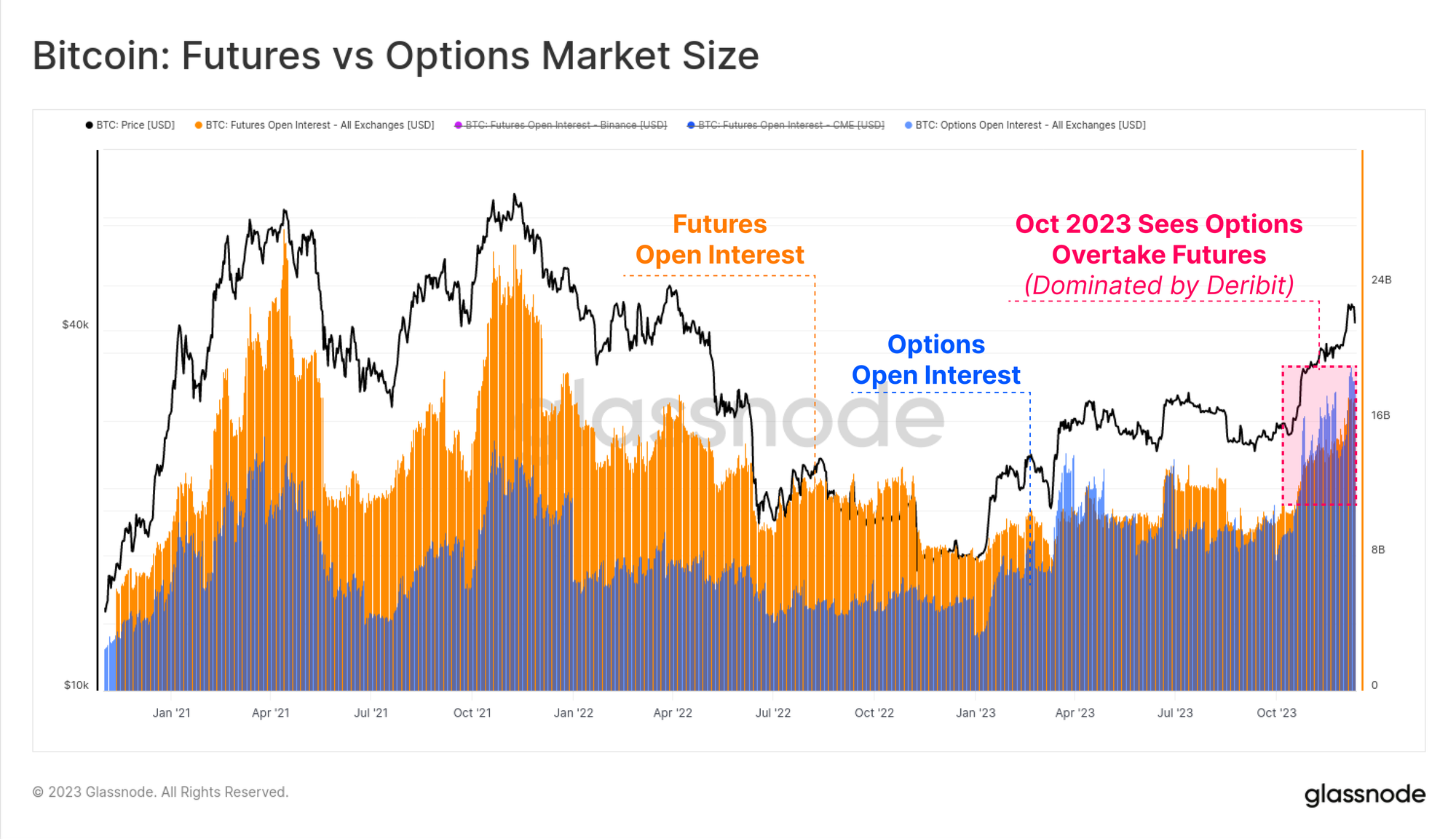
A notable feature of the 2020-2023 cycle is the rise of futures and options markets as the preferred venue for price exposure and liquidity. The year 2023 will be extremely important for this maturation process, as the growth of the options market has matched or exceeded the size of open interest in the futures market.
Both currently have open interest between $16 billion and $20 billion, with Deribit continuing to dominate (more than 90%) the options space. This points to growing institutional interest in Bitcoin, with traders and positions taking advantage of the options market to deploy more sophisticated trading, risk management and hedging strategies.
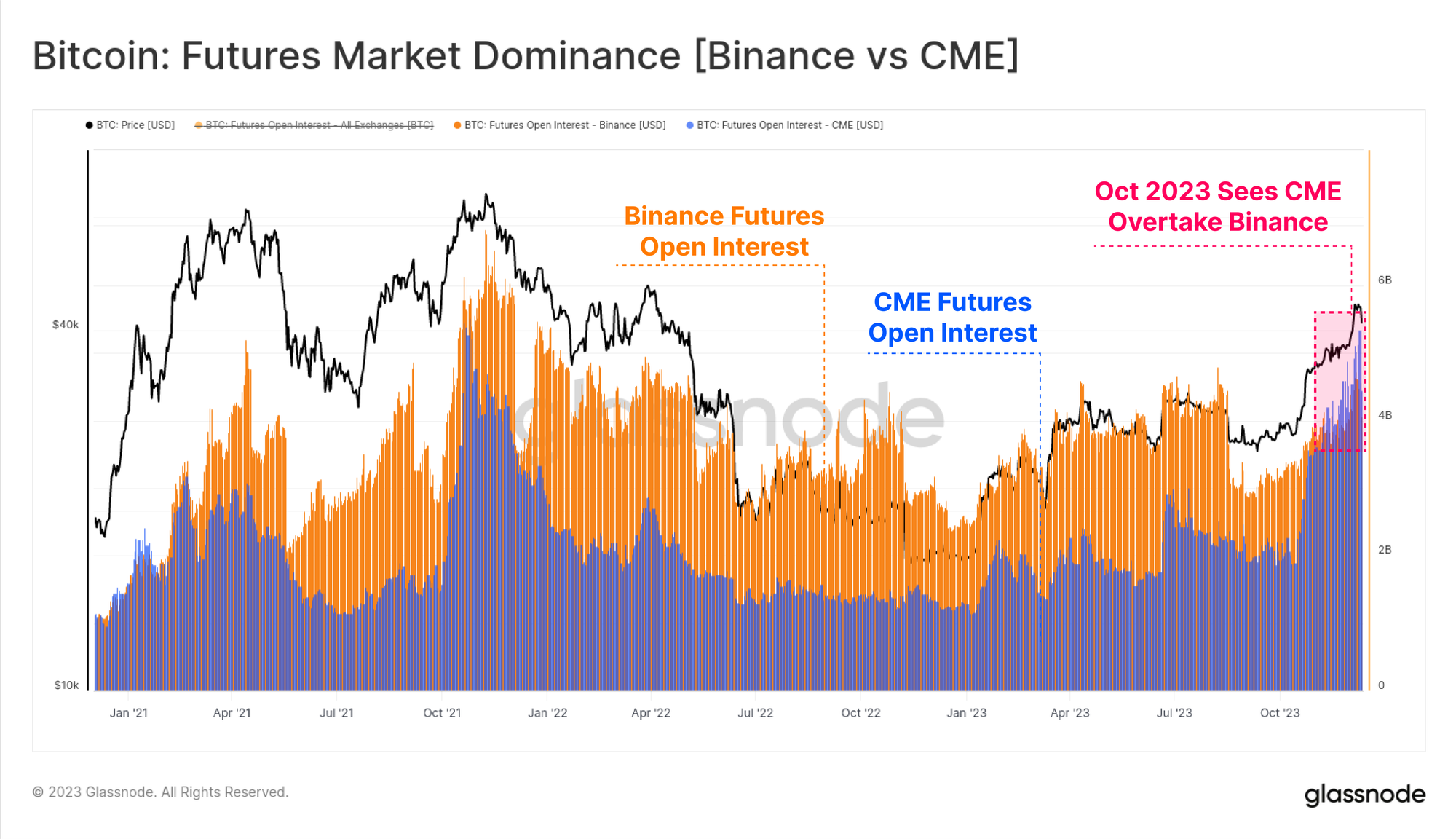
There has also been a noteworthy shift in dominance in the futures market, with open interest on the regulated CME exchange surpassing overseas exchange Binance for the first time. Likewise, October seems to be an important moment for this phase of transition, suggesting an influx of institutional capital.
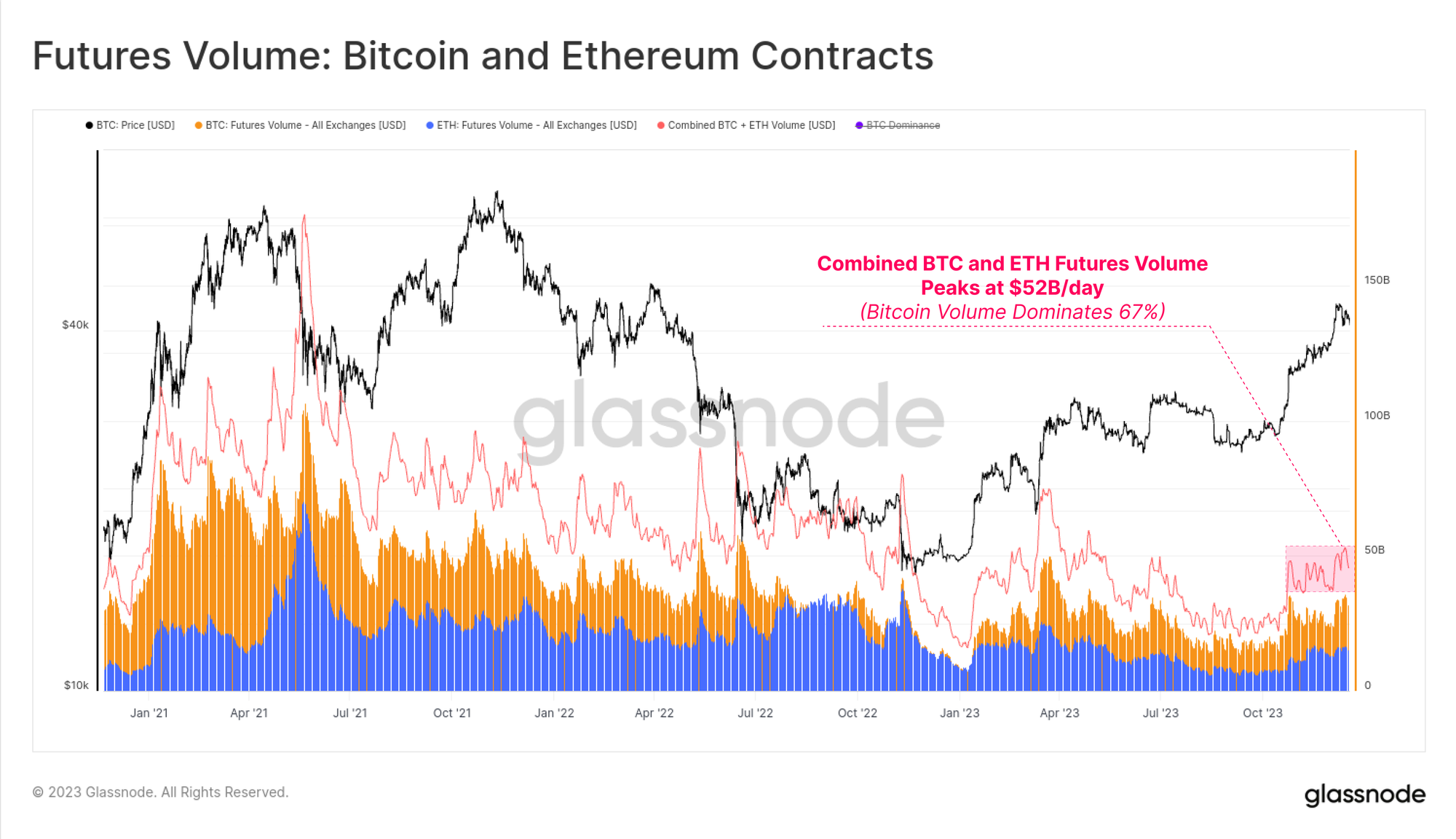
Futures trading volume for BTC and ETH increased in October, with average daily trading volume reaching $52 billion. Bitcoin contracts account for approximately 67% of trading volume, and Ethereum contracts account for 33%.
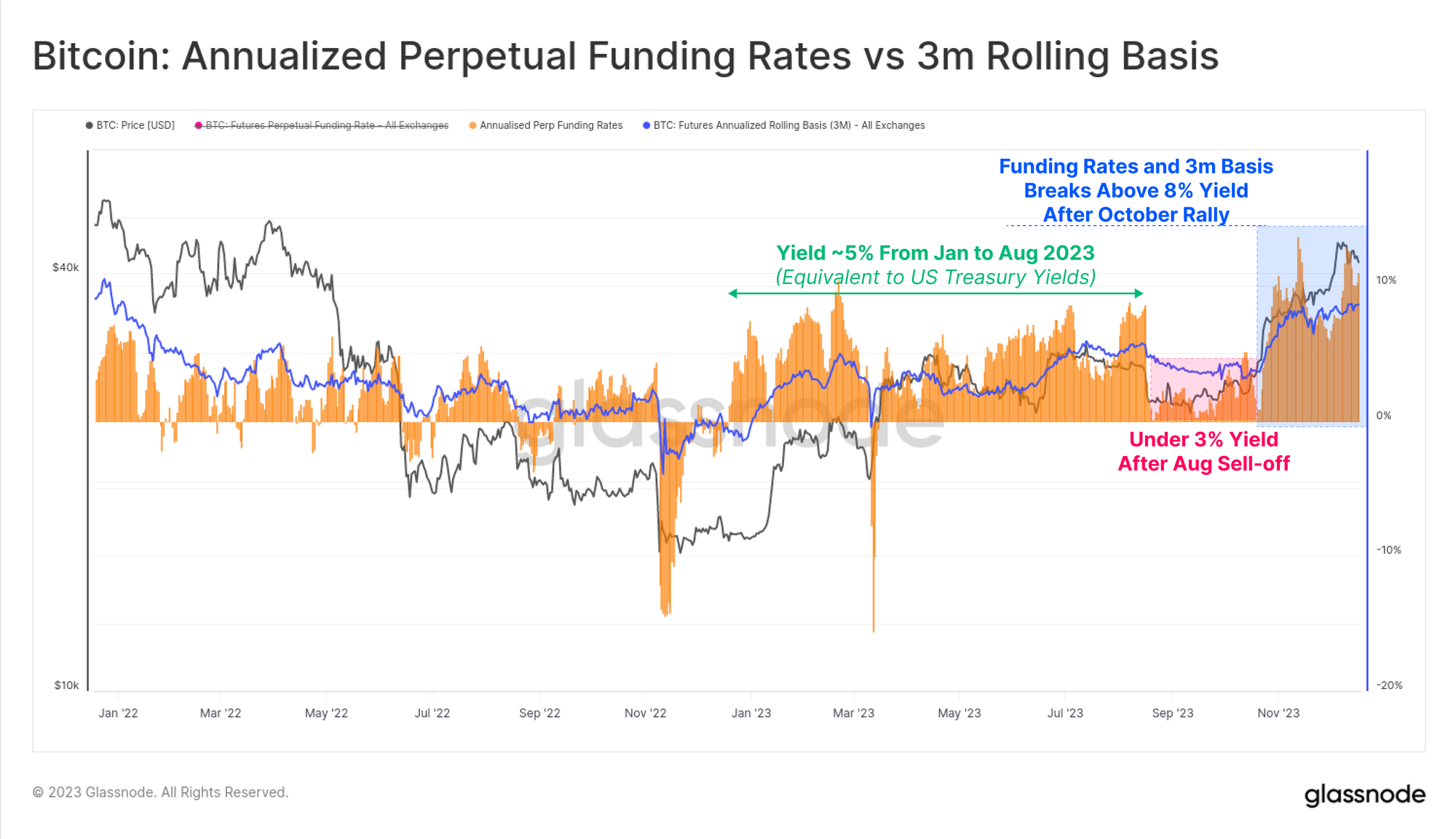
Cash and carry returns available in the futures market go through three distinct phases throughout the year, which also tells the story of capital inflows into the space:
- From January to August, earnings fluctuated around 5%. That's roughly in line with short-term U.S. Treasury yields, so is relatively unattractive given the additional risk and complexity of the trade.
- From August to October, yields fell below 3% following a $26k sell-off and a surprisingly low volatility environment.
- Since October, the yield has exceeded 8%. With futures basis now holding at 300 basis points above U.S. Treasuries, market maker capital now has a meaningful incentive to return to the digital asset space.
Stablecoin supply
A relatively new phenomenon that emerged in the last cycle is the outsized role that stablecoins play in market structure, becoming the preferred quote currency for traders and the main source of market liquidity.
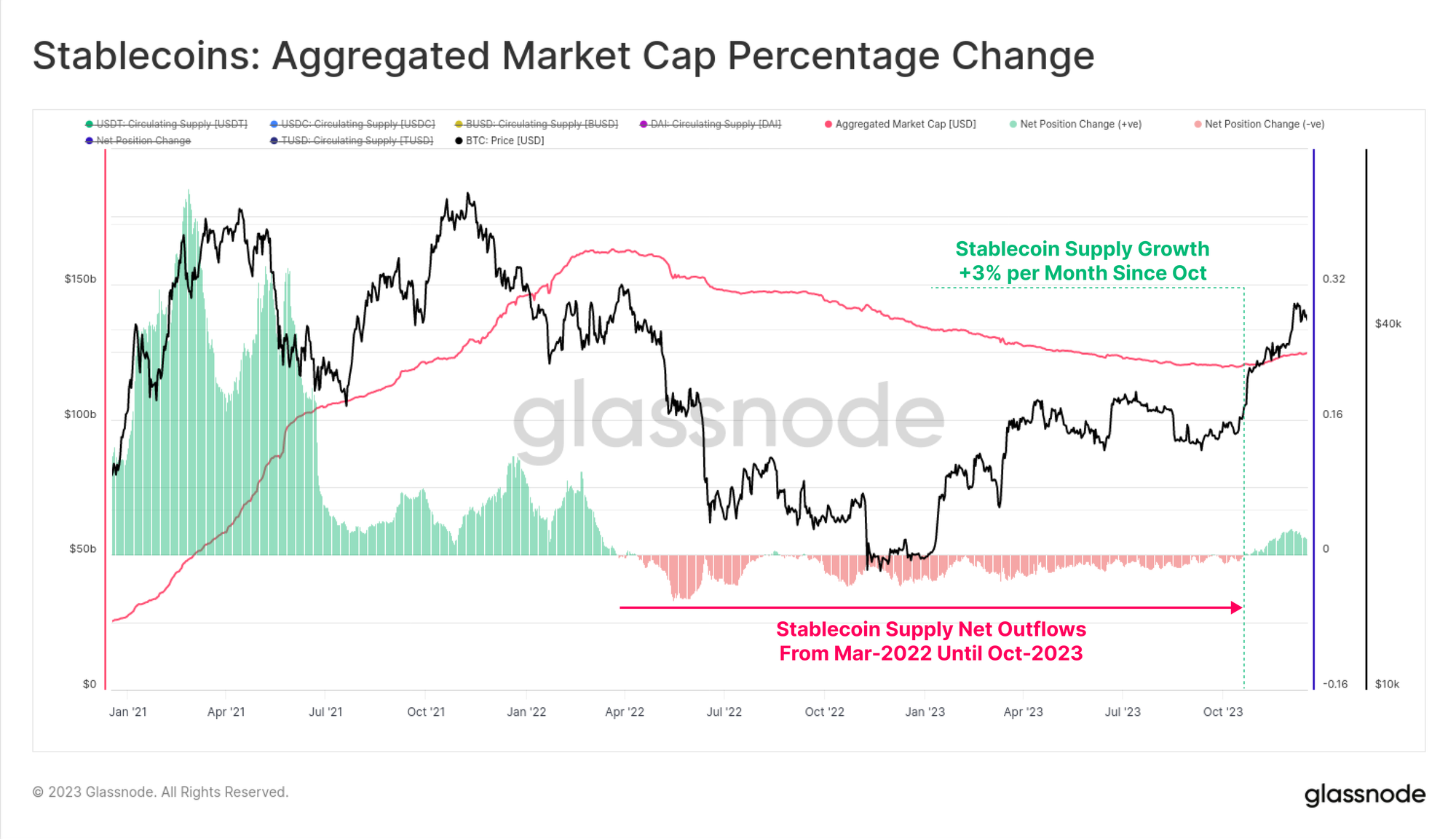
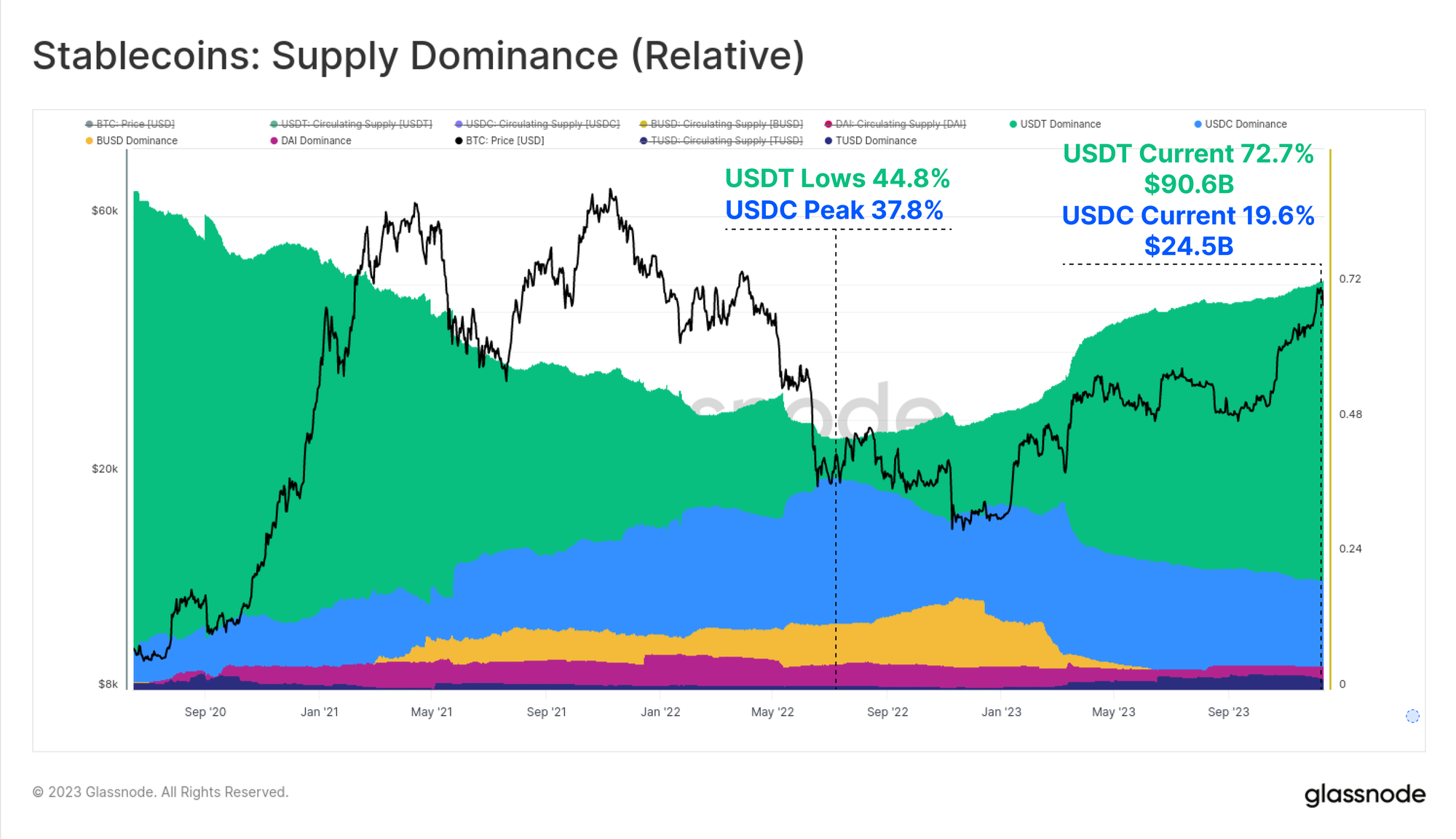
Overall stablecoin supply has been declining since March 2022, down 26% from its highs, and is a major headwind to market liquidity. This is due to regulatory pressure (the U.S. Securities and Exchange Commission (SEC) charged that BUSD is a security), capital rotation (preferring U.S. Treasuries over non-interest-paying stablecoins), and waning investor interest in a bear market.
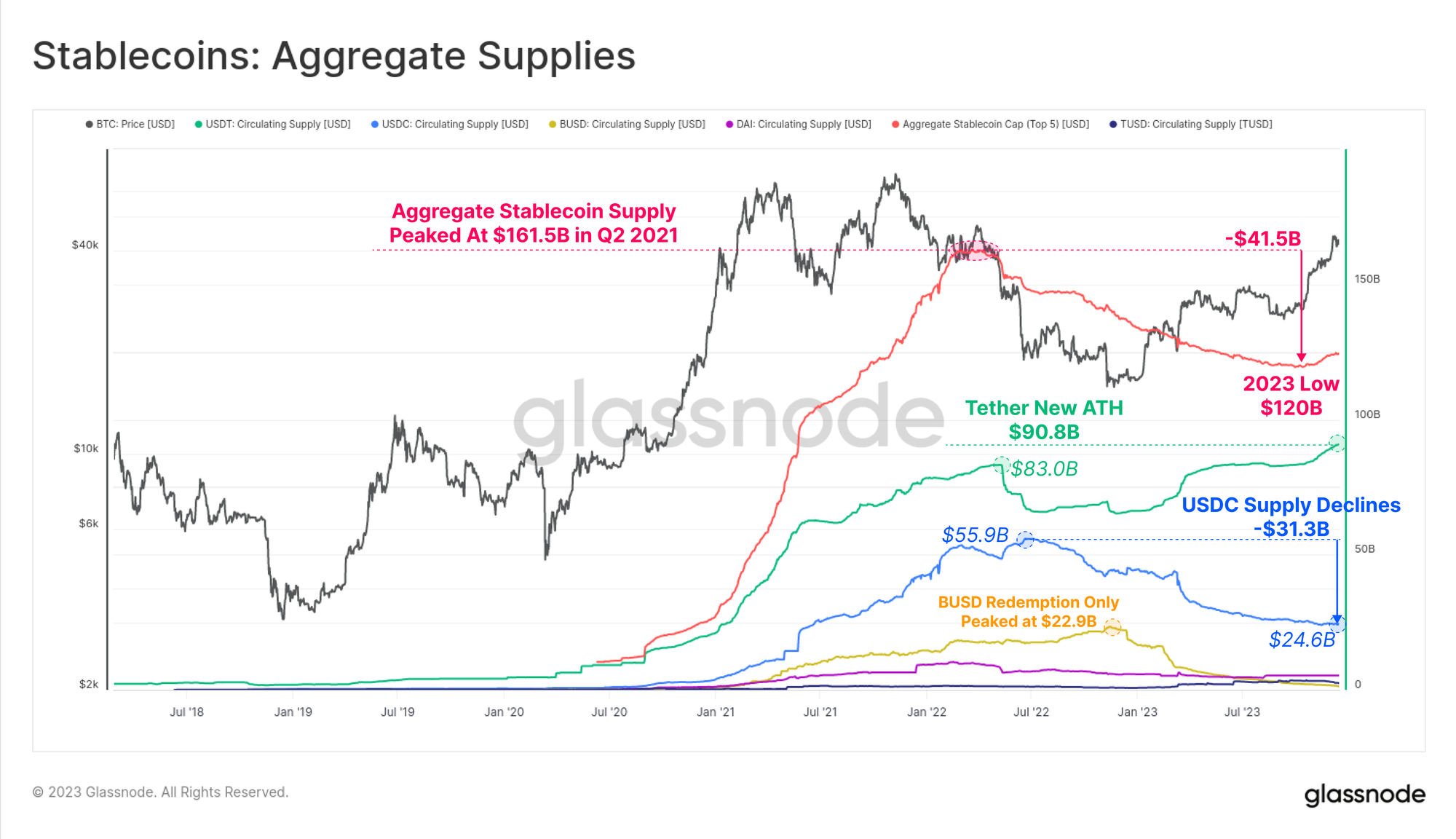
However, October has marked a turning point, with total stablecoin supply bottoming out at $120 billion and supply starting to grow at a rate of up to 3% per month. This is the first expansion of stablecoin supply since March 2022 and may be a sign of returning investor interest.
The relative dominance of various stablecoins has also changed significantly from 2022 to 2023. Previously rising stablecoins such as USDC and BUSD have significantly reduced their dominance, with BUSD entering redemption-only mode, while USDC’s dominance has dropped from 37.8% to 19.6% since June 2022.
Tether (USDT) has once again established itself as the largest stablecoin, with total supply climbing to over $90.6 billion, accounting for 72.7% of the market share.
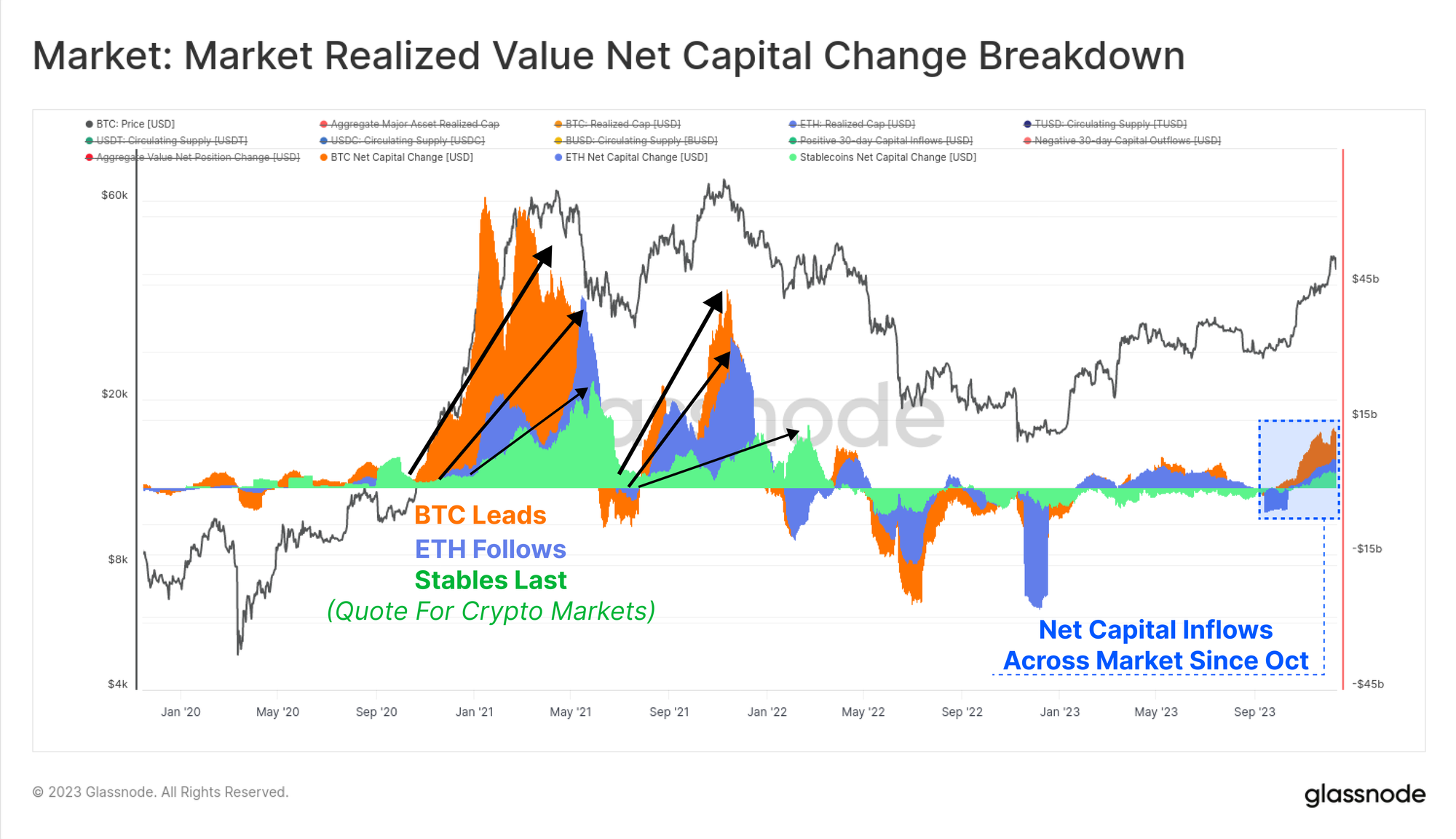
Finally, we can compare the 30-day change in realized market cap of BTC and ETH with the change in overall stablecoin supply. These three indicators help visualize and measure relative capital flows and rotations between sectors.
Once again, October stands out as a key moment when capital inflows turned positive across all three assets, coinciding with the market’s breakout of the key $30,000 level, expanding institutional interest in the derivatives market, and net capital inflows across the three major digital assets.
Summary and conclusion
Compared to the devastating deleveraging and market downtrend of 2022, 2023 will be almost completely different. Instead, this year has brought a renewed focus on digital assets, significant outperformance, and new on-chain artifacts in the form of Bitcoin Inscription.
The Bitcoin supply is currently tightly held by long-term holders, and most investors are now holding the currency in a profitable position. With the launch of a Bitcoin-based ETF in the United States becoming increasingly likely in early 2024, coupled with the Bitcoin halving coming in April, the stage is set for exciting developments in the year ahead.