In the new week, the gas on each chain has finally dropped, and airdrops can start again!
On December 11, Trader Joe launched the DEX Merchant Moe dedicated to Mantle Network, aiming to expand the innovative liquidity hub established by Trader Joe. Trader Joe token JOE holders will use the new token $MOE TGE (Token Generation Event) 2.5% of the total project tokens will be airdropped and an additional 5% will be distributed in the next 12 months. According to official documentation , the only way to obtain MOE tokens is to hold JOE tokens and participate in staking.
On December 23, Merchant Moe once again released a document describing its timetable from release to full deployment on the Mantle Network, and stated that the $MOE token issuance will be released in early January 2024, so BlockBeats sorted out how to participate in JOE staking Tutorial on obtaining MOE token airdrop for readers’ reference.
How to participate in staking
As mentioned above, the initial distribution of MOE is only available to JOE token holders, and this opportunity occurs in two phases. First, there is an initial allocation of 2.5% of the total supply of MOE. After the initial distribution, JOE token holders will receive an additional 5% of the total supply, which will be distributed over a period of one year. To participate in both phases, users must transfer their JOE tokens to the Mantle Network and then deposit their JOE tokens into mJOE staking on the Merchant Moe platform.
The following is the specific pledge process:
1. Purchase JOE tokens. If you purchase them on CEX, you need to withdraw them to the following networks and prepare gas tokens on the corresponding chain;
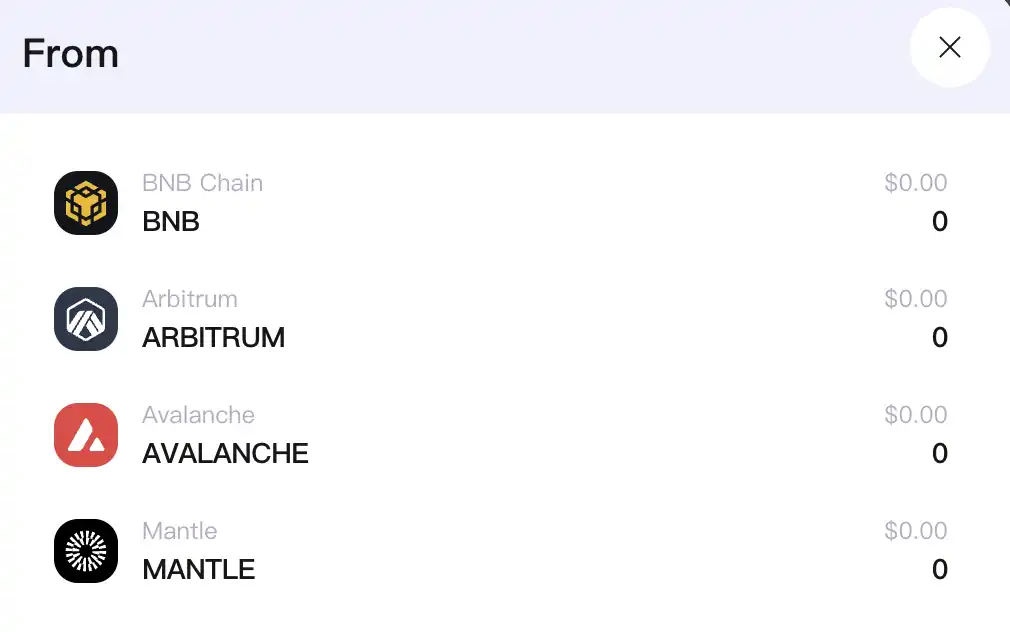
2. This article takes Avalanche as an example and uses the official bridge to bridge JOE to Mantle Network;
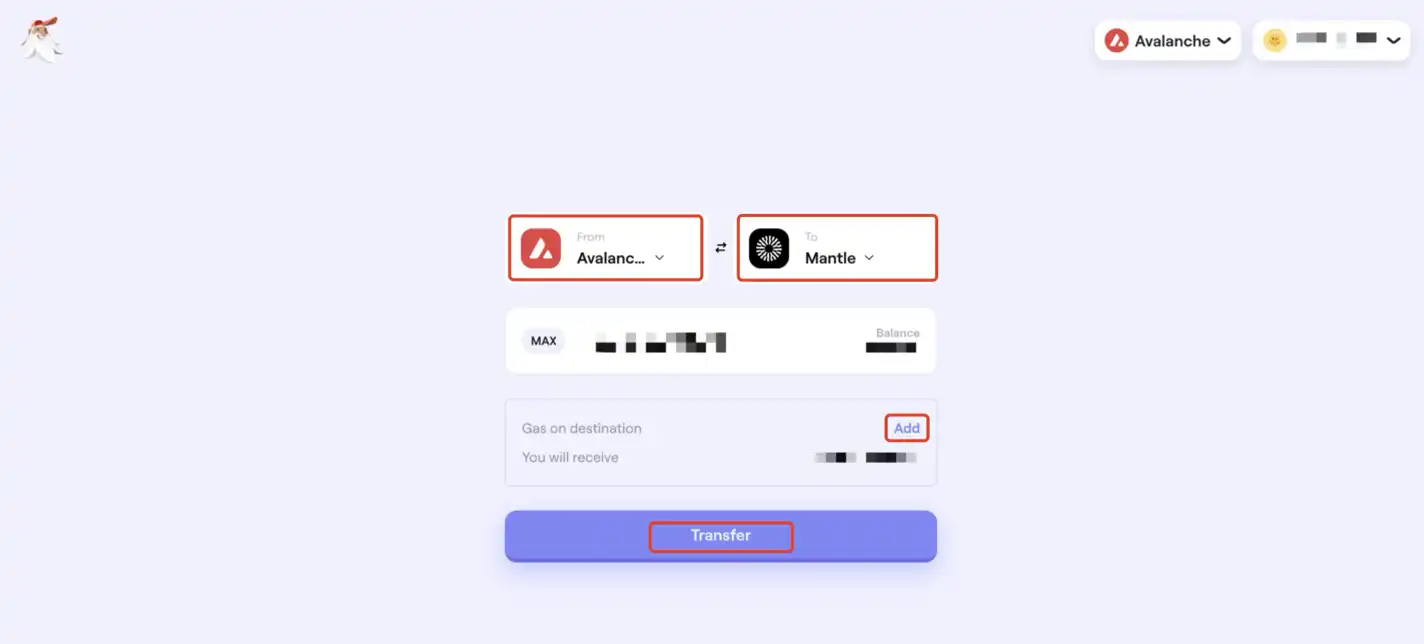
Mantle Network uses MNT tokens as gas. If you do not have MNT, you can add "destination gas" in the bridge interface, just click the "Add" button before transferring JOE. You can also buy MNT at CEX and transfer it to Mantle Network;
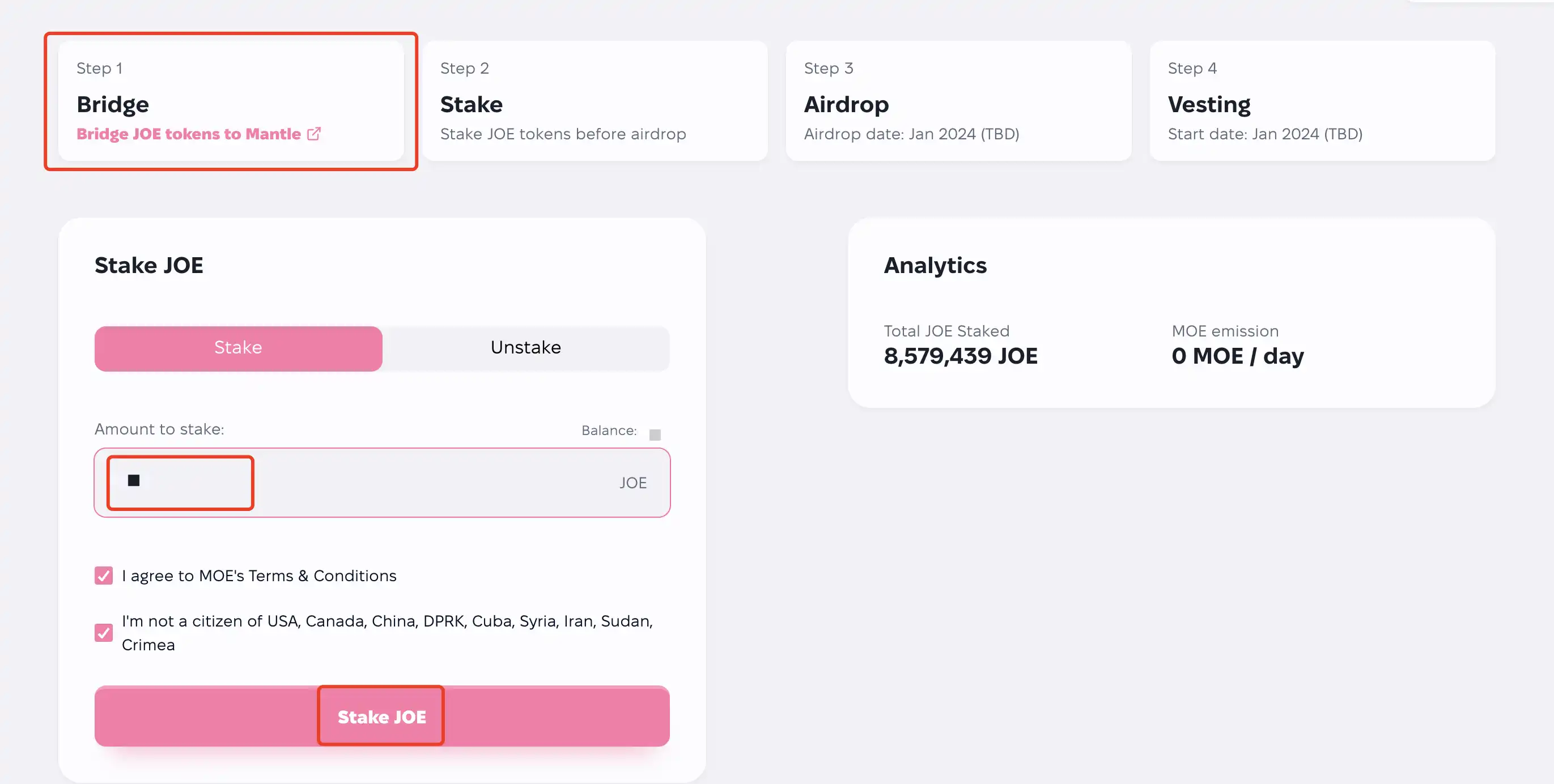
3. Enter the airdrop staking interface and connect to the wallet. Then enter the amount of JOE you want to stake and click Stake JOE to approve the transaction;
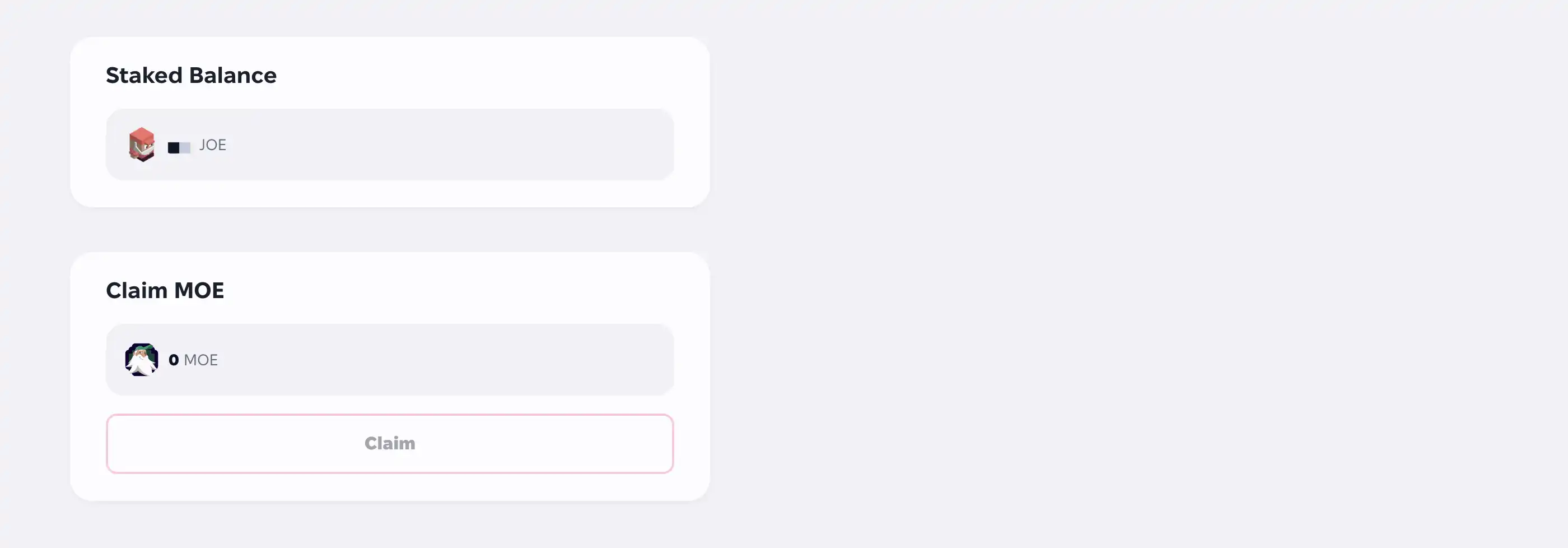
4. After the pledge is successful, you can see the JOE pledge balance and the number of MOE obtained in the future at the bottom of the interface.
Merchant Moe Token Economics
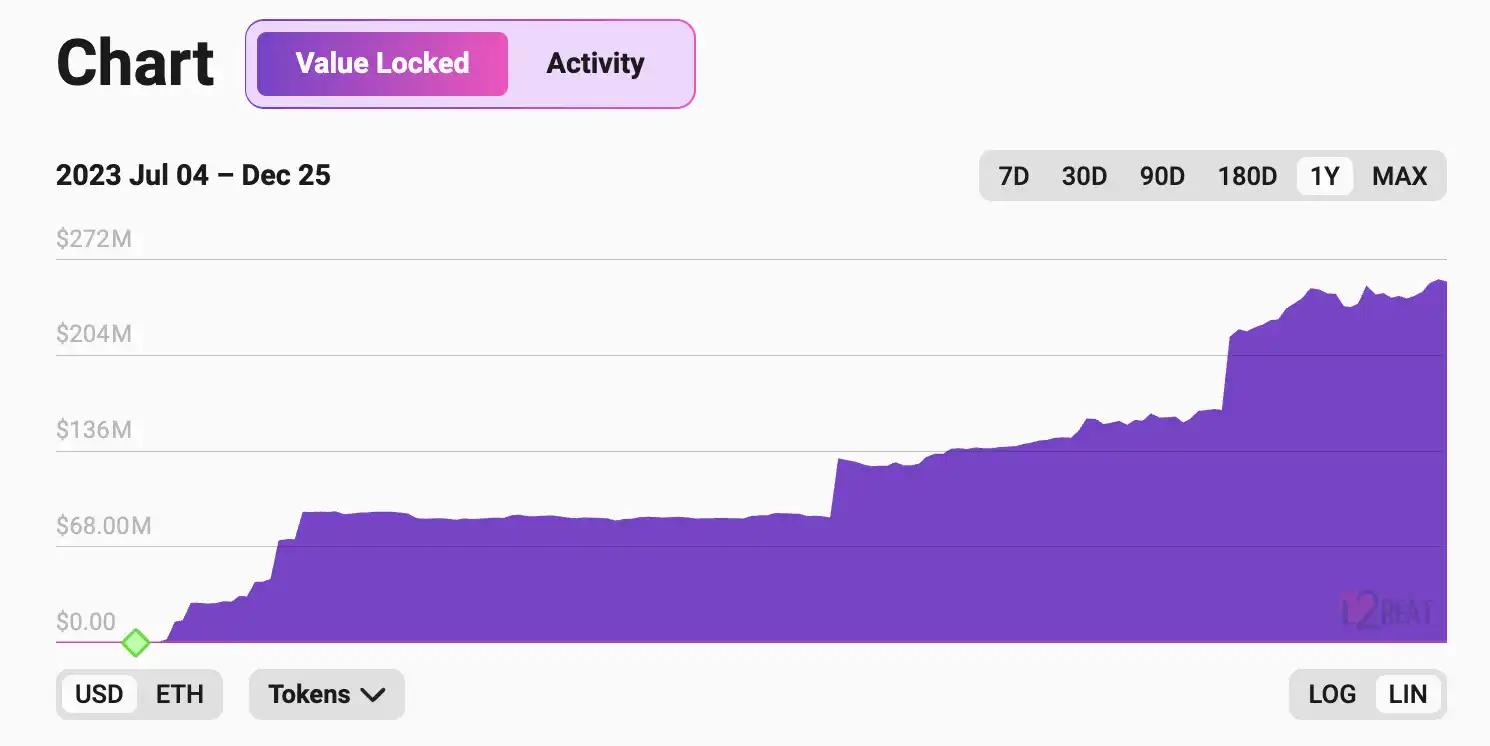
As an emerging Layer 2, Mantle Network has maintained a steady pace of development since its launch. L2Beat data shows that its TVL reached US$254 million as of press time, ranking seventh. The Mantle Network ecosystem includes its native DEXs FusionX, Symbiosis, etc. Merchant Moe, launched in partnership with Trader Joe, will also be supported by a number of native DEXs in the Mantle ecosystem.
Merchant Moe is supported by the Mantle EcoFund and will work closely with the Mantle team to become the central trading and liquidity center in the Mantle ecosystem. Its native token is MOE. By staking MOE tokens, you can earn stable currency income through sMOE, and you can also unlock voting rights for future MOE issuance through veMOE.
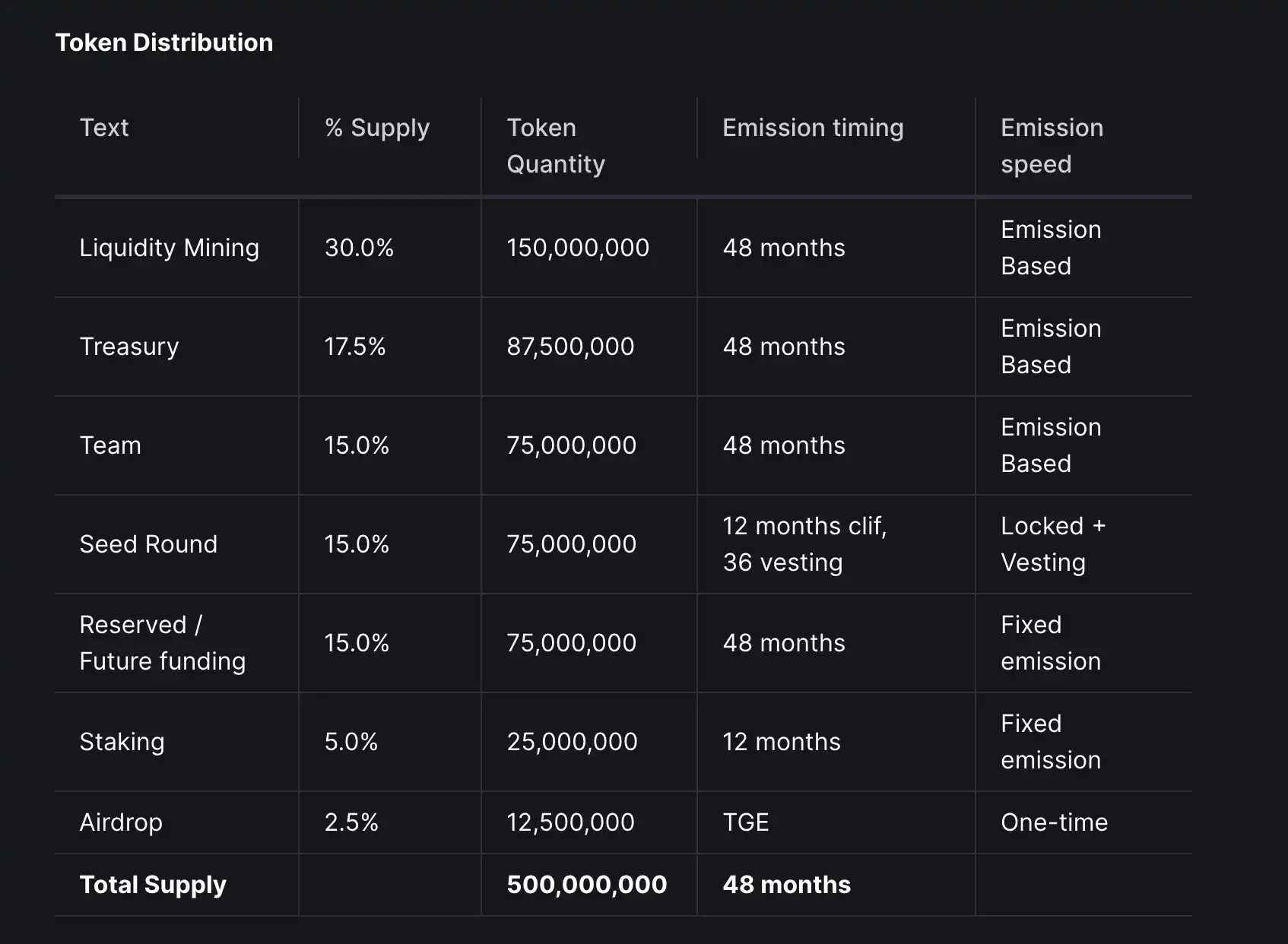
According to its official documentation, the total supply of MOE is 500,000,000, of which 30% is used for liquidity mining, 15% is used for Seed Round, 15% is used for future reserved funds, 5.0% is used for staking, and 2.5% is used for Airdropped, the remaining 32.5% is allocated to the team and the treasury.
Merchant Moe officials did not clearly indicate the time of the airdrop, but the official document shows that it is set to be in the next few weeks. Before the initial distribution, JOE holders do not need to take a snapshot, and users must pledge JOE tokens in the mJOE contract at the time of TGE.
Liquidity Book: Trader Joe’s Core Weapon
Merchant Moe is another expansion move for Trader Joe's.
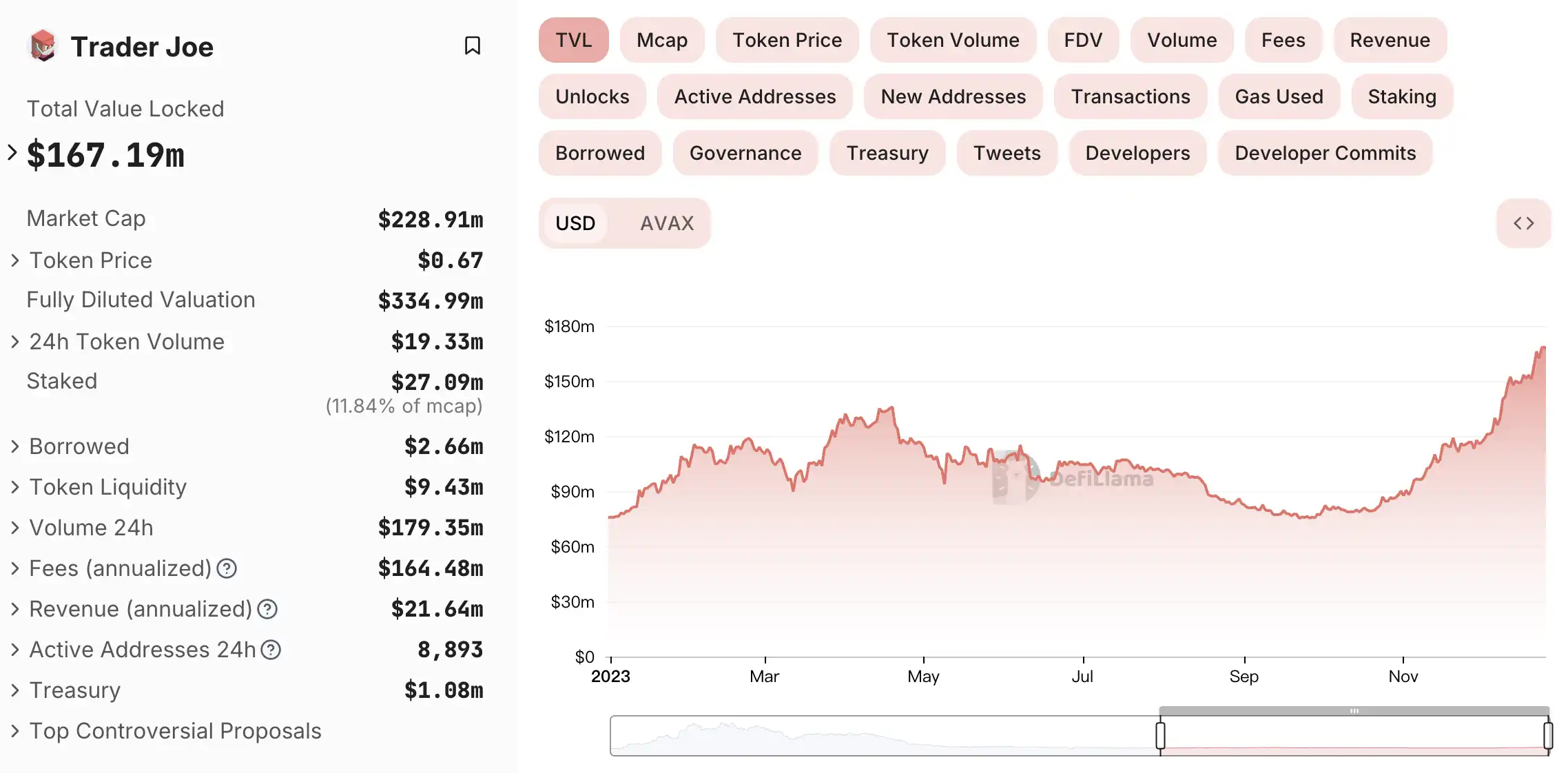
In August this year, Trader Joe was deployed to the Ethereum mainnet. Previously, Trader Joe has launched Avalanche, Arbitrum, BNB Chain and other networks. According to DefiLlama data, Trader Joe’s total locked position on the Arbitrum chain has reached US$167 million, and ecological activity has been increasing recently.
At the beginning of this year, Trader Joe integrated LayerZero, and its native token JOE plans to transform into a full-chain token. On May 19, Trader Joe announced that it has achieved seamless cross-chain JOE by adopting LayerZero's OFT Token standard. Users can perform JOE cross-chain between Avalanche, Arbitrum, BNB Chain and other chains, and avoid the security of "encapsulation" risk.
Trader Joe's core advantage lies in its tenacious core team with excellent delivery capabilities and innovation. Its core business is spot DEX. On top of this, the Trader Joe team has made many product mechanism innovations, which are specifically reflected in its V2 product - Liquidity Book (liquidity order book). Merchant Moe will also launch Liquidity Book after launch to reduce transaction costs.
Related reading: " Using Arbitrum to usher in a second spring?" Comprehensive analysis of Trader Joe’s business status, Token model and valuation level 》
Liquidity Book is actually a re-innovation of the centralized liquidity concept of Uniswap V3. Essentially, it is a combination of the two mechanisms of "order book" and "liquidity pool". Liquidity Book introduces the price range unit "Bin" on the basis of concentrated liquidity. A Bin (liquidity box) represents a range filled with liquidity.
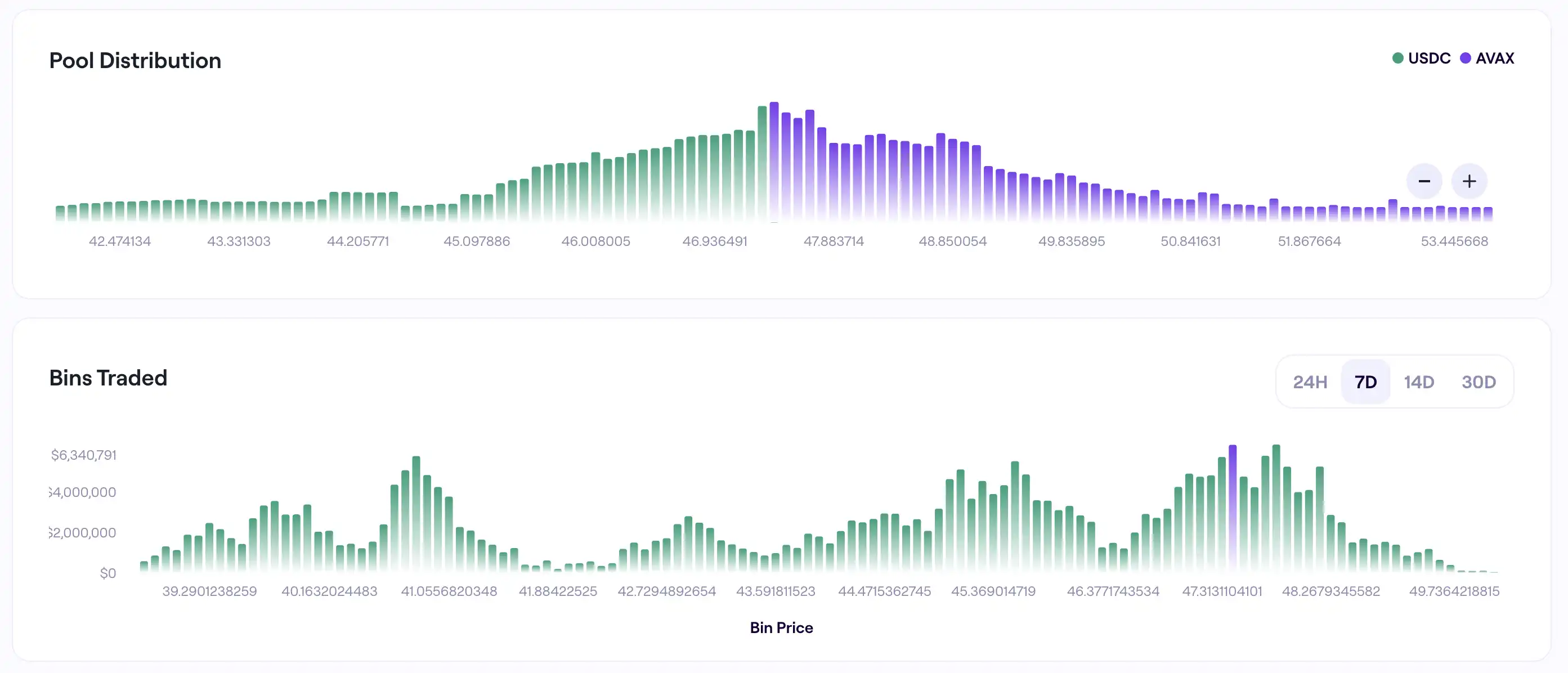
The width of the Bin of each liquidity pool is fixed and equal, and the difference between Bins is called "Bin step". For example, the Bin step of the AVAX-USDC trading pair in the picture above is 20BP=0.02%. The Bin step of the Pool for each trading pair is a parameter that can be set by the creator, so Pools with different Bin steps can be initiated for the same trading pair.
Trader Joe's Bin is similar to the pending order price in CEX's order book-based matching model, and the Bin step is the smallest unit between CEX's pending order prices. Therefore, Trader Joe's DEX is a custom order book with the width of the Bin as the pending order trading unit.
In March this year, after the airdrop of Arbitrum, the trading volume on its chain remained high. Uniswap V3, which landed on Arbitrum early, naturally gained the largest liquidity and trading volume. However, Trader Joe also relied on Liquidity Book’s product experience + market-making reward operations at that time. The activity became Arbitrum's second largest DEX in terms of trading volume at the time, once accounting for 45% of ETH-ARB's trading volume.
It can be seen that with the launch of Merchant Moe, Trader Joe's expansion path will migrate to the emerging Layer 2 platform to drive more liquidity growth. By then, the MOE airdrop will be released, and perhaps Merchant Moe will also become a rising star of DEX on the Mantle Network with Trader Joe's core technology.