Appchain stands for “application-specific blockchain,” a tailored solution specifically designed to meet the unique mission requirements of a decentralized application or Web3 protocol. .
Bitcoin's original concept paved the way, but Ethereum aspires for more – a universal platform for all things DeFi and Tokenize. However, this ambition hit a roadblock when usage skyrocketed in 2017, leading to sky-high transaction fees, making it clear Ethereum's capacity was insufficient to meet such high demand.
This limitation has led to the creation of many Layer 1 blockchains known as “Ethereum killers” such as Solana, which aim to surpass Ethereum by providing faster transaction and confirmation times while remaining versatile. . But here's the problem: the popularity of these platforms often adds to the existing chaos of Shard blockchain ecosystems.
This brings us to the development of appchains, which solve the fundamental problem of future-proofing the rapidly changing crypto landscape.
In this article, we will explore what Appchain is, how it works, and how it differs from other blockchain solutions.
General-purpose chains, limited by a broad focus, cannot adapt quickly enough in this disruptive space. However, Appchains offer a fast and targeted approach, built precisely for the needs of the protocol they are built on.
Appchain is a smart way to leverage the popularity and familiarity of legacy systems while remaining flexible and sovereign enough to incorporate cutting-edge technologies.
Unlike general-purpose blockchains that strive to be a one-size-fits-all solution, appchains can be fine-tuned to an application's specific performance, security, and governance needs. This specialization allows for more efficient processing, reduced congestion, and lower transaction costs, making appchains the ideal choice for applications that require high throughput, security, or unique functionality.
By focusing on a specific application or set of use cases, appchains can grow and scale in a way that is both sustainable and future-ready, responding to the ever-changing industry landscape. Blockchain technology and its applications.
The operation of appchains can quickly become technically complex. For the scope of this article, we will simplify the explanation.
Appchains are essentially unique environments fine-tuned to the applications they serve. Such specialization allows it to optimize every aspect – from transaction processing to security protocols – specifically for that one application. This involves a customized approach to processing transactions, smart contract execution, and overall network administration.
Unlike traditional blockchains that have to balance the needs of diverse applications, appchains can prioritize efficiency and performance for a specific use case.
Appchains typically operate on existing Layer 1 (L1) blockchains, such as Ethereum. However, in the case of Layer 1 appchains, they maintain a degree of independence, often through a connection to a layer 0 protocol such as Cosmos. This layer 0 acts as a foundation network, providing interoperability and underlying infrastructure, allowing different Layer 1 appchains to coexist and communicate within a larger ecosystem.
Take Immutable for example. Immutable zkEVM is a Layer 2 scaling solution for Ethereum, focused entirely on supporting blockchain-based games, i.e. an appchain on Ethereum for gaming. Ethereum itself does not support fast-paced gameplay due to its low throughput. Therefore, Immutable's game-focused appchain helps game studios deploy games in the Ethereum ecosystem without facing inherent limitations.
Appchains are purpose-built blockchains that solve a niche problem. Typically, the benefits that appchain brings are: Modularity, scalability, interoperability.
Remember that these benefits do not apply to all appchains. Technically, a developer could create an appchain that is purpose-built to not allow interoperability.
Modularity refers to the design/architecture of the appchain.
General purpose blockchains, like Ethereum, have a monolithic architecture. This means they tend to have rigid rules and standards, hindering the ability to make changes quickly without affecting the entire network.
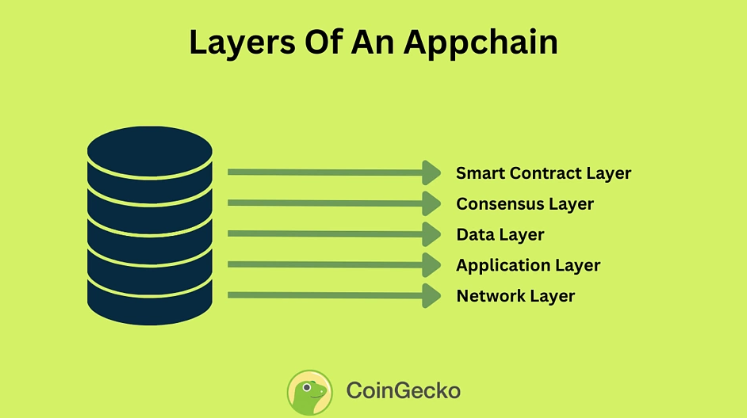
The appchain's modular architecture grants developers complete control over the blockchain's mechanics – from the Token Economy to the consensus mechanism. Developers can adjust each layer according to the dApp's requirements.
Source: CoinGecko
For an official appchain, there are 5 layers:
1. Network layer: Peer-to-peer network management platform layer, allowing nodes to communicate, Chia data and authenticate transactions.
2. Application Layer: Stores the actual applications running on the blockchain, providing the necessary interfaces for developers to create and manage DApps.
3. Data layer: Responsible for organizing and storing all data, including the state of the blockchain, transaction details, and smart contract data.
4. Consensus layer: Implements the appchain's consensus algorithm, which can be any variation such as Proof of Work, Proof of Stake...
5. Smart contract layer: automates, verifies, and enforces contract negotiation or execution.
Appchain offers a modular approach to scaling, as the application and data layers are decoupled from the security layer, allowing for optimization while using tested Layer 1 or layer 0 for security. password, instead of launching new chains.
Appchains are essentially blockchains that dedicate resources to a single task or function. This makes them incredibly scalable (fast and low cost) for the purpose they were built for. The main contributing factor to scalability in an appchain is the presence of a separate or dedicated mempool. This is made clear by DYDX 's recent migration to the Cosmos ecosystem.
DYDX is a popular decentralized exchange (DEX) for perpetual trading. When the dApp first launched, the team was forced to adopt a hybrid model where smart contracts held user funds but Order Book management was done on centralized servers. This limitation was due to scalability issues as the DEX had to process more than 1,000 orders per second and at the time, the team could not find a suitable infrastructure solution.
Recently, with DYDX V4 , this DEX moved to the Cosmos ecosystem and launched the DYDX chain, an appchain for DYDX's dApp. This allows DYDX to achieve complete decentralization while maintaining high scalability.
A large part of the blockchain ecosystem is being segregated. Each blockchain, like Bitcoin and Ethereum, is like a walled garden for its users. Users on Ethereum may not be able to take advantage of Solana or Bitcoin without going through a complex network of steps and bridges.
Although appchains are often independent, they are still designed with interoperability in mind and built for fast, secure transfer of assets from one dApp to another.
ParaSwap is a DeFi aggregator appchain that allows users to seamlessly swap assets across various decentralized exchanges. This allows users to get the best swap rates without having to manually navigate through multiple DEXs or blockchain networks.
The line between appchain and other blockchain solutions is very blurred. An appchain can be as complex as a full Layer 1 blockchain (think Theta Network) or as specialized as a dApp (like Osmosis).
A blockchain can be considered an appchain if it is purpose-built for a specific use case. It should be a dedicated network designed to optimize the performance and functionality of a specific group of dApps, like a DEX, gaming, or Non-Fungible Token marketplace.
Here are some key differences between appchain and other popular blockchain solutions.
If you have explored the DeFi space, made transactions, interacted with smart contracts then you have probably interacted with appchains. Below are some examples of appchains.
Source: CoinGecko
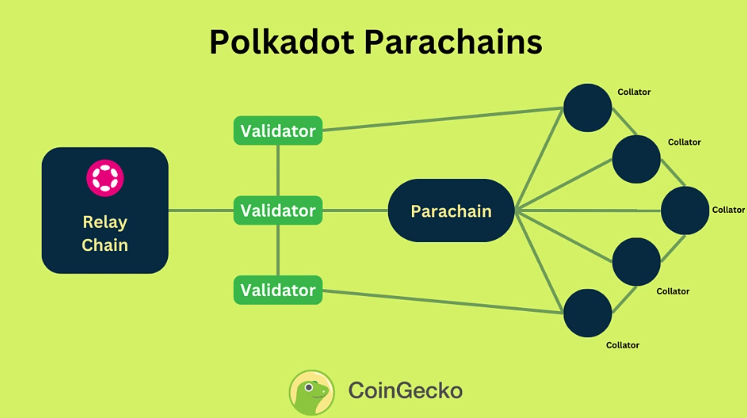
Polkadot 's Parachain are individual blockchains that run in parallel within the Polkadot ecosystem and are connected to Polkadot 's main Relay Chain , providing common interoperability and security. Each Parachain can have its own Token Economy, governance model, and functionality, making them highly customizable.
Source: CoinGecko
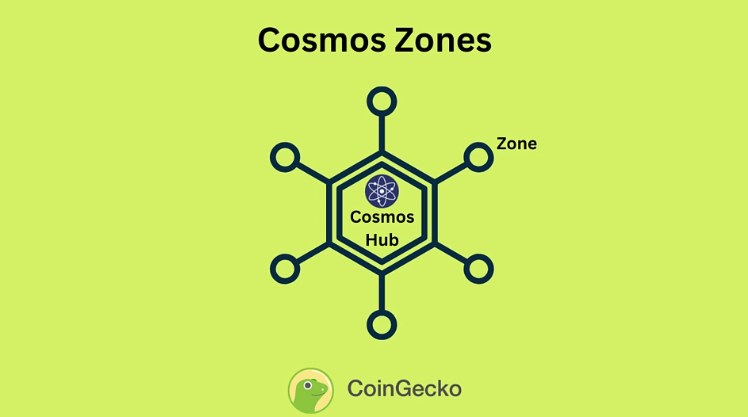
In the Cosmos network, zones are independent blockchains connected to the Cosmos Hub, scalable across many applications, from DeFi to gaming. These zones are similar to appchains in functionality, allowing for a high level of customization and autonomy.
They use the IBC protocol for interoperability, allowing for seamless transfer of data and Token across the Cosmos ecosystem.
Source: CoinGecko
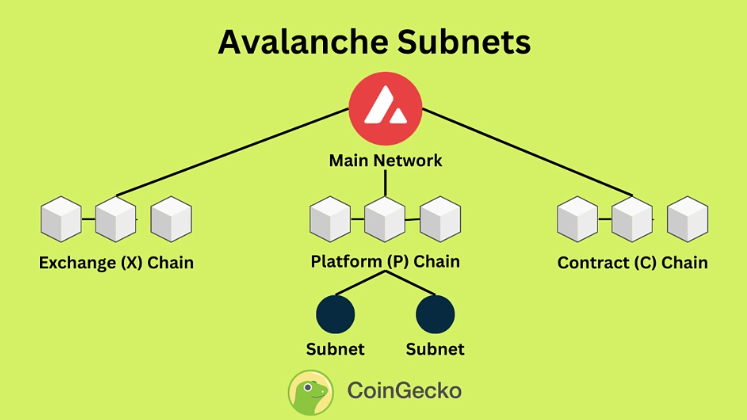
The Avalanche subnet allows for the creation of custom, application-specific blockchains, where each subnet consists of a group of validators that reach consensus on the state of a set of blockchains.
Subnets in Avalanche have their own set of validators and can even run with different Arm Virtual Machine , providing a high level of flexibility and scalability. This design allows for bespoke blockchain rules and parameters, tailored to the needs of specific applications.
There are hundreds of projects built on appchain. Below are some popular projects.
The development of appchain marks an important milestone in blockchain history, providing tailored, efficient solutions in a disruptive industry. By focusing on specific applications and use cases, appchains help drive innovation, scalability, and sustainability. They ensure the blockchain ecosystem remains responsive to the diverse needs of users and developers.
As more use cases emerge for Web3, DeFi , and digital assets, appchains will likely be at the forefront of developers building. From Non-Fungible Token games to CBDCs, application-specific blockchain can handle it all.
This article is not intended as financial or investment advice. Always do your own research before investing in any financial product.
Join Bitcoin Magazine's Telegram: https://t.me/tapchibitcoinvn
Follow Twitter (X): https://twitter.com/tapchibtc_io
Follow Tiktok: https://www.tiktok.com/@tapchibitcoin
Minh Anh
According to CoinGecko