


O cean Protocol is a decentralized data trading platform whose core goal is to solve the problems of user data circulation and value release. In the current Internet environment, large companies such as Google and Meta/Facebook collect user data, centralize analysis, and make money through advertising, while retaining all profits, while users have no control over where their data goes, let alone Get value from your profile.
The emergence of Ocean Protocol aims to change this situation. By providing users with data ownership and realizing the value of data, it makes DataDaos possible, that is, making user data truly owned by users and allowing users to profit from it.
Therefore, based on the Ethereum blockchain, Ocean Protocol has established its own market to connect data consumers and providers. By tokenizing data sets and services, it allows data providers to monetize their data simply and effectively, while Provide users with a one-stop ecosystem to obtain valuable information.
Currently, Ocean Protocol has issued its own native token "Ocean". This token can be used for data pledge, community management, and purchase/sale of DataToken. It incentivizes the growth of the ecosystem by rewarding data providers and consumers. It is worth noting that the Ocean token is a standard fungible ERC-20 Ethereum token.
core mechanism
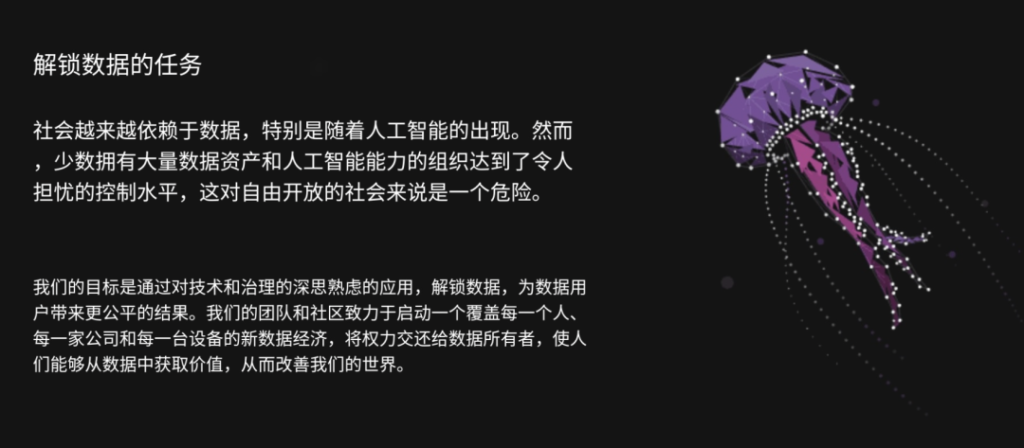
Ocean Protocol adopts a unique and innovative method of data sharing and monetization, using blockchain technology to build a decentralized data market. Its core mechanisms revolve around data tokenization, decentralized markets, privacy and control mechanisms, and community governance.
Data Tokenization
Ocean Protocol's data tokenization is one of its core mechanisms, designed to convert data into tradable digital assets. This process is achieved by establishing DataTokens, which are representatives of specific data sets, allowing data owners to monetize and share data while protecting privacy.
The process of tokenization of data sets
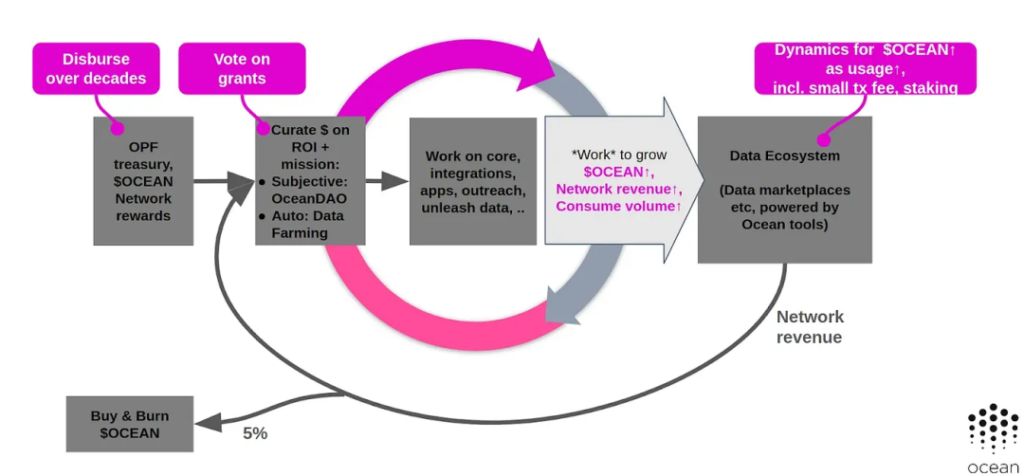
- Create DataTokens : Data providers can tokenize their data sets through Ocean Protocol and create ERC-20 tokens called "DataTokens". These tokens represent access to a specific collection of materials. Each dataset has its unique DataToken.
- Data access control : The process of tokenization includes not only generating tokens, but also setting smart contracts corresponding to access permissions to the data set. This ensures that access to data can be transferred to token holders in a secure and controlled manner.
- Trading and Liquidity : DataTokens allow data owners to list and sell access to their data sets on Ocean Market. Token holders can trade these tokens on the market or stake OCEAN tokens on specific datasets to provide liquidity.
Advantages of data tokenization
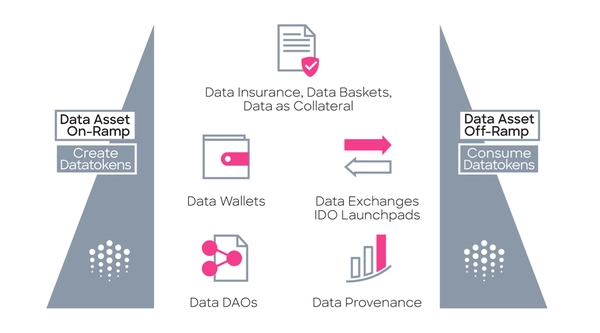
- Data Monetization : Data tokenization allows individuals and institutions to turn their data into a revenue stream, profiting directly from the data by selling access to it.
- Privacy protection : Ocean Protocol's Compute-to-Data function allows data to be processed and analyzed without disclosing the original data. This means that data providers can share their data without revealing sensitive information.
- Market liquidity : By staking DataTokens and OCEAN tokens on Ocean Market, liquidity can be provided for data sets, promote data trading, and bring benefits to liquidity providers.
- Decentralized governance : Ocean Protocol allows community members to participate in the development and management of the protocol through its governance model. The establishment and use of DataToken is jointly decided by the community, which increases the transparency and trust of the platform.
- Open and extensible package : Ocean Protocol provides an open and extensible package ecosystem for data providers and consumers, supporting the development of various types of data services and applications.
Mode of operation
- Data set release : Data providers first need to clearly describe their data set and define the number of DataTokens required to access the data set.
- Pricing mechanism : Data providers can set prices for their DataTokens, or use Ocean Market's automated market setting mechanism (AMM) to dynamically adjust prices.
- Data access : Consumers gain data access by purchasing DataTokens. In some cases, access may be time-limited or limited to specific actions on the materials.
Decentralized Market (Ocean Market)
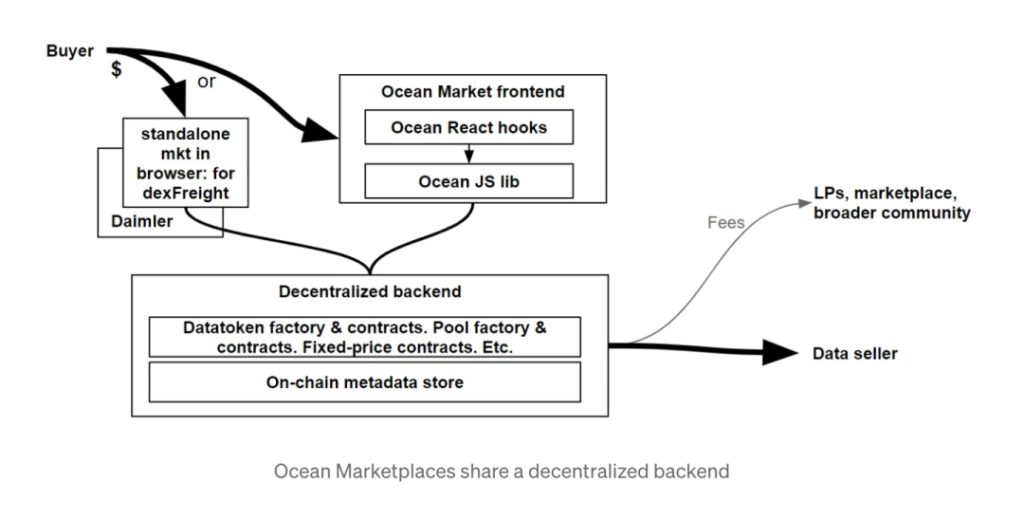
Ocean Market is a basic component of Ocean Protocol and serves as a decentralized market for interaction between data providers and consumers. It utilizes blockchain technology to facilitate secure and efficient data exchange.
The following is a detailed introduction to how Ocean Market operates and its specific features:
Listing and Sales Materials
Data providers can list their data sets on Ocean Market by tokenizing them into DataTokens. These DataTokens represent access permissions to the underlying dataset. When a data set is tokenized, it effectively becomes a digital asset that can be bought, sold, or traded on the Ocean Market. This process not only simplifies the monetization of data, but also ensures that data providers maintain control of their data.
Data access and consumption
Data consumers, such as developers, researchers, and enterprises, can browse the Ocean Market for data sets that meet their needs. Once they identify the relevant data set, they can use the token OCEAN to purchase the relevant data tokens. Holding a DataToken gives them access to the data set for consumption or analysis, depending on the terms set by the data provider.
Pricing and Automated Market Makers (AMMs)
Ocean Market uses an automated market maker (AMM) model to facilitate the trading of DataToken. This model allows for dynamic pricing based on supply and demand, ensuring that data prices are market-driven. Data providers can choose to set a fixed price for their DataToken, or they can let the market determine the price through the AMM mechanism. This flexibility supports efficient price discovery and liquidity for data assets.
calculated to data
One of the main features of Ocean Market is the computational profile function, which allows profiles to be analyzed or processed without leaving the secure environment. This means consumers can perform algorithms or calculations on the data they access through DataTokens without exposing the original data. This feature is critical to protecting privacy and security, making Ocean Market attractive for handling sensitive or proprietary material.
Staking and liquidity provision
Users can stake OCEAN tokens on specific data sets to provide liquidity. This liquidity is essential to facilitate the trading of DataTokens in the market. In return for their contributions, liquidity providers receive a portion of the transaction fees generated by buying and selling DataTokens related to the datasets they support. This incentivizes the management of high-quality data sets and the provision of market liquidity.
Governance and community engagement
Ocean Market is managed by the Ocean Protocol community, and OCEAN token holders have a say in the development and direction of the market. This decentralized governance model ensures that the market develops in a way that meets the interests and needs of users.
At its core, Ocean Market aims to democratize access to materials, allowing data providers to monetize their assets in a secure environment while providing data consumers with easy access to various data sets. It combines blockchain technology, dynamic pricing mechanisms, privacy protection features and community-driven governance, making it the cornerstone of the Ocean Protocol ecosystem and a key enabler of the decentralized data economy.
privacy control
Ocean Protocol takes an innovative approach to privacy control, particularly through its Compute-to-Data functionality, which ensures the privacy and security of data while allowing its efficient use. Ocean Protocol's privacy control mechanism not only emphasizes the protection of data, but also ensures that data owners have complete control over their data. The following is a detailed description of Ocean Protocol’s privacy control:
Compute-to-Data (calculate to data)
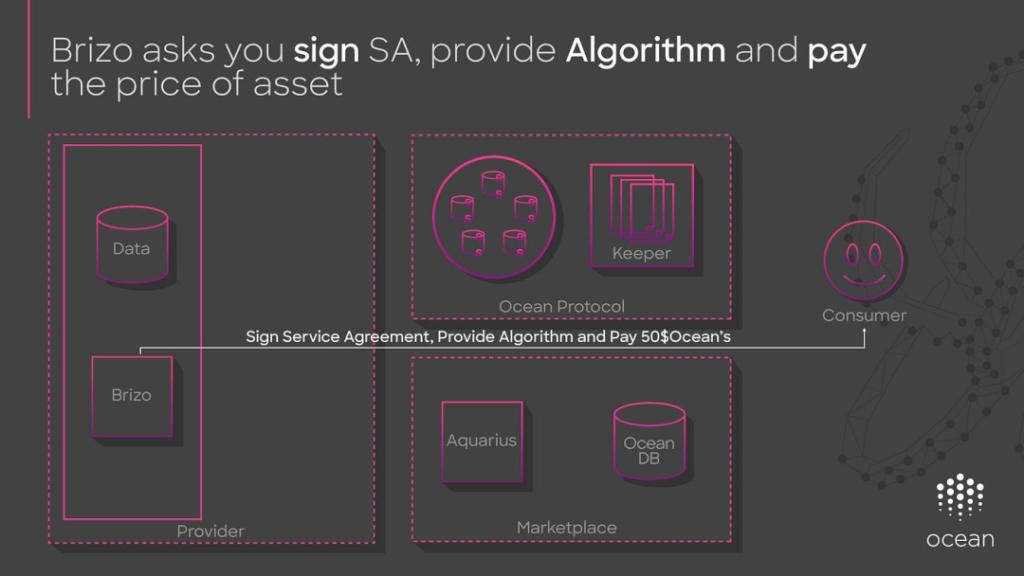
Compute-to-Data is a core feature provided by Ocean Protocol, allowing data analysis and calculation tasks to be performed where the data is stored while maintaining data privacy. This means that data consumers can perform algorithmic analysis on the data without having to move the data to their own servers or other computing environments. How this process works:
- Data remains in place : With Compute-to-Data, original data remains in the secure environment of the data provider and is not directly exposed or transmitted to data consumers.
- Privacy-preserving analysis : Data consumers submit computing tasks to the environment where the data resides. After the calculation is completed, only the results are returned to the consumer, and the original data and its sensitive content will not be leaked.
- Authorization control : Data providers can precisely control which users or entities can request calculations and what types of analysis are allowed to be performed, thereby ensuring that the use of data complies with the wishes and regulations of the data provider.
Through the Compute-to-Data function and data tokenization mechanism, Ocean Protocol allows the effective use and monetization of data while protecting data privacy and ensuring data security. This emphasis on privacy and control makes Ocean Protocol an ideal platform for handling sensitive data and promoting data-driven innovation. Through these mechanisms, Ocean Protocol establishes a secure, transparent and reciprocal data exchange environment between data providers and consumers.
Ocean Token
Ocean Token (OCEAN) is the native cryptocurrency of the Ocean Protocol platform, playing multiple key roles and supporting the operation of the entire ecosystem. As a blockchain project designed to solve the problem of data sharing and monetization, Ocean Protocol provides an incentive mechanism through OCEAN tokens while promoting data transactions and governance on the platform.

The following are several main uses and features of OCEAN tokens:
medium of exchange
OCEAN tokens are used as a purchasing medium for access to data services and data sets on the Ocean Marketplace. Data providers tokenize their data (create DataTokens), and data consumers can purchase these DataTokens with OCEAN tokens to gain access to the data.
governance
OCEAN token holders participate in Ocean Protocol's governance process, including voting on key updates, upgrades, and policy changes to the platform. This decentralized governance model ensures that the development direction of Ocean Protocol reflects the wishes and best interests of its community.
Staking and liquidity provision
In Ocean Protocol, OCEAN tokens can also be used for staking, especially in the provision of liquidity in the data market. Users can pledge OCEAN tokens into specific data asset pools to support the liquidity of data assets. In this way, stakers can earn rewards based on their pledged volume and associated transaction fees.
Store of value and investment
Like many cryptocurrencies, the OCEAN token is considered a store of value and investment vehicle. Investors purchase and hold OCEAN tokens partly out of their confidence in the future development potential of the Ocean Protocol project.
Role in Data Markets and Ecosystems
By providing an economic incentive, OCEAN tokens encourage data providers to share their data and enable data consumers to access this data in a viable and cost-effective way. In addition, through staking and governance, OCEAN tokens encourage community members to participate in the maintenance and development of the ecosystem, ensuring the health and activity of the platform.
Total Token Supply: 1,410,000,000, Token Allocation, Founding Team: 20%, Foundation: 51%, Acquirors: 24%, Network Reward (Network Reward): 5%.
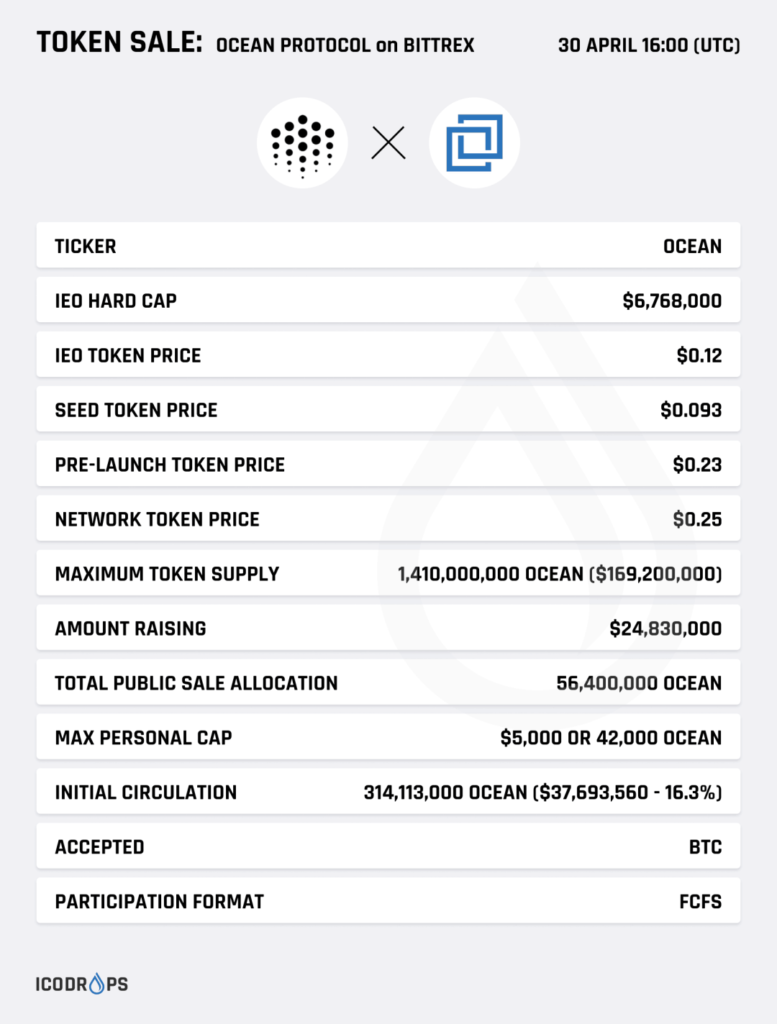
As of now, the current price of the OCEAN token is $1.20, which has increased by 3.33% in the past month. OCEAN has a market capitalization of $679,479,935 and a ranking of #130. The number of OCEAN in circulation is 568,381,103, accounting for 40.31% of the total supply. If all OCEAN tokens are fully circulated, the estimated market value is $1,685,607,326.
Team/Financing Status
Ocean Protocol was founded in Singapore in 2017 by two blockchain entrepreneurs, Bruce Pon and Trent McConaghly. The core team currently consists of 25 blockchain technology experts and entrepreneurs operating around the world, but the majority of the team is based in Romania and Germany.
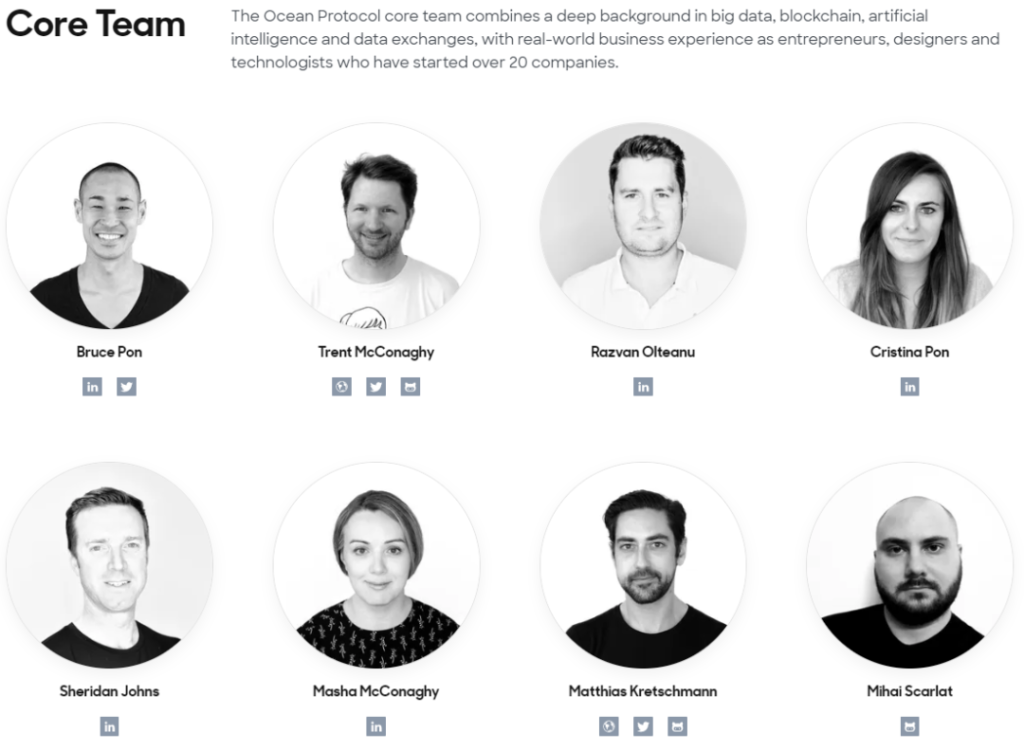
In addition to a dedicated core team working on the agreement, Ocean has more than 20 external advisors who provide guidance on business partnerships and governance. These consultants are also located in multiple countries and are often CEOs, founders or C-level functional leaders of technology or analytics companies.
Since its inception, Ocean Protocol has attracted a total of $28 million in venture capital (VC) across 5 rounds of financing. The latest funding round was a $5 million seed venture round on May 27, 2022. Investors include Blockchain Coinvestors, Caballeros Capital, Cogitent Ventures, Cypher Capital (Dubai) and Deep Ventures (venture capital), etc.
Future development analysis
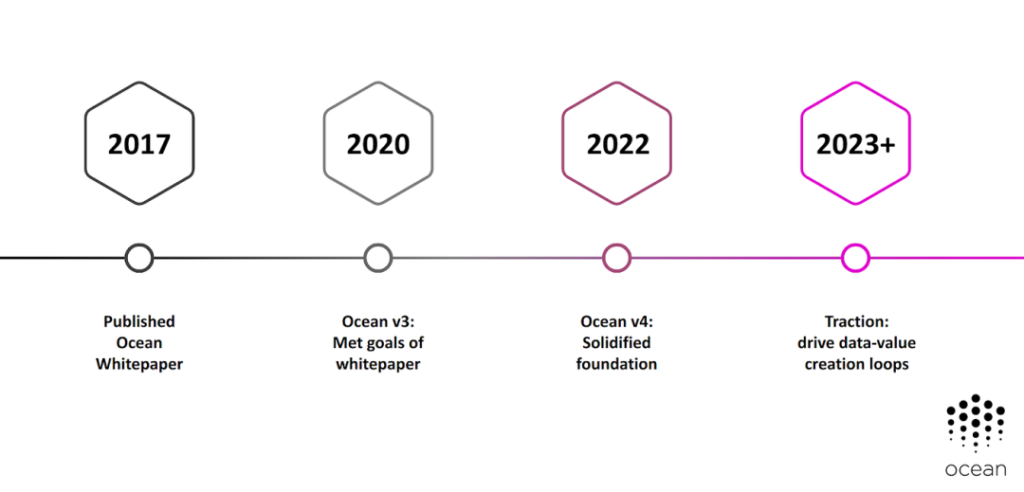
The future development prospects of Ocean Protocol can be analyzed from several different angles: technological innovation, market positioning, ecosystem maturity, team capabilities, financing and token economy, etc.
Technological innovation and market demand
Ocean Protocol technically proposes a unique data sharing and monetization model. It solves the contradiction between privacy and availability in the modern data economy, especially in the context of the rapid development of artificial intelligence and big data analysis. Compute-to-Data capabilities address the market need to provide verifiable computation without sacrificing privacy, a key factor driving future growth.
Ecosystems and Communities
Ocean Protocol’s ecosystem is constantly growing and includes multiple players from startups to large enterprises. The community governance model and the use of OCEAN tokens encourage extensive community participation, which helps promote the long-term vitality and innovation of the platform.
Team and leadership
Ocean Protocol's team is composed of experienced entrepreneurs, blockchain technology experts and industry consultants. These team members have the ability to successfully drive projects from concept to implementation. The professionalism of the team and the success of the project to date are strong supports for its future development.
Financing and Token Economy
Ocean Protocol’s funding history shows strong market confidence in its vision and technology. To date, Ocean Protocol has raised funds through an initial token offering and subsequent funding rounds, which has provided financial support for its continued technology development and market expansion.
market performance
The performance of OCEAN tokens in the market shows investors' recognition of Ocean Protocol's future development potential. A token’s market capitalization, circulation volume, and trading activity are important indicators of its market acceptance and investor sentiment.
future challenges
Although Ocean Protocol has shown great potential in many aspects, it also faces challenges in future development, including:
- Market competition : The data market is highly competitive, and Ocean Protocol needs to continue to innovate to stay ahead.
- Scaling : To achieve wider adoption, Ocean Protocol will need to overcome technical scaling and user experience barriers.
- Regulatory Compliance : The use and sharing of data is subject to changing privacy regulations and regulatory frameworks around the world.
Conclusion
Ocean Protocol's future development will rely on its ability to continue to promote technological innovation, expand its ecosystem, attract more users and partners, and adapt to changes in the regulatory environment and market. Given its strong team background, clear vision and strategy, and the initial market results it has achieved, Ocean Protocol has the potential to become an important player in the data economy. However, its success will also depend on the external market environment, the sustainability of technological innovation, and the activity and commitment of the community.






