Author: Jason Choi, TANGENT Co-founder Source: X, @mrjasonchoi Translation: Shan Ouba, Jinse Finance
I recently read a few blog posts from VCs about Memecoin. They are fresh and written by respectable people, but I can’t help but think that the analysis itself is part of the reason people trade memes.
Here’s the thing: memes are not a Trojan horse for cultural penetration (at least not yet), and I don’t even think they’re the most effective marketing strategy. I understand VCs need to package memes in a way that’s palatable to limited partners (LPs), as I used to be one of them.
But let’s be real. Most people, myself included, engage in meme trading for one simple reason: because “what the hell.”
the reason is simple.
The meme craze is just one more symptom of a larger trend playing out across the developed world: The future that the older generation promised the younger is no longer attainable for them.
For my parents’ generation, the dream was a stable job, a house, and raising a family. My generation dreams of graduating from college and becoming a billionaire tech founder.
Why? Partly because of Mark Zuckerberg, who was idolized in the movie The Social Network (of course, we totally misunderstood what the movie was about), like Jordan Belfort in The Wolf of Wall Street (but that’s a topic worthy of another long article).
But there’s something deeper going on. The median home price has surged 80% (adjusted for inflation) since 1985, and the ratio of home prices to incomes is more than double what it was in our grandparents’ day. Today, 50% of people earn less than their parents at age 30, compared with 90% in 1940.
The world appears richer than ever, yet younger generations are inheriting less than half the wealth of their predecessors. Hard work and dedication do not guarantee the same opportunities as their parents.
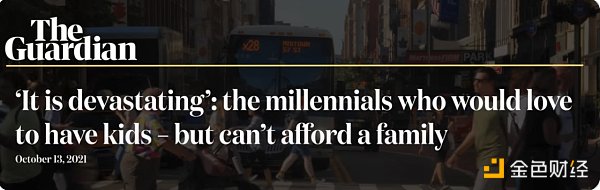
Since you can’t climb up the social ladder and are destined to be a “wage earner” your whole life, why not toss a coin and see if you can become the next dropout billionaire entrepreneur?
The advent of cryptocurrencies has been like a shot in the arm for this trend. Today, nearly two-thirds of young people believe that the stock market is a good way to accumulate wealth…
However, due to the rising cost of living, 90% of young people simply cannot afford capital investment, even if it can earn an average return of 7% per year.
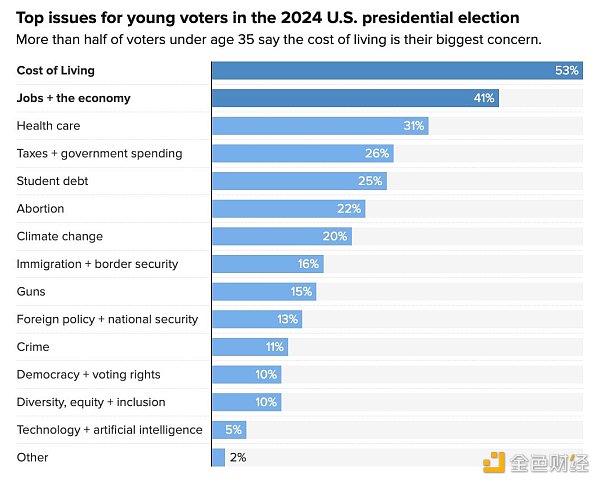
The huge volatility of cryptocurrency and the myths of getting rich overnight make it an unsolved game - as long as you join early enough, are smart enough, and perhaps a little adventurous, you may have a chance at a good life.
It was slightly more respectable to the outside world than a casino, and more intellectually stimulating for the bright young ones among us.
You might say, "Well, actually...ever since the tulip mania in 17th century Holland, humans have been seduced by the speculative game of getting rich quick! You should read "If You Fall Behind, You Get Punished!"
Yes, but my point is that what was historically driven by greed is now increasingly driven by desperation. Want to get a feel for this sentiment? Talk to any 20-something, whether in Hong Kong, Korea, the US, etc.
Young people must make increasingly risky decisions to live comfortably, and they believe, or know, that this is largely due to the financial decisions made by previous generations.
Now, this generation also wants the crypto game taken away from them through complex regulation.
They cancelled the ICO “for your protection” so when the tokens finally came to market you could only buy them at 500x the seed price.
They call it “rat poison” while charging high fees from customers who buy cryptocurrency.
Oh, these customers? Yep, the same people—the same people who are pouring billions into venture capital funds trying to take more and more games private.
This is why people trade memes.
Yes, there’s an element of greed, and yes, there’s also the idea of “buying tokens that don’t have huge VC holdings” that feels like a gambling game to a generation that grew up with smartphones and ADHD.
But it’s also a “whatever, nothing else works” mentality.
More than anything, it is a revolt against a generation they feel has failed them — the same generation that is now trying to take away the only way they seem to have gotten ahead through incomprehensible regulation and increasingly privatized opportunities.
Maybe I’m wrong. Maybe memes really are the next great marketing strategy for startups.