Today at @ColeccionesRSP we're sharing a work born from a decisive incentive: the £20,000 prize offered by the Commissioners of Longitude to solve the problem of calculating longitude at sea.
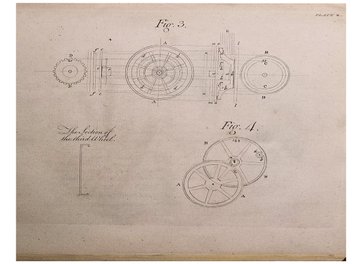
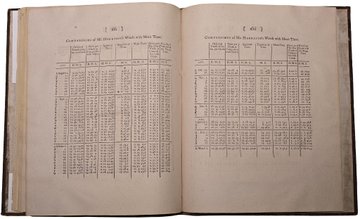
It's The Principles of Mr. Harrison’s Time-Keeper, with Plates of the Same, by John Harrison and Nevil Maskelyne (1767).
Published by official commission, the volume explains the principles of the marine chronometer developed by Harrison, accompanied by engraved plates that precisely describe its operation and its validation in actual navigation.
The participation of Maskelyne, the Astronomer Royal, places the document within the institutional and scientific framework of the 18th century, where mechanics, astronomy, and scientific authority converged.
The 1767 edition, which I'm sharing with you today, demonstrates how the precise measurement of time allowed the ocean to be transformed into a measurable space.