avatar
Andre Cronje
400,900 Twitter followers
Follow
Co-Founder & Architect @fantomfdn. Previously; Founder @yearnfi. Founder @thekeep3r.
Posts
avatar
Andre Cronje
08-28
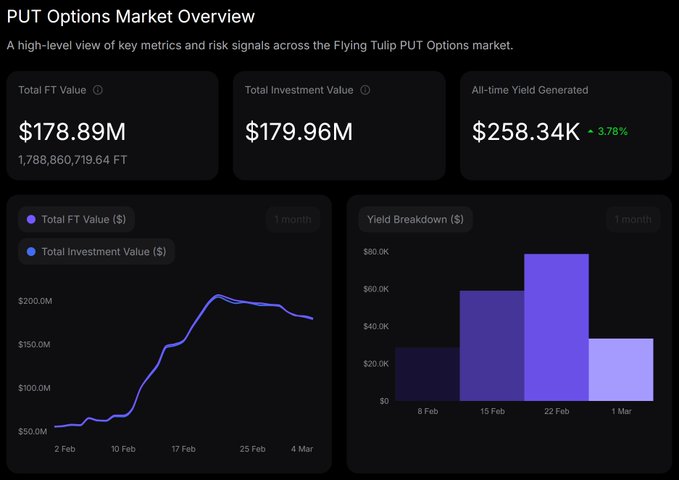
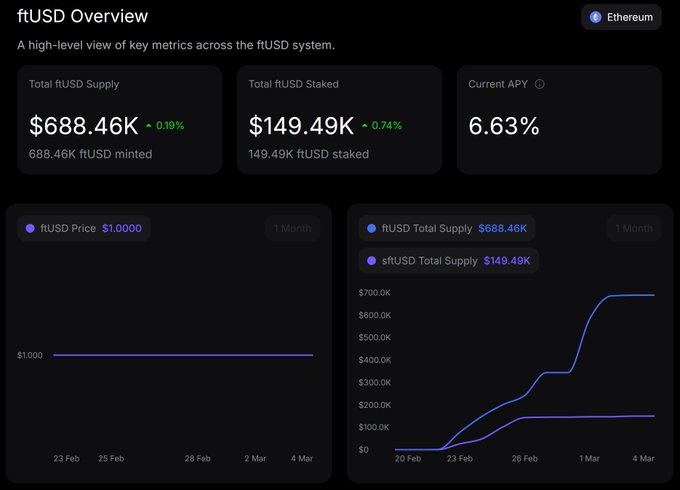
Finally, defi doesn't suck! 🌷 It's about fucking time someone built a defi solution that doesn't make you want to throw your laptop out the window. After months of silence, we suddenly got some big news from @flyingtulip_: they're raising capital, building out a full team, and just dropped a website update revealing more new features including their own protocol-native USD stablecoin (ftUSD) What's actually exciting here is that Flying Tulip's plans tackle basically every criticism you can throw at defi, Andre, or user onboarding—then goes beyond fixing problems to actually innovating. Shit UX? Fixed. Gas fee roulette? Gone. Andre abandoning projects? Full team structure. defi fragmentation? Unified platform. New user barriers? Subsidized onboarding. Add on top some genuinely new innovations like volatility-aware curves and impact-based lending that work together as one cohesive system instead of random features bolted together. It's like someone actually sat down and made a list of everything that sucks about defi and decided to fix all of it at once. Let me take you by the hand anon, and show you why now’s the first time in years you should let yourself get excited. Why the capital raise is bullish AF If you want to take on CEXs like Binance (billions in revenue) or compete with the big boys of defi already powered by VC lucre (Ethena, Uniswap, Curve, etc.), you can't just be some anon in a hoodie hunched over a laptop at 3AM trying to implement John C. Hull's derivatives textbook in Solidity while simultaneously moderating Discord trolls and answering "wen token?" messages in the Telegram group. Flying Tulip raising capital shows they're serious about competing at the big leagues level. This money goes toward: ➡️ Marketing that actually works: Getting normies to try defi without needing a computer science degree ➡️ Building a proper team: Developers, auditors, community managers—the works ➡️User acquisition: Competing with CEX marketing budgets requires real capital For investors? You're getting exposure to a protocol that could capture massive market share from both CEXs and fragmented defi, plus tap into new users taking their first steps into defi through an easier onboarding path. For users? You get one of defi's best innovators (@AndreCronjeTech) backed by a full platform that's way more than some homebrew solution—complete with proper UX tools, customer support, comprehensive docs, and all the infrastructure that makes protocols actually usable. Anyone who's tried to navigate defi knows how rare that shit is. Andre's back: this time it's a different beast Yeah, we know the concerns. Andre Cronje has a reputation for launching projects and moving on. But look closer—this isn't another solo Andre experiment. Flying Tulip is building a full team around the project, which is exactly what needed to happen. The do-it-all-yourself approach leads to burnout and abandoned projects. This time, Andre isn't carrying everything on his shoulders alone. There's proper team structure, dedicated funding, and institutional backing. It looks different, smells different, and will taste different because it IS different—this is being setup to be a properly resourced company. For context: Andre is basically the defi OG who pioneered half the shit we use today. Rehypothecated pools, yield strategy vaults, decentralized keepers, atomic swaps, uniquote for on-chain oracle storage, options liquidity mining, ve33 tokenomics, TWAP/TWAR oracles—thought leader, or at least partner, behind most first-of-their-kind defi innovations. Hell, he even reinvented developer incentive structures on @SonicLabs . Now, they’ve taken that same level of “think-differently” approach to raising VC funds (so help us god!) Shhh, anon, it's okay to admit you're an Andre fanboy too. The fact that serious capital is being raised with a real team structure tells you everything about how seriously this is being taken. This setup lets Andre focus on what he does best—thinking up cool shit and coding it—while a dedicated team can handle everything else. Plus, it's clear this isn't some experiment-in-prod-with-a-new-primitive approach—this is an idea that's been thought through, allowed to stew, planned meticulously, and is now on the verge of launch. There's actual skin in the game from multiple stakeholders. UX for defi in current state is absolute shit If you're an experienced anon, you know the pain. Want to provide liquidity? Cool, pick between trading fees (Uniswap), lending yield (Aave), or perp fees (GMX). Want all three? Congratulations, you now need to manage positions across three different protocols, bridge between chains, and pray to the gas gods that your transactions don't cost more than your potential profits. Anon, we know you've experienced the pain of explaining to your non-native friends how to use defi. "Hey friend, want to try defi? First, buy ETH on Coinbase, send to your on-chain wallet, approve six different tokens, understand impermanent loss, calculate optimal ranges, monitor health factors, and oh—hope Ethereum gas doesn't randomly spike to $200 per transaction." Erm, wut? By the middle point of the 2020s don't you deserve better anon? Why can't you just earn more without doing more? Is that too much to ask for? Flying Tulip doesn't think so... Why self-custody beats trusting randos with your money Alright anon, we get it. You've given up on the bullshit fragmentation of defi and settled for the simpler life of fucking around on CEXs. Binance has slick UX, fast execution, no gas fees to think about. So what if some defi maxis keep screeching about self-custody? You think you've heard all the arguments already. But let's take a deep breath and recap why that's still a terrible idea, shall we? When you keep funds on a CEX, you're not holding crypto - you're holding an IOU from some company that promises they have your Bitcoin somewhere. Your "1 BTC" is actually just a database entry that says "anon123 owns 1 BTC." If the exchange decides to exit scam, gets hacked, faces regulatory pressure, or runs afoul of local legislation and loses its license to operate, your database entry becomes worth exactly zero dollars. "Not your keys, not your crypto" isn't just a meme - it's a warning written in the blood of Mt. Gox users (850,000 BTC gone), FTX users ($8B in user funds vanished), and all the users of all the other exchanges that went belly-up. When Sam Bankman-Fried was using customer deposits as his personal piggy bank, users learned the hard way that "trust us, bro" isn't a viable custody solution. With a private wallet, your funds are controlled by cryptographic keys that only you possess - unless you're an idiot and post your seed phrase on X or fall for some "customer support" DM asking for your private keys. Assuming you have two brain cells to rub together, no CEO can lend your money to their hedge fund, no "hack" can drain your account, and no government can freeze your assets because they don't like your politics. Your crypto is mathematically yours. Yeah, yeah, we get it - CEXs are so convenient. But what if you could have that convenience AND actually own your money AND earn way more than you do now? Flying Tulip is suggesting it'll offer more fun, more opportunity, and better security than any CEX. There's really no excuse left for trusting some rando with your hard-earned money when you could be making it work harder than you do. Don't work like a bitch, let your funds do the work instead (earning from multiple revenue streams simultaneously) Want to drop $10,000 USD worth of funds for yield? In current defi setups, you pick your poison and miss out on everything else. Flying Tulip is designed to let your position simultaneously: ➡️ Earn AMM trading fees (0.02% vs Uniswap's 0.3%) ➡️ Collect lending interest when traders borrow against positions ➡️ Receive options premiums from integrated derivatives ➡️ Get liquidation bonuses when overleveraged positions get rekt ➡️Benefit from volatility-aware curve optimization (the AMM automatically adjusts to market conditions, giving you better execution and protecting against getting arbitraged) Imagine you deposited your funds into the ftUSD / $WS (Wrapped Sonic) liquidity pool. When someone uses their own tokens for collateral to borrow some of your ftUSD for leverage, they're paying you fees, borrowing your assets, and potentially getting liquidated (more money for you). It's beautiful 😍 Flying Tulip is planning to make this accessible to everyone. Building on Sonic means subsidized transactions and direct on-ramping. New users don't need to understand gas concepts, bridge between chains, or navigate the defi maze. You can literally go from fiat to earning yield in Flying Tulip without ever thinking about transaction fees or cross-chain bullshit. For experienced anons, it's unified liquidity paradise. Remember wanting to LP, trade perps, lend, AND earn from liquidations? Flying Tulip will allow you to do all of this from one position. For newcomers, it's the easiest onramp to earning actual yield without the usual defi learning curve from hell. Smart LPing that adapts instead of getting rekt Using current AMMs requires too much work for you anon, your liquidity is acting like a zombie and it wants your brains to make it work - you have to constantly monitor and shepherd it, either moving it to new pools, topping up liquidity pairs to be better balanced, or worse yet actively managing concentrated liquidity ranges on Uni v3 like some ADHD-medicated degenerate day trader glued to their 15 monitors at 3 AM. Uniswap's x*y=k formula distributes liquidity uniformly across a wide price range to secure infinite liquidity, but treats a 2% move the same as a 20% crash. Curve's stable formula works well for stablecoins, but you have to use a separate pool type and formula for volatile assets, and both require governance votes to change the rules that dictate how the pools work, which is too slow to react to market demands. The Gyroscope dynamic CLPs are new and cool but still guide the "zombie" back to range when it's drifted out of bounds. Plus all this depth of liquidity often means you're over-provisioning compared to actual swap volumes - basically throwing money at a problem and hoping it sticks. Flying Tulip's planned AMM will improve upon the ideas in Curve to have concentrated liquidity that dynamically adjusts to concentrate around recent asset price ranges, adapting in close to real-time using EWMA volatility tracking: ➡️Calm markets: Curve flattens (minimal slippage, like Curve's stable-swap) ➡️Volatile markets: Curve steepens (toxicity protection, like Uniswap) Practically: swap 2,000 ftUSD → $WS during low vol, get up to 42% better execution than traditional AMMs according to Flying Tulip's testing. Markets go crazy? The curve automatically protects LPs from getting arbitraged to death. Even better - you can relax because the zombie liquidity is being shepherded for you while simultaneously milking it for all it's worth through multiple liquidity utilization streams. Too much liquidity and not enough swap volume in a pool, no sweat, it’s probably being borrowed to earn more fees. Impact-based lending: risk management that isn't theoretical bullshit Aave: "ETH has 75% LTV because... reasons?" Flying Tulip: "Your LTV is 1 - (actual slippage cost) - (volatility buffer)" Want to borrow 7,500 ftUSD against your $10,000 value $WS position? Flying Tulip is designed to: 1⃣Simulates liquidating your exact position size 2⃣Calculates real slippage based on current market depth 3⃣Adds volatility buffer for current market conditions 4⃣Sets your max borrow limit accordingly Deep liquidity + calm markets = 85% LTV. Thin books + volatile conditions = 60% LTV. The math adapts to reality instead of pretending infinite liquidity exists. Leverage without getting rekt (and without losing sleep) Traditional leverage = hard liquidation thresholds = getting absolutely destroyed by wick downs. Aave users loop stETH for leverage and pray they don't get liquidated at 2 AM by a flash crash. f(x) Protocol pioneered a different approach with their xETH tokens offering up to 7x leverage through automatic rebalancing instead of liquidations—but it's still a fixed maximum that doesn't adapt to market conditions. Flying Tulip takes this concept further with dynamic LTV ratios that automatically adjust based on real market conditions. Instead of offering "7x leverage," Flying Tulip gives you smart borrowing limits that change with the market: ➡️Stable markets + deep liquidity: Borrow up to 80% of your collateral value (5x effective leverage) ➡️Volatile conditions: Automatically drops to 50% LTV (2x leverage) ➡️Thin liquidity for your position size: Further reduced to 45% LTV (1.8x leverage) Say you deposit $10,000 worth of $WS as collateral. In calm markets, you can borrow 8,000 ftUSD against it. Markets start getting spicy? The protocol automatically reduces your borrowing limit to $5,000 before you even think about it. No more 3 AM liquidation anxiety—the system manages risk for you. The beauty is you get maximum leverage when it's actually safe, and automatic protection when it's not. f(x) Protocol gives you consistent 7x leverage regardless of market conditions. Flying Tulip lets you sleep safe at 3am like a normal person, anon. Wouldn't that be nice? On-chain perps that actually compete with CEXs Alright anon, we know you want to play with perps on-chain like every other degenerate leverage trader, farming skew wins and losses like a caffeinated hamster on a wheel that's somehow connected to a withdrawal account so that you can buy more shit you don't need from Amazon or fund your OnlyFans addiction. You've probably been grinding on Hyperliquid or dreaming about it while stuck on some dirty-ho -in-an-upmarket-dress of a CEX. Hyperliquid built their own performant L1 specifically for order book perpetuals with one-block finality. It's impressive, but it's still the traditional approach - separate order books, isolated liquidity, and you're playing in their specific sandbox. Flying Tulip says "fuck that" and plans to build something completely different. Instead of choosing between AMM or order book liquidity, they built a hybrid AMM + CLOB system where both work together. Your perp positions settle against opt-in LPs and the integrated trading infrastructure, which means deeper liquidity and tighter spreads. Flying Tulip's perps are backed by delta-neutral strategies. The entire liquidity model runs on a synthetic delta-neutral pool powered by staking yield. This isn't just throwing your money into a perp and hoping for the best - it's a system designed to generate yield while maintaining price exposure. Plus, they avoid the external oracle dependency bullshit that plagues other platforms. Markets settle directly against the AMM/CLOB hybrid, enabling permissionless asset pairs without waiting for some external dogshit oracle to wake up and figure out what price an asset should be. Same unified liquidity serves your spot swaps, perp trades, lending positions, and leverage plays simultaneously. Try explaining that level of capital efficiency to your Hyperliquid maxi friends while they're stuck managing separate positions across different systems. ftUSD: a stablecoin that isn't held together with hopes and prayers Look, every serious DEX eventually realizes the same thing: relying on other people's stablecoins means leaving money on the table. Curve figured this out when they launched crvUSD and started funneling 100% of borrowing fees and interest directly to CRV holders instead of enriching some money market fund that has fat pockets full of Circle and Tether's stables. Smart move—why let someone else capture the stablecoin revenue when your users are already trading billions in volume? Flying Tulip plans to follow the same playbook with ftUSD. According to their docs, "tokenized delta-neutral LP positions produce a USD-equivalent asset"—meaning ftUSD represents claims on the actual yield-generating delta-neutral strategies happening across the platform. The delta-neutral part means the stablecoin isn't getting rekt by directional price movements; it's backed by the spread capture and yield from the platform's operations. Here's the clever part: launching with a native stablecoin from day one means Flying Tulip can create deep ftUSD liquidity pools against every major asset. Want to trade ETH? There's an ftUSD/ETH pool. Need WS exposure? ftUSD/WS is there. This creates natural arbitrage opportunities that keep the peg tight—if ftUSD trades at $1.02, arbitrageurs buy other stables and sell ftUSD until it's back to $1.00. All that arbitrage volume generates fees for the protocol. Compare this to Ethena's USDe: both use delta-neutral strategies, but USDe depends on external CEX funding rates that can go negative. Flying Tulip will keep everything on-chain—the delta-neutral backing comes from their own AMM operations, lending activity, and integrated trading infrastructure. The result? A stablecoin that generates revenue for the protocol while serving as the base currency for their entire ecosystem. Plus, any peg maintenance activity generates trading fees that flow back to the platform instead of enriching external protocols. Proper limit orders that work like they should Anon, I see you—you're time-poor and just can't be fucked to screw around figuring out which on-chain protocol offers limit orders in some janky way that requires reading docs or watching tutorials just to understand basic shit. You expect your limit orders to just work. From the 1970s guys in suspenders screaming across trading pits, to the 1980s Gordon Gekko wannabes with their brick phones, through the 1990s day traders with multiple 4:3 ratio monitors, right up to Robinhood users following some 19-year-old's DD post on r/wallstreetbets drafted in the comfort of his mom's basement about the next GameStop-like sure bet to moon—everyone just hits "buy limit at $X" and moves on with their life. Why should you be any different? Try explaining current defi limit orders to any of these people and watch their mind melt: Native DEX attempts: The smart ones did the obvious thing and moved to app-chains where they could build proper order books without Ethereum's limitations. Makes sense, except now you're trading in yet another isolated ecosystem instead of using the liquidity where it actually lives. More of that fragmentation we love so much. The aggregator workarounds: CoW Protocol batches your order with others in auctions every few seconds, but whether YOUR order gets filled depends on if their solvers can make a profit including it. Could be the next batch, could be never. 1inch has gasless limit orders but only for swapping into ETH (cool!) and only if you hold tokens that support permits like USDC or DAI (less cool) and it runs on off-chain infrastructure (definitely not cool). The Uniswap v3 hack: Want a limit order? Just provide single-sided liquidity in a narrow range and hope someone trades against it! Explain to a tradfi trader why they need to become a liquidity provider to place a buy order and watch their eye twitch. Meanwhile, that Robinhood user is still just hitting "buy limit" and going back to scrolling TikTok. Flying Tulip will implement limit orders as narrow AMM ranges with TWAP triggers and ERC-1155 position tokens. Place a buy order, earn fees while it rests, get filled when price hits your target. Groundbreaking stuff: limit orders that actually limit things at the prices you want. The unified router chooses between immediate AMM execution or resting limit orders based on price impact. Same liquidity pool serves spot traders, limit order users, and LPs simultaneously. No separate systems, no off-chain components, no explaining why limit orders require a computer science degree. Better yet, you earn fees while your order sits there waiting to be filled—something you'll never get on Binance or any CEX. Finally, defi that doesn't just match centralized exchanges but actually improves on them. The CEX killer thesis: this time it's actually real Look anon, you know why you end up back on Binance even though you probably hate making CZ even richer with every trade you make. Everything just fucking works. One login, one interface, one pool of margin across spot, futures, options, lending. You're not juggling twelve different protocols, approving tokens six times, or explaining to your tax software why you have 47 transactions just to make one leveraged trade. Current DeFi makes you feel like a digital nomad with commitment issues—hopping between Aave for lending, Uniswap for swaps, GMX for perps, and some random yield farm that definitely isn't a rug pull (narrator: it was). Each with its own UI, its own tokens to approve, its own way of wrecking you when gas spikes to $200. Flying Tulip says "fuck that" and is building what DeFi should have been from day one. Everything unified, everything working together, everything earning you money instead of just bleeding it. Better fees than Binance (0.02% vs 0.1%), better yields than anything centralized, and your keys never leave your wallet. The difference? While CEX shareholders extract billions from your trading fees, Flying Tulip's VC structure actually makes sense—50% community foundation, 50% investors with downside protection instead of pure extraction. The raised funds go directly into token buybacks, liquidity programs, and protocol growth instead of some billionaire's fourth yacht. You'll be over here earning protocol revenue instead of subsidizing random shareholders' Lamborghini collections, trading on the platform that finally figured out how to make DeFi not suck. About damn time someone built this shit right.
UNI
3.6%
loading indicator
Loading..