I’ve been thinking about this a lot lately: why BTC is still a better “sit and wait” asset than stables for most people.
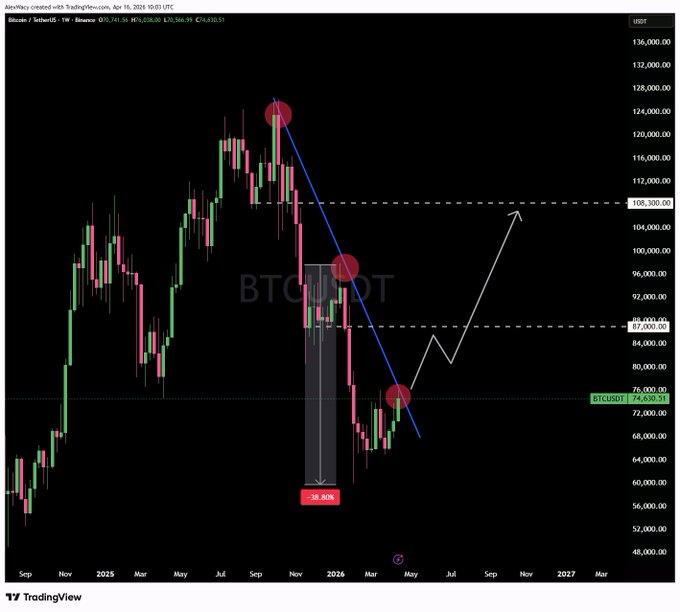
Right now BTC is around 69k. The last ATH was ~126k. So to get back there, it needs roughly +90% from here.
The question isn’t “will BTC pump tomorrow”.
The real question is: do you think BTC makes a new ATH sometime in the next 5 years?
If your answer is NO, then you’re basically saying the whole institutional arc was a dead end. ETFs, treasury talk, BTC as a macro asset, all of it ends up being a nothingburger. Maybe that happens, but it’s a pretty strong stance to be confident in.
If your answer is YES, then the math is actually boring in a good way.
Let’s do it clean: if BTC does ~+90% over 5 years, that’s not 18% a year. It’s about 14% CAGR (because compounding). If it’s +83%, it’s closer to 13% CAGR. Either way, it’s double-digit annualized without touching DeFi risk.
Now compare that to stables.
Stables feel safe because the number doesn’t move. But your purchasing power still moves. If you just sit in stables, you’re basically accepting a slow bleed versus inflation. And the moment you try to “make stables productive”, you’re usually taking risk that people pretend isn’t there: counterparty risk, platform risk, depeg risk, freeze risk, regulatory risk. It’s not free yield, it’s yield with a receipt.
So for me stables are amazing for optionality. Dry powder, sleeping well, being able to click when the market gives you a gift.
But if the goal is long-term holding, BTC is still the simplest trade-off I can explain to a normal person: you take volatility now, to avoid slowly getting priced out later.
Not advice, just how I frame it when the timeline is years, not weeks.