Today
Intel
Market
Earn
Settings
Account
Theme Selection
Light
Dark
Language
English
简体中文
繁體中文
Tiếng Việt
한국어
Followin APP
Mine Web3 Possibilities
App Store
Google Play
Log in
百里
122,136 Twitter followers
Follow
#OKX Web3钱包现已支持80+公链 提供钱包、多链 Swap、BRC-20铭刻&交易、NFT 市场、DeFi 挖矿一站式服务 #web3入口 一个就够立即注册:http://okx.com/join/2091788 商务合作请私信 TG:@Baili866 #Bitgetbuilder #HTX
Posts
百里
02-07
Thread
#Thread#
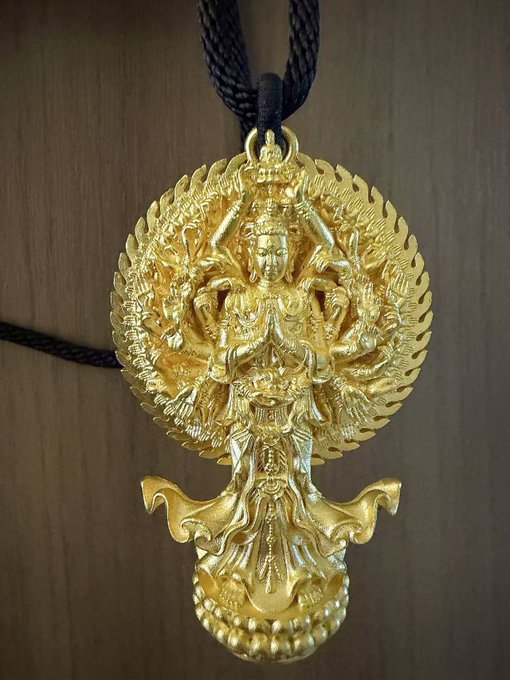
A New Year's gift to myself 🎁 A 90g Thousand-Hand Guanyin statue. I've wanted it for a long time, and receiving it in person was truly breathtaking! Without attachment to anything, may the thousand hands protect your heart! 2026, let's grow inward. Wishing everyone a prosperous New Year, may you earn a fortune!
BTC
0.74%
百里
02-07
Thread
#Thread#
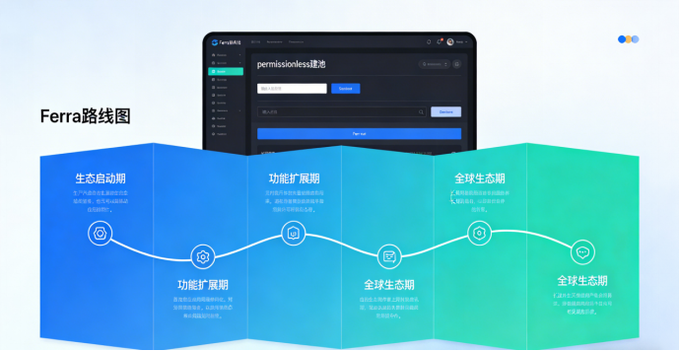
The crypto market is never short of volatility, but every major crash serves as a stress test for DEX projects. When the market is bullish, data and narratives can easily obscure everything; only when the tide recedes can we see whether a project is simply piling on data in the short term or slowly building its structure and ecosystem. Recently, BTC has been declining, and market sentiment has clearly cooled. Most users have two choices: either gamble on a rebound or simply stop trading and wait for a signal. But my own approach is the opposite. Especially during these phases, it's crucial to shift your focus away from price and examine what the project is actually doing. Bull markets are about speed, bear markets are about the underlying infrastructure; at this point, genuine or fake development is easily identifiable. I've been following @ferra_protocol recently, and my overall impression is that they're not chasing short-term data growth, but rather slowly reconstructing the system itself. Two details are quite representative. The first is the LP Guild. After week 10, the bonus fees are now available. The key issue isn't the appearance of the leaderboard, but a shift: incentives are moving from "points for record-keeping" to tangible cash flow. When participants have stable expectations of returns, the ecosystem can begin to function organically, rather than relying on external stimuli. The second point is their recent overall pace. On one hand, they've made pool building and token listing permissionless, lowering the barrier to entry and allowing more people to join. On the other hand, they've clearly laid out their roadmap: DAMM, Trading Guild, a UI overhaul of Feeds, and Feeds Premium. These two things address two different problems: the former is "how to get people in," and the latter is "what they do after they're in, how they collaborate, and how they stay." Simply put, in the first half of the DEX era, many projects relied on subsidies to buy growth; but in the second half, what truly differentiates them is the ability to transform traffic into relationships and participation into a system. From this perspective, Ferra's actions over the past week have primarily focused on the latter. This kind of development may not seem the most exciting in the short term, but it often determines whether a project can survive a downturn. The real gap is never widened when the market is at its best, but rather accumulated little by little during the worst times.
BTC
0.74%
百里
02-05
Thread
#Thread#
Recently, @ferra_protocol has gained attention in the DeFi space due to its multi-pool parallel design. However, I've noticed a common phenomenon: many people who get involved in DeFi immediately focus on APY and accumulating points, rarely asking themselves a more important question: Are these already launched features truly suitable for me? Will using them incorrectly lead to losses? When researching Ferra, I never prioritize yield or tasks; instead, I follow a fixed order of evaluation. If you follow this logic, you'll avoid pitfalls. Today, I'll analyze Ferra in detail from the perspective of "how to use the already launched features effectively." Step 1: Identify Pool Types Ferra currently offers three main pool types: CLMM, DLMM, and DAMM. In my opinion, this isn't a question of "which is better," but rather, you need to first clarify: are you a trader or a limited partner (LP)? Traders are concerned with execution price, slippage, and depth; LPs should be more concerned with the extent to which they need to actively manage the pool. CLMMs are inherently designed for those willing to manage trading ranges and adjust positions. If you're not even willing to study the logic behind trading ranges, don't force yourself to be an active market maker; choosing a less stressful pool type is the responsible thing to do with your capital. Step Two: Look at fees and trading structure, not just APY. On Ferra, whether you can capture fees depends on the stability of trading volume and whether your range covers the main trading bands. Many people lose money with CLMMs in similar ways: they set their ranges too narrow, which seems like high returns, but when the price moves, it becomes a one-sided asset, and they don't capture the fees but bear all the risk. Multiple pool types are an advantage, but the choice and the outcome are entirely yours; the protocol doesn't guarantee anything. Step Three: Tasks and points are only for reference, not a reason to trade. I look at Points, Quests, and LPR Guidelines, but I never use them as a reason to trade. High-frequency trading for the sake of tasks only amplifies slippage and wear and tear; in the end, you may seem to be "participating in the construction," but you're actually paying tuition. Step 4: Before adding liquidity, ask yourself two questions: 1) If the price breaks out of the range, can I accept the asset becoming one-sided? 2) Do I have time to periodically adjust the range and collect fees? If either of these is a no, I won't touch pool types that require active management. Overall, @ferra_protocol isn't a protocol where you can make money with a simple click; it's more like a tool system divided into pool types and strategies. If you understand pool types, fees, range management, and task incentives, it's a tool to improve capital efficiency; if you don't, it becomes a trap that amplifies random fluctuations. The tools are already in place; the rest is up to you how you want to use them.
百里
02-03
Thread
#Thread#
Do you all think that grabbing airdrops during a bear market is the only way to succeed? Let me tell you from my five years of experience: airdrops are much harder to grab during a bear market, and often you're just wasting your time. However, the recent launch of Ferra Feeds Premium subscription is worth participating in, especially with the new lucky draw points system in the daily check-in section. I've been watching the leaderboards for the past few days and have come to the conclusion that the Ferra points gap has widened and is continuing to grow. It's now certain that all current Ferra points activities will be linked to airdrops during @ferra_protocol TGE events, and may even be used as a core allocation criterion. With the real market crashing so drastically, truly free-to-play airdrops have virtually no place in this market. Regardless of whether it's a bull or bear market, project teams will always prioritize paid users in their airdrop designs; this is basic business logic. Simply put, you need to be willing to create value and contribute revenue to the project for it to give you a higher weight in airdrops. Relying solely on daily check-ins and scripts to maintain visibility and expecting a substantial airdrop share is now unrealistic. This is very evident in the leaderboards: accounts relying solely on basic tasks have mostly been pushed to the hundreds or even thousands of places below. The Lucky Draw mechanism essentially widens the gap in points with an extremely low barrier to entry. Therefore, my advice is to complete the Lucky Draw every day, even if it costs only one SUI. This is one of the few opportunities at this stage to leverage changes in point rankings at a low cost. Let's briefly discuss Feeds Premium. At this stage, I'll place it very high on my list. The reasons are threefold: points receive a multiplier, the empowerment from subscribers will only continue to increase, and the point weight directly determines how many airdrop tokens you'll receive in the future. Especially for those users who have already added LPs on Ferra and are actively engaging, Feeds Premium isn't about spending money; it's about amplifying the value of your existing participation, making it highly efficient. Finally, a brief analysis of the Yapping V1 leaderboard reveals that subscribers will likely receive additional weight in the future; otherwise, the entire points incentive system wouldn't make sense. The question with Ferra now isn't whether to participate, but whether you can climb to the higher levels of the points system.
SUI
2.78%
Loading..