A quantum computing paper jointly published today by Google, the Ethereum Foundation, and Stanford University has once again caused panic. I just read the full original text, so what exactly is it saying? The core of the paper is a more accurate estimate of the resources required for quantum computing to break encryption algorithms. Previously, it was believed that quantum computing required massive resources, making its implementation extremely difficult and costly. However, this paper argues that only 1200 logical qubits and 90 million Tooffoli gates are needed to break the algorithm, far fewer than previously estimated. Based on the current rate of hardware development, this could be achieved in 5 to 10 years. In other words, the window of opportunity for blockchain to achieve quantum resistance is at most 10 years, turning a previously unattainable concept into an objectively imminent reality.
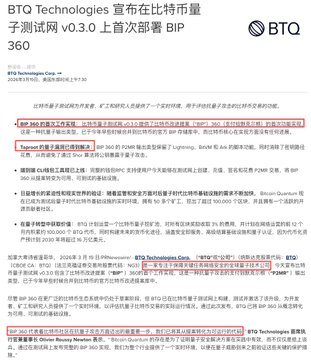
Regarding the threat to Bitcoin, as shared in the previous two tweets, if this day truly arrives, it will be somewhat damaging but not crippling. This is because quantum computing is only effective against addresses whose public keys are exposed. Currently, Bitcoin's BIP360 is quantum resistant, but this requires a wallet migration. However, unclaimed wallets, represented by Satoshi Nakamoto's, cannot migrate due to lost private keys and other reasons, thus facing the risk of being compromised. These wallets account for 30% of all Bitcoins.
Assuming that quantum computing is indeed realized one day, but Bitcoin hasn't made corresponding preparations, the worst-case scenario would be a 30% market crash. If Bitcoin can withstand this, it will survive. This is why it's said to be somewhat damaging but not crippling.
Are there any other solutions? Actually, there are, depending on whether the Bitcoin community is willing to implement them. It involves two steps:
1. After BIP360 is launched, issue a global wallet migration countdown announcement, requiring everyone to complete the migration within 3 years.
2. After the deadline, the Bitcoin blockchain undergoes a fork upgrade, permanently locking the wallet addresses that haven't completed the migration.
The only problem this solution faces is the "moral constraint" imposed on Bitcoin's most ardent believers—the idea that you control your wallet. However, if quantum computing arrives and you don't migrate your wallet in time to avoid being hacked, what's the point of controlling it?
So, if you really want to resist quantum computing, there are plenty of ways to achieve it.
Original paper link:
quantumai.google/static/site-a...…
twitter.com/jason_chen998/stat...