Yield in DeFi while keeping assets in your wallet. Aqua
many users have been using the DeFi we used to for a long time, me included, with the AMM mechanism we familiar with
but this mechanism has key issues. the main one is idle capital
after LP assets are locked in pools, 80-95% of the liquidity in a pool isn’t used for its core function, all the real work is done by 10-20%, the rest of the assets just shape the price
related drawbacks
◆ locking assets in pools. it doesn’t allow assets to be used for other purposes and creates security risks, protocol hacks and loss of funds
◆ fragmentation. because funds are locked in a single pool or protocol, DeFi protocols are forced to compete for liquidity by offering extra rewards and different marketing incentives
the 1inch project released the Aqua whitepaper, which introduces a new type of shared liquidity layer
this is a new method that brings in a set of innovations that fix these AMM vulnerabilities
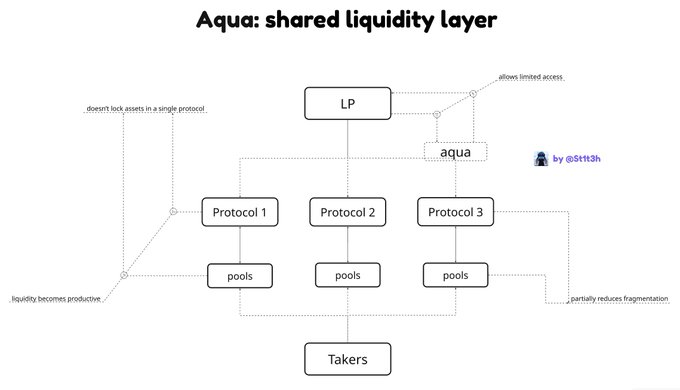
in Aqua, an LP doesn’t provide assets to lock them in pools, instead they provide limited access to their assets from their wallet to pools
meaning when an LP wants to interact with Aqua, they simply grant limited access to their assets, without locking them, at the same time to multiple protocols, pools, and other opportunities
Aqua itself doesn’t store assets, it stores virtual balances to calculate the liquidity formulas
this makes it possible to eliminate several vulnerabilities at once: improve asset security, funds stay in the wallet and not in a shared pool, use multiple strategies instead of a single pool, and increase efficiency
key features of Aqua:
◆ increase asset security by keeping funds on LP wallets
◆ partially solve the asset fragmentation problem
◆ use a wider range of tools to build yield logic
◆ boost capital efficiency
despite solving some AMM problems, Aqua has its own set of vulnerabilities
LP behavior risks, an LP can revoke access to assets, which creates extra challenges for liquidity calculations
strategy risks. more accessible functionality increases the complexity of building effective strategies, which raises the risk of losses
can’t say that Aqua is better than AMM, since it has its own risks, it’s more of a tool that lets you choose based on your strategy and evaluate risks and opportunities in each case
I also continue to use @katana, which has an AMM model, but not the classic version