avatar
선동잘당하는 열충 공지방
Follow
Posts
avatar
선동잘당하는 열충 공지방
$BASED Summary of Official Position on the Tokenomics Controversy (Korean) 1. General Position • There has been considerable criticism and concern regarding $BASED tokenomics over the past day. The team is aware of issues such as poor communication, Ethena distribution, the existence of Season 3, and Sybil issues. • Token launch is not simply about distribution; it's about aligning early contributor rewards with long-term ecosystem growth. • BASED's long-term goal is to become a mainstream fintech-level crypto platform like Robinhood. ⸻ 2. Token Supply & Launch Philosophy • If the initial circulation is too small, community formation will fail, and if it's too large, there's a risk of price collapse due to lack of liquidity. • The launch will not be delayed due to market conditions (e.g., BTC below 70k). → Based on product completeness, community, and ecosystem readiness. ⸻ 3. Seasonal Community Rewards • Season 1 (approximately 3 months): $7.63M in fees • Season 2 (approximately 3 months): $5.34M in fees • 60-70% of profits are redistributed to users (affiliate/referral rewards) • S1 = 8%, S2 = 8% token allocation • Due to the short season, a simple comparison with "10% for other projects" is inappropriate ⸻ 4. Q&A Key Summary Q1. Why are tokens given to exchanges (Launch Partners)? • Refers to exchanges and distribution partners, not influencers • To ensure liquidity, accessibility, and price stability • Includes vesting conditions ⸻ Q2. Why is Ethena included in the Genesis distribution? • Ethena is not simply an external entity, but a community with substantial contributions. • HyENA joint project → Core engine of growth. • Ethena Community: 7.5% of total supply. • 20% unlocked for 3 months after TGE. • The remainder vests after 1 year. • BASED community receives tokens immediately, before Ethena. ⸻ Q3. Why is there investor allocation? • Capital that enabled early survival. • 1-year lockup + 24-month linear vesting. ⸻ Q4. Why is 20% of the team allocation? • Long-term builder incentives & core personnel retention. • Cannot be sold before the community. • Fully vested. ⸻ Q5. Why is Season 3 included in the Genesis Distribution? • Genesis is based on the "economic vesting point," not the actual payment point. • Season 3 runs from January to May → included in the Genesis distribution. ⸻ Q6. Why are $PUP holders eligible for Genesis distribution? • Signaling remaining loyalty even in a bear market, not for short-term farming. • To strengthen community stability and long-term holder base. • Token conversion, not airdrop. • No snapshots. ⸻ Q7. How do you handle Sybil? • Analyze millions of on-chain and off-chain data. • Use Based Alignment Score. • Criteria: • Ongoing use. • Excluding single-event activities. • Actual trading risk. • Partial deductions for trading primarily in stablecoin pairs. • Removed tokens will be redistributed to the actual community. ⸻ Q8. Why only 8% per season? • The season is very short, at 3 months. • Based on the entire points period (June-December 2025, 6 months), → A total of 28.5% is distributed to the community, including S3. • To prevent short-term over-distribution. ⸻ Q9. What are the Based Card Points? • Detailed information will be provided upon the release of the airdrop checker (before TGE, mid-March) ⸻ Q10. What about buybacks/fee sharing? • Only confirmed details will be announced. • Announcement will be made after regulatory and implementation issues are resolved. • No empty promises. ⸻ Q11. How much was removed from Sybil? • Redistributed to normal community users. ⸻ Q12. What is the TGE schedule? • Target: March • Additional exchange launches are being prepared. • Any changes will be immediately announced with the reason.
BASED
0%
avatar
선동잘당하는 열충 공지방
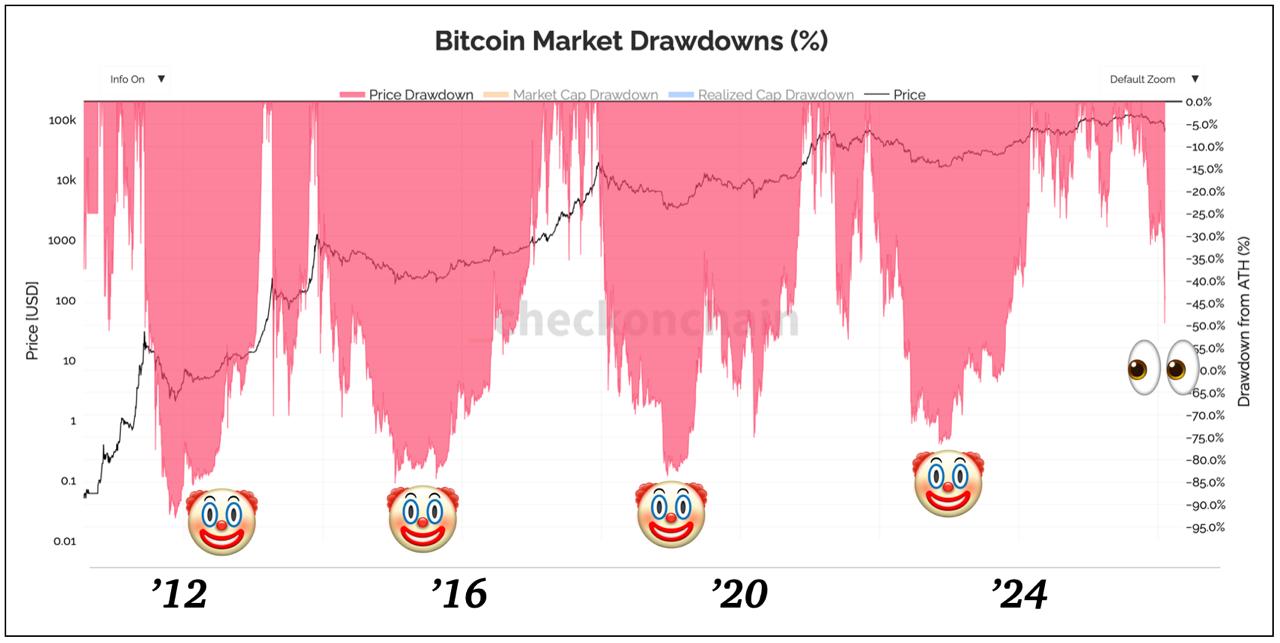
Oh my, why does the coin market keep crashing? Now that I'm at it, let's figure out why. There's been a lot of talk about the four-year cycle of the coin market, but in February 2026, the market plummeted again, seemingly following that cycle. Some say it's due to the issue of Trump's nominee for the new Federal Reserve Chairman, or the Satoshi Nakamoto theory mentioned in the Jeffrey Epstein document. However, this plunge was too rapid, too structural, and too simultaneous to be a simple price correction. I believe it's due to the inherent vulnerabilities of the market structure itself. I'd like to share my analysis of the specific causes of the plunge. First, I believe the recent plunge was caused by a self-induced crash in the options market. Indeed, at the peak of the bull cycle, options open interest (OI) was at an all-time high, while spot trading volume was declining. Due to the structure of options, market makers change hedges when prices fall, and when hedges are changed, spot is forced to sell, further declining prices. We call this phenomenon "Gamma Unwind." Second, there was no influx of new stablecoins into the coin market. While the coin market appears complex, it ultimately boils down to the question, "Are new dollars coming in now?" Since 2026, the net issuance of USDT and USDC has slowed, some exchanges have seen stablecoins leave, and even OTC desk trading volumes have decreased. This means that existing positions are maintained, with no new buyers appearing. Third, miners' mining operations have become increasingly strained. For miners, rising electricity costs, a growing debt burden from facility investments, and significant pressure to refinance their BTC-collateralized loans have led to significant selling pressure. This has led to shorter price rebounds, creating a price structure with lower highs. Fourth, Bitcoin still appears to be "immature digital gold." Frankly, it remains a risky asset for large funds. At the same time, the presence of high-growth tech assets like AI and safe-haven commodities like gold and silver has led to a diversification or even a shift away from the cryptocurrency market. Unfortunately, while Bitcoin may still be philosophically digital gold, it remains a high-risk asset within a portfolio. Finally, and perhaps most importantly, the market seems overly confident in one direction. After the price peaked in October 2025, there was a common sentiment that the market wouldn't experience the same crash as before thanks to ETFs and that this cycle might be different. Every asset market becomes particularly vulnerable during these times, and I believe the recent plunge is ultimately the result of this structural vulnerability created by this confidence. In conclusion, the cryptocurrency market's plunge is attributed to a combination of market participants' greed and the clear inability to compete with narratives like AI. What's different from past down cycles is not the fear of individual investors, but rather the adjustment of institutional leverage and derivative structures. Just as past down cycles were more of a rebalancing to move into the next phase, my conclusion is that we should stay in the market for the time being and wait for greater opportunities to emerge! #KillMeWithoutPain
USDC
0%
loading indicator
Loading..