avatar
Alex Web3投资备忘
Follow
Posts
avatar
Alex Web3投资备忘
🔍 Daily Briefing, February 10, 2026 📊 I. Key Data Fear and Greed Index: 10 (Extreme Fear) US BTC Spot ETF: Net inflow of $145 million yesterday; US ETH Spot ETF: Net inflow of $57.07 million yesterday. 📰 II. Important News of the Day 1️⃣ Macroeconomics and Regulation 1) On February 10th, U.S. Treasury Secretary Scott Bessant publicly criticized Coinbase on Fox News as a "stubborn player" because Coinbase opposes the Clarity Act. Bessant repeatedly emphasized the necessity of passing the Clarity Act during a Senate Banking Committee hearing last week, using strong language against its opponents. The Clarity Act aims to clarify the regulatory division of labor for crypto assets, with the SEC and CFTC each responsible for different areas. However, Coinbase is concerned that it may restrict its business model, such as stablecoin rewards, leading to divisions within the industry. 2) On February 10th, Federal Reserve Governor Christopher Waller stated that the Fed plans to launch a "simplified master account" by the end of this year, initially advancing limited access arrangements to the payment system. The traditional Fed master account provides institutions with direct access to the federal payment system and the U.S. monetary system, while the "simplified master account" will have significant restrictions, including no interest payments and no access to the discount window. This plan has previously been open for public comment and has revealed the differences between the crypto industry and community banks regarding whether non-traditional financial institutions should be allowed access to certain functions of the U.S. payment system. Waller stated that the Fed still needs to "continue to work things out" on these issues, but hopes to implement it within the year if conditions permit. 2️⃣ Industry News 1) On February 10th, Ethereum co-founder Vitalik Buterin published an article updating his systematic thinking on the intersection of Ethereum and artificial intelligence. He emphasized that AGI should not be pursued in an "indiscriminate acceleration" manner, but rather the values ​​of cryptography and AI should be deeply integrated. Core objectives include: preventing humans from being marginalized by AI or permanently stripped of power by an inescapable power structure, and preventing systemic risks arising from AI going out of control or an imbalance between offense and defense. In terms of a more short- to medium-term practical path, Vitalik proposed four key directions: first, building more "trustless/privacy-friendly" AI interaction tools; second, Ethereum as the AI ​​economic interaction layer; third, making a "cyberpunk-style self-verifying world" a reality; and fourth, reshaping market and governance mechanisms. 2) On February 10th, Base App announced a shift in its product direction, focusing on creating a better on-chain trading experience. The news feed will only display tradable assets and on-chain activities, and the Talk discussion section will be removed. Simultaneously, Base App will gradually terminate its Creator Rewards incentive program, which has distributed over $450,000 to approximately 17,000 creators in the past six months. The program will end on February 15th. 3) On February 10th, Goldman Sachs issued a warning that hedge funds are short US stocks at an unprecedented pace amid escalating concerns that artificial intelligence could disrupt traditional business models. Data shows that nominal short of individual stocks reached a record high since records began in 2016 last week. The report stated that Anthropic's launch of a new tool to automate tasks across multiple industries triggered a concentrated sell-off. 164 stocks in the software, financial services, and asset management sectors collectively lost approximately $611 billion in market capitalization last week. Although US stocks rebounded on Friday, the Nasdaq 100 index still recorded its worst week of the year, reflecting continued fragile market sentiment. 4) On February 9th, CME Group officially announced that its Cardano (ADA), Chainlink (LINK), and Stellar (XLM) futures contracts are now available for trading. Users can expand their trading strategies through the capital efficiency and flexibility of these new contracts, which also offer "micro" versions. 5) On February 10, Ark Invest, owned by Cathie Wood, increased its holdings of Bullish stock by 57,164 shares (worth $1.83 million) on Monday, after the latter's stock price rose by 16.76% in a single day. Ark had already purchased 393,057 shares of Bullish stock last Friday, worth approximately $10.8 million. 3️⃣ Trends in companies I'm following/AI-related developments 1) On February 9th, it was reported that Seedance 2.0, ByteDance's AI video generation model, swept across the domestic and international internet during its limited beta testing phase. Feng Ji, the creator of *Black Myth: Wukong*, commented that Seedance 2.0 is currently the most powerful video generation model available, bar none. This model employs a dual-branch diffusion transformer architecture, capable of generating both video and audio simultaneously. Users only need to write detailed prompts or upload an image to generate a multi-camera sequence video with native audio within 60 seconds. Analysts believe that Seedance 2.0 has the potential for early large-scale application in AI comics, AI animation, and short drama production, significantly reducing costs, improving efficiency, and releasing new content supply. The technological breakthrough of Seedance 2.0 has also acted as a catalyst for sentiment surrounding AI video content, with media and IP-related sectors showing significant gains, and many stocks, including Chinese Online and iReader Technology, surging to their daily limit. 2) On February 10th, it was reported that Alphabet, Google's parent company, plans to raise $20 billion through a bond issuance. This will provide Google with ample resources for AI model development, server upgrades, and global data center expansion. According to sources, the bond issuance has already received over $100 billion in pre-orders, representing an oversubscription rate of 5 times. The bonds are expected to be issued in seven different maturities, and the management team comprises top global financial institutions such as JPMorgan Chase, Goldman Sachs, Bank of America, Deutsche Bank, Royal Bank of Canada, and Wells Fargo.
ETH
5.42%
avatar
Alex Web3投资备忘
🔍 Daily Briefing, February 9, 2026 📊 I. Key Data Fear and Greed Index: 9 (Extreme Fear) US BTC spot ETF: Net outflow of $358 million last week; US ETH spot ETF: Net outflow of $171 million last week. 📰 II. Important News of the Day 1️⃣ Macroeconomics and Regulation 1) On February 9th, US President Trump reiterated his prediction that the Dow Jones Industrial Average would reach 100,000 points before the end of his term. Earlier, he posted on Truth Social, stating, "The US stock market is hitting record highs, and national security is guaranteed, all thanks to our great tariff policies." Previous reports indicated that US stocks rebounded strongly on Friday, with the Dow Jones Industrial Average historically breaking the 50,000-point mark, marking its largest single-day gain since May of last year. Trump has repeatedly publicly shill for buying stocks, and subsequent market rallies are often directly related to his policy announcements and trade tariff adjustments. 2) U.S. Treasury Secretary Scott Bessant said on Sunday that even under Federal Reserve Chair nominee Kevin Warsh, he does not expect the Fed to rapidly shrink its balance sheet. San Francisco Fed President Daly said last Friday that one or two more interest rate cuts may still be needed to address the weakening labor market. 3) In the Japanese House of Representatives election held on February 8, the Liberal Democratic Party (LDP), led by Sanae Takaichi, won 316 seats on its own. This not only easily surpassed the 233-seat threshold for a majority but also directly exceeded the two-thirds majority (310 seats) requirement, marking the LDP's best performance since its founding in 1955. The market widely expects Takaichi to leverage this victory to continue pursuing aggressive fiscal expansion and strategic investments, leading to a significant jump in the Nikkei index and a weakening of the yen. 2️⃣ Industry News 1) On February 9th, the Financial Times published an article criticizing cryptocurrencies. The article stated that since its inception, Bitcoin has been on a path destined for a disastrous end. Last week, Bitcoin experienced its worst crash since 2022, wiping out all gains since Trump's re-election in 2024. The US certainly has a leader closest to being a "Bitcoin president," but even with the establishment of a strategic Bitcoin reserve, the pardoning of numerous crypto criminals, and the inclusion of crypto assets in 401(k) retirement accounts, Trump could not stem the selling pressure. People are beginning to realize that an asset sustained solely by wishful thinking has no bottom line on its value. 2) On February 9th, Andrew Kang, co-founder of Mechanism Capital, posted: "We are in one of the most extreme asymmetric moments in history. The only correct strategy now is to lengthen your time horizon and completely abandon short-termism... We are about to witness an exponential explosion in AI, robotics, energy, and innovation... We will compress more technological progress and economic growth than the entire history of human civilization. The speed of wealth growth will be astonishing, just like how cryptocurrencies created a large number of billionaires and multimillionaires in a short period of time, but on a much larger scale. Without early intervention, it will be difficult to buy rapidly rising assets at a reasonable price." 3) On February 8th, Chaitanya Jain, Bitcoin strategy manager at Strategy, posted on social media, "We will never stop buying Bitcoin." This followed previous reports that Strategy founder Michael Saylor had again posted information related to Bitcoin Trackers, stating, "The orange dot is important." Based on past patterns, Strategy typically discloses its increased Bitcoin holdings the day after such news is released. 3️⃣ Trends in companies I'm following/AI-related developments 1) According to reports, Xiaohongshu's technology team is developing a video editing AI product called OpenStoryline (version 1.0.0). The product is currently in the testing phase and may be open-sourced in the future. OpenStoryline is positioned as an AI-based creative tool, with core functionality supporting conversational editing. Its product performance is considered comparable to ByteDance's JiDream Little Lark and SenseTime's Seko 2.0. This move signifies that Xiaohongshu is further deepening its involvement in the short video creation ecosystem, leveraging AI technology to lower the barrier to entry for users creating videos. 2) ByteDance recently officially released a biomolecular structure prediction model called Protenix-v1. This model not only fully replicates the core capabilities of Google's AlphaFold3 (AF3), but also announced that its source code and model parameters are fully open-sourced under the Apache 2.0 license, breaking the technical barriers of top-tier biological models. The power of Protenix-v1 lies in its full-atom 3D structure prediction capabilities, enabling it to accurately handle complex biological systems, including proteins, nucleic acids (DNA and RNA), and small molecule ligands. According to AIbase, this is the first fully open-source model that, with the same training data, model size, and inference budget, achieves performance equal to or even surpasses AlphaFold3 in multiple benchmark tests. 3) Recently, Sam Altman was reported to have invested heavily in an AI startup called World Labs. Founded by Stanford University professor and former head of Google Cloud AI, Fei-Fei Li, the startup has raised over $100 million in a very short time, with its valuation soaring to the $1 billion level. World Labs' core focus is on giving AI "spatial understanding" like humans. Altman is optimistic about this area because while large-scale models have reached the pinnacle in language processing, they still have shortcomings in understanding the three-dimensional physical world. According to AIbase, Altman's investment is not simply financial support, but also reflects his strong confidence in the deep integration of "embodied intelligence" and artificial general intelligence (AGI). 4) Recently, the well-known self-hosted AI agent framework OpenClaw (formerly Clawdbot) suffered a serious supply chain attack. In a recent blog post, cybersecurity platform VirusTotal disclosed that the framework's extension platform, ClawHub, was infected with a large amount of malware disguised as practical tools. Attackers exploited OpenClaw's ability to execute shell commands, manipulate files, and initiate network requests to disguise trojans and data-stealing programs as community-developed "skills."
BTC
1.91%
avatar
Alex Web3投资备忘
02-05
Google's latest quarterly earnings report is a resounding success, with several key highlights: 1. Cloud revenue grew by 48%, significantly exceeding expectations, and operating margin improved to 30% (compared to 24% in the previous quarter, and Alibaba Cloud's 9% in China). This is approaching the levels of industry leaders AWS and Microsoft, demonstrating rapid growth. Furthermore, three-quarters of Google Cloud customers choose Google's vertically optimized AI services, showcasing a strong full-stack advantage across chips, large models, AI platforms, and enterprise AI agents. 2. Search revenue grew by 17% (compared to 15% in the previous quarter), with search volume also reaching a record high. Google AI Search increased user dwell time: In AI Mode, users spent three times more time searching than with regular searches, further disproving concerns that the widespread adoption of question-and-answer AI would erode Google's core search revenue this quarter. 3.ai Phone—Pixel 10 Coming Soon 4.Gemini The Gemini 3 Pro is undeniably user-friendly, processing three times the daily token volume of the Gemini 2.5 Pro. In Q4, the Gemini API processed 10 billion tokens per minute, up from 7 billion in Q3, a 43% sequential increase. Apple's Siri also uses the Gemini model. Capital expenditure in 2026 is more than double the 90 billion+ in 2025, with an expected 175-185 billion (this may be a market concern). However, despite the excellent financial report and guidance, the stock still fell in after-hours trading, as Google is the only AI company whose stock price hasn't experienced a correction recently. The narrative leader needs to release some pressure from time to time. ———— PS: A small membership group for crypto asset and stock investment has been established. Add alexxxp on WeChat and note: Member. The membership group is suitable for those who agree with fundamental analysis and value investing principles. The group will discuss in-depth investment issues and specific projects/companies. I will also share my current strategies, targets, and the underlying logic. The fee is 399 yuan/year. Purely speculative issues will not be discussed in the group; otherwise, a refund and removal may be requested. I understand and respect everyone's individual investment style, but focus is required here.
GEMINI
2.31%
avatar
Alex Web3投资备忘
02-04
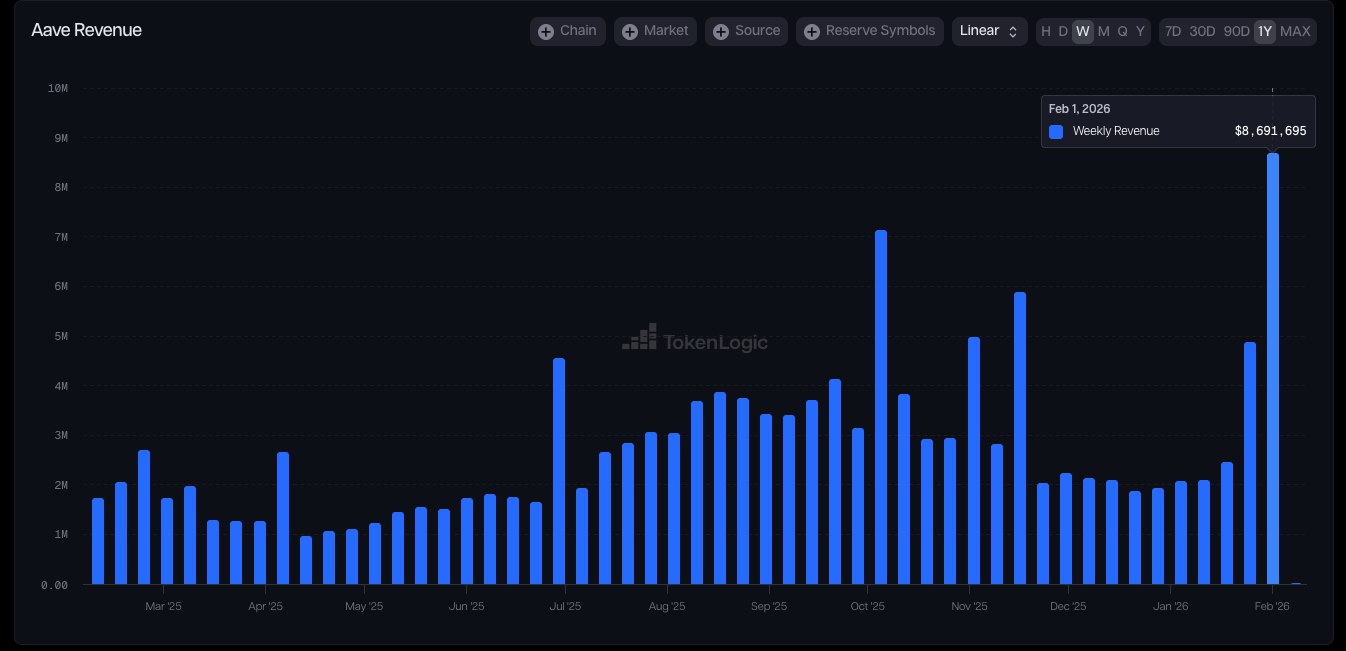
🔍 February 4, 2026 Daily Briefing 📊 I. Key Data Fear & Greed Index: 14 (Extreme Fear) US BTC Spot ETF: Net inflow yesterday -$272 million US ETH Spot ETF: Net inflow yesterday $14.06 million 📰 II. Important News of the Day 1️⃣ Macroeconomics and Regulation 1) According to CLS News Agency, US President Trump signed a government funding bill at the White House on February 3, ending the partial government shutdown. Earlier that day, the US House of Representatives passed a funding bill for several federal government departments for the remainder of the fiscal year, resolving the partial shutdown that began on January 31. The bill will provide funding for several federal government departments until September 30, the end of the fiscal year, and will provide two weeks of funding for the Department of Homeland Security, which has recently faced controversy and protests due to immigration enforcement actions. 2) On February 4th, Patrick Witt, Executive Director of the Presidential Advisory Council on Digital Assets, stated that the White House would not accept any provisions in the legislation concerning the structure of the crypto market that directly target President Trump or his family's digital asset business; such content has been clearly marked as a red line. Witt stated that anti-corruption or ethical provisions previously proposed by some Democratic lawmakers are completely unacceptable, and emphasized that the core of the bill is the regulation of the crypto market, not ethical censorship. He admitted that the Democrats' demands to restrict the involvement of senior government officials and their families in the crypto industry are one of the main obstacles to the legislation's progress. 3) On February 3rd, the Financial Times reported that US President Trump and his allies raised $429 million in political donations for the midterm elections over the past year, a record high for a midterm election year. A significant portion of these funds came from the cryptocurrency and artificial intelligence industries, reflecting strong capital bets on his policy direction. The largest disclosed single donation came from Crypto.com, when the trading platform donated $30 million to Maga Inc.; venture capital giants a16z co-founders Marc Andreessen and Ben Horowitz each donated $3 million, and OpenAI co-founder Greg Brockman and his wife donated a total of $25 million. 2️⃣ Industry News 1) On February 3, Ethereum founder Vitalik Buterin posted on social media that the original "scaling" positioning of Ethereum Layer 2 needs to be re-examined. He pointed out that the progress of L2 towards Phase 2 is significantly slower than expected, while Ethereum L1 is continuously scaling (transaction fees have dropped significantly, and the gas cap is expected to increase significantly in 2026). Therefore, L2 should no longer be regarded as a "branded shard" of Ethereum. Vitalik Buterin believes that L2 should focus more on differentiated value beyond scaling, such as privacy features, efficiency improvements for specific applications, and non-financial application scenarios, while at least meeting Phase 1 security standards. He also proposed introducing native rollup pre-compilation to enhance interoperability and security between L2 and the Ethereum mainnet, emphasizing that developers should explore innovative features rather than solely serving L1 scaling. According to incomplete statistics from L2Beat, there are currently about 135 Ethereum L2 networks on the market, of which 109 had less than 1 User Operations Per Second (UOPS) in the past day. Community reactions to this are divided: some users agree with his viewpoint, believing that the L2 scaling narrative is weakening; others worry that this statement will damage confidence in L2 projects and affect funding and ecosystem stability. 2) On February 4th, according to on-chain analyst Yu Jin, Trend Research reduced its holdings by 153,500 ETH (worth $352 million) over the past two days at an average price of $2,294, and repaid 266 million USDT to reduce leverage. Trend Research currently holds 498,000 ETH (worth $1.11 billion), with accumulated losses of $605 million and 743 million USDT in leveraged loans. 3) On February 3rd, Ondo Finance disclosed on its website that it had secretly filed a registration statement with the U.S. Securities and Exchange Commission (SEC). Once effective, this statement will enable Ondo to provide global investors with issuer-level disclosures compliant with SEC requirements, but regulatory approval has not yet been obtained. On the same day, Ondo announced the launch of Ondo Global Listing, aiming to allow U.S. stocks to be listed on the blockchain almost in real-time on IPO day and provide trading services on mainstream blockchains through the Ondo Global Markets platform from day one. In addition, Ondo launched Ondo Perps, offering 24/7 trading of US stock and ETF perpetual contracts to non-US users, supporting leverage, and planning to allow the use of tokenized securities as collateral, no longer limited to stablecoins. 4) On February 4th, Tom Lee responded on the X platform to reports of $6.6 billion in unrealized losses on ETH holdings. He stated that some market opinions misunderstood the operating logic of the Ethereum Treasury. BitMine's core objective is to track the ETH price and strive for outperformance throughout the entire market cycle. When the crypto market is in a downtrend, a synchronized decline in ETH price is normal. Tom Lee emphasized that BitMine has no debt, and given the strengthening fundamentals of Ethereum, the recent market correction is highly attractive. In the long term, Ethereum will remain a crucial infrastructure for the future financial system. 5) On February 4th, according to the Financial Times, stablecoin issuer Tether lowered its fundraising target from $15-20 billion to $5 billion, due to investor skepticism regarding its $500 billion valuation target. Tether CEO Paolo Ardoino stated in an interview that the $15-20 billion fundraising amount was a misunderstanding; it was simply the maximum amount they were willing to sell, not a target. He added that the company had not yet decided how much equity to sell, partly because insiders were unwilling to reduce their holdings. It is understood that Tether's profit last year was approximately $10 billion, mainly from returns on its asset holdings, but profits are projected to decline by approximately 25% year-on-year in 2025. 6) On February 4th, Aave founder Stani.eth announced the gradual shutdown of the Family iOS wallet, but it will continue to support the Aave App as infrastructure. Aave Labs will no longer use the Avara umbrella brand, which includes the Family and Lens brands; Lens is now managed by Mask. Aave plans to focus its resources on enhancing Aave brand awareness to refocus on its DeFi business. 7) On February 4th, BNB Chain released new application layer standards BAPs and the non-fungible proxy (NFA) token standard BAP-578. BAPs are standards that allow the community to propose how BNB chain applications should communicate and interact, standardizing collaboration between applications, including application programming interfaces (APIs), wallet and identity specifications, token and NFT utility standards, and interoperability between applications. BAP-578 is the non-fungible proxy (NFA) token standard; NFAs are AI-driven assets that can operate autonomously on-chain. 3️⃣ Focused Stock Developments/AI-Related Progress 1) On February 3rd, US AI startup Anthropic released an AI tool for corporate legal teams, capable of automating tasks such as contract review, confidentiality agreement classification, and legal briefing drafting. Affected by this news, the professional information and data services sector in Europe and the US collectively declined: legal and information services giant RELX fell by approximately 14% at one point during trading, while industry benchmarks such as credit reporting giant Experian, financial data service provider London Stock Exchange Group (LSEG), and Thomson Reuters all saw share prices drop by 8% to 11%. Market analysts believe that the emergence of this tool signifies that the threat of AI to the traditional media and information service business models has entered a substantial stage. 2) On February 4th, WeChat's official information release platform, "WeChat Official Account," released an "Announcement on Combating Third-Party Induced Sharing Behavior," publicly announcing the results of its handling of the Spring Festival marketing activities related to Tencent's AI application "Yuanbao." The announcement revealed that during its Spring Festival marketing campaign, the product induced users to frequently share activity links to private domain scenarios such as WeChat groups through tasks and red envelope giveaways, severely disrupting the platform's ecosystem. WeChat officially took action against the illegal links for "Yuanbao" starting today, restricting their direct opening within WeChat. 3) On February 3rd, at the Cisco AI Summit in San Francisco, Intel CEO Chen Liwu announced that the company would officially enter the GPU (Graphics Processing Unit) field, planning to develop its own data center-grade GPUs for AI training and inference. Intel has just appointed a new chief GPU architect to lead this work, stating that this is to better meet customers' needs for AI computing power. Chen Liwu pointed out that the industry currently has very high demand for memory and storage chips in GPUs, and the entire market is facing a severe shortage of storage chips, which he predicts will continue until at least around 2028. 4) On February 3rd, Ant Financial CEO Zhao Wenbiao released an all-staff letter titled "Working Together to Usher in a New Era of Large-Scale Models," announcing the formal establishment of the "Large-Scale Model Technology Innovation Department." The department's core mission is to build foundational large-scale models and industry-specific models for enterprise-level (To B) scenarios, collaborating with internal Ant Group teams to promote the commercialization of large-scale models in enterprise services. Official data shows that Ant Financial has already covered all state-owned joint-stock banks and over 60% of local commercial banks, extending to industries such as energy, transportation, and manufacturing. This organizational restructuring is seen as a significant step in the company's accelerated deployment in the enterprise AI services sector.
ONDO
2.08%
loading indicator
Loading..