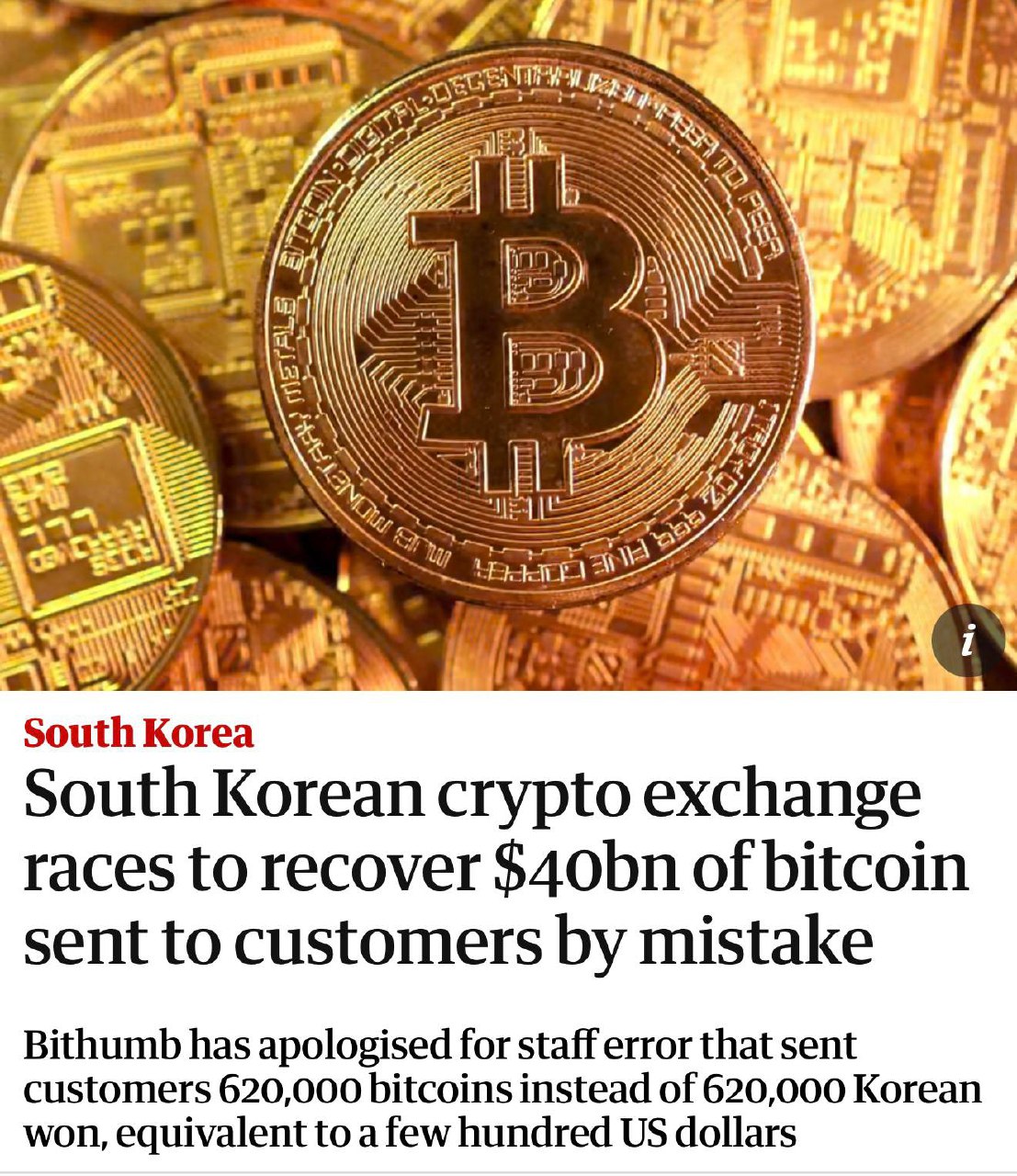
A South Korean cryptocurrency exchange is urgently trying to recover $40 billion worth of bitcoin that was mistakenly sent to customers.
The South Korean exchange Bithumb accidentally sent 620,000 Bitcoin (approximately $44 billion) to 695 customers instead of the usual 2,000 won ($1.50) reward, causing a temporary sell-off before the exchange locked trading and recovered 99.7% of the mistakenly transferred BTC .
Bithumb 's incident and emergency response.
- An error occurred on February 7th during a promotional campaign; instead of sending 2,000 won, the system mistakenly sent approximately 2,000 BTC per person, temporarily turning 695 accounts into "paper millionaires." Some quickly sold their holdings, causing the price of BTC on Bithumb to plummet 17% to 81.1 million won before recovering.
- Bithumb truly "raced" by locking trading/withdrawal transactions on affected accounts within just 35 minutes, recovering 99.7% (only about 125 BTC worth about 13 billion won was missing), and committed to using its own funds to cover losses, stating it was not related to hacking or security vulnerabilities.
Consequences and responses from regulatory agencies
- 86 customers mistakenly sold part or all of the BTC they received; Bithumb is contacting each person individually to recover the cash or alternative crypto, while also waiving transaction fees and offering compensation bonuses.
- The South Korean Financial Services Commission (FSC) held an emergency meeting, calling this evidence of the “risks and weaknesses of virtual assets,” and is ready to plan on-site inspections of Bithumb and other exchanges if any irregularities are detected.