avatar
土澳大狮兄BroLeon | 🔶BNB |
113,845 Twitter followers
Follow
Posts
avatar
土澳大狮兄BroLeon | 🔶BNB |
Thread
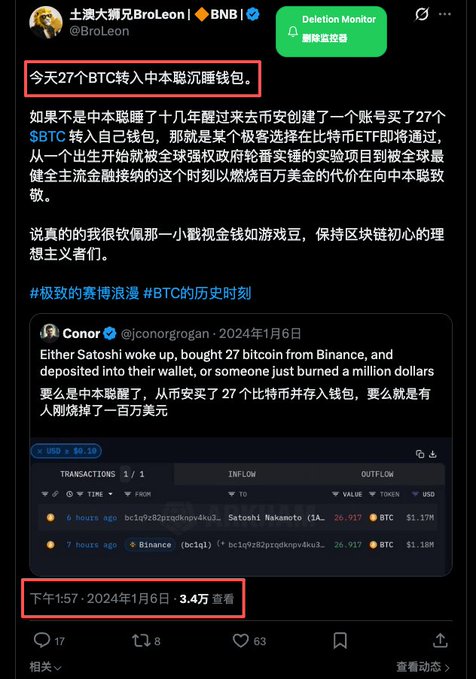
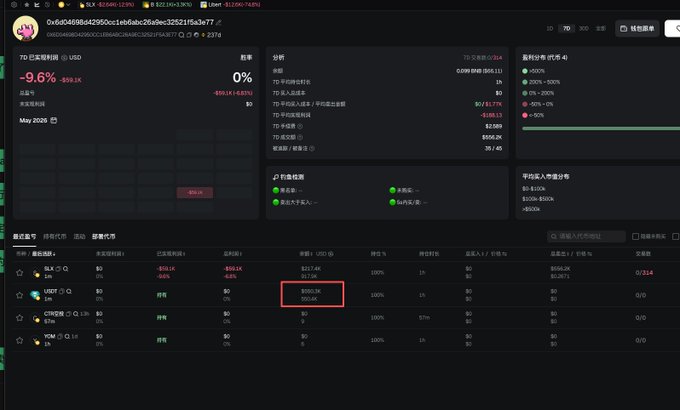
Over the past decade, I've experienced many moments like this, and each one has strengthened my belief in $BTC. This time, it was truly a massive undertaking: 107 BTC, worth $8 million, directly burned—impressive! Respect! Since 2015, "burning" has been a traditional practice in the Bitcoin community. Intentionally burning coins reduces the supply of BTC, essentially creating deflation and increasing its scarcity. For example, the address 1111111111111111111114oLvT2 mentioned by Blue Fox has already seen 800 BTC transferred into it, making it one of the most famous burning wallets. This address itself is representative of the burning culture of the past decade. Every large-scale burning of coins trends on social media, sparking discussions about "cyber romance" or "who's so rich/obsessed"—like the transfers to Satoshi Nakamoto's address, it's shrouded in mystery and idealism. Other burn addresses, such as 1BitcoinEaterAddressDontSendf59kuE and 1CounterpartyXXXXXXXXXXXXXXXUWLpVr, have also been receiving burns for years, accumulating a considerable number of coins burned. In 2024, the historic moment when BTC entered the ETF, someone bought 27 BTC worth millions of dollars and transferred them to Satoshi Nakamoto's wallet, clearly a tribute to this historical moment. I even wrote a tweet about it. Now, as my faith in Bitcoin begins to waver, I'm more convinced that these five consecutive burns weren't accidental or meaningless displays of wealth, but rather a signal from an OG to all BTC holders and crypto believers: "We are still here!" I will continue to hold $BTC, no matter what happens. #UltimateCyberRomance #Burn #BTCBurn twitter.com/BroLeon/status/205...
BTC
1.85%
avatar
土澳大狮兄BroLeon | 🔶BNB |
Thread
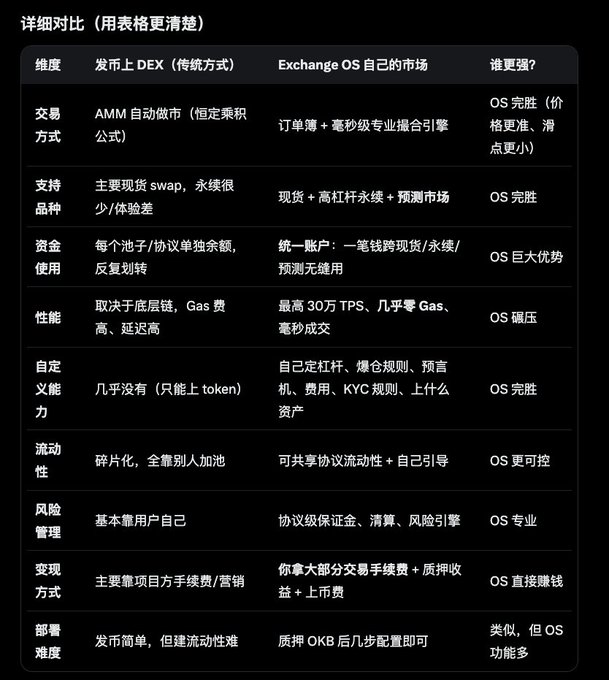
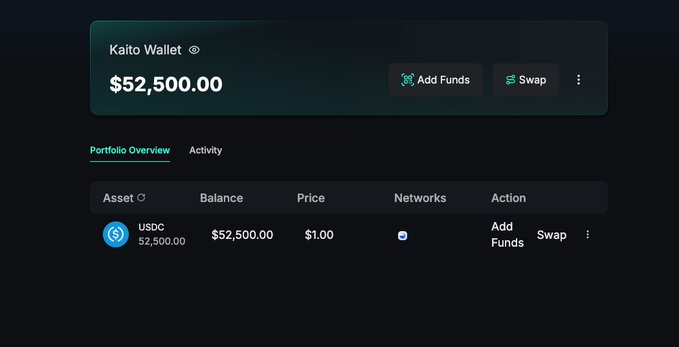
Today, @star_okx posted numerous tweets introducing X Layer's major update - Exchange OS, causing a surge in stock price on [date missing], at least providing a clear boost. Interestingly, because the market was so sluggish and OKX did a good job preventing insider trading, the news only generated a reaction [date missing] 😂. I've been thinking about it, and this update seems a bit like a marketplace version of Shopify or AWS, so it feels like a huge opportunity. After all, countless small business owners used to rack their brains trying to open exchanges, spending huge sums of money buying unreliable "white-label" exchange code. Now, @okx has directly reduced costs to the extreme. Once you identify a trading need, staking OKB allows you to create a "mini CEX" (spot + perpetual + prediction market) with a single click. It uses an on-chain order book and an institutional-grade matching engine, supporting high leverage, unified accounts, and customizable rules, offering an experience similar to a centralized exchange, but with funds self-custodied on-chain. To illustrate, a DEX is like a public marketplace where anyone can set up a stall, but the experience is chaotic and functionality is basic. With Exchange OS, you can open your own themed store, customizing the decor, rules, and merchandise, and even charging admission fees (transaction fees). However, this significantly increases the requirements and capabilities required. Issuing a coin is easy, but maintaining an exchange is much more complex. I feel that OKX needs to support at least one or two benchmark exchanges to unlock more possibilities. Furthermore, liquidity is currently very scarce. Creating themed stores represents a more segmented approach to liquidity. The advantages of Exchange OS may only be fully realized when liquidity returns to crypto. twitter.com/BroLeon/status/205...
OKB
1.7%
avatar
土澳大狮兄BroLeon | 🔶BNB |
Thread
I was recently discussing the Perp feature with the @OndoFinance team, and waking up to the news of Nathan @nathanlallman's passing was truly shocking. He was tweeting just three days ago. While I can't find Nathan's exact age, judging from his resume, he majored in economics and biology in college, graduating around 2015-2016. When he founded Ondo in 2021, he was probably in his early 30s, so he was likely only in his early 30s when he passed away—very young. Nathan was actually quite accomplished. He started trading cryptocurrencies and participating in ICOs as early as 2017, remaining active on the front lines. Between 2018 and 2019, he ran a small crypto hedge fund and personally managed liquidity on Uniswap and SushiSwap. Afterward, he earned his MBA from Stanford and was deeply involved in projects such as security tokenization within Goldman Sachs' global markets digital asset team. In 2021, he left Goldman Sachs to officially found Ondo Finance, with a core logic of bringing institutional-grade traditional financial products onto the blockchain. In 2023, Ondo began tokenizing US Treasury bonds, directly placing itself at the center of the RWA (Real Money Market Fund) sector. In recent years, it has expanded into tokenized stocks and ETFs, significantly broadening its product line. Just when US RWA stocks were poised for a boom in 2026, he unexpectedly passed away—a truly tragic loss. Nathan was the true driving force behind Ondo. His personal network with institutions like the SEC, JPMorgan, and BlackRock, as well as his role as a public advocate for the RWA sector, are unlikely to be completely replaced in the short term. His successor, De Bode, with his McKinsey background, will likely take a more systematic and institutional approach, and his style will certainly differ from Nathan's. Nathan was a crypto native. Let's all prioritize safety and enjoy each day; no one knows whether an accident or tomorrow will come first. R.I.P. twitter.com/BroLeon/status/205...
ONDO
5.23%
avatar
土澳大狮兄BroLeon | 🔶BNB |
Thread
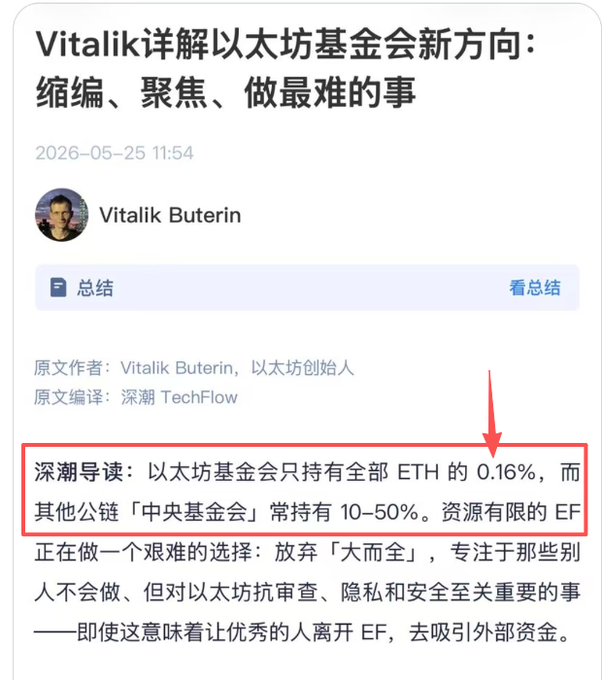
At first glance, the Ethereum Foundation seems so wronged and pitiful. It's amazing that 0.16% of Devs are working so hard for such a huge project. Why are you being so harsh on EF? Then I checked the Ethereum Foundation's (EF) entire history of ETH holdings. The Ethereum Genesis Block pre-mined 72 million ETH, of which 60 million were allocated to participants in the 2014 crowdfunding and 12 million to the development fund (i.e., the Ethereum Foundation), so it actually accounted for 16.7% at the beginning. But back then it was the Proof-of-Work (PoW) game rule, and EF itself didn't mine, so naturally the tokens were gradually diluted. That was the ancient era, and it's not in the same league as now where project teams control the market and other public chains take 10-50% of the tokens. There's no comparison. However, the EF Foundation actually accumulated its holdings through internal allocation and operations, with peak holdings far exceeding 0.16%. Why are they so low now? It's because they've been continuously selling, so don't sell so badly. I've never seen any other public blockchain foundation sell off its own tokens and provoke such strong backlash. ~~~~~~~~~~~~~~~~~~~~ According to on-chain data from March 2022, the EthDev wallet address showed that the foundation held approximately 353,318 ETH, worth about $827 million. This is roughly the highest verifiable historical holding, representing about 0.3% of the total supply at that time. Several major sell-offs in history In 2017, under Vitalik's leadership, the foundation sold 70,000 ETH, essentially at the peak of the time, which doubled the foundation's operating reserves. In May 2021, when ETH surged to a new high of around $4,000, the foundation sold 35,000 ETH; in November of the same year, the foundation sold ETH again the day after it hit an all-time high of nearly $4,900. Since 2021 alone, the foundation has sold approximately 239,000 ETH, cashing out about $654 million. Accelerated Selling in 2025-2026: By October 2025, the foundation had conducted 17 ETH sales that year, leaving approximately 222,720 ETH remaining. After entering 2026, the foundation continued to sell ETH to BitMine through OTC channels, selling approximately $47 million worth of ETH in the past week alone. As of the latest data, the foundation holds approximately 92,548 ETH, worth about $214.8 million at current prices. In addition, the foundation has pledged approximately 70,000 ETH (about $143 million), which is not included in its liquid holdings. The figure is 0.16% now, but it will be around 0.25% in the second half of 2024. If this rate continues, the foundation's ETH reserves may run out by 2027—which is the core context behind Vitalik's article about "limited resources" and the need to refocus on strategy. ~~~~~~~~~~~~~~~~~~ So, Dev Sell had a blast selling, and its holding ratio dropped. Who's to blame?
ETH
0.86%
loading indicator
Loading..