avatar
Aakash Gupta
146,225 Twitter followers
Follow
Posts
avatar
Aakash Gupta
04-18
Thread
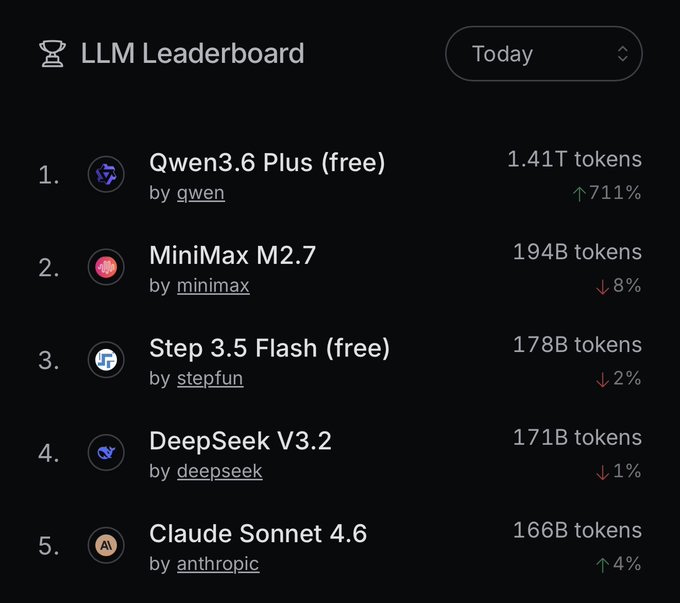
Anthropic went from $1 billion in revenue to $30 billion in 15 months. Their growth rate is 10x per year. OpenAI's is 3-4x. Software companies don't do this. ServiceNow crossed $1 billion in revenue in 2015 and took nearly a decade to reach $10 billion. Snowflake crossed $1 billion in 2021 and is at roughly $4 billion today. Zoom, during a pandemic that put half the planet on video calls, grew 4x in its best year and has never matched that pace since. The entire SaaS playbook was built on the assumption that growth settles into the 40-60% band once you cross a billion in revenue. Rule of 40. Every Series D board deck uses the same math. Anthropic tripled in a single quarter. The engine is coding. Claude Code alone is at $2.5 billion in annualized revenue. Cursor, Replit, and Windsurf all default to Claude as their coding backbone. Eight of the Fortune 10 are now Anthropic customers. Over 500 customers spend more than $1 million a year, up from a dozen two years ago. Engineers aren't buying "AI." They're buying one specific model family because it one-shots refactors that everything else fumbles. The differential is the part nobody's running. A company growing 10x chasing a company growing 3-4x closes the gap fast, even when it starts behind. The growth rate ratio is roughly 2.5x to 3x. The last-round valuation ratio is 2.2x: Anthropic at $380 billion, OpenAI at $852 billion. The growth curve is already steeper than the valuation gap. VCs have already noticed. Anthropic is currently fielding offers at $800 billion and turning them down. That's the market saying the 4x company and the 10x company are converging on valuation before anyone's priced the revenue. Revenue catches up fast when the multiplier is 10.
ANTHROPIC
5.7%
avatar
Aakash Gupta
04-11
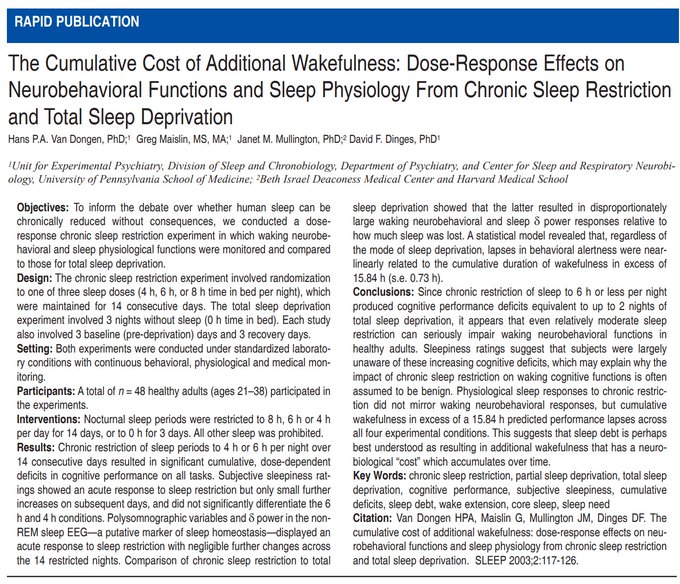
The scariest finding in this paper: the subjects couldn't tell it was happening. UPenn ran this study on 48 healthy adults. One group slept 8 hours. Another slept 6. Another slept 4. For 14 straight days. They tested cognitive performance every 2 hours from 7:30am to 11:30pm. The 6-hour group's reaction times, working memory, and sustained attention deteriorated on a near-linear curve. By day 14 they were performing at the same level as someone who hadn't slept at all in 48 hours. The 4-hour group hit that threshold by day 6. Here's the part that should unsettle everyone who thinks they "do fine" on 6 hours: the subjects' self-reported sleepiness flatlined after the first few days. Their brains kept getting worse. Their perception of how impaired they were stopped updating. The cognitive decline was invisible to the person experiencing it. The researchers found a hard threshold. Any wakefulness beyond 15.84 hours in a day produces cumulative neurobiological cost. That cost compounds every single day you exceed it and does not reset with a weekend of sleeping in. About 35% of American adults sleep less than 7 hours a night. 40% of those get 6 hours or less. In 1942 that number was 11%. We built an entire professional culture around a sleep schedule that this paper says is functionally equivalent to pulling consecutive all-nighters. "I'm fine on 6 hours" is the most common response to sleep research. The first thing chronic sleep debt destroys is your ability to notice chronic sleep debt. twitter.com/aakashgupta/status...
CRV
2.74%
avatar
Aakash Gupta
04-09
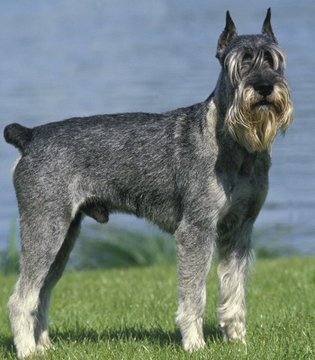
The company behind this pill has raised $250 million and is running the largest clinical trial in veterinary history, and the science explains why investors are losing their minds. The drug is LOY-002, made by a company called Loyal. It works as a caloric restriction mimetic. It tricks the dog's metabolism into behaving like it's on a restricted diet without actually reducing food intake. The biological cascade this triggers is the same one that's extended lifespan in every species ever tested, from yeast to primates. The FDA has already accepted the safety data and the effectiveness data. Two of three regulatory gates cleared. The third is manufacturing review, expected to complete this year. If approved, LOY-002 becomes the first FDA-approved drug for lifespan extension in any species. Not disease treatment. Not symptom management. Lifespan extension as a formal indication. The STAY study has 1,300 dogs enrolled across 70 vet clinics. Half get the pill, half get placebo. Both beef-flavored so nobody can tell the difference. It is the largest clinical trial ever conducted in veterinary medicine. Here's where it gets interesting for humans. Dogs develop the same age-related diseases we do: cancer, heart disease, kidney failure, cognitive decline resembling dementia. They live in our houses, eat similar food, breathe the same air. A mouse in a sterile lab tells you almost nothing about human aging. A golden retriever sleeping on your couch tells you a lot. Loyal has a second drug, LOY-001, targeting large breeds specifically. Big dogs die younger because centuries of breeding for size accidentally gave them elevated IGF-1 levels, which is the same growth hormone pathway linked to accelerated aging in humans. Reducing IGF-1 in flies, worms, and rodents extends lifespan. Loyal is now testing whether the same holds in dogs. 90 million pet dogs in 60 million US households. Average spending: $1,852 per pet per year. A pill that gives you two more years with your dog is the easiest sell in pharmaceutical history. Human longevity trials would cost $1 billion+ and take decades. Dog trials cost a fraction and produce data in years. Every dog in the STAY study is generating aging data that maps to human biology. The shortest path to an FDA-approved human longevity drug might run through your veterinarian's office. twitter.com/aakashgupta/status...
DOGS
3.06%
avatar
Aakash Gupta
04-08
Thread
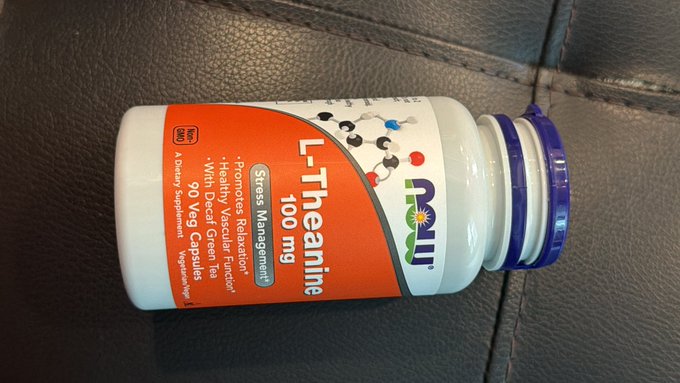
L-theanine is the only legal compound that changes your brainwaves on an EEG within 40 minutes of swallowing a capsule. And the mechanism is wild. Your brain constantly balances two opposing neurotransmitters. Glutamate fires neurons. GABA calms them. L-theanine is a structural mimic of glutamate, close enough to cross the blood-brain barrier and sit on glutamate receptors. But instead of firing the neuron, it partially blocks the signal. Your excitatory system downshifts without you feeling sedated. That downshift cascades. GABA levels rise. Serotonin and dopamine both increase. EEG studies at Oxford showed 200mg produces measurable alpha wave activity in the 8-13 Hz range across the parietal and occipital cortex. Alpha waves are the frequency your brain produces during meditation and flow states. Most people spend years trying to access that band through breathwork. A capsule gets there in 40 minutes. The part that makes it genuinely useful: a 2016 study gave subjects L-theanine during a multitasking stressor. The placebo group's brains shifted into high-beta stress mode. The L-theanine group maintained alpha dominance under the same conditions. Their brains stayed in calm-focus while processing the same cognitive load. Pair it with caffeine and the synergy gets even more interesting. Caffeine alone sharpens attention but triggers tremor, anxiety, and an eventual crash. L-theanine blocks the jitter pathway without touching the alertness pathway. You get the focus of coffee without the cortisol spike. One cup of green tea contains roughly 20mg of L-theanine, which is why tea feels different from coffee at equivalent caffeine doses. 200mg daily is the dose most studies use. That bottle is 100mg capsules. Two per day. Yes, it's worth the hype. One of the few supplements where the EEG data actually matches what people report feeling. twitter.com/aakashgupta/status...
COMP
2.45%
avatar
Aakash Gupta
04-06
This is wild: Citrini sent a dude with $15,000 cash, recording sunglasses, and a pack of Cuban cigars to the Strait of Hormuz. What he found flips everything Wall Street thinks about the strait on its head. Every hedge fund, every macro desk, every retired general on CNBC is watching the same AIS shipping data to price Hormuz risk. The analyst signed a pledge at an Omani checkpoint promising not to gather information, then smuggled in a gimbal, a microphone kit, and a 150x zoom Leica camera past the border officer who inspected his bag. What he discovered on the ground: the AIS data everyone is trading on is missing roughly half of what's actually transiting the strait on any given day. Ships are going dark, spoofing destinations, broadcasting "CHINESE CREW OWNER" through transponder fields to avoid getting hit. Iran's ghost fleet is running 29+ laden tankers inside the Gulf with transponders off, moving an estimated $3B in crude to Malaysia since the war started. The entire market is pricing a "closed" strait off satellite imagery and transponder data that has a 50% blind spot. Every oil model, every supply forecast, every macro call built on AIS throughput numbers is working from a dataset that systematically overstates the disruption. When the signals deliberately go dark, the people staring at dashboards are the last to know what's happening. Citrini figured that out by putting a guy on a speedboat 18 miles from the Iranian coast while Shahed drones flew overhead. The gap between "what AIS says" and "what's actually transiting" is the most mispriced variable in energy right now.
Citrini
@citrini
04-06
Strait of Hormuz: A CitriniResearch Field Trip The Field Report from Analyst #3 is live. https://citriniresearch.com/p/strait-of-hormuz-a-citrini-field…
AIS
0%
loading indicator
Loading..