# AI tokens soar with OpenAI releasing GPT-4#
On March 15, OpenAI launched a new generation of multi-modal model GPT-4. The new-generation model can receive image and text input at the same time, and has more parameters and is safer than the previous-generation model GPT-3.5 (the technical base of ChatGPT). The AI tokens surge, with AGIX’s daily increase exceeding 40%, and FET’s daily increase exceeding 20%.
Latest
Featured
avatar
Dov Wo
Thread
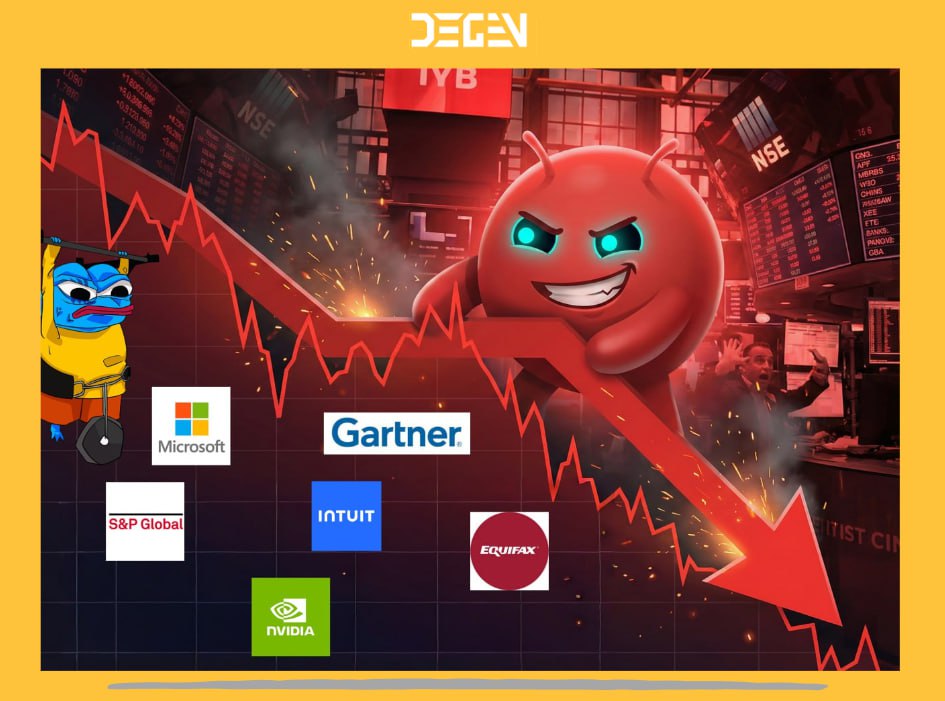
The era of a major turning point has arrived. SaaS company stock prices have already experienced a massive collapse. Software companies may be next. Chegg, the company that North American students used to use to find homework answers, collapsed rapidly after the release of GPT 4. Lately, I've been engrossed in using ClaudeCode and OpenClaw. The code written in ClaudeCode can already put all Wall Street analysts and lawyers out of work; more than half will be laid off within three years. Those once-prestigious, million-dollar-salary jobs for recent graduates will never return. Those who have built connections and built trust within the industry, reaching VP level or higher, can continue to survive, becoming human intermediaries connecting the old and new worlds in the short term. Almost all education becomes completely useless. Those whose market share will be taken are the current middle and high school students receiving traditional education, graduating and hoping for decent jobs. After graduation, they will find themselves completely crushed by AI with 10 times the efficiency and 2 times the results. This is the new era of real estate, a new generation's plunder of wealth, even the plunder of meaning, from another generation. Humans need rest; working 8 hours, playing 8 hours, and sleeping 8 hours are necessary. AI is cheap, continuously capable, and everything is over. @dontbesilent12's radical view even suggests that humans shouldn't handle documents, and that notion is a sign of outdated productivity, as sharp as saying Jack Ma shouldn't be sweeping the floor in front of Alibaba. I'm in Hong Kong these days; friends are welcome to come discuss business and explore AI together.
GPT
131.32%
avatar
냥버거🍔🫎
[Review of Sentient's New Infrastructure, ROMA] Hello. This is Nyangburger. Sentient recently hosted a great event, so I decided to participate right away. I'll be writing a lengthy review of ROMA (Recursive Open Meta Agent), Sentient's new infrastructure project. I'll delve into the details and share my thoughts while designing a virtual test environment. To cut to the chase, this isn't just a simple agent; it has the potential to become a crucial infrastructure that can solve the "trust" problem of AI inference. Let's analyze why ROMA is so important at this point in time and how it differs from existing models. The End of Black Box AI and the Beginning of "Recursive Inference" What's the biggest problem with commonly used LLMs and agents? It's that they become fools in "long-horizon tasks." While it's good at summarizing the Ethereum whitepaper, if you ask it to "analyze the performance of the top 10 DeFi protocols over the past three years and compare it to macroeconomic indicators," it gets lost or exhibits hallucinations. This is because errors accumulate step by step during the AI process. However, ROMA, developed by Sentient, tackles this problem head-on with its "recursive structure" and "transparency." {1. ROMA's Core Architecture: AI that Works Like a CEO} To easily understand ROMA, imagine a "competent organizational chart." While a traditional agent is a freelancer who plays the drums and drums alone, ROMA is a "meta-agent" that continuously breaks down tasks into subtasks and delegates them. ROMA solves complex problems through the following four-stage infinite loop: Stage 1: Atomizer: It evaluates incoming tasks. You can independently determine whether a task is something you can handle alone or whether it needs to be broken down into smaller pieces. Step 2: Planner: If it needs to be broken down, it breaks it down into subtasks, much like a project manager might divide a task into development, design, and planning. Step 3: Executor: Executes the broken down tasks, utilizing search tools, data analysis tools, or other specialized AI models. Step 4: Aggregator: Collects and verifies the results of each execution, and combines them into a final report. The recursive nature of ROMA lies in this process. If the subtasks are complex, these four steps are repeated, delving deeper into the tree structure. {2. Overwhelming Performance: The Numbers Speak for It} In Web3, the rule is "Don't trust, verify." ROMA's performance is proven by benchmark data. The Seal-0 benchmark results, which test complex search and reasoning capabilities, are shocking. ROMA Search: 45.6% (overwhelming first place) Kimi Researcher: 36% Gemini 2.5 Pro: 19.8% Open Deep Search: 8.9% This is more than twice as accurate as Google's Gemini. This is strong evidence that ROMA doesn't simply scrape information, but rather logically infers while maintaining context. {3. Why ROMA for Web3 and Developers? (Utility & Clarity)} I'm drawn to this framework not just for its performance, but also because ROMA's philosophy is based on open source and transparency. Escape the Black Box (Stage Tracing): Existing commercial agents simply provide results and fail to explain why they happen. However, ROMA provides a "Stage Tracing" feature. The entire inference process, from input to output, is transparently visible through the Pydantic architecture. Debugging is possible, and human intervention (human-in-the-loop) is possible to identify errors. This is essential in fields where trust is paramount, such as on-chain data analysis and financial reporting. Modularity: ROMA is like Lego blocks. You can freely insert your desired LLM (GPT-4, Claude, Llama, etc.) or tool into each node (stage). An example of a strategy leveraging modularity is a cost-effective strategy: outsource the planning stage to the intelligent GPT-4 model and simple search to the lightweight Llama model. Parallelism: Independent subtasks run in parallel. This dramatically accelerates research tasks that require processing massive amounts of data. {4. In closing: Sentient's Big Picture With ROMA, Sentient believes it has opened a world where "anyone can build their own agent with the best technology." This isn't just a tool; it's more like a complete protocol. While the current AI landscape is dominated by closed models, ROMA provides a solid foundation upon which the open source community can build specialized "expert agents" for domains like finance, law, and creative writing. Based on this foundation, I believe Sentient will further strengthen its position in the AI landscape. twitter.com/CalligramReboot/st...
META
6.71%
avatar
DEGEN - INSIGHTS
02-05
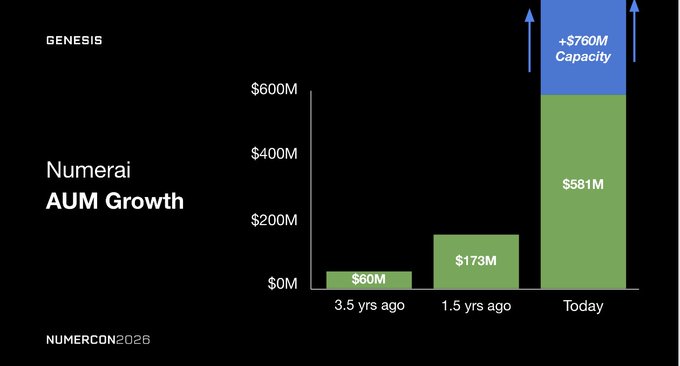
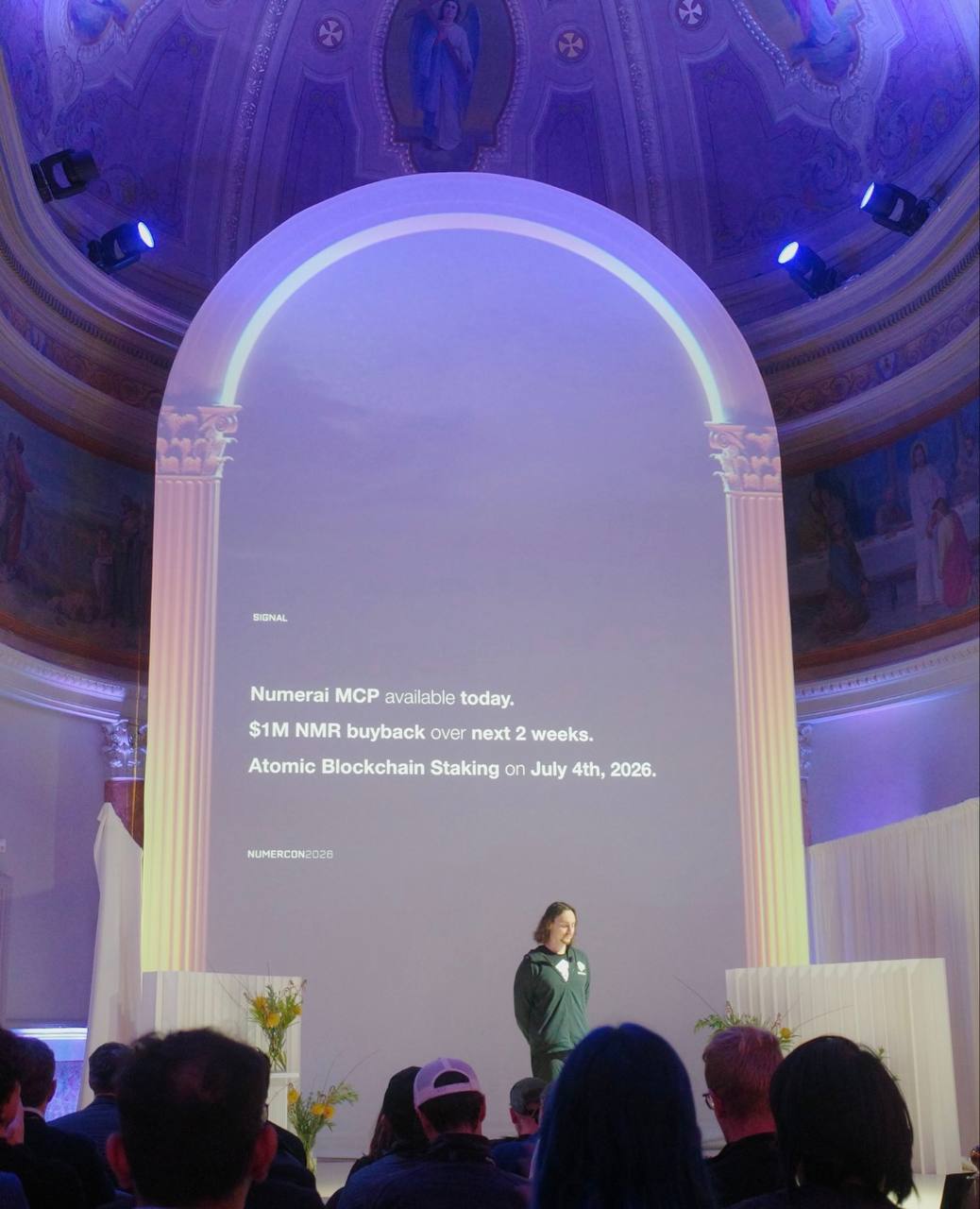
🆘 Let's take a look at the hottest crypto news of the past 48 hours with Degen 🆘 - [DEGEN] $GOYIM - This controversial Memecoin is soaring on the Solana platform thanks to the circulating stories related to Epstein (Market Capital reaches $4 million). - [DEGEN] $CLAWSTR - A purely decentralized Nostr infrastructure (Nostr-native) that enables seamless communication and transactions between Agents (Capital of $10 million USD). - [DEGEN] $RENTA - Token $RENT surged in price as the AI-to-human recruitment platform gained significant attention from the community. - $BIRB is listed for Spot Trading on Upbit and Bithumb. - $PAXG is listed as a Spot Trading on Robinhood. - $TRIA is listed for Spot Trading on Coinbase. - MagicBlock ($ Block) announced Tokenomics, with 50% of the total supply allocated to the community and node operators. - Virtuals Protocol ($VIRTUAL) introduces a '60 Days' framework, allowing founders to Token Issuance in a risk-free and reversible format. - The Avalanche Policy Coalition ($ AVAX) has established an Advisory Board to help shape global crypto regulations. - MetaMask ($MASK) adds the ability to trade Tokenize US stocks and ETFs through a partnership with Ondo Global. - Numerai ($ NMR ) announced a buyback of $1 million worth of NMR Token and the integration of an AI agent into its data tournament. - Tether provides open-source MOS software and a Mining SDK for its Bitcoin mining infrastructure. - AI startup Harmonic (backed by Vlad Tenev) is funding Neel Somani, the former CEO of Eclipse. - Y Combinator (YC) will begin Capital startups with the USDC stablecoin starting from the Spring 2026 funding round. - Beyond Inc. and Tokens.com collaborate to launch a real estate Tokenize platform. - Nansen launches NX8, a data-driven Tokenize index for leading Layer 1 blockchains. - Tom Lee claims the crypto market has bottomed Dip after the recent downturn. - ING Bank (Germany) launches ETP products for Bitcoin, Ethereum, and Solana for individual investors.
BLOCK
0%
avatar
Layergg exchange & project alert
02-04
🆘 What happened in Crypto in the last ~24h:🆘 - [DEGEN] $GOYIM - Controversial $GOYIM meme coin surges on Solana following viral Epstein narratives(MC 4M) - [DEGEN] $CLAWSTR - Clawstr: Decentralized Nostr-native infrastructure for seamless agent-to-agent communication and transactions(MC 10M) -[DEGEN] $RENTA - $RENT surges as AI-to-human hiring platform gains viral community traction - $BIRB Listed on Upbit spot, Bithumb spot - $PAXG Listed on Robinhood spot - $TRIA Listed on Coinbase spot - $BLOCK MagicBlock unveils $BLOCK tokenomics with 50% allocation for community and node operators - $VIRTUAL Virtuals Protocol's '60 Days' framework enables risk-free, reversible token launches for founders - $AVAX Avalanche Policy Coalition launches Advisory Council to shape global crypto regulations - $MASK - MetaMask adds tokenized US stocks and ETFs via Ondo Global partnership - $NMR - Numerai announces $1M NMR buyback and AI agent integration for tournament - Tether open-sources MOS and Mining SDK for Bitcoin mining infrastructure - Vlad Tenev-backed AI startup Harmonic sponsors former Eclipse CEO Neel Somani - YC to fund startups with USDC stablecoins starting Spring 2026 batch - Beyond Inc. and Tokens.com partner to launch real estate tokenization platform - Nansen launches NX8, a data-driven tokenized index for leading Layer 1 blockchains - Tom Lee declares crypto bottom is in following recent market slump - ING Germany launches Bitcoin, Ethereum, and Solana ETPs for retail investors ********************************** 💞 Please Like + Retweet if you enjoy this ✖ See details @Layergg #Highlight #Daily
SOL
2.11%
loading indicator
Loading..