I never thought about becoming a KOL. The word "KOL" sounds a bit cheesy. There is generally negative sentiment toward influencers and the influencer economy as a whole. I understand why, the crypto world is full of scammers who peddle and dump on fans, ultimately causing harm to the fans.
But not all KOLs are scammers. Money is not my motivation for tweeting, I only started tweeting because I was bored during the 2022 bear market.
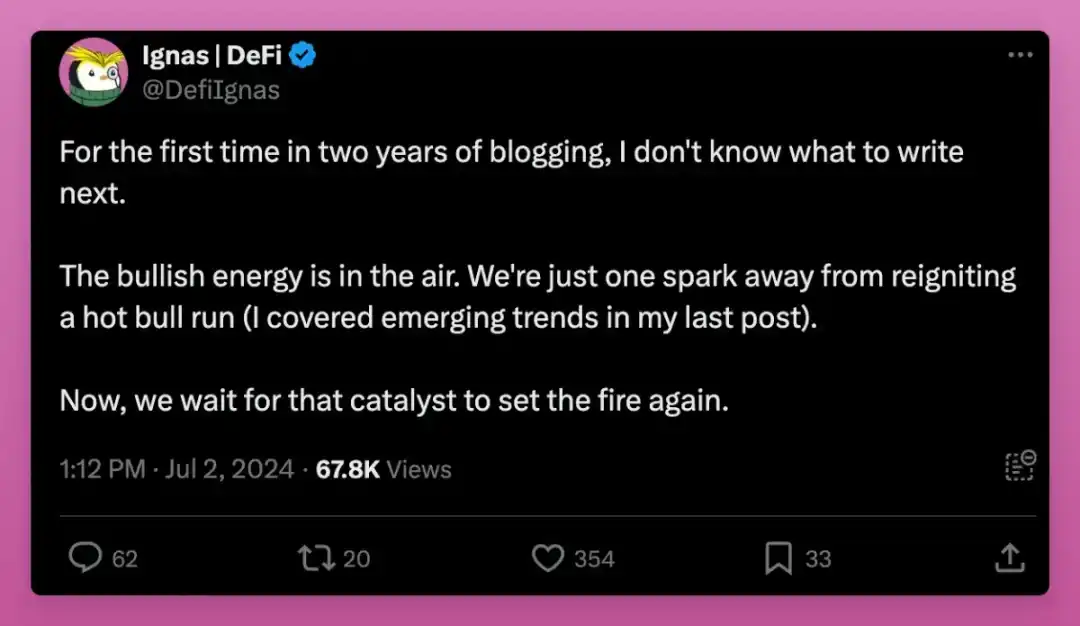
Now, I'm bored again and asked on Twitter what to write next. The most popular ideas were sharing insights into becoming a KOL, how to grow your audience, and revealing some secrets of cryptocurrency KOLs and marketing. Since I already have 100,000 followers on Twitter, I thought it would be a good opportunity to share something different.
In this post, I’ll briefly share my story, provide tips for growing your audience, discuss popular monetization models (including pricing), and more.
First of all, do you want to be a KOL?
When the market crashed in late 2021, I was working at a Korean CEX. Suddenly, the cryptocurrency market became unusually quiet.
There were a few months when I would go to the office just to check Twitter and nothing interesting would happen. To make matters worse, my boss is promoting CEX, so there is no real work to do in the office.
This is my second bear market, so I know a new bull market is coming.
The 2020-2021 bull run started in DeFi, but few people understand how it works. Most people trading on CEX don't know how to use MetaMask. When DeFi summer arrives, those who understand the basics of DeFi reap huge profits. I also started farming YFI on Curve very early, and the annual interest rate once reached a terrifying 10,000%. What a wonderful time…
My plan is to continue researching to find the next opportunity sooner rather than later.
I originally wrote on Twitter to take personal notes to demonstrate that I actually understood the subject. That’s why my Twitter name is “DeFi Research.”
Tip: If you think you really understand a concept, try writing it down. You'll find that it's much harder to explain your ideas clearly on paper than it is when you imagine them in your head.
But I'm still bored. Therefore, I wrote a large study on the roadmaps of 25 DeFi protocols to find their common trends. I spent a week writing this single manuscript.
I'm worried it might fail. After investing so much time into an article, you really want it to be successful.
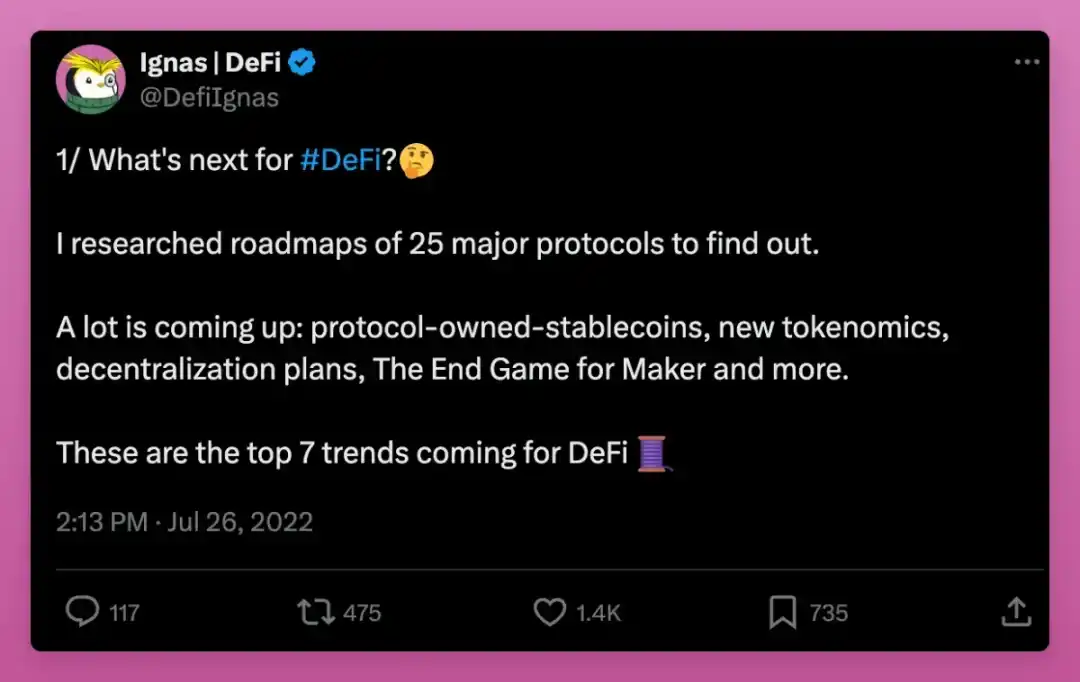
I was lucky enough that the article went viral. DeFi Edge, Miles Deutscher, DeFi Dad... Many DeFi big names have participated in the interaction, and it is still one of my top 5 most liked tweets (with 244k views).
I only had 300 followers. But then, the number of fans increased rapidly for several days. With this tweet, my followers grew to about 3,000, a 10-fold increase!
Tip: Quality of content on Twitter matters. While trending tweets may be accidental, sustained follower growth requires insightful and unique content, which takes time and effort. Some tweets will fail, but successful ones will attract quality followers.
I continued to learn and share content about token economics, stablecoins, SBT every week and quickly grew to 10,000 followers.
Tip: Persistence is key. Once you gain momentum, you need to keep pushing. Otherwise, the Twitter algorithm will "forget" you and your tweets will not appear in other people's feeds.
The first milestone is achieved, the first 10,000 followers are the hardest. After that, you can cover a wider range of topics. Next, I’ll cover more tips on growing your audience.
Why you should write on Twitter (even if you don’t want to be a KOL)
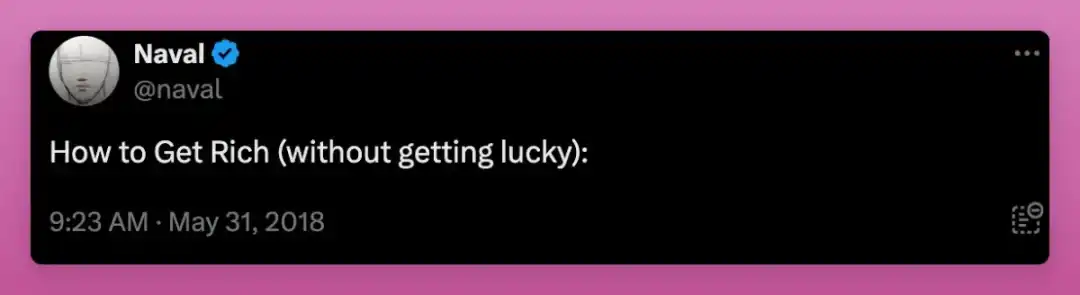
Two other reasons that prompted me to start writing on Twitter: my girlfriend and Naval Ravikant. Naval completely changed my concept of success. He shared his own success experience in his famous "How to Get Rich (Without Luck)" tweet.
Tweets are great, but books are more detailed. Her book can be read here . Funnily enough, as an experiment, I wrote a (viral) tweet about how I got rich through cryptocurrencies, which gained me thousands of followers.
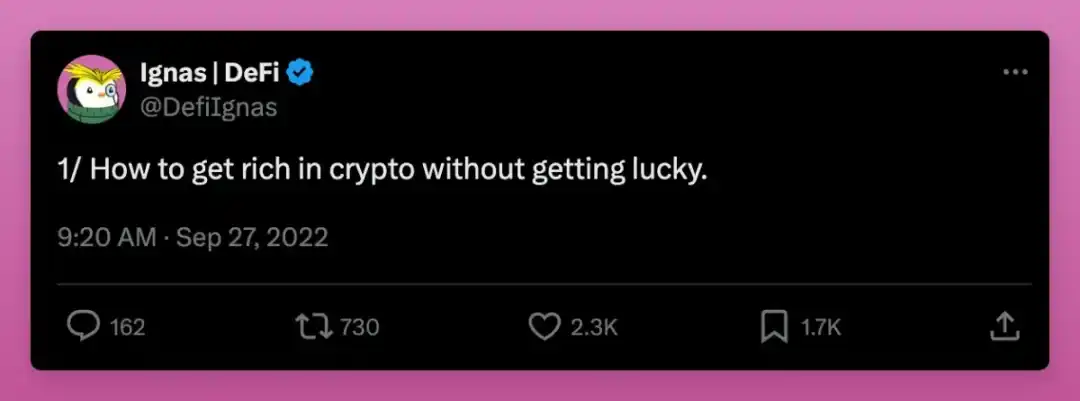
In short, Naval taught people to pursue wealth rather than become rich. By arming yourself with professional knowledge and leveraging it through the Internet, you can make a fortune, which greatly expands your career opportunities.
This specific knowledge is very specific and creative and can be gained through curiosity and enthusiasm. You can apply specific knowledge through coding and media. “You can build software and media that work for you while you sleep.”
But this part was an unexpected surprise for me:
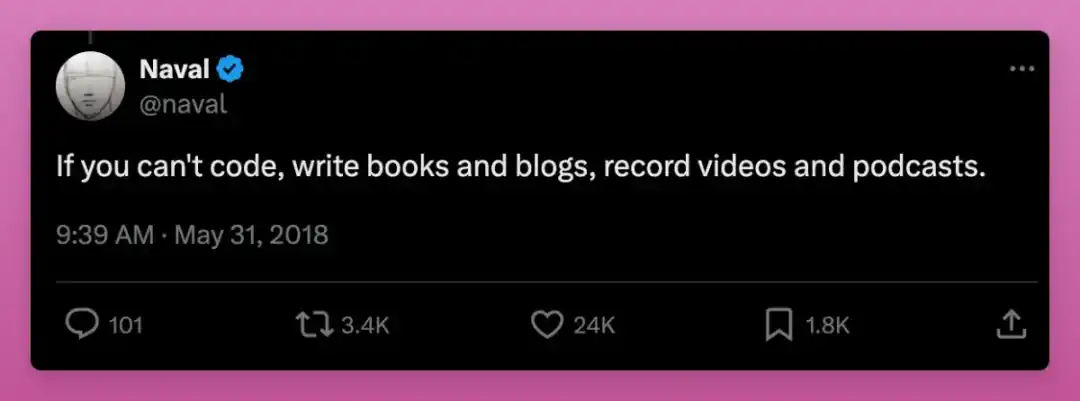
"If you don't know how to program, write books and blogs, record videos and podcasts." This will ultimately allow you to apply "specific knowledge, add leverage, and eventually you will get the rewards you deserve."
In the age of the attention economy, having an audience is an advantage.
Our attention is limited, but information is unlimited. With so much information vying for your attention, your attention is more valuable and harder to capture. For crypto projects, catching your attention can mean the difference between a protocol's success and failure, with technical features coming second.
If this isn't an attention game then what is? Valuations are largely driven by attention, and cryptocurrencies are still 99% speculative.
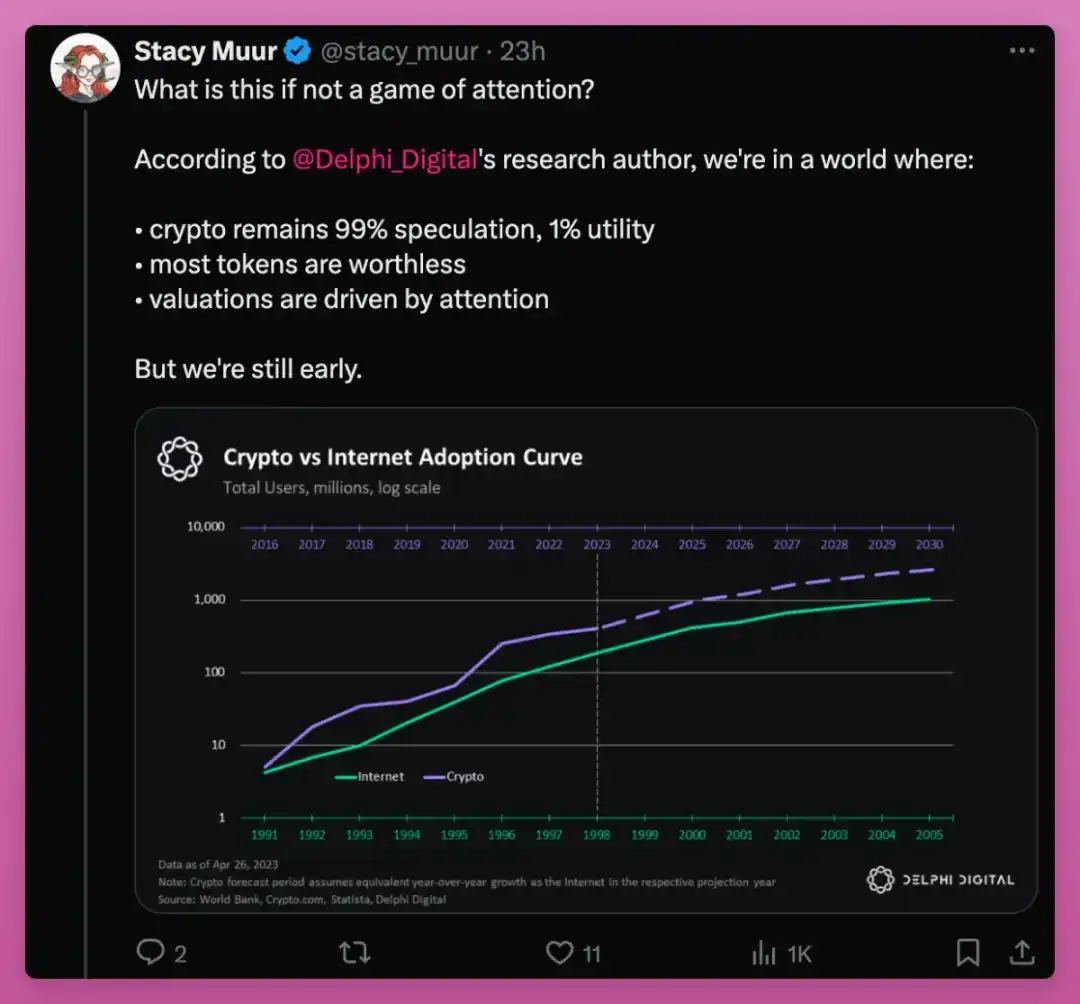
Stacy interprets Delphi Digital's report, attention is everything
This is why I support Polkadot adopting an influencer marketing strategy. I believe this is the most effective way to disseminate information to native Web3 users. The problem with Polkadot is poor execution.
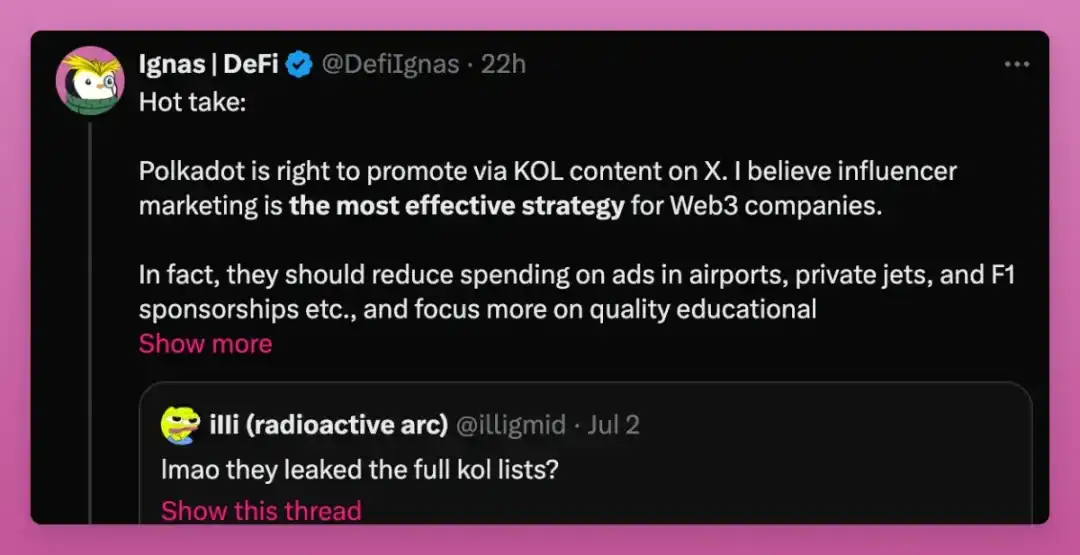
Since cryptocurrencies are largely driven by narrative and emotion, crypto companies want to partner with influencers.
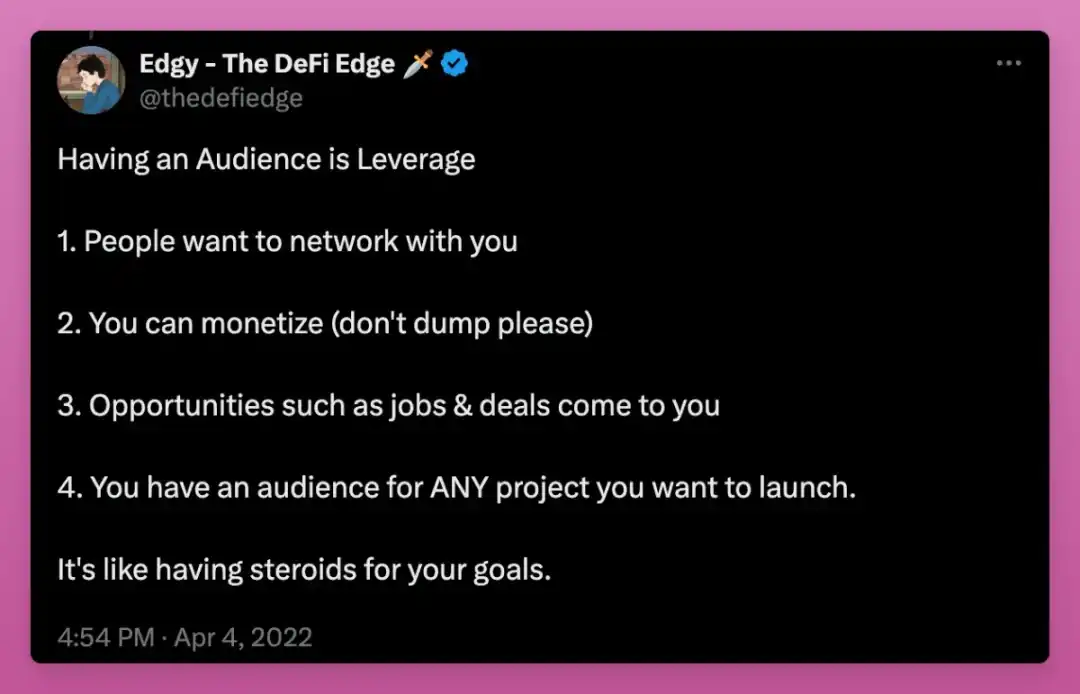
As Edgy said, this leverage makes it easier for individuals to obtain jobs and trades, thereby reducing reliance on a single source of income.
In short, Naval's book said it all for me:
- I was bored but curious about cryptocurrencies, so I started researching it, which helped me build a specific body of knowledge.
- Since I can't code, I choose to write to increase my audience and gain influence.
- As my audience grew, I gained multiple ways to make money.
- To me, cryptocurrencies are like a game. (When I was a teenager, I played Lineage 2. Leveling up in the game is similar to gaining followers on Twitter. Money in cryptocurrencies is like Adena in the game, and becoming a KOL is like becoming a Lineage heroes, expanding your influence).
Tip: What are you really curious about? In the long run, you need to stay motivated through curiosity.
commercialization model
Before I share my tips for gaining followers, I want to share an important reason to become a KOL: making money .
This is the biggest problem for many KOLs. It is more difficult to monetize than attract viewers and fans.
A few months after I started writing, I quit my 9-to-5 job. This is the best I've ever felt.
I went to a coffee shop and opened a Notion table listing all the popular models that KOLs use to make money. My first thought was to look for investment pieces for venture capital firms while learning about good protocols in the crypto space. Long story short, I ended up with a blog, referral program, Instadapp ambassadorship, and launched my KOL marketing agency, Pink Brains.
In addition to salary, I have at least five sources of income (including airdrops).
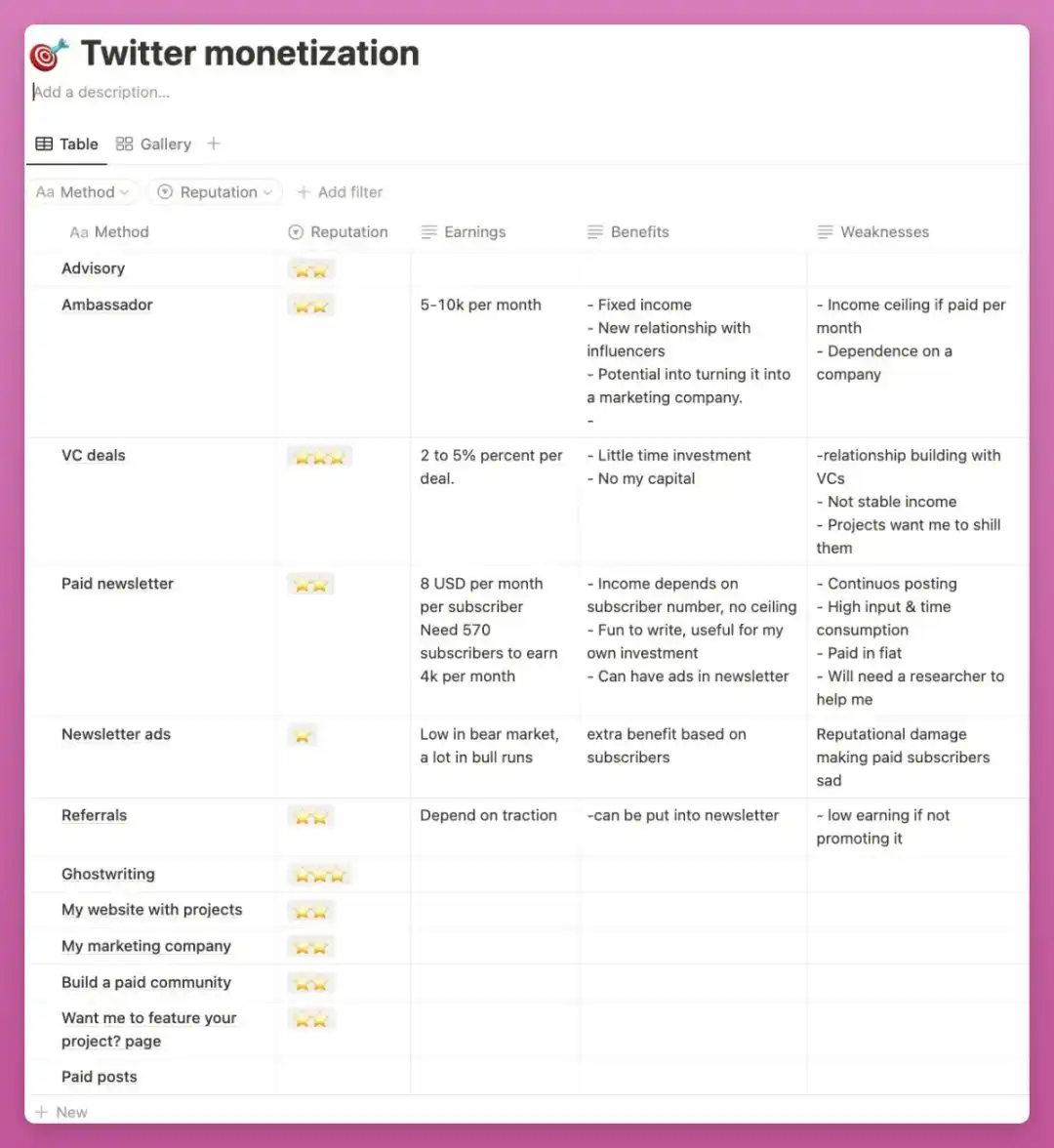
Note: I created this Notion table myself and I haven't touched it for a year. So, it's not finished yet and has a lot of typos.
Therefore, here are the most popular monetization models for crypto KOLs:
Paid Tweets: Seems Simple, But Could Damage Your Reputation
- One bad collaboration with a dubious encryption project can ruin your reputation, so make sure the project is reliable. Accounts with fewer than 10,000 followers rarely attract mainstream projects, while accounts with many followers are overwhelmed and spend a lot of time researching projects.
- Compensation varies based on private negotiations, the KOL's reputation and influence, and the KOL's knowledge of other rates. For KOLs with less than 20,000 followers, the starting price for a tweet is usually US$500, but for KOLs with hundreds of thousands of followers, the starting price for a tweet may reach US$3,000-5,000. Mainstream projects have lower reputational risks and therefore generally pay lower fees.
- When the market turns from bullish to bearish or from bearish to bullish, the rewards will also change.
Blog sponsorship
- A dedicated section within the blog post. Prices range from a few hundred to a few thousand dollars, depending on the number of subscribers. Expect to pay upwards of $1,000 for 150 words of sponsored content in a blog post.
- Featured blog posts: One well-known KOL I know charges $15,000 for a dedicated blog post, and a blog post generally costs much less.
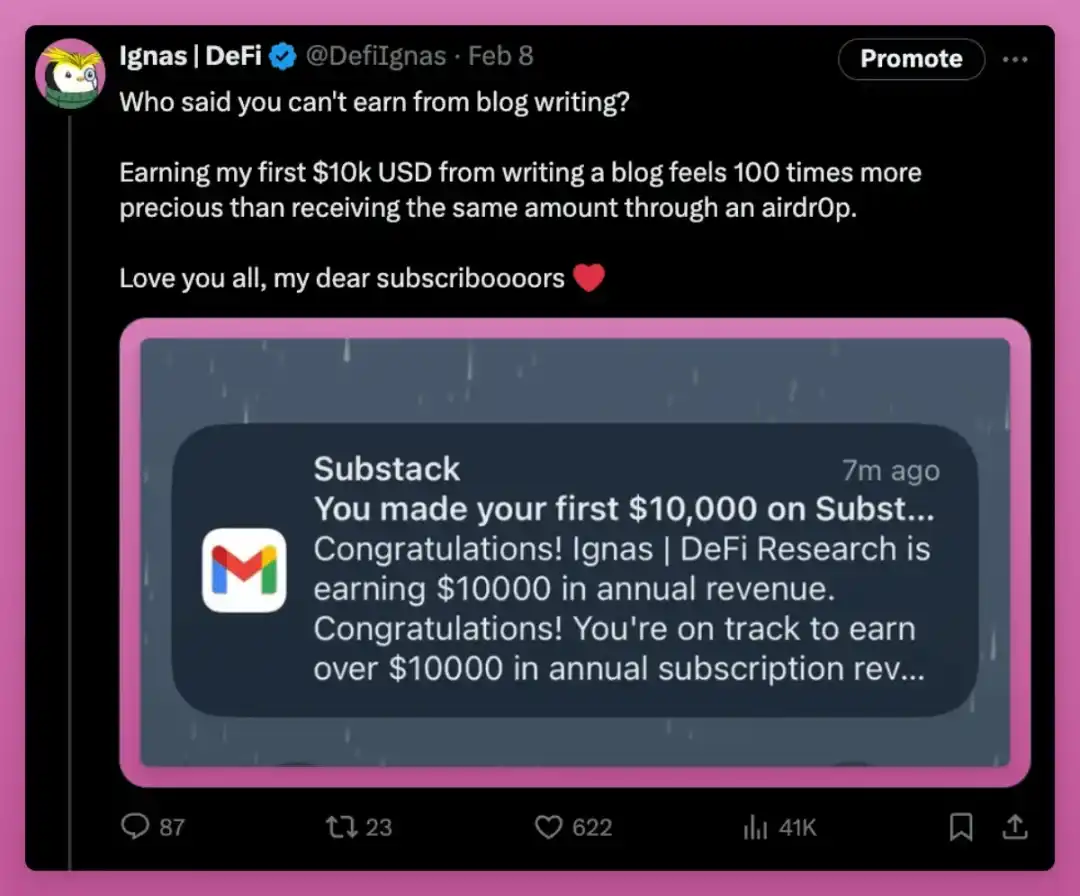
- Paid subscription: Unpopular because it limits the growth of KOLs. You can earn more income from the above two methods. For example, I earn $13,000 per year before taxes from paid subscriptions.
KOL private equity investment
- Private equity investment is increasingly popular among KOLs. Projects also like this model, because KOLs will voluntarily participate in project construction without having to pay for commissions.
- The investment amount per KOL usually ranges from US$1,000 to US$20,000.
- Terms such as unlock period and valuation are better than most venture capital firms.
- Ask you to release information about the project, usually a few tweets per month. High earning potential.
- The previous situation was that it was considered almost risk-free due to the short unlocking time and low valuation. Things are a little different now as low float and high FDV tokens continue to sell off.
Consultant/Ambassador Position
- Both have a minimum number of posts per month and are long-term. Compensation is typically paid in project tokens, while one-time paid tweets on Twitter are paid in stablecoins. Compensation varies, but you can typically earn $5,000-$10,000 or even $15,000 per month.
recommender
- I like referral models that provide special benefits to the referrer. Airdrop is suitable. Another common one is that CEX will reward referrers with a portion of the fees received from new users. This income is unstable.
Extended reading: Crypto KOL showed how much he earned from the "Binance Referral Code" rebate, and the community was shocked: a room in Taipei City
Dumping tokens to fans
- Buy tokens and recommend them to your fans. This is so common that even the “most respected” KOLs on Twitter do it.
KOLs have more ways to monetize, such as becoming a representative of the DAO. The upper limit of your monetization ability depends on your creativity.
Finding a profit model takes time. It took me 9 months and 40,000+ followers on Twitter before I found my first blog sponsor. Instead of posting paid tweets (I only posted one for Pancakeswap V3), I decided to start a KOL agency.
In fact, I make more money posting paid tweets than I do through our KOL agency, and it’s less work. But rather than making money, I want to grow Pink Brains.
How to grow your audience
This topic can be written as a separate blog article. You can find many related tweets on Twitter, such as this tweet from Edgy. To keep it simple, I'll share my personal recommendations:
1. Start with an area of focus and then gradually expand your scope of influence.
- Start by focusing on a hot area or even just a protocol, and then become an authority in that area. Write guides, share updates, connect with the core community, and share your insights.
- Make sure you're actually passionate about it rather than feeling like you're working for it.
- Expand coverage as you grow personally: A popular protocol → Similar protocols → DeFi → Cryptocurrency → Other
2. Find what you are good at:
- You might be good at on-chain transactions, making memes, or finding airdrops. It’s best to combine multiple skills to make you irreplaceable.
- For example, CC2 ventures shares guides on airdrops while also farming them themselves.
3. First provide value, then seek to realize it.
- First, you need to offer something of value to your audience without asking for anything in return. Write guides, share insights, and connect with like-minded people.
- Profits will have to wait. If you start monetizing paid tweets too early , it could hinder your growth in the long run.
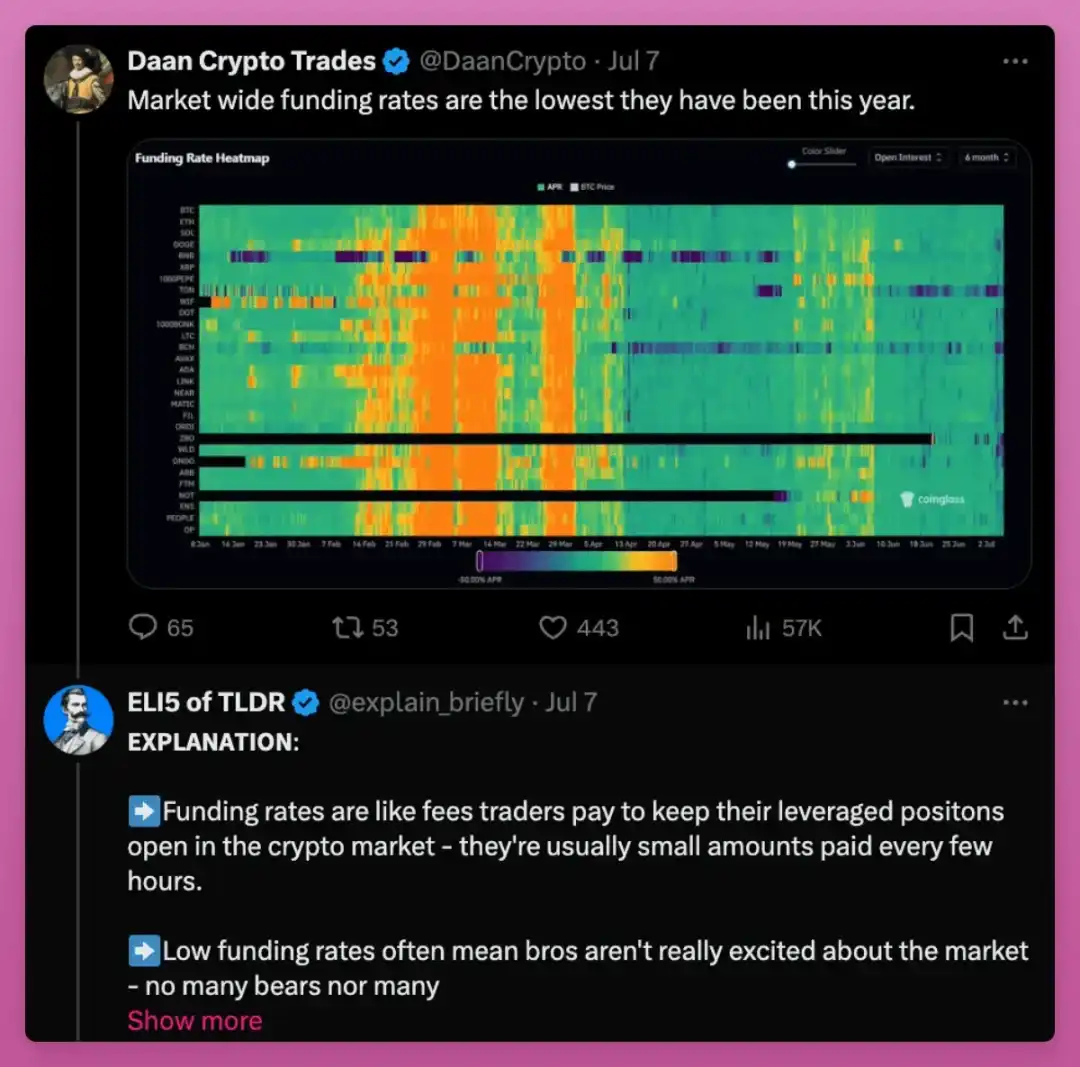
- For example, ELI5 of TLDR grew to 13,000 followers by commenting on popular tweets .
4. Avoid using hashtags and instead use tickers . Too many hashtags can make your tweets look like spam.
5. Choose an eye-catching profile photo and use it consistently . NFT avatars (such as Pudgy Penguins) can attract community members and increase your number of fans, but NFTs are expensive.
6. Try new content : Yesterday’s success may be tomorrow’s failure. As crypto trends evolve, stay ahead of the curve by constantly reinventing yourself.
- I’ve seen many influential people lose their influence because they failed to reinvent themselves.
- Being unique makes you stand out. Take inspiration from your favorite authors, but don’t plagiarize their content.
- Mix lightweight content tweets (like this one ) with topical and longer tweets . Light content gets views, long tweets attract followers.
5. Tag a few experts on the topic at the end of the tweet . But please don't tag the same person over and over again, it's annoying.
6. Don’t send meaningless spam tweets . Insightful spam tweeting is a high-level art form that requires intelligence and expertise.
7. Use tools like Typefully to help you write tweets
- Fix grammar, use AI to help brainstorm ideas, and track material.
- Review the results to understand what type of content resonates best with your audience, then adjust your strategy.
8. Reply to tweet comments, participate in discussions and express gratitude to fans . Building a community is a two-way street.
9. Try other platforms : You can start with Farcaster, Debank or Lens to build your audience without fierce competition. Once you have a solid following, bring them to Twitter.
10. Don’t look for easy shortcuts. There are no shortcuts .
- Avoid Twitter activity of likes, retweets, and comments. These can skew your engagement metrics. After the campaign ends, an algorithm displays future tweets to the same reward-seeking users. If they stop engaging, your influence will shrink. Prioritize small, focused communities.
- Don’t just go for eyeballs, pursue quality. Forget vanity metrics and attract “valuable fans” with top-notch content.
Ultimately, it comes down to whether you have a unique perspective, know how to write, and keep working at it. It took me two years to get 100,000 followers.
Unfortunately, building a fan base is now more difficult than ever. There are very few new people on crypto Twitter, so the same people are tweeting and reading articles.
Twitter’s “recommend” feature reduces the need to follow accounts directly.
I recommend following Alex to learn about changes to the Twitter algorithm and how to adapt to grow your audience.
How to market to other people on Twitter
An unexpected side effect of becoming a KOL is increased sales power. It’s not just that the audience has expanded.
I receive dozens of private messages every day but can only reply to a few of them. Unfortunately, I can't reply to every message as it's very time consuming and most private messages are pointless.
Most KOLs do this. The number one reason for not replying is not following each other: if I don't follow anyone who follows you, you will be passed.
This is why, even if you are not a KOL but a developer, researcher, corporate employee, business developer, etc., if you plan to connect with people on Twitter, you should still gain followers.
I receive a lot of sales pitches every day and they teach me how to sell. Here are some tips:
- Keep it brief, long messages will be skipped.
- Introduce yourself, state your needs and emphasize your value.
- Don’t put links in the first message, especially Calendly!
- Be persistent but not rude.
- No reply? Your recommendations may not meet my needs, please don't mind.
- Nothing worse than a Calendly link in the first message !
All in all, this is just my path, yours will be different.