
At EDCON 2024, Vitalik Buterin summarized Ethereum's achievements, including lower transaction fees, increased transaction speed and wallet security. He predicted that smart contract wallets will be widely used, and by 2034, Ethereum's scalability will increase significantly, transaction fees will be lower, and user experience and security will be improved.
Compiled by: Mia, ChainCacther
Compiled by: Mia, ChainCacther
Ethereum has been leading the innovation and development of blockchain technology since its inception. Since the official launch of the Ethereum blockchain on July 30, 2015, it has attracted the attention of developers around the world with its unique charm, and together they have drawn a blueprint for a decentralized future.
At EDCON 2024, Ethereum co-founder Vitalik Buterin once again stepped into the spotlight and delivered a keynote speech on "The Next 10 Years of Ethereum", reviewing Ethereum's significant progress in fees, transaction inclusion time, and wallet security, and expecting that smart contract wallets will be widely used in the next five years.
Review and achievements
Vitalik recalled the summer of 2015, when he stood in his Berlin office, surrounded by passionate developers. Their eyes were fixed on the Ethereum testnet, waiting with bated breath for the decisive moment - the arrival of block number 1028201. As the numbers jumped, the bell for the mainnet launch finally rang, and in less than half a minute, blocks began to emerge like a tide, marking the official entry of Ethereum into history. At that time, the Ethereum development team had less than 100 people, but they were moving forward step by step with the dream of changing the world.
Today, the Ethereum ecosystem is no longer what it used to be. Large conferences have been held one after another, attracting thousands of developers and enthusiasts to participate; at the application level, millions of users are enjoying the convenience and security brought by Ethereum, and the visions originally described in the white paper have become reality one by one.
transaction fee
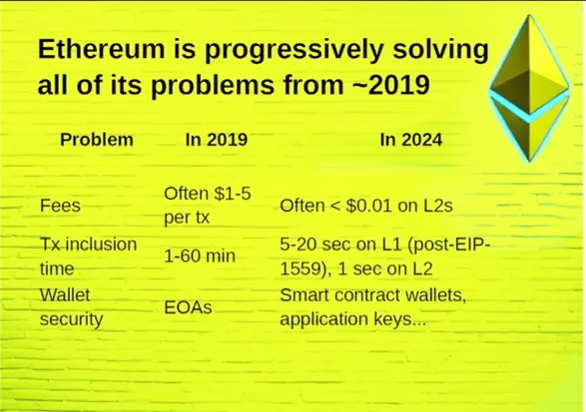
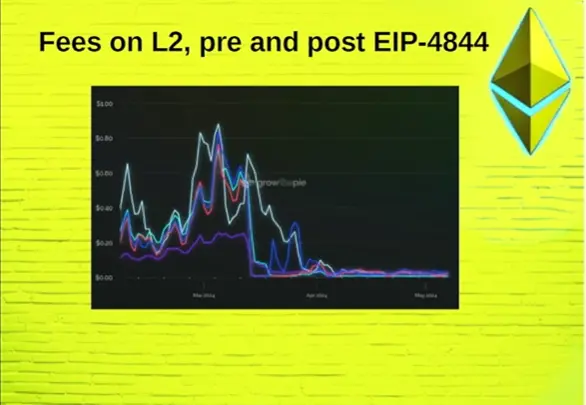
Looking back, high transaction fees have been a major problem for Ethereum users. In 2019, the cost of a transaction could be as high as tens or even hundreds of dollars, which is undoubtedly a heavy burden for ordinary users. However, with the implementation of the EIP-1559 proposal and the rise of Layer 2 solutions, Ethereum's transaction fees have undergone a revolutionary reduction. Today, the fees for most transactions have dropped to less than one cent, greatly improving user experience and transaction efficiency.
Transaction speed
At the same time, Ethereum's transaction speed has also achieved a qualitative leap. In the past, users may have to wait for several minutes or even longer to confirm a transaction; but now, thanks to the optimization of the network architecture and the support of Layer 2 technology, the transaction confirmation time has been shortened to a few seconds or even instant completion. This change not only improves transaction efficiency, but also lays a solid foundation for the large-scale application of Ethereum.
Wallet Security
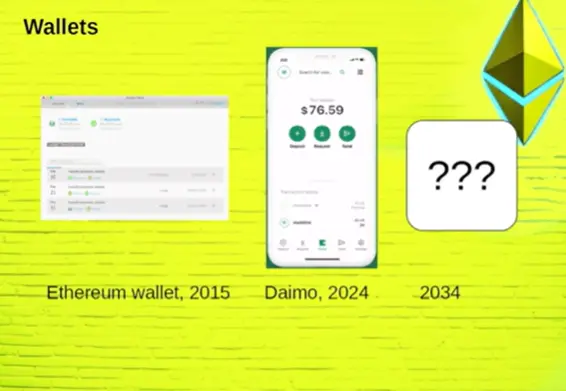
Ethereum has also made significant progress in wallet security. From the initial single private key control mode to today's diverse smart contract wallet options (such as Gnosis Safe), Ethereum provides users with a more flexible and secure way to manage their accounts. The rise of multi-signature wallets has found a perfect balance between self-sovereignty and centralized trust for users.
Consensus Mechanism
Another major innovation of Ethereum is the transformation of its consensus mechanism. From the initial Proof of Work to the current Proof of Stake, Ethereum has not only significantly reduced energy consumption, but also laid a solid foundation for future scalability and security improvements. Future updates such as the Shanghai upgrade will further enhance the functionality of Ethereum and push it towards a more efficient and environmentally friendly direction.
Innovation and Application
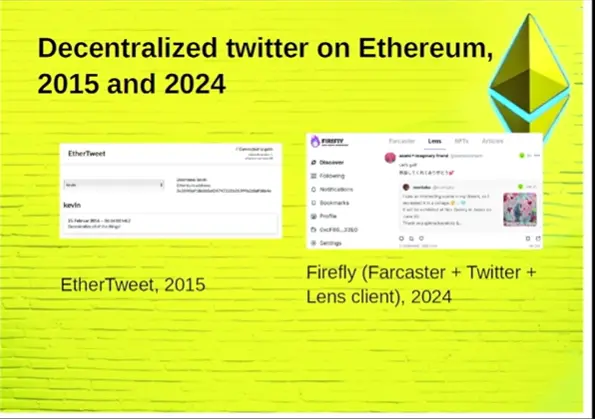
The Leap from EtherTweet to Firefly
When talking about Ethereum's application innovation, we have to mention the leap from EtherTweet to Firefly. As the first decentralized Twitter application on Ethereum, EtherTweet, although with a simple interface and limited functions, marked Ethereum's initial exploration in the field of social media. Today's Firefly client integrates multiple functions such as Farcaster, Twitter and Lens, providing users with a more convenient and efficient experience. This change not only shows the great progress of Ethereum in technology application, but also indicates the direction of unlimited development in the future.
The rise of DeFi
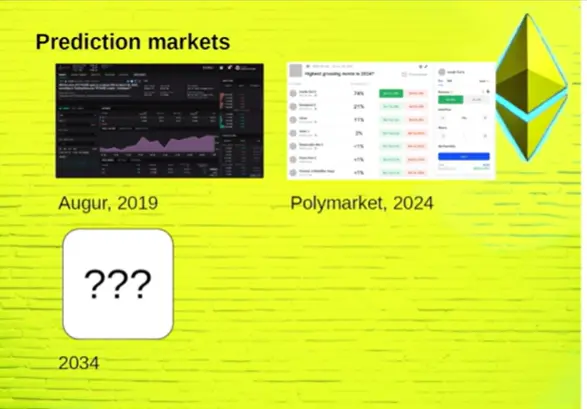
Driven by Ethereum, the field of decentralized finance (DeFi) has ushered in unprecedented development opportunities. Applications such as stablecoins, decentralized exchanges, prediction markets, and non-fungible tokens (NFTs) have sprung up, providing users with more diverse financial service options. These applications not only lower the threshold and cost of traditional financial services, but also bring users a more transparent and efficient trading experience.
Future Outlook
Scalability
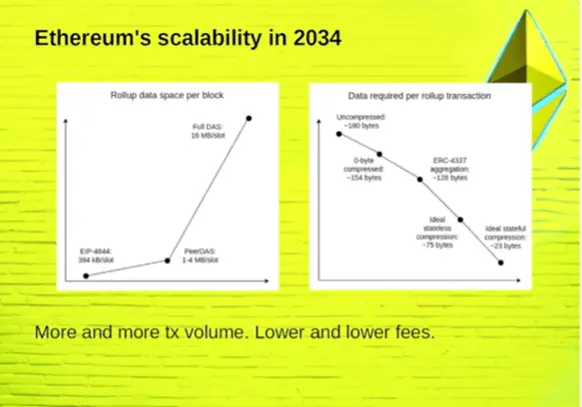
Vitalik predicts that by 2034, Ethereum's scalability will achieve a qualitative leap. With the implementation of upgrades such as the Verkle tree and the continuous development and growth of Layer 2 technology, the number of transactions that Ethereum can process per second will increase significantly to thousands or even millions. This will greatly promote the expansion and popularization of Ethereum in large-scale application areas.
Further reduction of transaction fees
As Layer 2 technology continues to mature and improve and the network architecture is further optimized and adjusted, Ethereum's transaction fees are expected to continue to decline in the next decade. This will further reduce user costs and improve transaction efficiency, thereby promoting the widespread application and popularization of Ethereum.
User experience and security
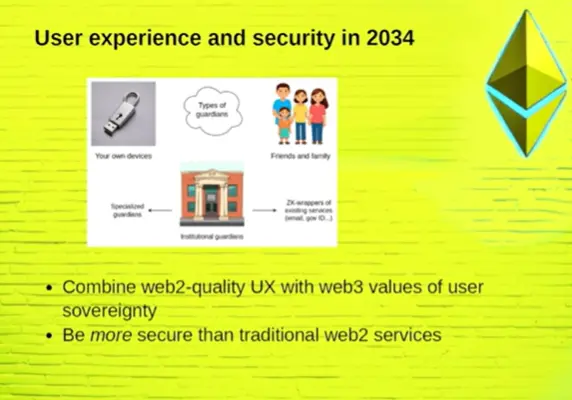
While improving scalability and reducing transaction fees, Ethereum will also strive to achieve a perfect combination of user experience and security. By introducing more advanced security technologies and optimizing user experience design, the overall satisfaction and trust of users will be improved. By then, using Ethereum's Layer 2 network will be as smooth as using the mainnet directly, completely breaking the boundaries of the layers and bringing users a seamless experience.
Exploration and application of emerging technologies
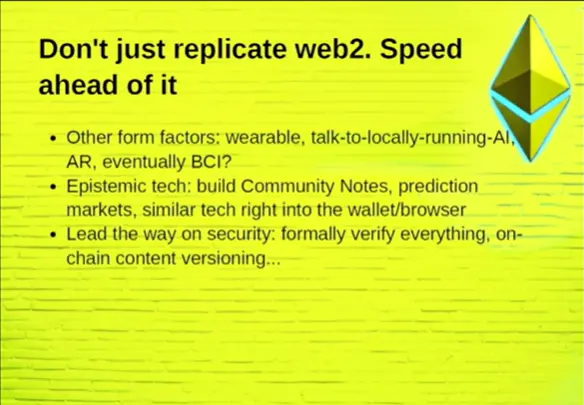
In addition to the expansion of traditional fields, Ethereum will also actively explore the application of emerging technologies such as wearable devices, local AI, augmented reality (AR) and brain-computer interface (BCI). These emerging technologies will bring unprecedented interaction methods and user experience to Ethereum applications, driving them to develop in a more intelligent and convenient direction. At the same time, Vitalik also encourages developers to go beyond the existing Web2 framework, be innovative and constantly explore unknown areas to inject new vitality and impetus into the future development of Ethereum.
Safety and Community
Vitalik emphasized the core role of the community in the future development of Ethereum. He believed that the overall defense capability of the Ethereum ecosystem could be significantly improved by strengthening community participation and introducing advanced technical means such as formal verification. He also suggested that community notes, prediction markets and other technologies be directly embedded in wallets or browsers to provide users with more convenient and comprehensive services to ensure the security of their assets and personal privacy.
Disclaimer: As a blockchain information platform, the articles published on this site only represent the personal opinions of the author and guests, and have nothing to do with the position of Web3Caff. The information in the article is for reference only and does not constitute any investment advice or offer. Please comply with the relevant laws and regulations of your country or region.