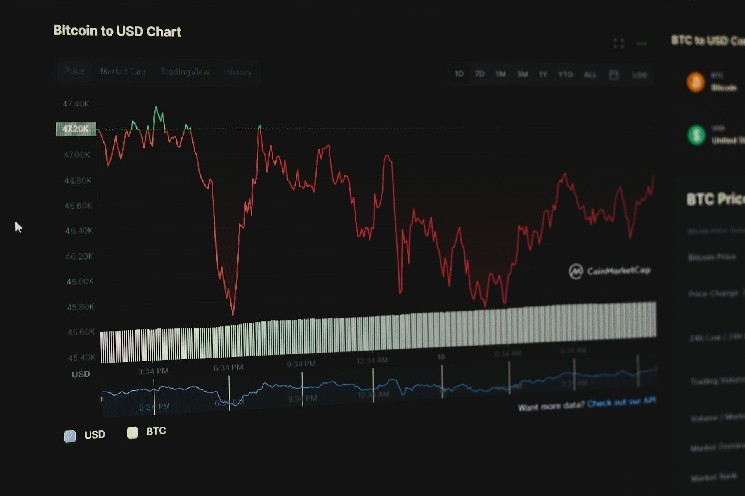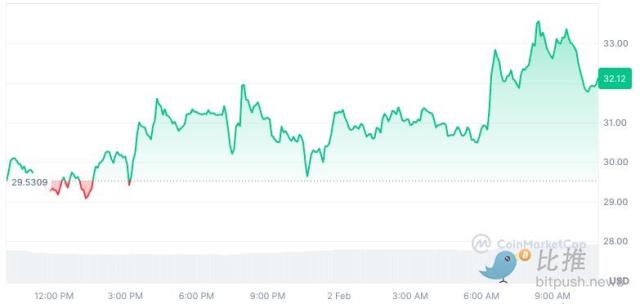
Ahead of the upcoming release of the US Consumer Price Index (CPI) data, there is a growing number of cryptocurrency investors accumulating and holding digital assets, particularly Bitcoin.
Market indicators suggest that investors are shifting towards accumulating assets based on their sentiment and the potential impact of CPI data on the cryptocurrency market.
On-chain data shows investor confidence in Bitcoin recovers
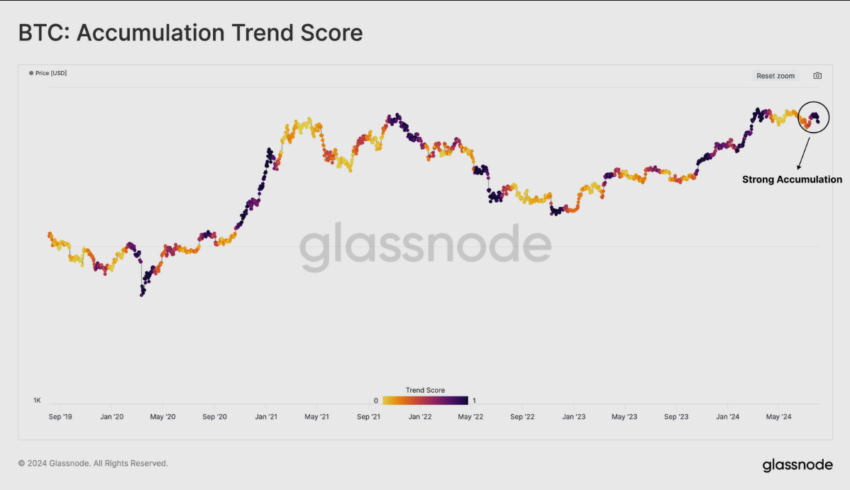
A recent report from Glassnode highlighted a distinct trend among crypto investors recovering from last week’s selloff. Amidst uncertainty, many investors are increasingly holding digital assets, especially Bitcoin. This movement is evident in on-chain data, showing a significant shift toward accumulating assets, particularly among large wallet holders affiliated with institutional investors.
Since Bitcoin hit its all-time high in March, the market has experienced a prolonged period of oversupply. However, this trend appears to be reversing, especially among large wallets. The Cumulative Trend Score (ATS) supports this observation, showing a return to cumulative dominance behavior, reaching a high of 1.0 over the past month.
Read more: Bitcoin (BTC) Price Prediction 2024/2025/2030
Long-term holders (LTH) played a key role in the lead-up to the ATH and are now turning to holding after a period of heavy selling. This trend is evident with over 374,000 BTC moving into LTH status over the past 3 months.
“This suggests that investors’ inclination to hold coins is stronger than their spending pressure,” Glassnode analysts explained.
The 7-day LTH supply change provides additional insight. After a significant distribution during the March ATH period, recent data shows that LTH is now back in positive territory, favoring accumulation over selling.
Despite the aggressive circulation from April to July, Bitcoin spot prices remain above the active investor fee threshold, indicating investor optimism about positive market momentum in the short to medium term.
Rate cut expectations and regulatory tailwinds fuel optimism
BeinCrypto reported that the cryptocurrency market experienced significant turmoil last week, with liquidations reaching $1.06 billion in 24 hours. Experts attributed the decline to weak U.S. economic data and geopolitical risks.
However, Bitcoin and other cryptocurrencies made a remarkable recovery the following day. At the time of writing, Bitcoin is trading at $60,806, up 2.5% over the past 24 hours. In a broader context, the total cryptocurrency market cap is now $2.23 trillion, up 2.4% over the same period.
Analysts suggest that the expected Fed rate cut could sustain the market’s upward momentum. QCP Capital’s note highlights the impact of inflation on Bitcoin, noting that Bitcoin’s importance is diminishing as the focus shifts to the possibility of a rate cut.
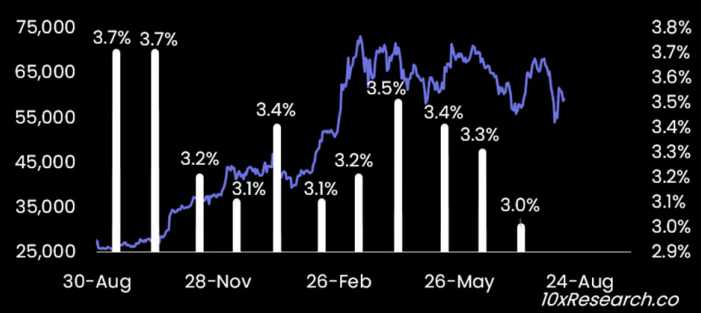
Analysts at 10x Research also noted that Bitcoin’s direction has historically been closely tied to inflation trends, with the asset typically rallying when inflation is falling. However, the latest CPI data suggests that this pattern may not always hold.
“We are seeing short covering in both Bitcoin and Ethereum on expectations of falling inflation. However, […] the recent rally looks like another bearish bounce as fundamentals remain weak,” they noted.
Despite the short-term volatility, analysts remain positive on Bitcoin in the long term . In addition to the expected rate cut, continued inflows into Bitcoin exchange-traded funds (ETFs) and regulatory tailwinds could be other potential catalysts for the bullish trajectory.
“The 12-month outlook for Bitcoin is one of the most bullish I’ve seen. With inflows into Bitcoin ETPs, regulatory clarity, and an expected rate cut, Bitcoin could emerge as a great long-term hedge, ” said Juan León, chief investment strategist at Bitwise.
Read more: How to Prepare for a Recession: 11 Quick Tips
In particular, the inflow of funds into Bitcoin ETFs since January has exceeded $17 billion, contributing to the record highs set earlier this year. This trend is expected to continue as major financial institutions such as Morgan Stanley approve Bitcoin ETFs , further supporting Bitcoin prices. In addition, the significant progress in cryptocurrency-friendly legislation and growing political support in the United States are creating an environment favorable for further adoption and price appreciation.