The speed of replenishment in the AI hardware circle never disappoints me.
In the first half of the year, a Shenzhen company launched an "AI card recorder" that can be attached to the back of an iPhone. It can be called a "physical plug-in" for GPT version recording. As soon as it was released, it attracted 200,000 users and sales easily exceeded 100 million yuan.
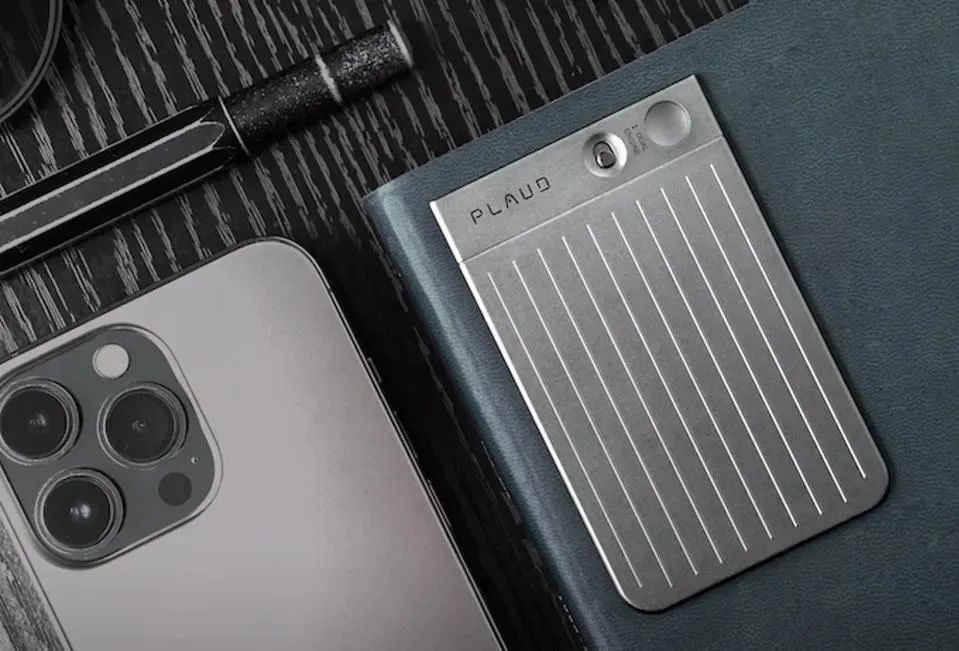
And now, the company has launched a new wearable recording AI hardware - NotePin.
As the name suggests, this is a wearable device that integrates AI recording and transcription technology. Its goal is to help users efficiently record and organize daily conversations through multiple wearing methods and multi-language transcription.
When the words recording, AI, wearable, and hardware are put together, the old jokes also come straight to the top of the head:
It’s not that AI is everywhere, it’s that AI wearables are everywhere.
Your job may be just a wearable recording AI hardware away
Your wearable AI memory capsule.
This sentence on Plaud NotePin’s official website vividly highlights its function, which is to record users’ conversations in real time and transcribe and organize the audio content through a large model.
Inspiration often strikes quickly, but NotePin is easy to use. Just press the middle of NotePin to easily activate the recording function.
Chinese, English, French, Korean... According to the official introduction, NotePin supports up to 59 languages, covering most regions on the earth to meet the needs of different users.
After accurate transcription, there is still one more step left to organize. Give NotePin some room to speak, and it will support automatic segmentation of the recording and attach a timestamp.
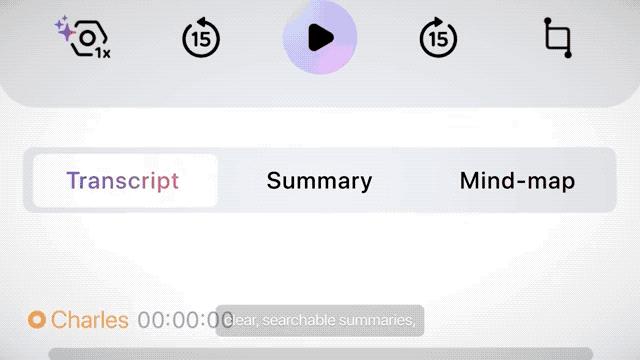
During the sorting process, users can choose a suitable template from more than 20 expert-designed templates to generate a personalized summary. It can be said to be the AI chosen tool for workers to be responsible for transcribing and summarizing meetings.
If you are unsure, you can also listen to the friendly tips from AI.
AI will extract relevant information from the knowledge graph based on the user's specific needs and contextual information, and then recommend the most appropriate template.
The AI model used here can be either GPT-4o or Claude 3.5 Sonnet, whichever one is more powerful will be used.
No matter how strong he is, he can still "put on a shell" and sweep across the hills.
If the content is too long and you don’t have the patience to read it, you can also search and retrieve the required information in the "Memory Capsule" to get the results in one step.
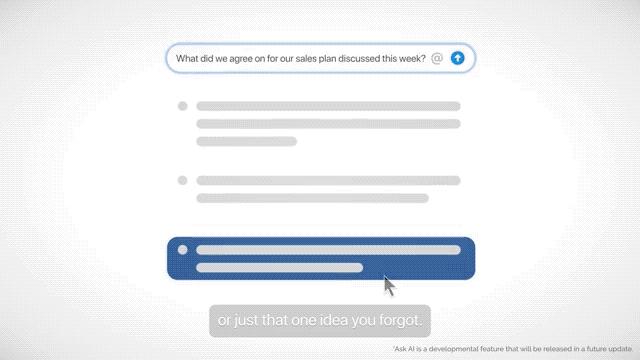
For example, what are the next steps for the project we discussed last Thursday? Don’t worry, just ask NotePin this question and it will quickly organize a structured answer.
In Plaud’s words, “We focus on the AI, and you can focus on the outcomes.”
So who is the most suitable person to use NotePin? The official also gave an anchored user portrait.
Salespeople can record details of conversations with customers to gain a deeper understanding of each other's needs and preferences. Teachers can take the time to review classroom interactions and improve teaching strategies. Doctors can also record changes in patients' conditions, adjust treatment plans, and so on.
Simply put, if you are a professional or everyday user who needs to quickly capture, record and organize inspiration, information and key data, then it may be worth buying Plaud.

Voice Memo + ChatGPT = 1763 RMB
At first glance, the appearance of NotePin is easily reminiscent of the classic Xiaomi Mi Band 1.
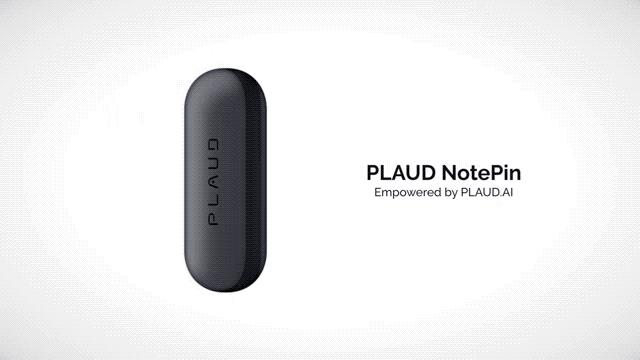
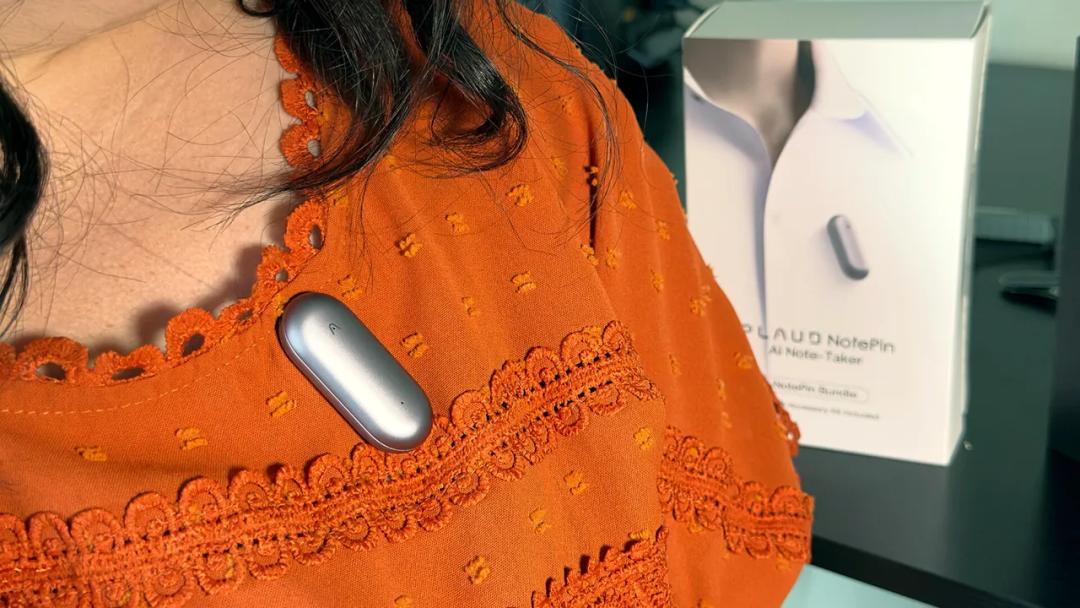
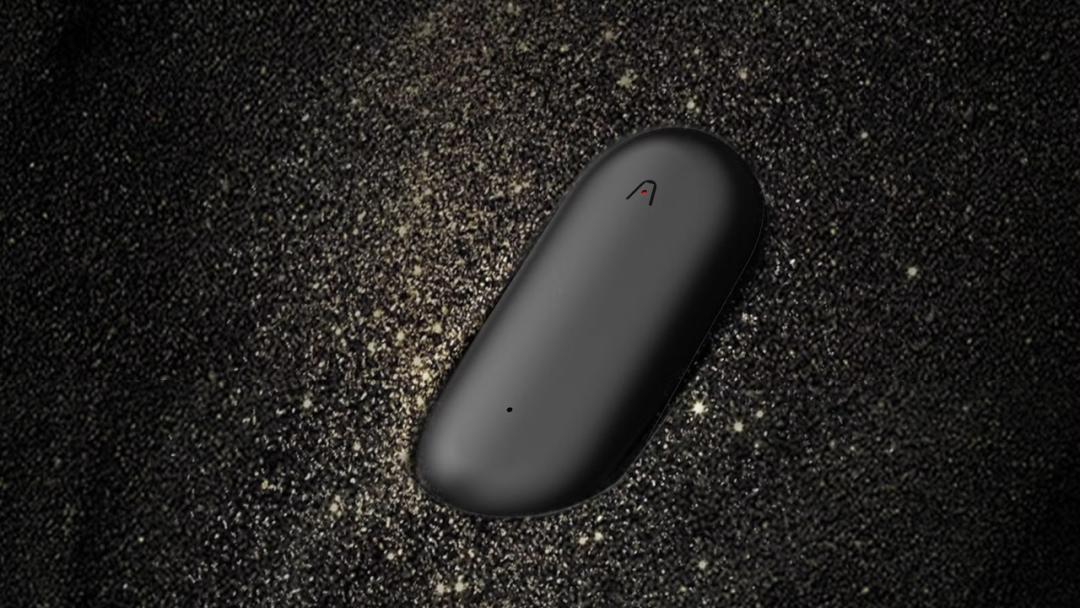
NotePin has a rounded and soft capsule-shaped design, with a compact size of only 51x21x11 mm and a weight of only 25 grams.
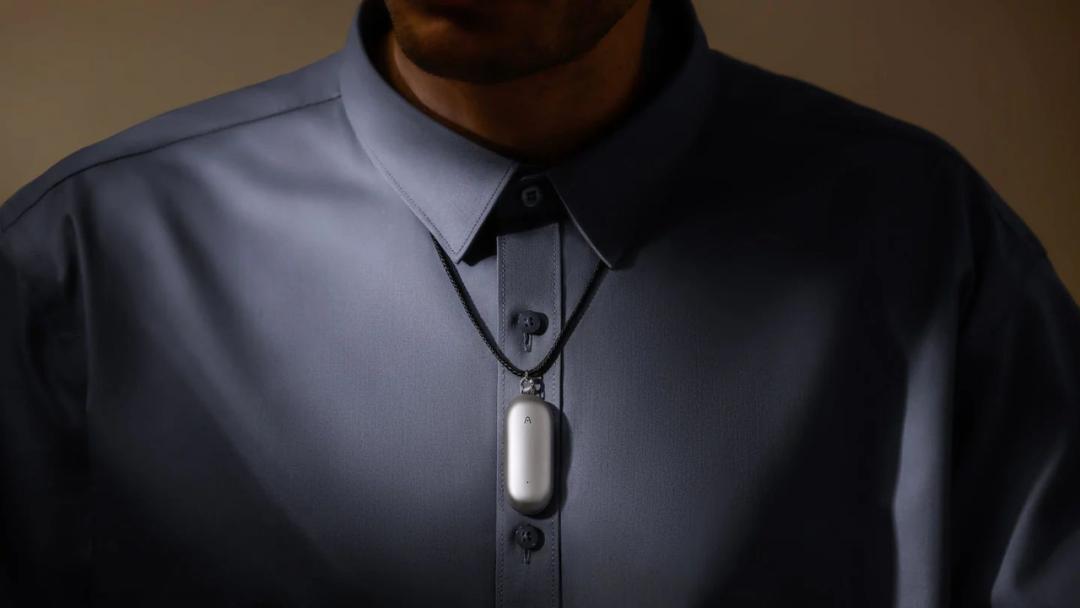
In terms of wearing methods, NotePin is extremely flexible and can be worn as a necklace, wristband, clip or magnetically.

Moreover, NotePin is available in three stylish colors: Cosmic Gray, Moon Silver, and Sunset Purple.
NotePin's battery life is also a highlight. It has a standby time of up to 40 hours and can record continuously for 20 hours. When the battery is exhausted, it can be quickly recharged through wired charging.
NotePin is even equipped with two high-fidelity microphones that use beamforming technology to capture sound while retaining the quality and details of the original sound as much as possible and reducing distortion.
It is not an AI illusion or AI’s immaturity. The first hurdle in the implementation and promotion of AI hardware is the issue of privacy.
Plaud officially explained that the core AI function of the NotePin product is mainly processed in the cloud.
Specifically, speech transcription is done by the common Whisper technology, while more complex tasks such as content summarization and other advanced functions are handled by cloud services.
Once processed, the information will be displayed on Plaud's application or website for users to view.
In addition, to ensure the security and privacy of user data, Plaud uses a specially designed cloud service, Plaud Privacy Cloud (PPC).
By partnering with top cloud service providers, NotePin uses end-to-end encryption technology so that only the sender and receiver can decrypt and read the information, thus preventing the possibility of data being intercepted or tampered with during transmission at the source.
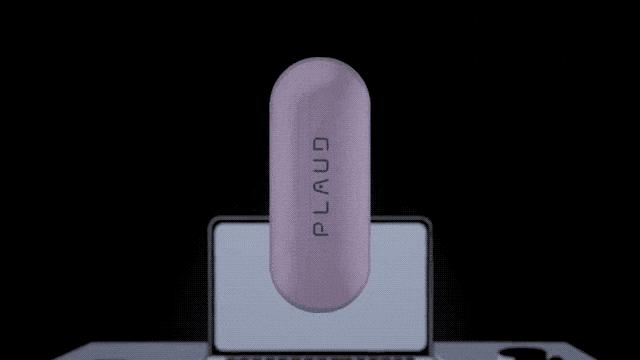
Plaud NotePin is now available for pre-order on the official website for $169 and is expected to start shipping in late September.
The basic AI features are already included, but if you want more advanced features, such as summary templates and speaker labels, you can choose to pay an additional $79 per year, which is equivalent to RMB 1,763.
AI is not a product, but a function. Yes and no.
Looking back at the history of AI hardware in the past two years, it can be said to be a series of "starting high and ending low".
Whenever a new AI hardware is unveiled, it is always accompanied by deafening publicity, but it either dies on the day the ban on media reviews is lifted, or suffers a collective collapse in word-of-mouth after delivery.
One thing that deserves praise about NotePin is that it did not claim to be an iPhone killer right away, or even claim to change the way the next generation interacts, but instead focused on oral scenarios in real life.
In addition, the role of wearable devices such as smart bracelets is not limited to detecting various body indicators. Its deeper meaning is that it allows us to pay more attention to our physical condition.
In other words, whether it is Ai Pin, Rabbit R1, or the newly released NotePin, there is a common logic behind them - they all meet user needs in different ways and improve the quality of user life or work.
However, one problem NotePin faces is that it fails to convince users why they should spend “wasted money” to serve a new AI hardware. Just like smartphones integrate multiple functions such as landline phones, cameras, calculators, and game consoles, NotePin seems to be destined to be replaced by AI Phone from the beginning.
A typical example is that although NotePin can complete audio recording independently, transcription, summarization and other AI functions still require the Plaud application or website.
In this process, smartphones remain a supplement rather than a substitute.
As for the price, Voice Memo + ChatGPT = RMB 1,763, and on Taobao, there are many voice recorder devices that cost less than RMB 100, with a battery life of 60 hours and even AI transcription services.
Moreover, the AI hallucination problem is also the biggest obstacle to the popularization of such tools.
Imagine that you talk to it with great expectations, but if during the transcription process, it suddenly buries key information, you who trust it completely will be kept in the dark by the AI illusion.
In the inherent consumption habits, users are willing to pay for a piece of hardware regardless of whether there is AI or not. However, before AI becomes a mature and reliable productivity tool, users are obviously more inclined to pay for current performance rather than future value.
Regarding the arrival of NotePin, foreign media The Verge pointed out:
Everyone was suddenly building hardware to record meetings, but the software was the real trick.
From a functional perspective, NotePin is actually very reminiscent of the Flash Capsule function launched by the Hammer phone in 2017.
Long press the Home button, or the middle button of the headphone remote control, to start voice input and record your fleeting thoughts. Both the text and the recording will be saved, and you can edit the text again. The recorded "capsules" can be dragged to the notes, inserted into the WeChat input box, and turned into a to-do list....
Such transcription tools also echo a current view that AI is not a product but a feature.
But this sentence is both right and wrong.
In most cases, various traditional hardware products are revived with AI as an enhanced function. For example, smart home devices, smartphones, wearable devices, etc., may contain AI functions such as voice recognition, image recognition, predictive analysis, etc. to improve user experience and product performance.

In this scenario, AI is a component of a product rather than a standalone product.
As AI technology develops, some AI functions are packaged into independent products due to their powerful processing capabilities and unique services, such as dedicated AI chips, independent voice assistant devices, and AI-driven robots.
NotePin is a prime example of this, at least on the surface.
As consumers, we would love to see more hardware in the AI hardware space.
In 1988, Mark Weiser proposed the idea of ubiquitous computing and predicted that the computing model would develop into ubiquitous computing. Supporters of ubiquitous computing believe that computing embedded in the environment or daily tools can enable people to interact with computers more naturally.
At that time, Mark Weiser proposed that the basic ubiquitous computing devices include: tabs, pads and boards.
Tabs: a wearable centimeter-sized device
Pads: Handheld Devices
Boards: meter-level interactive display devices
In terms of form, NotePin meets the standards of a wearable centimeter-sized device, but this still seems a bit outdated. Perhaps one day, when you mutter to yourself in the air, AI will already be silently recording and analyzing your thoughts.
By then, we'll all look back and miss the days when we still had to wear NotePins.
A paradoxical situation is that the more blurred the boundary between AI products and traditional hardware, the greater the probability that they will replace traditional hardware. After all, putting aside the gimmick of AI, the frequency of product use can only be greatly increased if the basic needs of users are met.
And when the wearing time of future AI hardware starts from three to five hours, then this AI hardware may have real development potential.
So if you ask me, what kind of AI hardware will be supported?
I will tell you that the best AI hardware in the short term is in my pocket right now, and it’s called a cell phone.
This article comes from the WeChat public account "APPSO" , author: APPSO, and is authorized to be published by 36Kr.