Author: OurNetwork
Compiled by: TechFlow
Re-pledge
EigenLayer | Ether.fi | Swell | Symbiotic | Karak

Since June, ETH's total locked value (TVL) in re-staking has increased by 30%, with less than 1,000 users participating in re-staking every day; EigenLayer has an 84% market share.
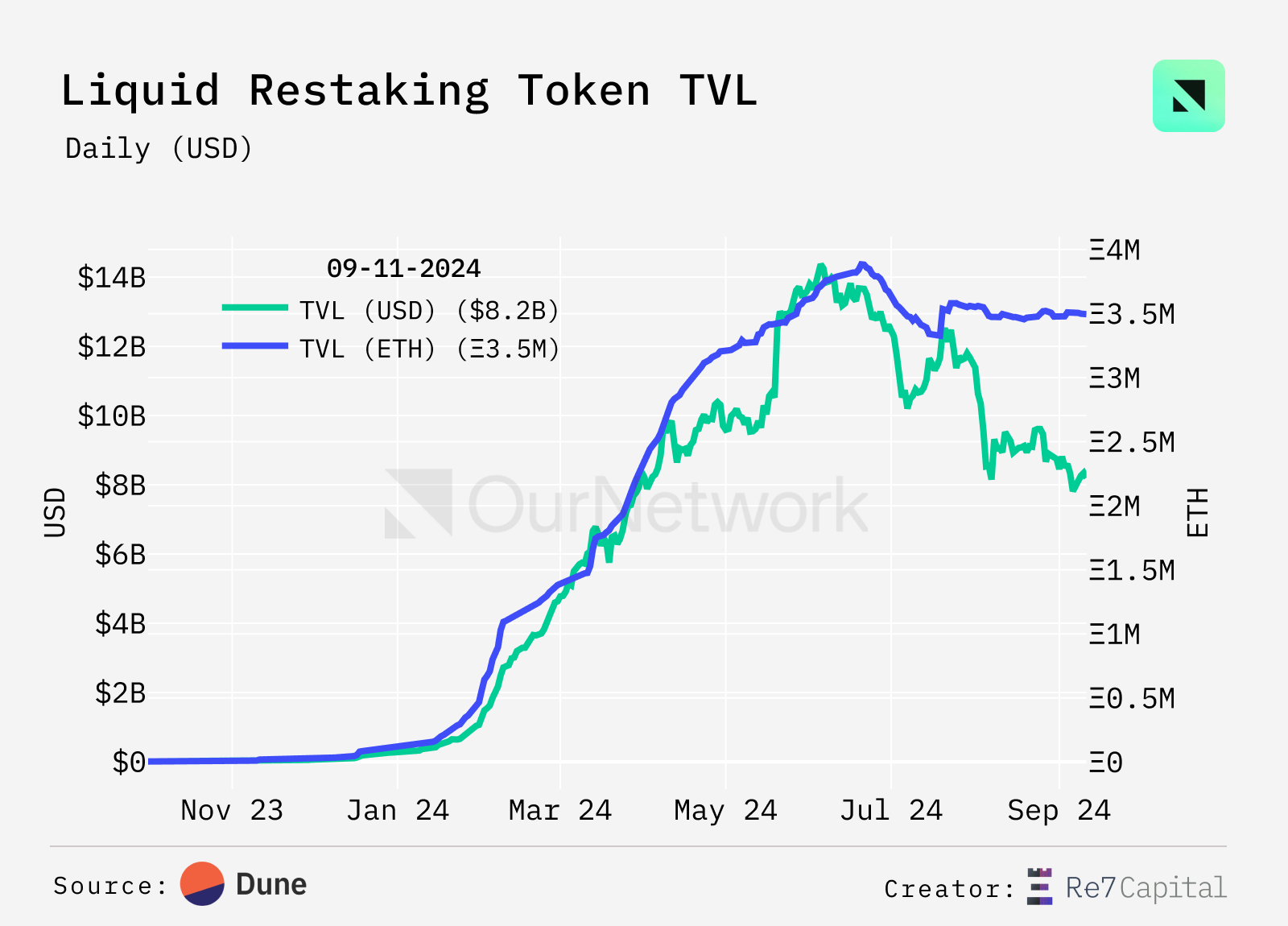
Restaking protocols aim to increase the yield on staked assets by supporting external systems, often called Active Validation Services (AVS). These protocols have spawned billions of dollars in Liquid Restaking Tokens (LRTs), which represent the amount of deposits in restaking protocols. Restaking interest increased in the first half of 2024, but has now stabilized - total ETH staked in USD in restaking protocols is down 38% from its peak in June. After stripping out the volatility of ETH-USD, staked ETH units have remained stable over the same period, with very limited net new inflows. There are currently 23 AVSs, and liquidity restaking accounts for 75% of total TVL.
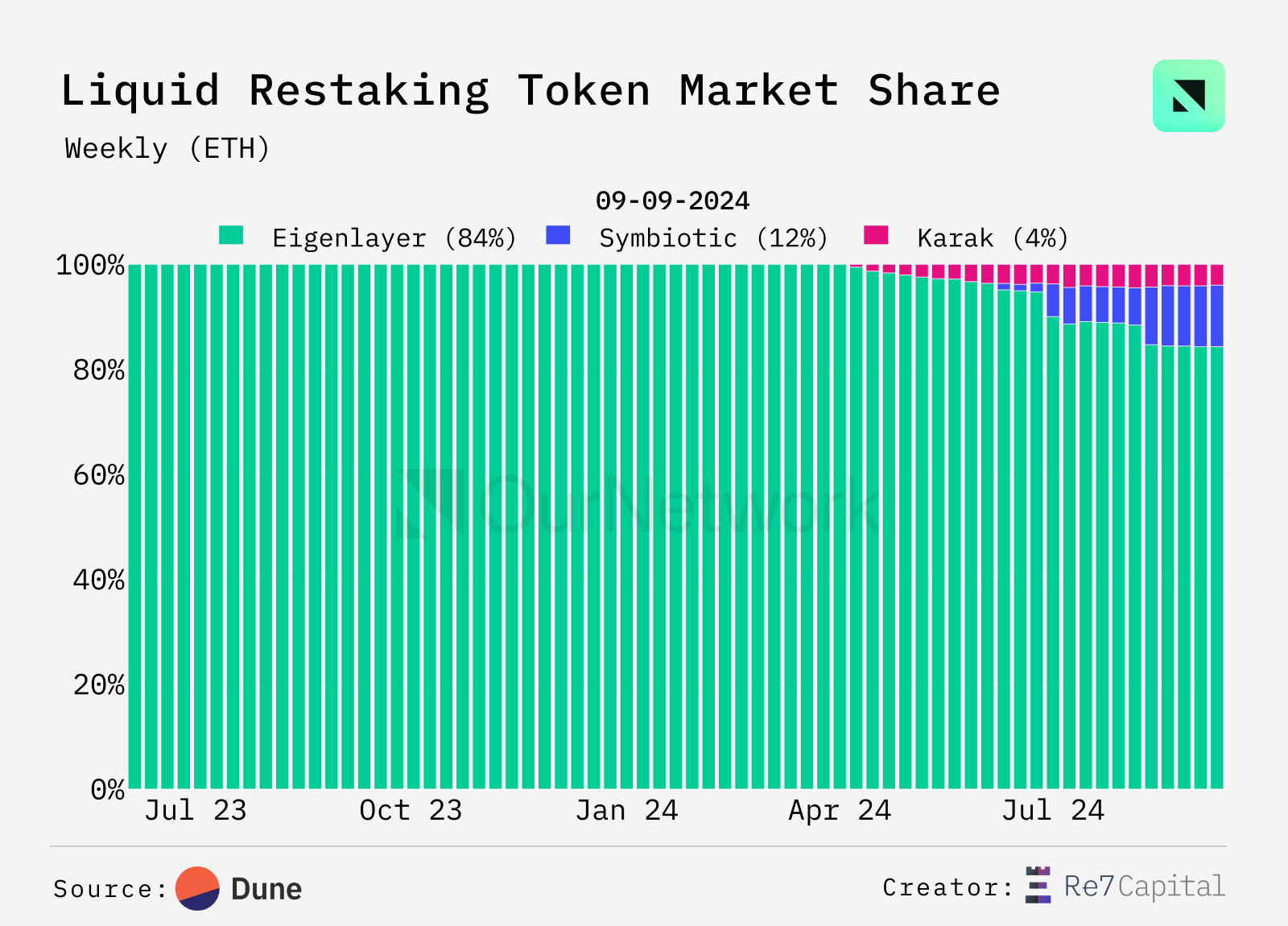
Eigenlayer is the leading restaking protocol with 84% of the market share. Emerging protocol Symbiotic ranks second with 12%, while Karak ranks third with 4%. As of September 12, Eigenlayer has experienced a net outflow of -94,000 ETH, or approximately $222 million, in the past month. Karak also experienced an outflow of -14,000 ETH, or approximately $33 million, in the same period. Symbiotic is the only protocol to see a positive change, with an increase of +253,000 ETH, or approximately $598 million.
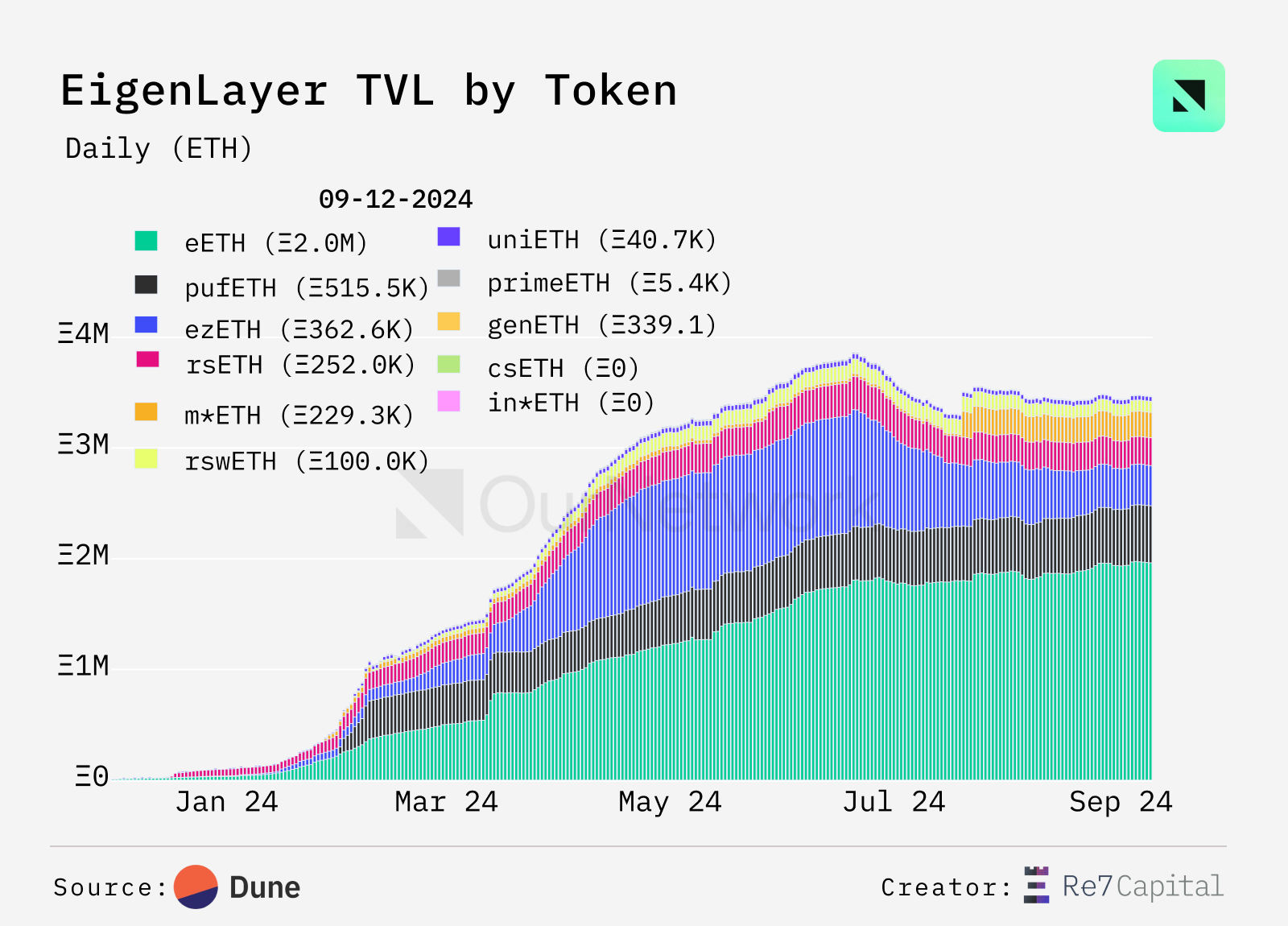
Users can deposit Eigenlayer directly with ETH and LST, or indirectly through liquidity re-staking projects like Ether.fi. Liquidity re-staking protocols mint a liquid token called LRT that represents a claim on assets re-pledged in protocols like Eigenlayer — Ether.fi’s eETH is the largest LRT backed by Eigenlayer, with 1.96 million issued and a market cap of $804 million. Puffer’s pufETH has issued 515,000, and Renzo’s ezETH has issued 363,000.
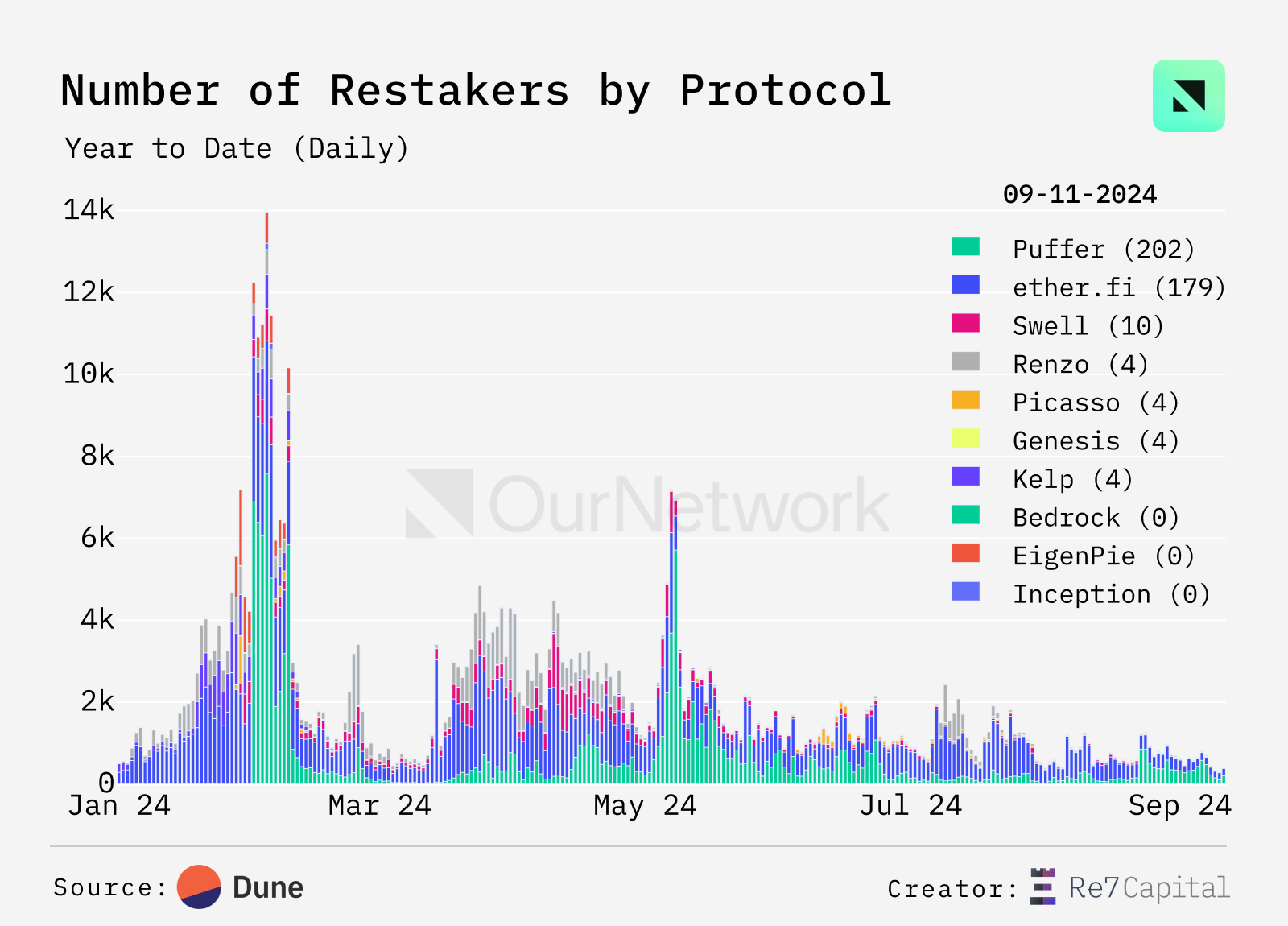
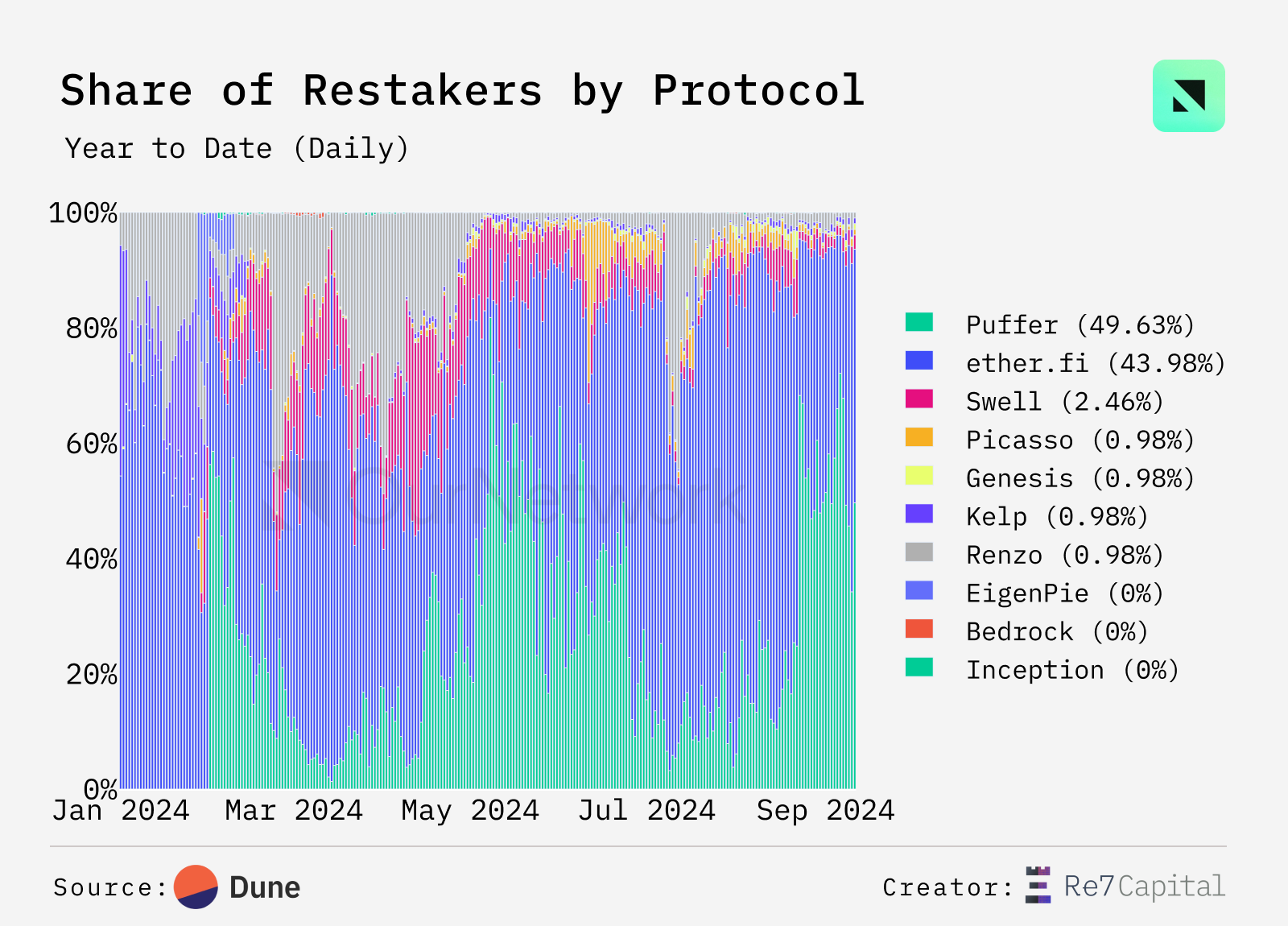
The number of liquidity re-stakers has dropped 90% from a peak of 10,000 in February. Of the remaining ~1,000 individuals, the majority (95%+) operate through Ether.fi and Puffer.
Transaction Highlights: This was the first transaction to fund Kiln, which provides services as an AVS operator (AVS operators use re-staked assets for validation). Today, this address has become one of the top operators on Eigenlayer with over 39,000 ETH and 5,400 delegators.

Ether.fi
Matt Casto | Website | Dashboard
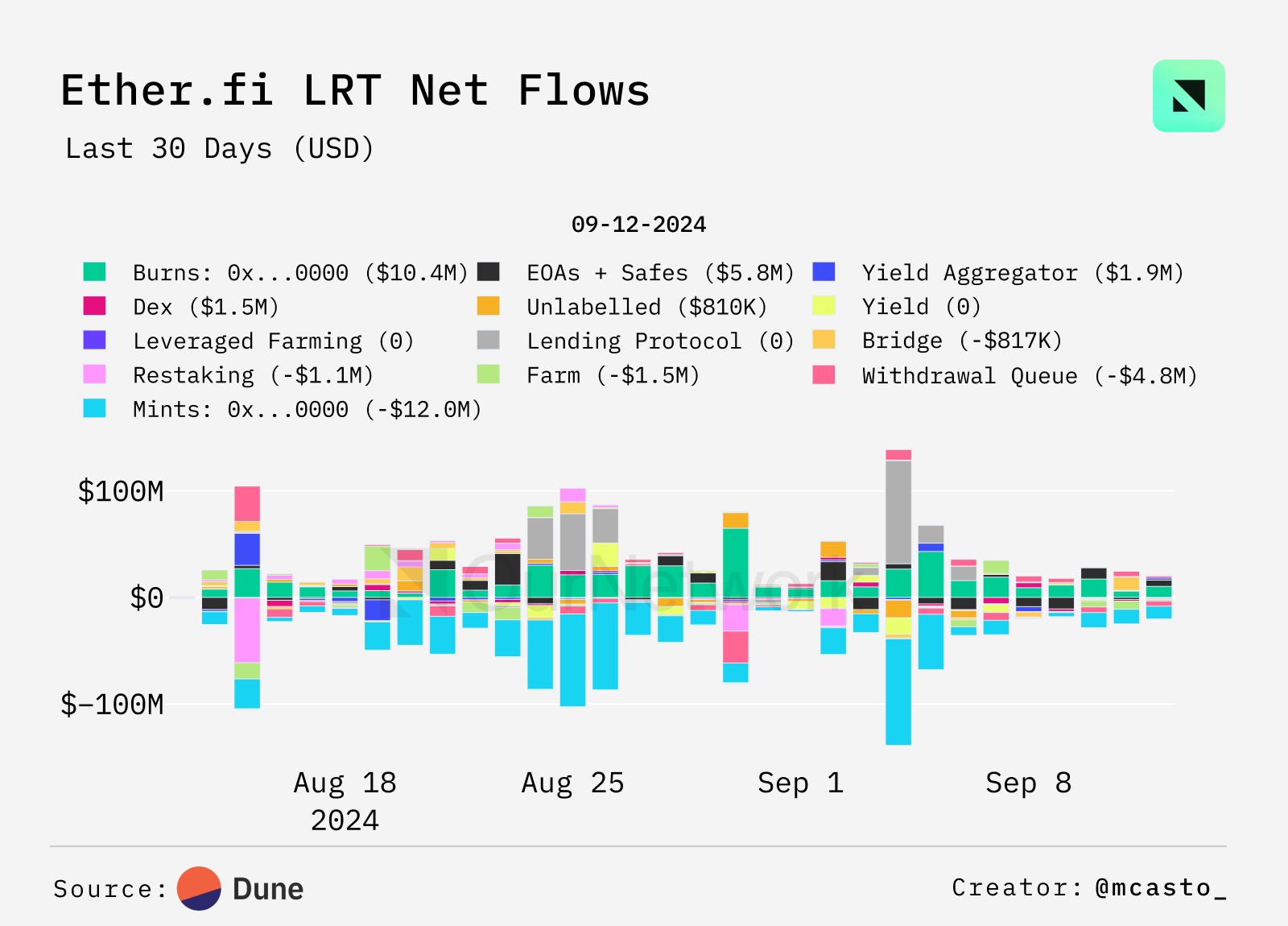
Lending protocols have been the biggest beneficiaries of weETH/eETH flows over the past month
Over the past month, lending protocols experienced the highest net inflows into Ether.fi’s weETH/eETH (the leading LRT), which totaled $252 million in inflows. During the same period, users invested $52 million into bridge protocols and $39 million into EOAs and Safes. The largest net outflows came from re-staking, which fell by $52 million, mainly due to a notable outflow of $61 million on August 15th. This coincided with the launch of another LRT, eBTC, from Ether.fi, and supply was likely directed to Symbiotic’s eBTC/weETH, which may explain some of the outflows.
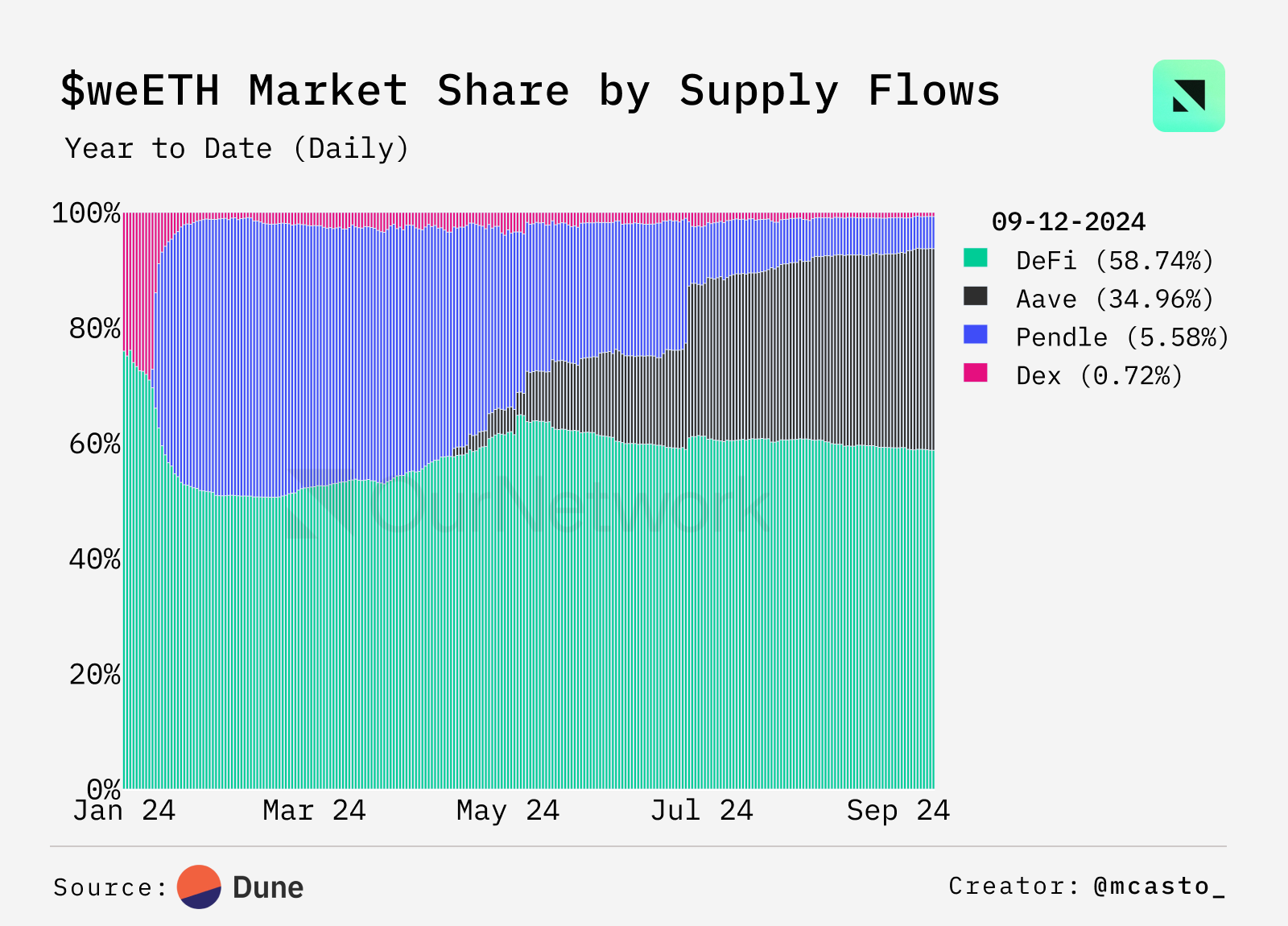
Aave has seen the largest growth in weETH supply liquidity so far this year, growing from 1.4% market share when deposits were enabled in mid-April to 35% today. This growth is primarily due to strong demand from users engaging in recycling strategies and borrowing stablecoins using weETH as collateral.
In the DEX ecosystem, the TVL of Ether.fi’s governance token ETHFI has recently increased on Uniswap v3, mainly due to the liquidity on Curve being transferred to Uniswap in early August. This move was driven by the Ether.fi team, who transferred the liquidity purchased by the treasury to Arrakis on Uniswap v3.
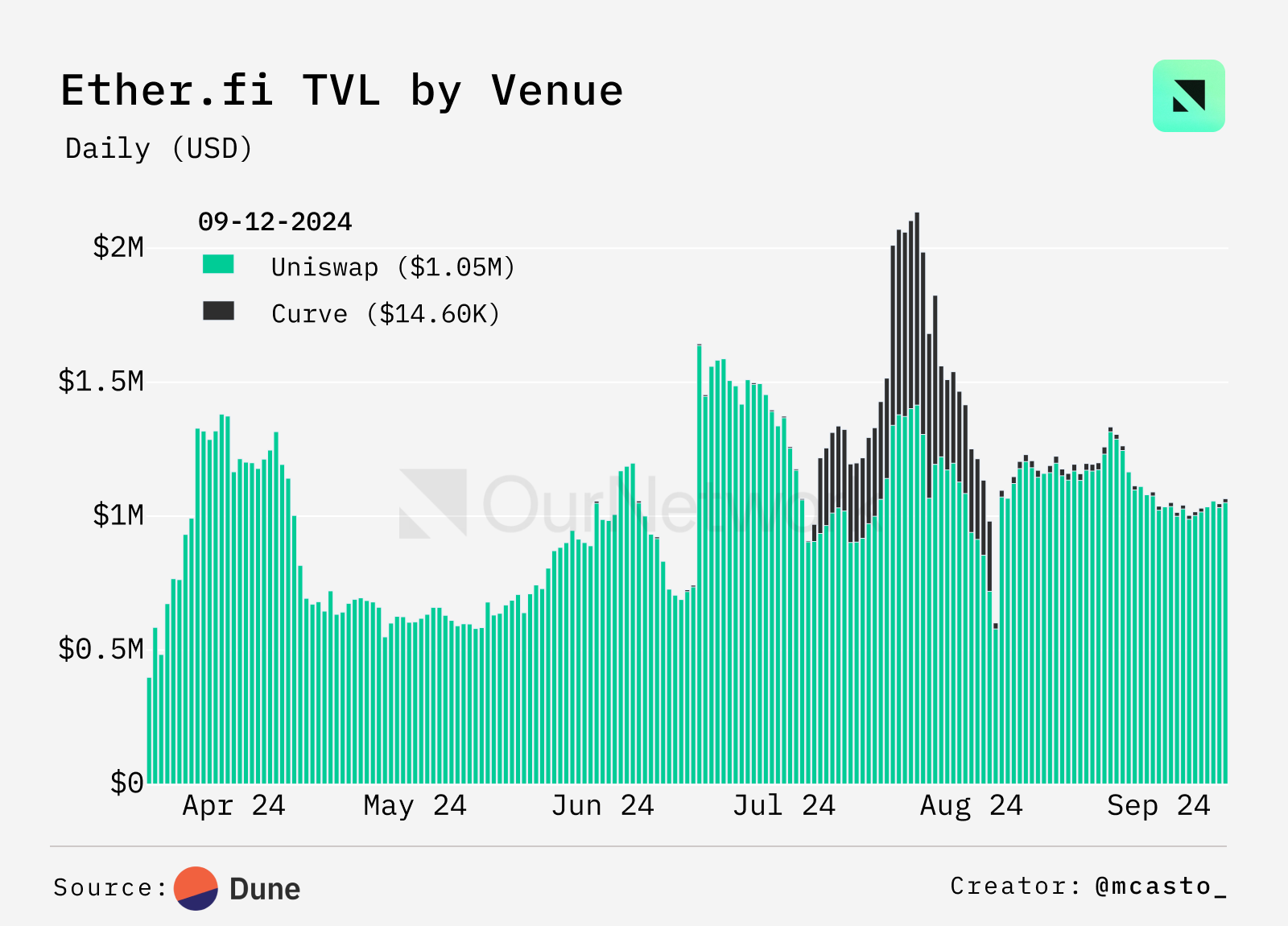
Transaction highlights: This transaction was an injection of liquidity into Arrakis' automated liquidity solution, which was previously extracted from Curve. This was the second largest liquidity injection since the pool existed. In addition, 80 ETH was injected in this transaction, which was worth $409,000 at the time. After the liquidity injection in this transaction, almost all of ETHFI's DEX liquidity passed through the Uniswap v3 pool.
Swell
Ian Unsworth | Website | Dashboard
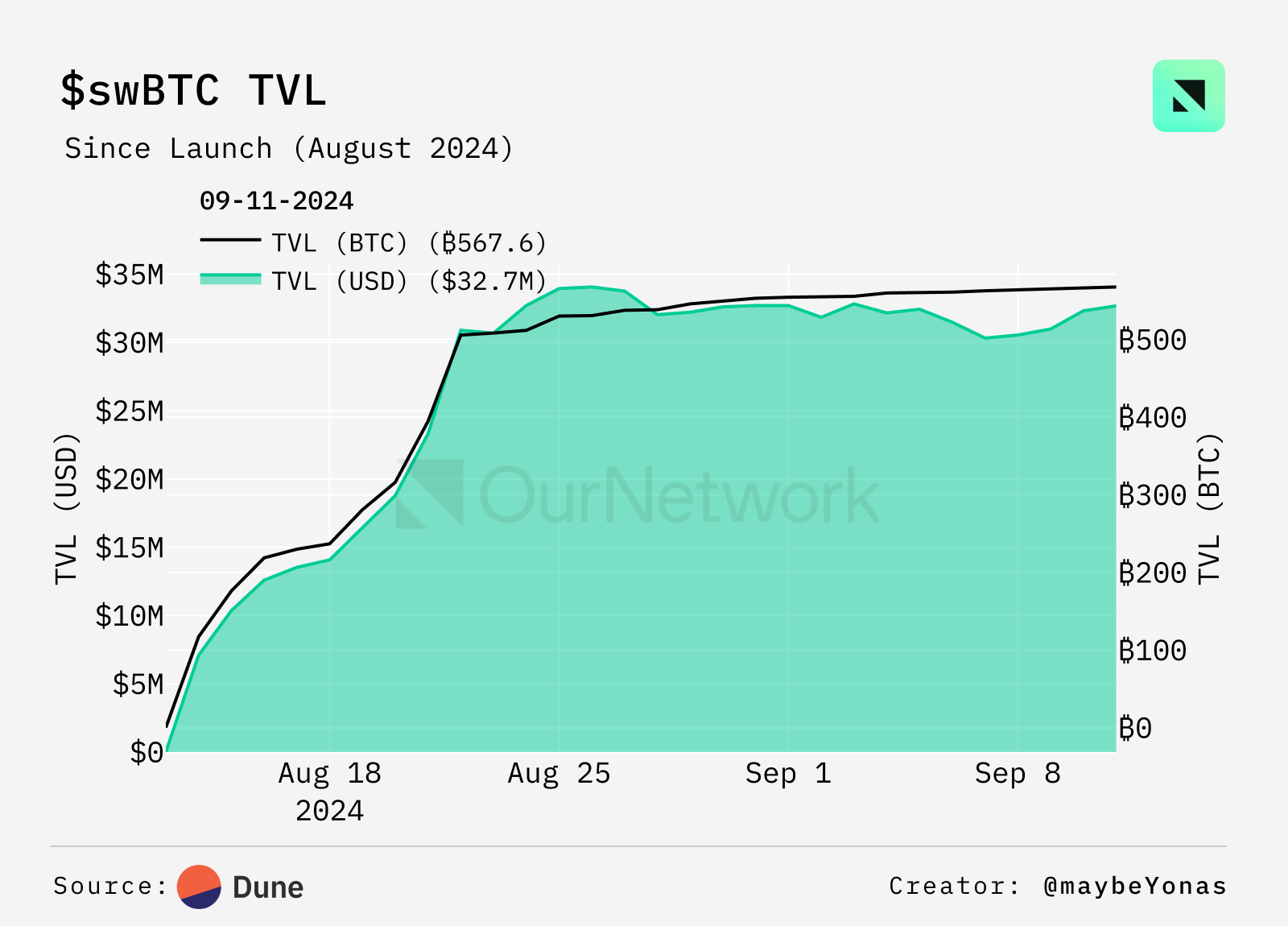
Swell's total locked swBTC value has exceeded 30 million US dollars
While most of the discussion about restaking has centered around ETH LRT, Swell’s new LRT, swBTC, has recently gained attention. Swell’s new product offers users the opportunity to earn potential staking rewards on Ethereum’s top three restaking platforms: EigenLayer, Symbiotic, and Karak. In just 10 days, swBTC’s total locked value exceeded $30 million, with over 560 unique depositors participating in deposits. As BTC liquidity becomes an ongoing trend, the increase in BTC LRT could serve as a positive on-chain catalyst.
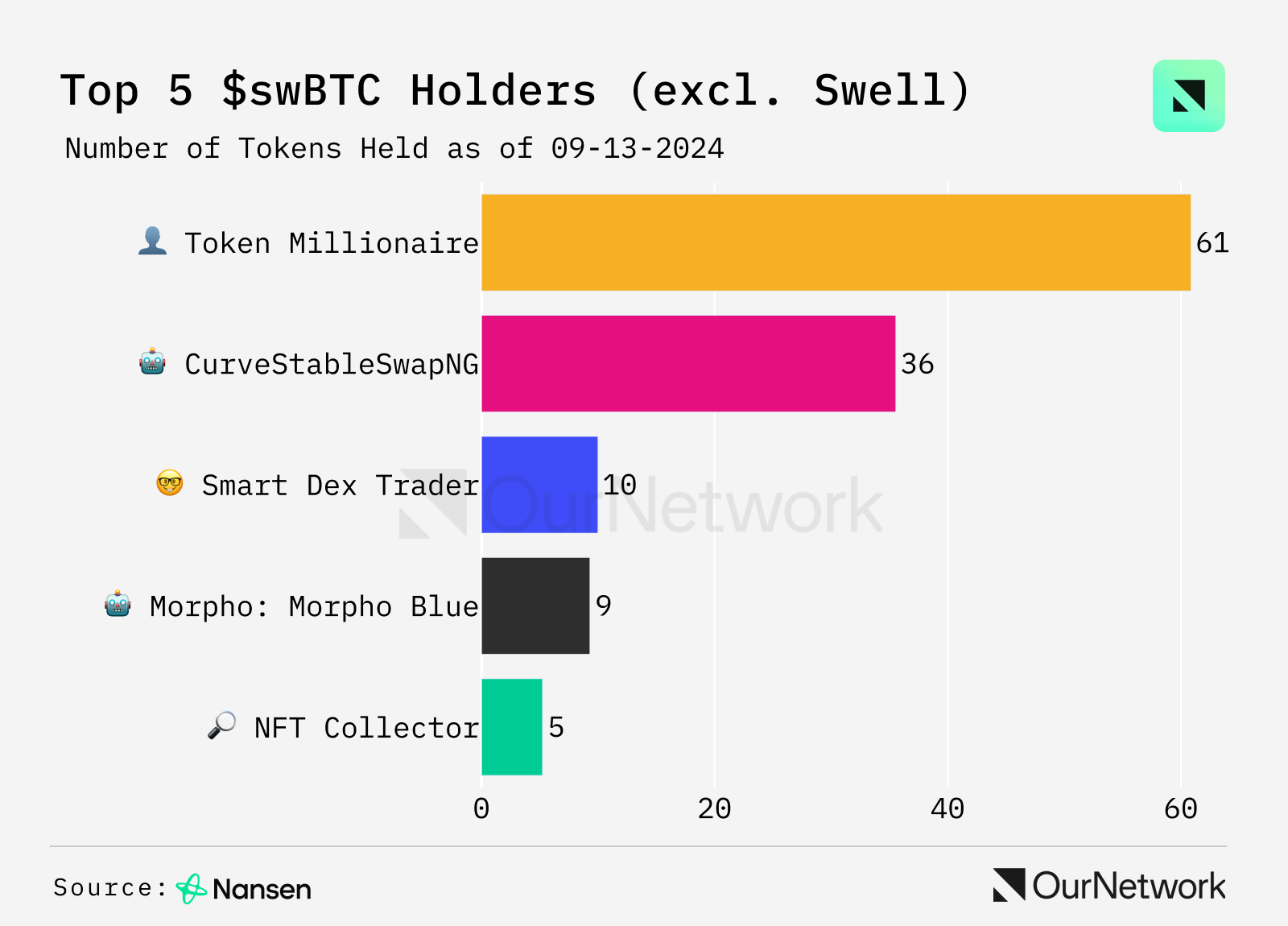
About a month after going online, part of the swBTC supply has flowed into key DeFi protocols such as Curve and Morpho, which account for about 8% of the total supply. In addition, Swell is developing a Layer 2 platform, and users have injected 68% of the swBTC supply into the contract of the expansion platform to facilitate its launch.
Users continue to express high interest in potential use cases in Swell’s Layer 2 contracts through deposits. Although Swell announced that the snapshot record for the airdrop has been completed, there are still approximately 460,000 ETH and more than $1 billion in funds deposited. The scaling solution is scheduled to be officially launched at the end of the fourth quarter.
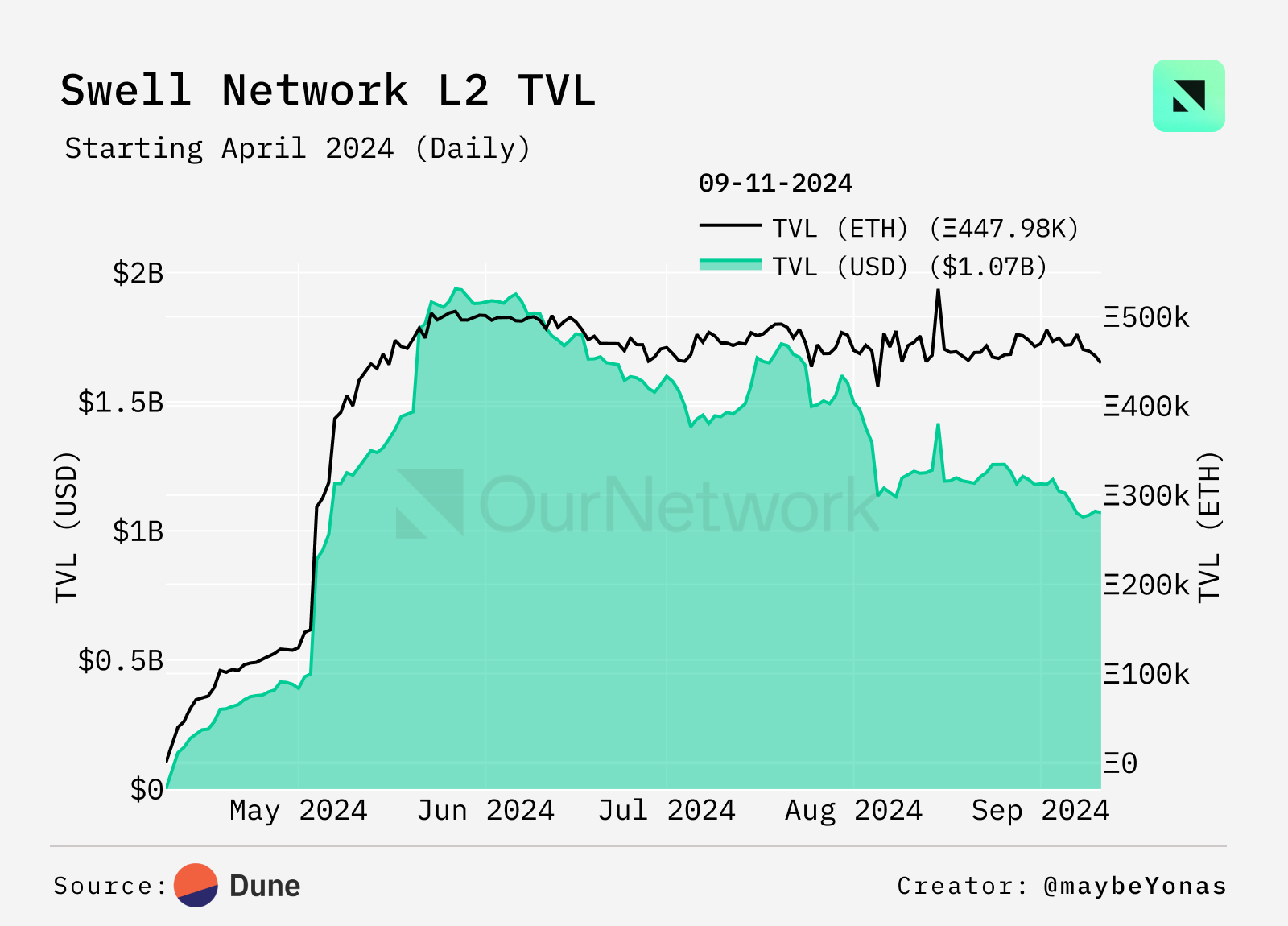
Transaction highlights: While looking at the usage of swBTC by some early adopters, this wallet deposited 100 swBTC, worth over $5.9 million, into the Swell L2 contract. Based on the wallet in question, this address may belong to Amber Group, a well-known asset management company with over 3,000 institutional clients.
Symbiotic
Symbiotic’s TVL exceeds $1.5 billion with the addition of new tokens
Symbiotic’s TVL, the second-largest heavily-collateralized protocol after Eigenlayer, has surpassed $1.5 billion, with the addition of other assets such as BTC, Ethena, and sUSDe.
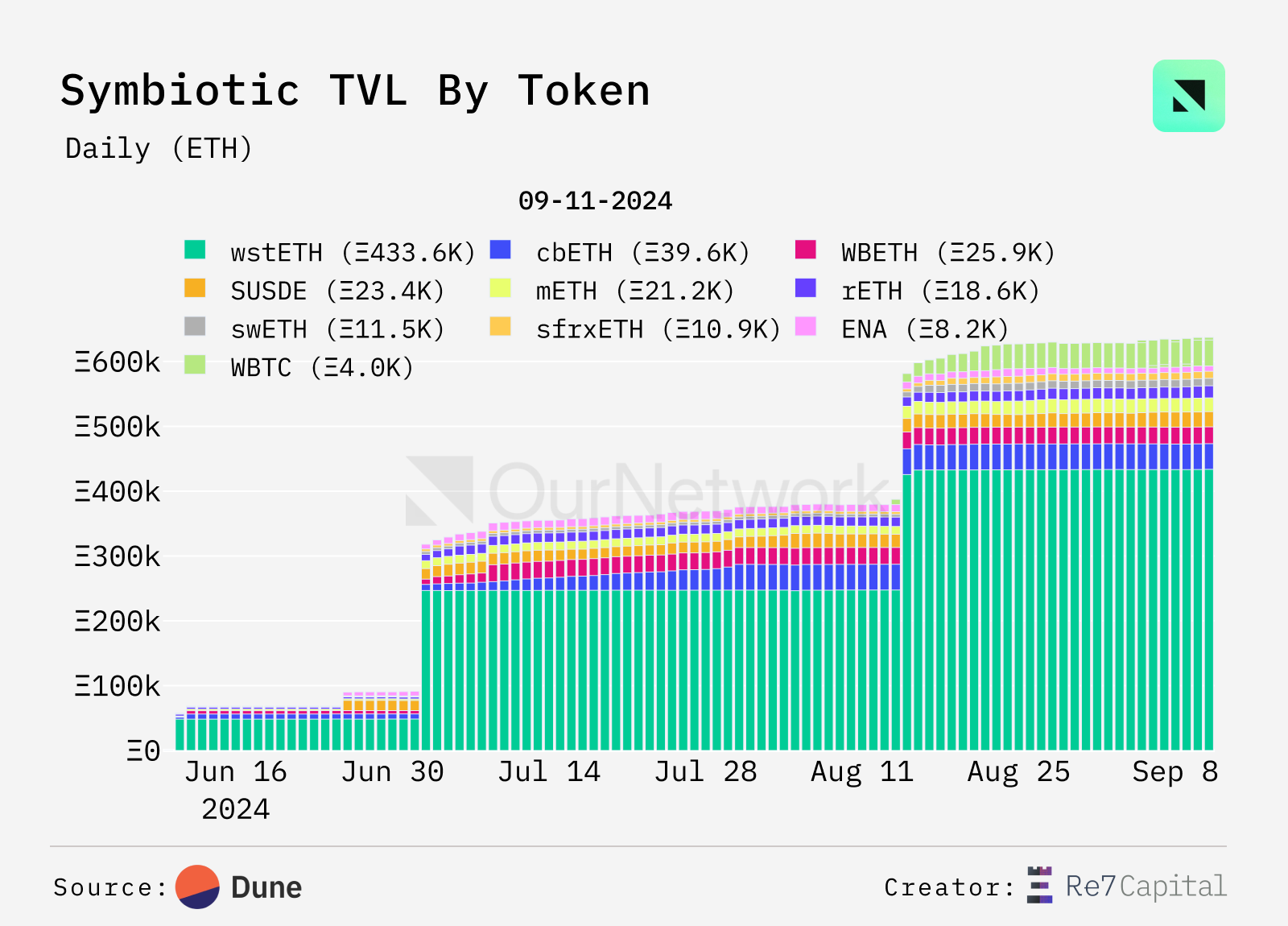
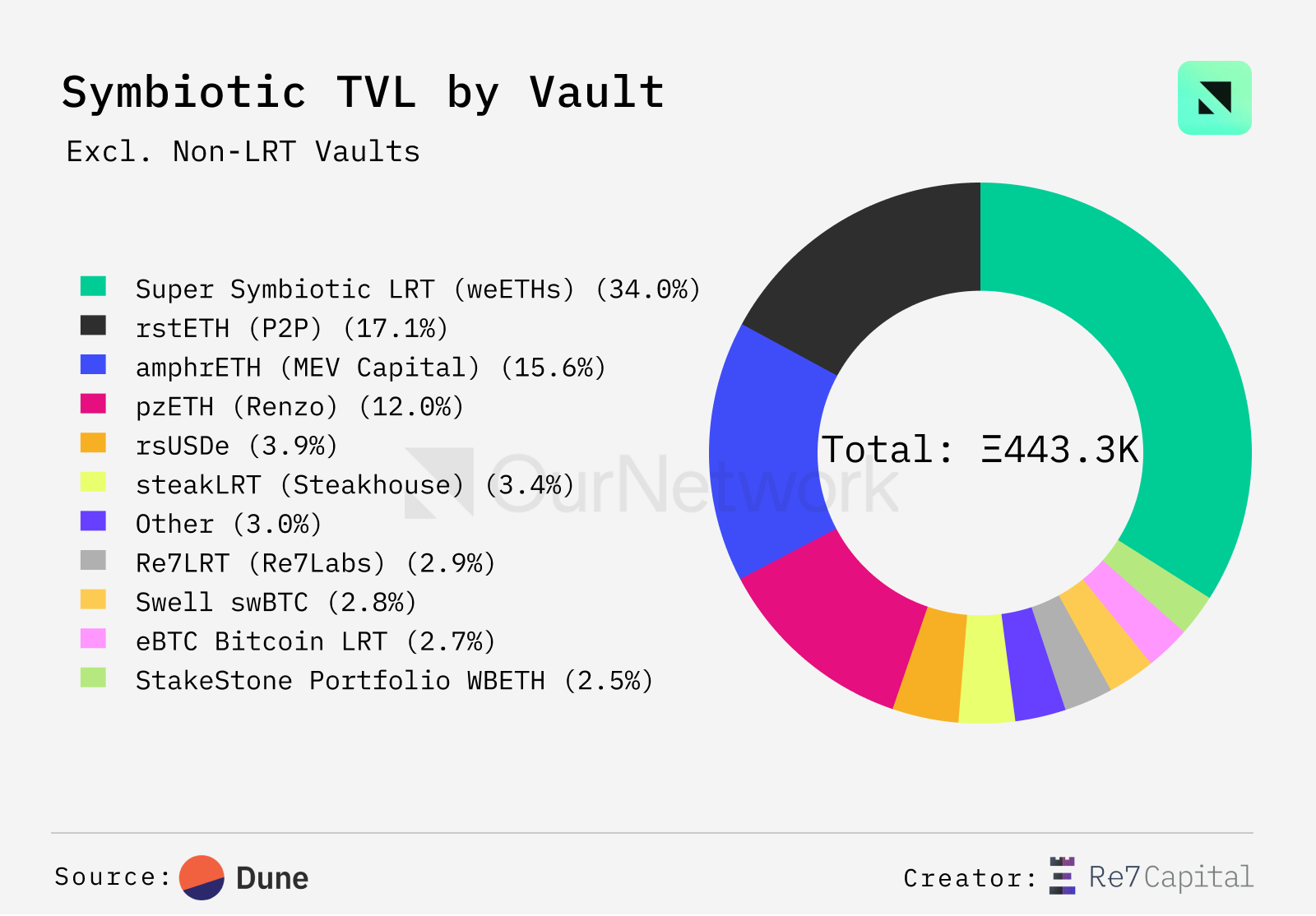
Pools like Re7LRT, which account for over 70% of depositors, reflect the growth of liquid heavily staked tokens on the Symbiotic protocol.
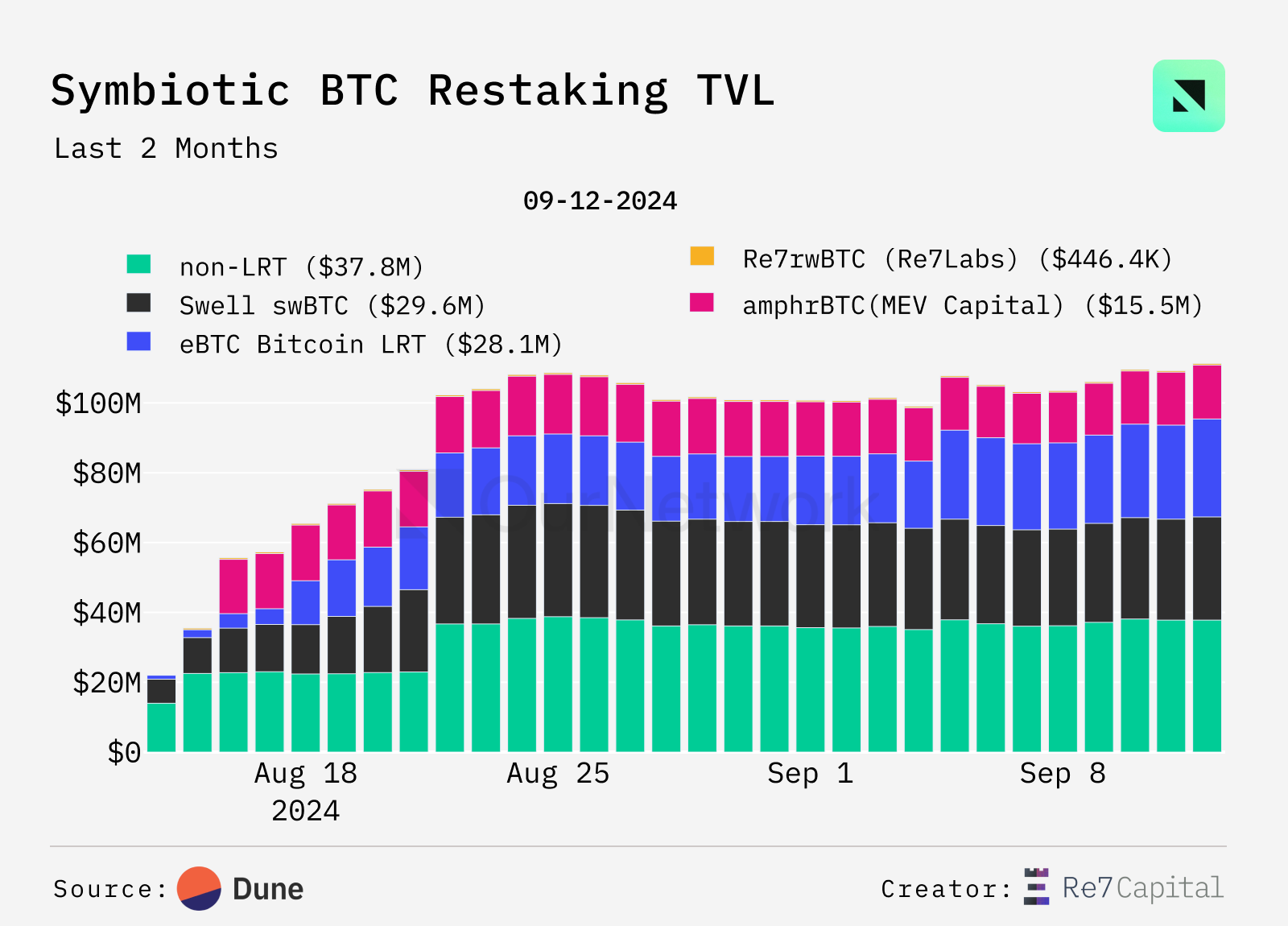
BTC re-staking has officially begun, and Symbiotic is one of the main platforms for depositing BTC. In the past month, more than $100 million in BTC has been deposited, and Re7, Ether.fi, and Swell's BTC LRT have driven this explosive growth.
Trading highlights: Yield trading using Re7LRT remains active. This large investor has set fixed income of more than 300 ETH through Pendle, a yield-splitting agreement, with Re7LRT expiration dates in September and December.
Karak
Karak’s ETH TVL has remained stable at 280,000 for nearly 3 months
Karak is the third-largest heavily-collateralized protocol by total value locked (TVL), maintaining a steady 280K ETH in deposits, but has not seen significant new inflows over the past three months. This is likely due to difficult market conditions and the emergence of competitors like Symbiotic, which launched later than Karak but now attracts three times as much ETH. To keep up, Karak has accelerated the process of introducing new assets.
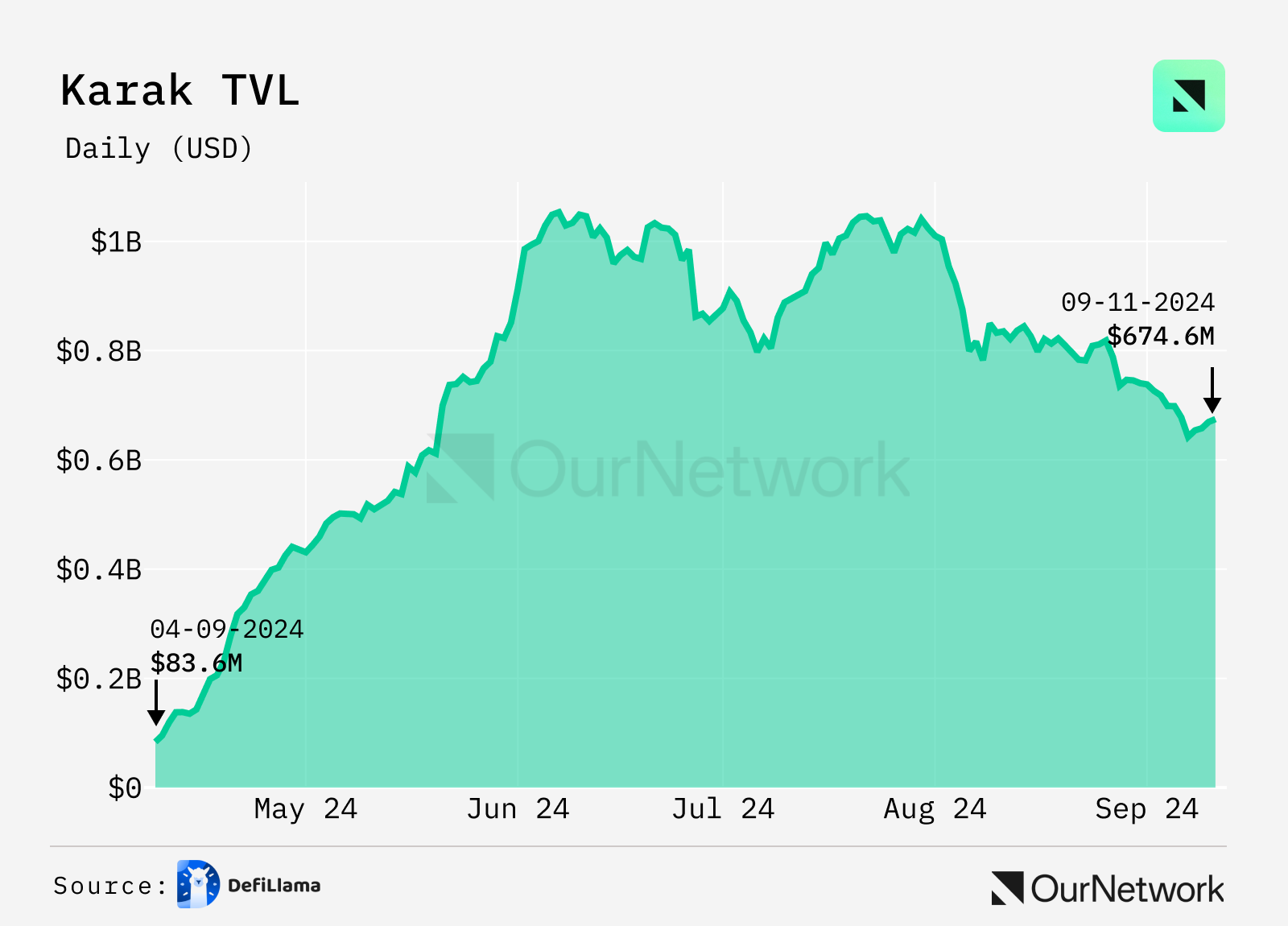
In the past 7 days, users have withdrawn 6,025 ETH from Karak, showing a lack of growth compared to its competitors. Users may have chosen to withdraw funds due to the decline in the attractiveness of Karak’s points program.
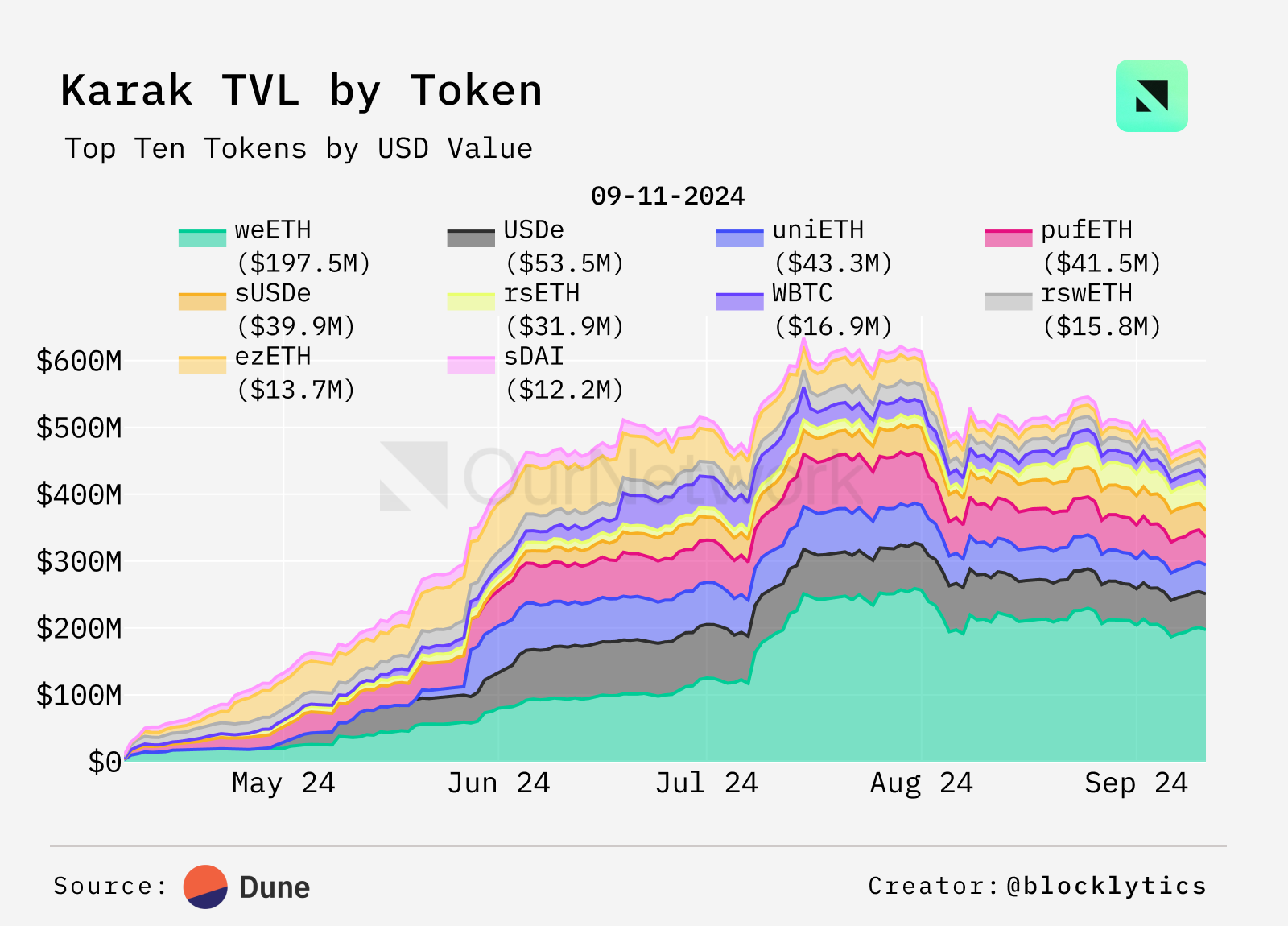
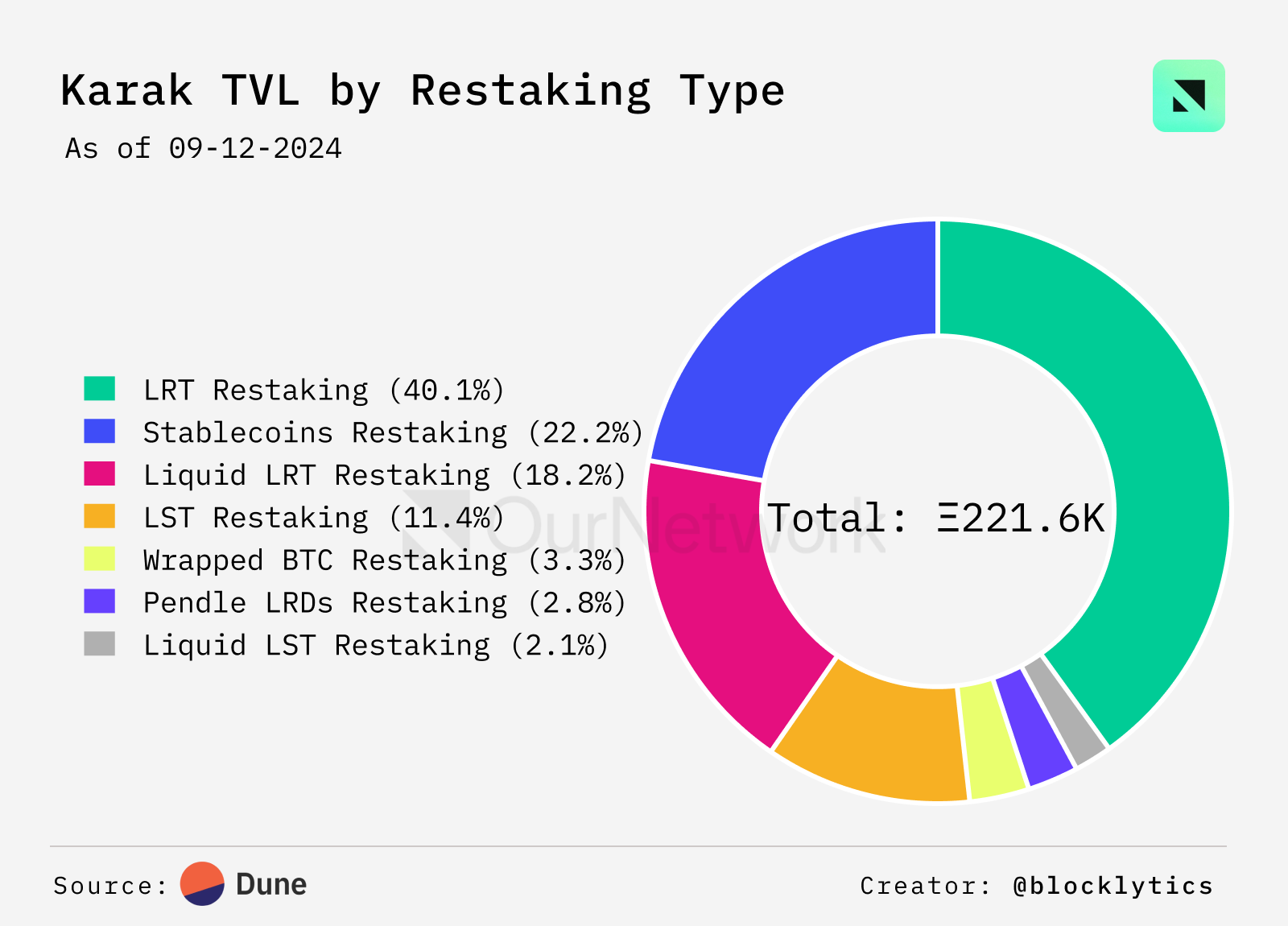
The pie chart shows that EigenLayer’s LRT and Pendle’s LRT derivatives account for a significant 61% of Karak’s total locked value (TVL). Given this significant dependency on competitor assets, Karak may need to explore new strategies to mitigate the risks associated with such dependencies.