


According to politico, a new HBO documentary claims to have cracked the true identity of Satoshi Nakamoto, the anonymous creator of Bitcoin, but HBO's promotional materials do not explicitly make this claim.
Those most commonly suspected of being Satoshi Nakamoto include the late software engineer Hal Finney, systems engineer Dorian Nakamoto, computer scientist Nick Szabo and the inventor of Hashcash Adam Back. However, Len Sassaman is currently ranked number one on the prediction website, far ahead of everyone else.
Who exactly is Len Sassamanv is fully described in this article.
We have lost too many hackers to suicide. What if Satoshi was one of them?
In every Bitcoin node, there is an obituary embedded. This obituary was embedded in the transaction data and became a memorial to Len Sassaman - a person who was almost immortalized on the blockchain. This commemoration couldn’t be more appropriate.
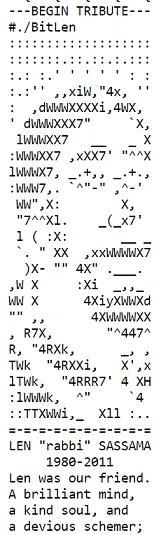
Len is a true cypherpunk - smart, fearless and idealistic all at once. He has devoted his life to defending personal freedom through cryptography. He has participated in the development of PGP encryption and open source privacy technology, and as an academic cryptographer, he studied P2P networks under the guidance of blockchain inventor David Chaum.
He is also a pillar of the hacker community: a friend and influencer of many important figures in the history of information security and cryptocurrency.
Losing Satoshi
By all accounts, Len would have become one of the most important cryptographers of his time. But on July 3, 2011, he tragically took his own life at the age of 31 after battling long-term depression and functional neurological impairment.
His death coincides with the disappearance of the world’s most famous cypherpunk, Satoshi Nakamoto. Two months before Len's death, Satoshi sent their last communication:
I have moved on to other things and may not be around again.
After 169 code commits and 539 posts in one year, Satoshi disappeared without explanation. They left behind a pile of unfinished features, a heated debate about their vision for Bitcoin, and a fortune worth $64 billion in BTC that remains untouched.
We've lost too many hackers to suicide. Aaron Swartz, Gene Kan, Ilya Zhitomirskiy, James Dolan. They are all victims of an epidemic of shame and depression that is also taking its toll on technological progress itself. Imagine if the creator of Bitcoin died before completing it. If that were true, what would they bring to the world if they were given the care and respect they deserve?
I hesitate to speculate on Satoshi's identity because discussions surrounding the topic often range from misguided to ridiculous and even unethical. However, with Craig Wright falsely claiming to be the creator of Bitcoin, it behooves us to revisit this topic and put the focus back on the cyberpunks who actually built Bitcoin.
No matter who Satoshi is, they are undoubtedly "standing on the shoulders of giants" - Bitcoin is the accumulated result of decades of research and discussion in the cypherpunk community. In this sense, Len is certainly an indirect contributor. But we still have to ask, who wrote the code, ran the first node, and released the content under the pseudonym Satoshi?
In order to synthesize and implement the many ideas on which Bitcoin is based, that person or team must have unique expertise spanning public key infrastructure, academic cryptography, P2P network design, practical security architecture, and privacy technology. They are likely to have deep roots in the cypherpunk community and strong connections to those who have had a major impact on cryptocurrencies. Finally, they need ideological firmness and hacker spirit to "roll up their sleeves" and anonymously build a real-world system that has previously remained in the realm of theory.
When I look back on Len's life, I see many of the same traits. I think Len may be one of the direct contributors to Bitcoin.
With cryptocurrencies receiving unprecedented attention, I hope to bring more awareness to the “unsung heroes” we should be grateful for. I also hope that we will reflect on how important it is to pay attention to mental illness, especially those functional neurological disorders that should receive more attention.
origin

Even as a young man, Len was a self-taught technologist specializing in cryptography and protocol development. Although he lived in a small town in Pennsylvania, by the age of 18, Len had joined the Internet Engineering Task Force responsible for the Internet's foundational TCP/IP protocol, which later became Bitcoin. The foundation of the Internet.
"I always looked a little special because I was smart." Len was diagnosed with depression as a teenager. Unfortunately, he experienced traumatic treatment by a psychiatrist that "bordered on abuse" during treatment, an experience that may have left him with a deep distrust of so-called authority figures.
In 1999, Len moved to the Bay Area and quickly became a fixture in the cypherpunk community. He lived with Bram Cohen, the creator of Mojo and Bittorrent, and contributed to the legendary cypherpunk mailing list where Satoshi first announced Bitcoin. Other hackers remember him as a smart and light-hearted man who chased squirrels at a cypherpunk party and drove a sports car with a "get out of jail free card" in case he was pulled over by the police. when used.
In San Francisco, Len is dedicated to defending personal freedoms and privacy through direct action in technology and politics. At 21, he made headlines for organizing protests against government surveillance and supporting the jailing of hacker Dmitri Skylarov.
PGP
Early in his career, Len stood out as an authority on public-key cryptography, which is the foundation of Bitcoin. By 22, he was already speaking at conferences and founding a public-key cryptography startup with noted open source activist Bruce Perens.
After the startup collapsed in the dotcom bust, Len joined Network Associates to help develop PGP encryption, which was crucial to Bitcoin. In 2001, during the release of PGP7, Len was responsible for setting up interoperability tests for the OpenPGP implementation, which brought him into contact with many important cryptography pioneers. Len also contributed to the OpenPGP implementation of GNU Privacy Guard and invented a new encryption protocol with PGP inventor Phil Zimmerman.
When introducing Bitcoin, Satoshi said he hopes Bitcoin can become "the same thing in the currency world" that strong encryption technologies such as PGP play in file security.
Generations ago, multi-user time-sharing computer systems faced similar problems. Before the advent of strong encryption, users had to rely on password protection...
Then strong encryption started to spread to the masses and trust was no longer necessary... Now, it's time to have the same thing in the currency world.
Hal Finney

At Network Associates, Len worked with Hal Finney on PGP. Finney was the second developer of PGP and helped establish RFC 4880, the OpenPGP interoperability standard. He is also the earliest and most important Bitcoin contributor after Satoshi:
- Finney was the first person besides Satoshi to contribute to the Bitcoin code and implement a Bitcoin node.
- Finney was the first recipient of Bitcoin (sent to him by Satoshi himself).
- Finney invented the concept of “Reusable Proofs of Work” on which Bitcoin mining is based.
- Before Bitcoin was released, Satoshi communicated extensively with Finney. In their last few interactions, Satoshi openly expressed his respect for Finney.
Not surprisingly, Finney is one of the most popular candidates for Satoshi, even though this means he needs to fake numerous email interactions with Satoshi while contributing to Bitcoin under both his real and fake identities. In addition, Finney continued to work for Bitcoin after Satoshi "left" in 2011.
remailer
Len and Finney share a very rare and related skill: they are both developers of remailer technology, one of the precursors to Bitcoin.
Introduced by David Chaum along with cryptocurrencies, remailers are specialized servers used to transmit information anonymously or pseudo-anonymously. The use of remailers is very common when participating in cypherpunk mailing lists, which themselves are built on decentralized remailers.
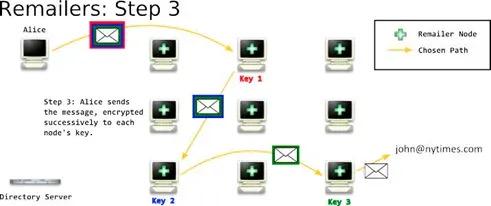
Early remailers simply forwarded information and masked the identity of the sender, while later protocols (such as the most popular Mixmaster remailer) relied on decentralized nodes to distribute fixed-size encrypted information blocks through the P2P network. Bitcoin's architecture is very similar to a remailer, except that its nodes transmit transaction data rather than messages. In 1997, crypto-anarchist founder Tim May even proposed a digital currency based on a remailer.
As the main developer, node operator and main maintainer of Mixmaster, Len is a leading expert in remailer technology. He also worked as a systems engineer and security architect on the Anonymizer privacy protection project, implementing similar technologies.
The remailer is not only the direct predecessor of Bitcoin technology, but also the basis of its intellectual history. In the article "Why Remailers," Finney argues that remailers are the foundation of the anonymous digital economy.
The remailer is the "base layer" of this intellectual edifice—it gives us the ability to exchange messages privately without revealing our true identities. This way we can conduct transactions, present credentials, and reach agreements without having to worry about government or corporate repositories tracking our every step.
One of the cypherpunks' visions includes being able to conduct transactions anonymously, using "digital cash." … This is another area where anonymous email plays an important role.
Operators of remailers were among the first to realize the need for cryptocurrencies: due to the lack of anonymous payment methods, remailers had to be implemented at the operators' own expense. This raises scalability issues and allows spam and abuse to become the norm. Because of this, the basic concepts of many cryptocurrencies stem from the need to build an abuse-resistant, for-profit remailer:
- In 1994, Finney proposed that remailers could be monetized through anonymous "coins" and "cash tokens."
- The first discussion of smart contracts was in the context of preventing remailer abuse. Nick Szabo's forward-looking smart contract paper published in 1997 specifically mentioned Mixmaster.
- Ian Goldberg and Ryan Lackey (two important people known to Len) are the main figures in the remailer community. They developed an unfinished cryptocurrency called HINDE in 1998. Ian later built several early electronic cash clients, and Ryan became Tezos' chief security officer.
Therefore, Satoshi's second post on Bitcoin mentioned that "paying to send emails" is the first practical use case of Bitcoin.
Initially, it can be used in nearly free proof-of-work applications.
It can already be used to deliver email for a fee. The send dialog box is resizable, allowing you to enter messages of any length.
Adam Back
In the small remailer community, Len has also interacted with Blockstream CEO Adam Back - the first person to communicate with Satoshi.
Back's interest in cryptocurrencies stemmed from operating remailers, and he invented the HashCash proof-of-work system for remailers to use to combat spam and DDoS attacks. Satoshi later used HashCash as the basis for Bitcoin mining.
We know that Len worked directly with Back, who is listed as a contributor to one of Len's research papers and a Mixmaster memo. They all participate in multiple OpenPGP implementation projects and are related to each other in each other's PGP trust network.
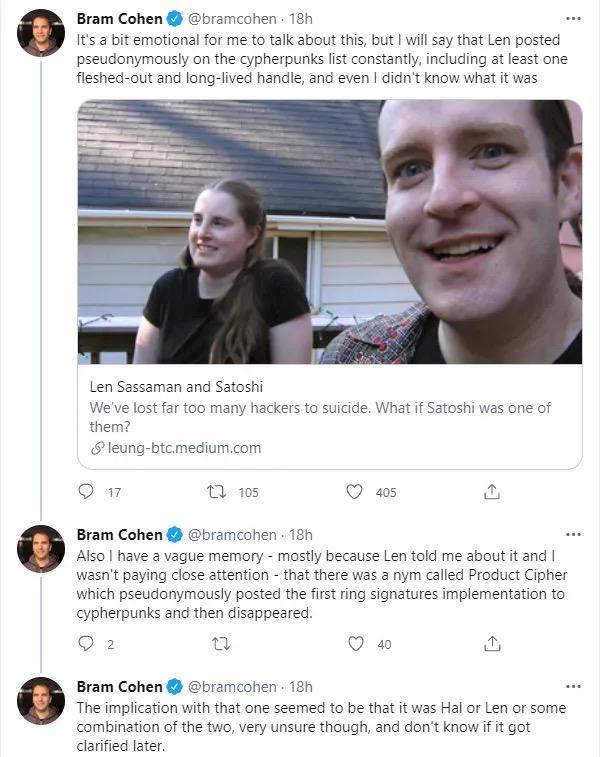
Interestingly, Back himself has hinted that Satoshi may be a remailer developer, noting that these developers "[practice] their own technology" and participate in encryption protocol discussions in a pseudo-anonymous manner. Unlike many cyberpunk figures in discussion, we know that Len has contributed extensively and pseudo-anonymously on the cyberpunk mailing list via a remailer.
Chaum and COSIC
After high school, Len worked to support his family and never had the opportunity to attend college. However, in 2004, he managed to land his "dream job" as a researcher and PhD candidate at the Computer Security and Industrial Cryptography Research Group (COSIC) at KU Leuven in Belgium.
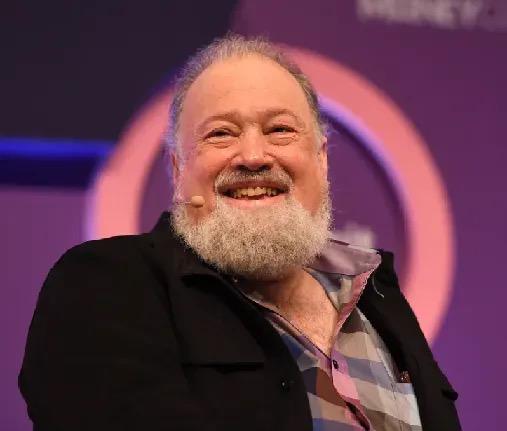
At COSIC, Len’s doctoral supervisor was David Chaum, the “father of digital currency”. While Chaum laid the foundation for the entire cyberpunk movement and all cryptocurrencies, few can claim to have worked directly with him.
Several of Chaum's key accomplishments include:
- Cryptocurrency was invented in the paper "Blind Signatures for Untraceable Payments" published in 1983.
- Invented blockchain in his 1982 doctoral thesis, which described all but one of the elements of blockchain in the Bitcoin white paper.
- He created Digicash, the first electronic cash system, with anonymous payments between digital avatars as his core vision.
"[Chaum] is at the center of a seemingly unstoppable movement - the digitization of money... The wild card in the era of digital currency is anonymity, and David Chaum believes that without anonymity, we will be in trouble."
Although Digicash failed (in part because of its reliance on a centralized system), Chaum hopes to build a second digital currency that can provide both anonymity and utility.
Although many saw its failure as evidence that digital cash is not viable, Satoshi defended the "old Chaum currency" while acknowledging the troubles caused by centralization issues.
Many people automatically view electronic money as a hopeless thing because all related companies have failed since the 1990s. I hope it's obvious that those systems failed simply because of their centralized nature.
Len's research
Len worked at COSIC in Belgium until his death in 2011. During this time, he amassed a distinguished record of 45 publications and 20 conference committee positions.
Len's research focuses on developing and writing actual code for privacy-enhancing protocols with "real-world applicability." His main project is Pynchon Gate, a collaboration with Bram Cohen, which is an evolved version of remailer technology that performs pseudo-anonymous information retrieval through a decentralized network of nodes without trusting a third party.
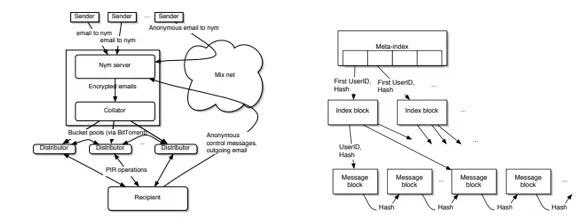
This project is closely related to Bitcoin - as the research on Pynchon Gate progressed, Len gradually focused on solving the Byzantine problem, which was one of the main obstacles in the early P2P network.
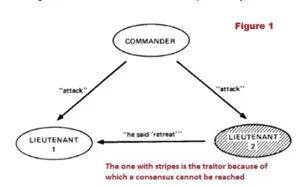
In the context of decentralized computing, Byzantine fault tolerance refers to the ability of a network to remain functional even if a node is destroyed or becomes unreliable. The Byzantine problem is one of the biggest problems that needs to be solved to ensure that cryptocurrency systems can be secure and decentralized without double spend or trusting third parties. The most important innovation of Satoshi is to successfully solve this problem by introducing the blockchain proposed by Chaum and proposing a "triple accounting" system.
During the development of Bitcoin in 2008–2010, Len became increasingly active in the field of financial cryptography. He has joined the International Financial Cryptozoology Association and has spoken at the Financial Cryptozoology and Materials Conference and served as a committee member. The conference was founded by Robert Hettinga, an early advocate of digital cash, and digital cash was one of the main topics discussed at the conference.
Satoshi as a scholar
There are many clues that Satoshi may have worked in academia during the development of Bitcoin, a view supported by Gavin Andersen, founder of the Bitcoin Foundation.
"I thought he was an academic, maybe a postdoctoral researcher, or a professor who didn't want to attract attention."
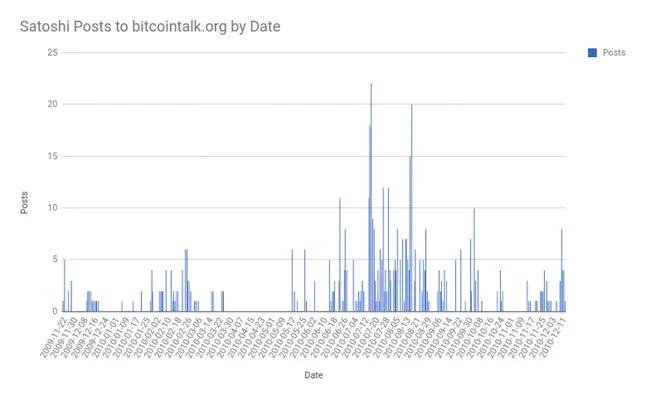
Satoshi's coding contributions and comments increase significantly during the summer and winter holidays, but decrease significantly during the final exam period in late spring and at the end of the year, consistent with academics having more time during the holidays and being busy with exams or grading at the end of the semester.
The unique structure of Bitcoin's code also points to Satoshi's academic background. The code was described as "excellent but not rigorous" and did not adopt conventional software development practices like unit testing, but demonstrated cutting-edge security architecture and a deep understanding of academic cryptography and economics.
This person has a deep understanding of cryptography... they've read academic papers, have a sharp intellect, and combine these concepts in truly innovative ways.
When renowned security researcher Dan Kaminsky first reviewed Satoshi's code, he attempted penetration testing using nine different vulnerabilities, but to his surprise, Satoshi had anticipated and patched these issues.
"I design beautiful exploits, but every time I attack the code, there's a line in the code that addresses the problem... I've never seen anything like this."
This may indicate that Satoshi and Kaminsky share similar information security experience and expertise. Coincidentally, Len and Kaminsky co-authored and published a paper demonstrating methods of attacking public key infrastructure.
In addition, the Bitcoin white paper was released in a format not commonly seen on the Cyberpunk mailing list - it is a LaTeX-formatted research paper with academic features such as abstract, conclusion and MLA citation format. This contrasts with the irregular blog post style of other proposals such as Bitgold and b-money.
Satoshi in Europe
Since COSIC is located in Leuven, Len lived in Belgium during the development of Bitcoin. That's important because some facts suggest Satoshi may also be in Europe, which was a major focus of the New Yorker's early investigation.
Satoshi's writing style has typical British English spelling and word usage, such as "bloody difficult" (very difficult), "flat" (flat), "maths" (maths), "grey" (gray), and dd Date format of /mm/yyyy. However, Satoshi also mentioned the euro rather than the pound.
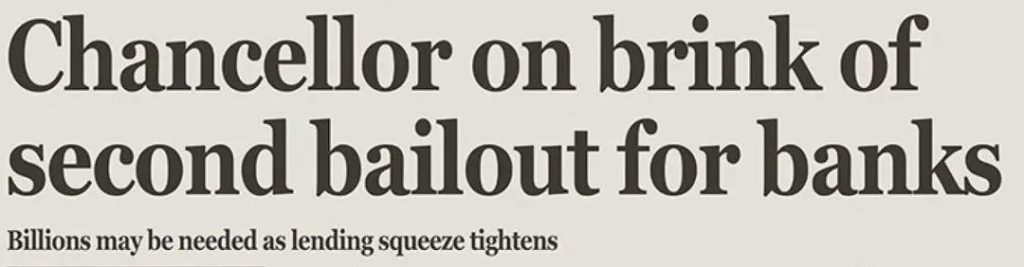
Bitcoin’s Genesis Block also contains a headline from The Times that day (“The Times January 3, 2009: Chancellor on edge of second bank bailout”). The headline refers specifically to that day's print edition, which is only distributed in the UK and Europe. In 2009, The Times was among the top ten newspapers in Belgium and is widely used by academics and researchers due to its wide availability in libraries and its detailed indexing system.
These clues present a paradox: they imply that Satoshi is European, but the person with the skills needed for Bitcoin and exposure to its major influencers is more likely to be American. Most of the conferences and gatherings of the cyberpunk community are concentrated in the United States, especially San Francisco, so many important figures are from the United States. Job opportunities for gaining experience in front-end information security and encryption technologies are also mostly concentrated in the United States.
Oddly enough, even though Len is American, he uses British English exactly the same as Satoshi.
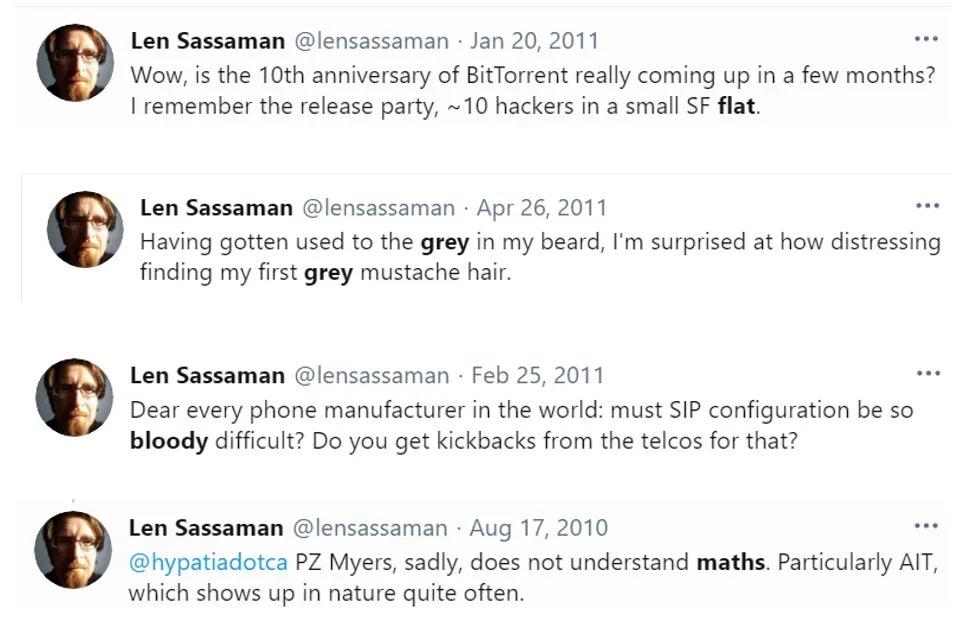
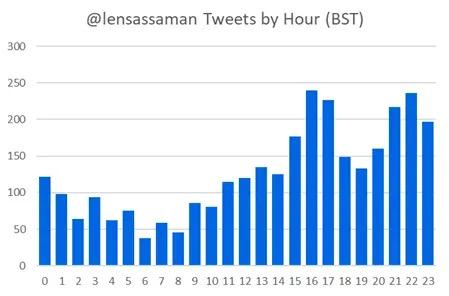
Analysis of Satoshi's posting history shows that he is a European "night owl" who usually devotes himself to Bitcoin development work after completing work or school during the day. At one point, Satoshi mentioned that the increase in mining difficulty happened “yesterday,” which would obviously not be true if he lived in the United States.
Assuming Satoshi's life is more than Bitcoin, he leaves his home computer during the day while working or studying... If Satoshi lives in the British Summer Time (BST) time zone, he works mostly at night, usually until the early morning hours.
When we look at Len's tweet history, we can see that Satoshi's posting times and code submission times are very close to Len's late-night activity.
P2P network
Although Bitcoin is not the first cryptocurrency, it is the first cryptocurrency based on a completely P2P decentralized network. Satoshi emphasized this point when he first mentioned Bitcoin:
I have been developing a brand new electronic cash system that is completely peer-to-peer and does not rely on any trusted third parties.
Dan Kaminsky said that to build Bitcoin, Satoshi had to "understand economics, cryptography, and P2P networks," and Len had unusual early exposure to and in-depth understanding of these three and their application in digital currency.

While in San Francisco, Len lived and worked with Bram Cohen, the creator of the P2P protocol BitTorrent. Between 2000 and 2002, Bram developed a revolutionary P2P network called MojoNation, which used "Mojo Tokens" as a digital currency, making it one of the first publicly released digital currencies.

In MojoNation's P2P economy, tokens can be used to exchange file storage. The files will be encrypted and encoded into "blocks", uploaded to the decentralized node network, and recorded on a public ledger, which is consistent with Bitcoin's There are similarities with decentralized bilateral accounting systems. Mojo is not just an internal accounting token, but a full currency - convertible into US dollars and vice versa. Some of the earliest token economic discussions centered around the mechanics of the Mojo token.
A Mojo represents part of the overall capabilities of the current system. If you work for me now, I'll give you points, and in the future when the network gets bigger, those points will represent part of a bigger pie, so their value will increase as you use them.
Satoshi discusses token economics in a similar way:
It has the potential to create a positive feedback loop; as the number of users increases, the value rises, which may attract more users to take advantage of this increased value.
Despite MojoNation's vision, its economic system quickly collapsed due to hyperinflation. Satoshi deliberately designed Bitcoin to avoid this fate, ensuring its stability through a built-in deflation mechanism and no reliance on a central "minting" server.

In 2001, Bram launched BitTorrent. As a P2P alternative to Napster, BitTorrent foreshadows Bitcoin's own decentralized node topology, consensus system, and protocol layer incentive mechanism. BitTorrent not only innovated networks like Gnutella technically, it also drove design through economic incentives and game theory.
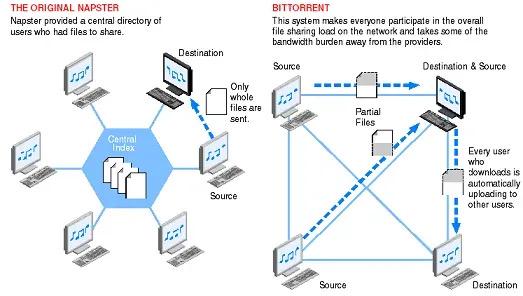
Presciently, Len once told Bram: "BitTorrent will make you more famous than [Napster founder] Sean Fanning." Satoshi later mentioned Napster to explain the need for a completely decentralized network.
Governments are good at cutting off the "heads" of centralized networks like Napster, but pure P2P networks like Gnutella and Tor seem to be self-sustaining.
Coincidentally, both Len and Tor founder Roger Dingledine participated in the development of the Mixminion remailer protocol. The two also jointly demonstrated at the Black Hat conference and co-founded the HotPETS conference.
In 2002, Len and Bram co-founded a conference called CodeCon, which focused on "projects with actual working code." At CodeCon 2005, Finney demonstrated "Reusable Proof of Work" (RPOW) through a modified BitTorrent client, which can transfer P2P digital currency. One commenter described it as:
... The world's first transparent server, which enables a decentralized, cooperative RPOW server world.
Digital currency was an important theme at the first CodeCon, which also featured Adam Back's HashCash and Zooko's demo of Mnet, a fully open source and decentralized successor to MojoNation. MojoNation is not tied to a single company and can be independently audited, both attributes Satoshi considers crucial.
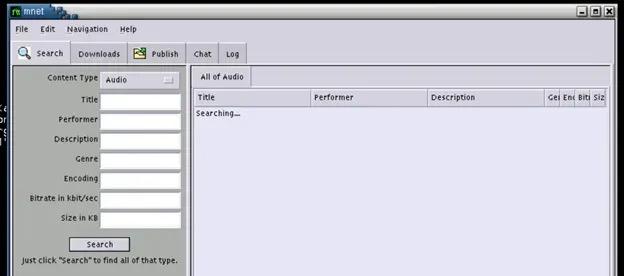
MojoNation co-founders Zooko Wilcox and Jim McCoy are also influential in the cryptocurrency field. Zooko was one of Satoshi's early collaborators and worked for David Chaum's Digicash. When releasing Bitcoin v0.1, Satoshi also linked to Zooko's blog on Bitcoin.org. Zooko later founded the privacy-focused cryptocurrency Zcash and proposed the much-discussed "Zooko Triangle" framework.
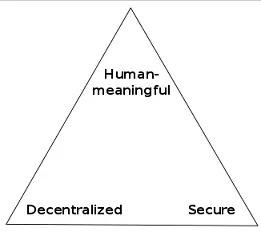
McCoy is also a major influencer in the cryptocurrency space, with Digital Currency Group’s Ryan Selkis even stating that he believes McCoy could be Satoshi.
hacktivism
Even by the standards of the cyberpunk community, both Len and Satoshi exhibit particularly strong ideological convictions and a strong commitment to open knowledge.
I hope you won't always talk about me... Maybe you can focus on open source projects and give more recognition to developer contributors.
Satoshi's "hacktivist" approach to distributing Bitcoin through a free, open-source grassroots project stands in stark contrast to their predecessors. Chaum, Stefan Brand, eCash and others took a completely different approach: filing for patents, creating closed-source venture capital firms, and trying to drive adoption through corporate partnerships.
This approach has similarities to Len's own extensive contributions to open source projects, such as his contributions to projects such as PGP, Mixmaster, GNU Privacy Guard, and his volunteer work experience with organizations such as the Shmoo Group.
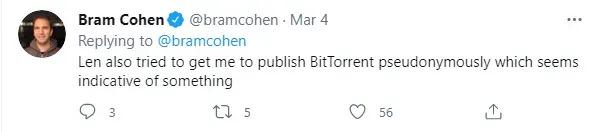
Satoshi mentioned their ideological leanings in several remarks, saying that Bitcoin is "very attractive" to the libertarian perspective and that it could "win a major battle in the arms race and gain years of new freedoms." territory".
Len is equally passionate about championing open knowledge and technological progress against interference from business and government.
The pursuit of knowledge is a fundamental part of being human. Any form of prior restrictions, I think, is an infringement on our freedom of thought and consciousness. So not only do I hope we can avoid overly restrictive, reactive legislation... I also don't want to see anyone create a framework that could be misused.
ending
Just as Satoshi created Bitcoin behind a pseudonym, Len was to some extent forced to live behind his own mask. Following an incident in 2006, Len began suffering from increasingly severe non-epileptic seizures and functional neurological problems, which exacerbated the depression he had struggled with since his teenage years.
A victim of stigma, Len "feels like he has to maintain this facade of superpowers," and he's "very afraid" that his deteriorating health will end his work and disappoint the people he cares about.
Despite these challenges, Len continued to work until a few months before his death, writing papers and even giving a lecture at Dartmouth University. Sadly, he succeeded in hiding the severity of his situation from almost everyone.
"Very few people knew it had gotten to this point... Something I heard over and over again was, 'We never knew, it looked like he was OK.'"
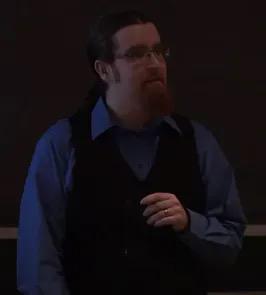
Just as Len builds on the ideas of those who came before him, we sense that he is committed to building things that transcend himself, which is one of the reasons for his dedication to open source and open knowledge.
"This is our legacy, these studies, these ideas, are leading us towards knowledge that has never been available in human history. We will pass this on to future generations. We have to make sure that we are not pushed into a situation where we cannot distribute the research Give others a blind spot and ensure this research doesn’t get locked up in the vaults of intellectual property lawyers.”
Len's death in 2011 was a huge loss to cyberpunk and the tech community as a whole, as was evident in the outpouring of memories and condolences that followed. One in particular stood out to me: a post on Hacker News by user "pablos08".
“Len and I became friends and were co-conspirators on cyberpunk, which was a wild front end at that time. We were reimagining our world as filled with cryptographic systems that would use mathematics to defend what we hold dear. Freedom. Anonymous remailers are used to protect speech from the threat of retaliation; onion routers ensure that no one can censor the Internet; and digital cash supports a radically free economy. We design plans to decentralize and distribute everything.
We imagine complex and obscure threats to problems we might one day face; we build future protocols to defend against these threats. It's all a highly academic exercise in geeky utopia. And I usually keep it that way, but Len wanted to really get involved.
Cypherpunks write code. "





