Author: RedStone; Translated by: Jinse Finance xiaozou
1. Abstract
● The restaking narrative first gained public attention at DevConnect 2023, and its adoption has skyrocketed since then. The restaking industry has grown exponentially from a single enterprise, EigenLayer, to a thriving ecosystem with numerous restaking platform providers, operators, liquidity restaking protocols, and risk experts across various crypto networks.
● Restaking is still a new concept, and the community should pay close attention to second-order effects, market dynamics, and challenges that may arise. It is now clear that restaking has developed into a major sub-industry, and there is a lot of room for competition in the restaking field. From core platforms such as EigenLayer, Symbiotic, Babylon, and Jito, to liquidity restaking protocols and DeFi derivatives, each company has its own unique approach and vision. The restaking market proves that this is not a "winner takes all" market.
● Liquidity Re-Pledge Protocols (LRTs) are often compared to Liquidity Staking Tokens (LSTs), but they are fundamentally different. LSTs bear homogeneous economic risks, while LRTs deal with heterogeneous economic risks. LSTs have a uniform risk associated with the underlying asset (i.e. ETH), while LRTs are subject to multiple risks, such as specific AVS factors (such as inflation, slashing conditions, and technical risks), while supporting various collateral types and processing payments in multiple currencies.
● The entire year of 2024 may be seen as the year of the "Bitcoin Renaissance", with many teams enabling Bitcoin holders to expand Bitcoin's economic potential to protect the security of other networks without relying on third-party trust or bridging other chains. Babylon is leading this trend, unleashing the crypto-economic power of Bitcoin through strong technical expertise. A growing ecosystem has formed around Babylon, including emerging Bitcoin liquidity staking players such as Lombard, Solv Protocol, PumpBTC, etc.
● The Solana staking industry has not received much attention due to the widespread adoption of Ethereum, but it is steadily growing with a brand new concept. On Solana, restaking has gained traction, with Jito Network leading the way, and companies such as Solayer, Cambrian, and Picasso also developing shared security projects. These initiatives aim to fill some of the gaps on the road to full decentralization of the Solana native protocol.
● Oracles play a critical role in the rehypothesis space at multiple levels. They can be part of the core design of a rehypothesis platform while also addressing the growing need for accurate pricing of new crypto rehypothecation assets with different economic and technical characteristics. Additionally, oracle networks provide one of the most compelling use cases for shared security. Rehypothecation collateral allows for innovations beyond traditional oracle design, such as enhancing network resiliency and service quality by increasing the cost of data operations, or creating new price feed models powered by a cost-effective rehypothesis data availability layer.
The main projects and institutions are shown in the figure below:
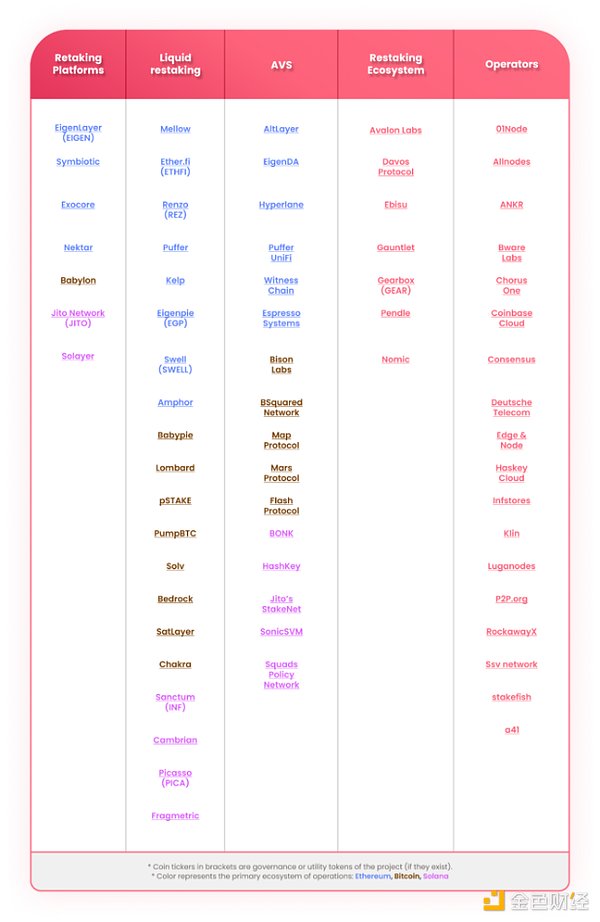

As the author of this article, I would like to express my sincere gratitude to all the contributors, projects, and key opinion leaders who helped us write this comprehensive report on the restaking landscape. Without these people, this article would not have been possible to achieve the depth and breadth it has - thank them and everyone else who helped!
2. Introduction to Restaking
EigenLayer is the pioneering force in Restaking.
It’s hard to believe that EigenLayer and the broader restaking activity have been in the public eye for over a year now, since EigenLayer launched its deposit functionality in June 2023. To date, the restaking industry accounts for about a third of Ethereum’s total TVL. However, don’t let this stat fool you — the seemingly simple idea of scaling economic security to multiple networks is extremely challenging to actually implement. The complexity lies not only in integrating the primitive so tightly with the blockchain’s consensus layer, but also in evaluating and predicting the second-order effects of this new and unknown concept. Before diving into these topics, let’s take a step back and briefly review the groundbreaking role of restaking and EigenLayer.
While complex and multi-dimensional, EigenLayer can fundamentally be understood as a generalized, bilateral decentralized trust market. Built on Ethereum, arguably the most extensive programmable decentralized trust network, it initially focused solely on decoupling Ethereum’s trust layer, allowing its components to be redeployed for different purposes. The structure of EigenLayer is built around its bilaterality. On one side, we have Active Verification Services (AVS) — systems that require their own verification process and form the demand side of the EigenLayer market. This includes a variety of technologies across all parts of the stack, such as sidechains, data availability layers, new virtual machines, keeper and oracle networks, bridges, threshold encryption, and trusted execution environments. Some notable examples of AVS include EigenDA, Witness Chain, and RedStone Oracles. On the other side are Restakers, ETH native stakers who stake ETH natively through Liquid Staking Tokens (LSTs) or the recently introduced permissionless support for any ERC-20 token, and opt-in to EigenLayer’s smart contracts for restaking. They form the supply side, extending the security of the crypto economy to more network applications while earning additional rewards.

Throughout 2024, EigenLayer has made significant progress in achieving its ambitious vision, quickly becoming known as the permissionless coordination engine for humanity. Earlier this year, the company announced a $100 million Series B round, which enabled founder Sreeram Kannan and his team to rapidly scale and bring in top experts in various related fields. With sufficient resources to support, the team was able to accelerate the development of the "Infinite Games" project. Building on this momentum in the second half of the year, EigenLabs acquired Rio Network to further leverage the deep expertise of the crypto-native team to enhance the EigenLayer ecosystem. In addition, in 2024, they also launched the much-anticipated EIGEN token, which was launched under the innovative stakedrop concept, marking a major milestone in the history of crypto. Subsequently, an independent, shareholder-free entity, the Eigen Foundation, was established to promote the development of the EigenLayer ecosystem. EIGEN recently implemented the transferability feature and managed to attract a lot of attention in crypto. EIGEN brings a novel token use case, aptly named Intersubjective Security, which is essentially a sophisticated way to provide forks as a service for non-L1 protocols. In addition, EigenDA is now live on mainnet, providing an amazing throughput of 10MB per second. To put this into perspective, it is hundreds of times higher than the native performance of Ethereum's protodanksharding data availability, all of which is achieved at a fraction of the cost. EigenDA also pioneered innovative support for re-staking of L2 network native tokens, a strategy that can be described as aligning incentives between key L2 participants, giving them a significant advantage in the fierce DA war. With so much innovation happening on all fronts, even seasoned crypto observers will find it quite challenging to keep up with EigenLayer. Some other notable developments include the launch of AVS mainnet rewards and the introduction of Programmatic Incentives, a new reward mechanism for stakers and operators who support multiple AVS, drive demand, and help share security price discovery. In addition, EigenLayer has proposed a new penalty design and continues to develop its governance structure to further strengthen its ecosystem.
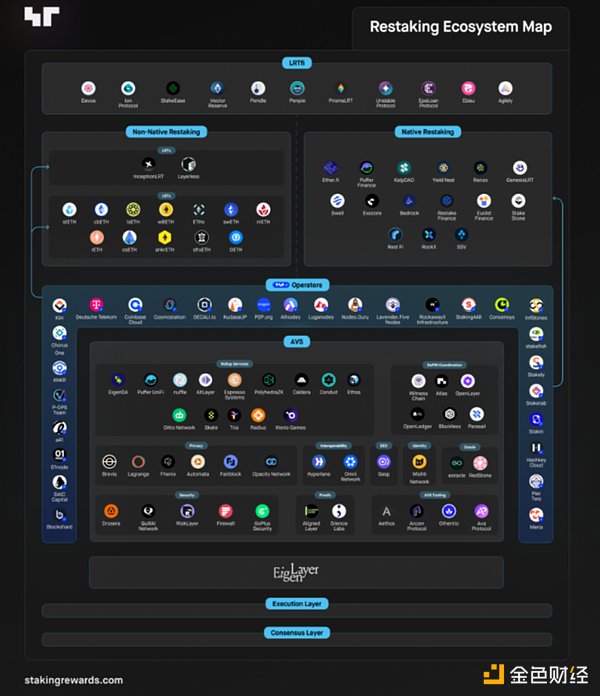
The EigenLayer team are true visionaries who have pioneered such a complex new structure that opens countless doors for blockchain innovation. We are grateful to work closely with the EigenLayer team, build as AVS, and support the broader ecosystem with our solutions. However, no one could have anticipated all the second-order effects, market dynamics, and challenges that needed to be overcome to make restaking a true new primitive. It is clear that restaking will become an important part of the industry, and there is a lot of room for players across the restaking space, from core reinvestment platforms and liquidity restaking protocols to aggregators, DeFi derivatives, and more. Each business has its own unique approach, technology stack, and ideology. The purpose of this article is to provide a comprehensive and detailed overview of the current expanding restaking landscape.
(1) Symbiotic’s re-pledge journey
Symbiotic is the new kid on the restaking block. Launched in early 2024, it quickly caught the attention of the crypto community, gaining significant mindshare in the restaking space. Backed by a team of top crypto veterans, Symbiotic’s momentum was further fueled by a massive seed round led by Paradigm, positioning it as the “Uniswap of restaking.” The project also received strong support from the founder of staking giant Lido, with some viewing it as a proxy for Lido DAO in the restaking wars, further driving initial deposit interest. Symbiotic’s strong market demand is evident, with the deposit cap being reached within four hours of initial growth, tripling its TVL. The protocol currently sits at a staggering $1.7 billion in TVL, just a few months after it began accepting deposits. But what exactly sets Symbiotic apart from other restaking platforms, especially EigenLayer?
Initially, the permissionless support for any ERC-20 asset (such as Ethena's USDe or Frax's FXS), even those not based on the Ethereum mainnet, caught the public's attention. However, from the beginning, EigenLayer embraced the concept of shared security derived from almost any crypto asset. Now that this has been deployed in the protocol, users have to dig deeper to find the differences between the leading re-staking platforms.
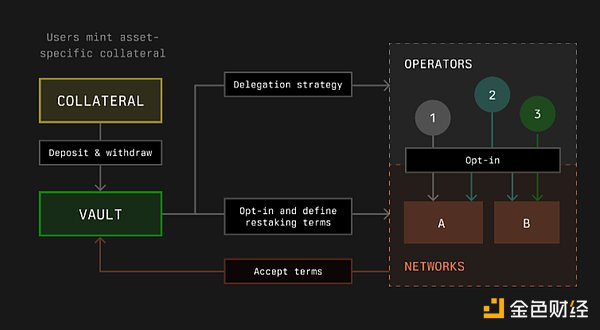
Symbiotic’s modular design provides extensive customization for all aspects of re-staking:
● Restakers:
Restakers re-stakeholders can delegate assets other than ETH and choose a trustless Vault (in the context of Symbiotic, Vault refers to the token pool deposit contract), outsourcing security to AVS. These Vaults allow adjustable parameter updates to ensure user protection. Symbiotic is unique in that it can deposit collateral into immutable, pre-determined Vaults, ensuring that the terms will not change in the future. Unlike EigenLayer, Symbiotic provides the option to mint corresponding ERC20 tokens to represent each vault.
● Network (AVSs):
Networks can work with top operators with verified credentials, choosing based on reputation or other important criteria when seeking security. Flexibility in collateral selection expands the security pool and potentially reduces the security cost of the network. Network builders, including projects involved in bridges, rollups, MEVs, and application chains, have full control over their own re-staking deployments. They can define aspects such as collateral assets, selection of node operators, rewards and penalties, all of which are included in Symbiotic's simple design.
● Operator:
Operators can secure security through a broad base of re-stakers with varying risk tolerances without having to build out separate infrastructure. This allows for greater customization of shared security while minimizing the technical and economic overhead of the protocol.
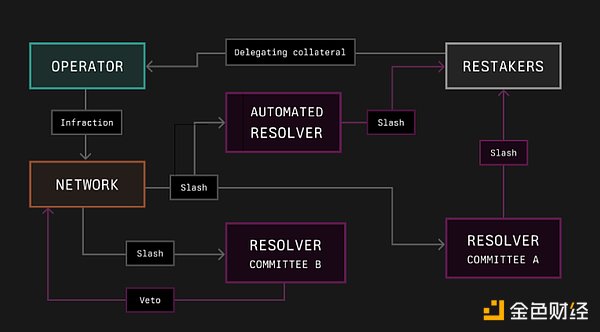
Additionally, Symbiotic provides flexibility in handling slashing events by introducing a new class of entities called Resolvers. Similar to the Slashing Veto Committee in EigenLayer, Resolvers can veto slashing when it is misused. The terms of AVS are proposed by Resolvers, and the recipients of the terms are vaults that provide collateral backing to the operator. Vaults can request multiple Resolers to handle collateral, or integrate with oracle-based dispute resolution (such as the RedStone Oracles framework).
Another key factor driving the platform’s growth is its strategic partnership with Mellow Protocol. Mellow is a leading liquidity re-staking protocol that is fully aligned with Symbitics, allowing for the permissionless creation of modular LRTs. Traditional LRTs often force users to take on a single risk when they choose multiple shared security networks, which fails to meet the diverse needs of users and over-exposes them to a variety of risks. By supporting a wide range of risk profiles, Mellow externalizes risk management, thereby creating a modular infrastructure for the creation and management of LRTs. The list of risk curators already includes well-known names such as RE7 Labs, Steakhouse, MEV Capital, P2P, Chorus One, and Renzo Protocol. In addition, DeFi partners such as Pendle and Gearbox are helping to further accelerate the momentum of Symbiotic and Mellow Points. Currently, Mellow Protocol has attracted $700 million in locked value, almost half of Symbiotic’s total TVL.
Symbiotic understands that the core value proposition of shared security lies in the decentralization of new and existing networks. As blockchain networks and protocols become more complex, Symbiotic recognized early on that it would become increasingly difficult to decentralize all the core parts of different technology stacks. To address this, Symbiotic focused on its core product, the restaking platform itself, rather than trying to promote adoption through additional internal services or native restaking. This focused approach has driven huge demand on both the restaking supply and demand sides.
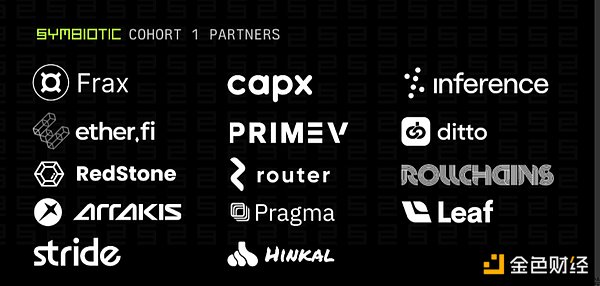
Symbiotic recently announced its first batch of partnerships, an astonishing 40 partnerships built on the system, including outstanding teams such as Ethena, Frax, Etherfi, and our RedStone Oracles team. We will support Symbiotic in three key ways:
● Provide oracle price feed to Symbiotic core module to implement USD-denominated tokens
● Explore the RedStone data aggregation network
● Support other networks on Symbiotic using our data feed
(2) Liquidity Re-Pledge Agreement: Binding Force of Re-Pledge
Many people believe that Liquidity Restaking Protocols (LRTs) are the same as Liquid Staking Protocol(LSTs). On the surface, they look very similar, allowing users to deposit primarily ETH or its derivatives and outsource the technical responsibilities of being a validator to a dedicated entity while still receiving the majority of validator rewards. Early in the restaking journey, it was impossible to restake without first staking ETH natively, which reinforced the perception that LRTs were just an additional staking layer with similar risks.
This couldn’t be further from the truth. LRT and LST are completely different primitives. For those familiar with traditional finance, the difference between them can be described as follows: LST is like a passively managed vehicle, such as an ETF, where risk is homogenized. Each protocol manages the same fungible underlying ETH pledge, just as an ETF reflects the volatility of its underlying index. In contrast, LRT is more like a hedge fund, dealing with heterogeneous risk factors, such as assessing specific AVS risks - such as inflation rates, slashing conditions, and technical risks - while also supporting a variety of collateral and processing AVS payments in different currencies. In addition, there are differences in the underlying re-staking platforms supported by each LRT (e.g., EigenLayer, Symbiotic, etc.).
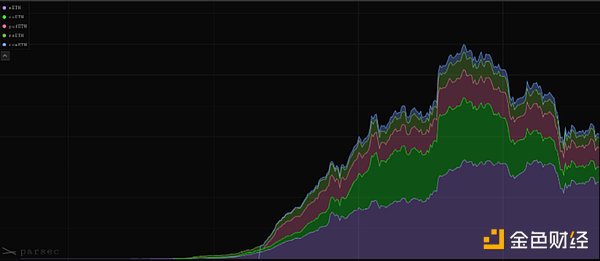
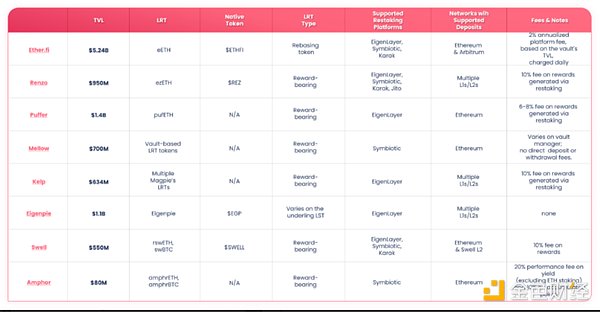
Liquidity re-staking protocols act as intermediaries between the two main re-staking participants, re-staking and operators. LRT acts as a distribution partner for operators and re-staking platforms, managing capital allocation and controlling the relationship between the two on both ends of the re-staking, which gives them significant power in the ecosystem. The LRT market operates differently from the LST market, which is currently dominated by a single player, Lido, where stETH has acquired currency-like characteristics and competes with native ETH for the status of base currency. In contrast, LRT requires a fully mature ecosystem to attract capital to its platform. This is why many protocols are pursuing vertical integration, such as Etherfi, which has launched multiple investment products such as DeFi strategies and credit card services, Swell has developed an L2 that uses re-staking tokens to pay gas fees, and Puffer's UniFi aims to unify all L2s through a rollup-based approach. LRT also faces the challenge of aligning the amount and duration of funds with the security needs of each network. They work closely with AVS to accurately determine the shared security needs of each network. The key consideration is how much security AVS needs and for how long. This is critical because no network wants to experience severe security fluctuations or pay too much for more security than is actually necessary.
As we can see, there are many different LRTs. The following table aims to illustrate the differences between the core liquidity re-staking protocols:
(3) Re-staking platforms you may not know about
Restaking is quickly becoming a crowded arena, with new projects emerging almost every month, each looking to solve industry bottlenecks in a unique way. Here are some notable projects:
● Karak Network
Karak is currently the third largest re-staking platform by TVL with a current TVL of $800 million. It has gained tremendous traction and support in the crypto DeFi community. The Karak network stands out by accepting the most diverse collateral, including LST, stablecoins, ERC20 tokens, and even LP tokens. Collateral can be stored across multiple chains such as Arbitrum, Mantle, BSC, etc. In the Karak ecosystem, the network that provides security is called a Distributed Security Service (DSS). These DSS are highly customizable and have built-in support for streamlined development. Karak's technology stack also includes a risk management L2 called K2, which serves as a sandbox for the DSS builder.
● Exocore
Exocore uses a full-chain approach to solve the fragmentation problem of re-staking. Instead of limiting security to a certain chain, Exocore aggregates cryptoeconomic security across multiple chains to secure AVS. It runs as a re-staking L1 and is managed by a network of validators, which makes it unique. Exocore claims that its main advantage is that it handles complex staking logic at the protocol level, which greatly reduces smart contract vulnerabilities and reduces user risks.
● Nektar Network
Nektar is another big player in the re-staking space, with a team with extensive experience in the staking industry. Prior to launching Nektar, the team developed the Diva LST protocol and pioneered distributed verification technology (DVT). Now, based on the Diva technology stack, Nektar positions itself as Resilient reaking, focusing on decentralization through Diva's fully distributed verification process. This approach reduces the centralization risks associated with proprietary tokens and promotes a more balanced validator network. Nektar also announced the launch of the first batch of re-staking vaults powered by Angle Protocol and Re7 Capital.
● Verio
Verio is the newest entrant into the re-staking space, launching on the back of Story Protocol’s impressive Series B funding round. With the motto “IP Re-staking,” Verio is positioned as Story Protocol’s staking hub, offering a dual-staking model that combines liquidity staking with IP re-staking. Users can stake IP assets in exchange for vIP tokens, earning yield while maintaining liquidity. These vIP tokens can then be re-staked against specific IP assets to earn additional rewards. By verifying the legitimacy of new IP assets, Verio drives Story Protocol’s own overall interests through IP re-staking, which could create a flywheel effect, increasing licensing fees and royalties for IP owners.
3. Bitcoin staking and Babylon
Until recently, Bitcoin holders who wanted to participate in DeFi had to rely on wrapped tokens like wBTC, which greatly limited their liquidity options. Using wrapped Bitcoin requires trusting an intermediary to issue the asset and maintain a 1:1 peg to Bitcoin. While this innovation is important, it comes with some drawbacks, such as the inability to use BTC natively on the Bitcoin network, which is the most secure way to hold BTC. However, recent advances in Bitcoin staking now allow Bitcoin holders to secure Proof-of-Stake blockchains by staking their assets directly on the Bitcoin network. This means that users can now leverage the cryptoeconomic security of Bitcoin to secure PoS networks built specifically on the Bitcoin network.
(1) Introduction to Babylon Pledge Agreement
Babylon is a shared security protocol that supports Bitcoin as collateral in the PoS ecosystem, allowing BTC to secure PoS chains without relying on non-native BTC assets held on the PoS chain. In the first deposit window, Babylon reached its initial cap of 1,000 BTC. Its subsequent Cap-2 program was a huge success, attracting up to 23,000 BTC, worth $1.6 billion. Babylon is comparable to EigenLayer, but instead of re-staking ETH and ERC-20 tokens, it outsources the economic security of Bitcoin. Babylon is a two-sided marketplace that uses Bitcoin as a bridge to secure PoS chains through staking. Its remote staking protocol provides strong security guarantees for PoS chains (consumer chains) and Bitcoin holders (providers) through novel mechanisms such as timestamp protocols, finality tools, and bond contracts. Babylon's Bitcoin staking protocol is modularly designed and can be applied to a wide range of consensus protocols used by consumer chains. Any blockchain network that wants to leverage the security and liquidity of Bitcoin can benefit from Babylon. Currently, its use cases are similar to re-staking platforms on other networks such as DeFi, rollup, and oracle networks.
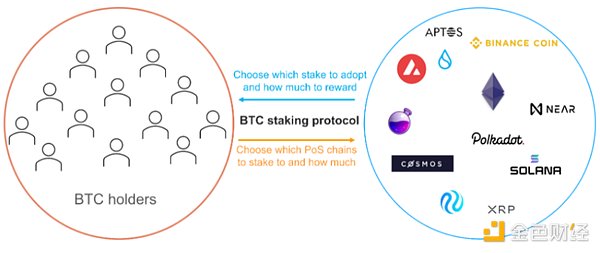
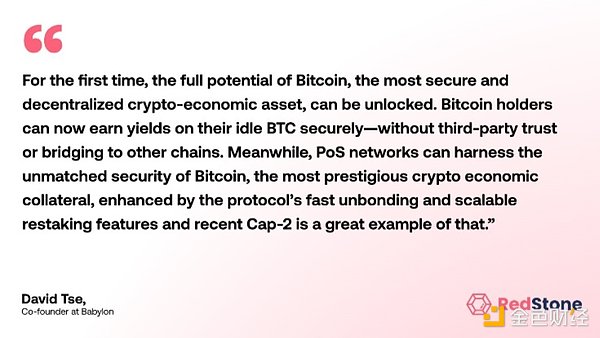
Often referred to as "digital gold," Bitcoin is the world's most valuable and secure cryptocurrency, known for its leading role as a decentralized peer-to-peer digital currency. Bitcoin's strengths lie in prioritizing simplicity and security over additional features. With Babylon, Bitcoin's intentionally limited functionality can now be greatly expanded to protect the security of a variety of networks, sparking what some call a "Bitcoin Renaissance."
(2) Bitcoin staking pattern
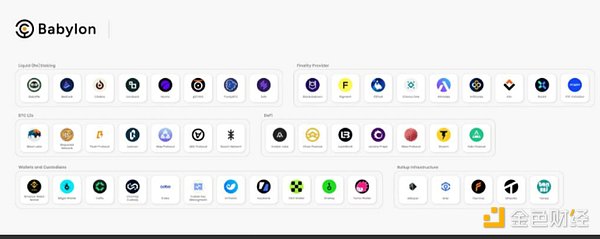
A large amount of Bitcoin is being actively allocated to Bitcoin liquid staking protocol on Babylon. For example, Solv, a leader in the field, holds more than 24,000 BTC in reserves, equivalent to nearly $1.6 billion in liquidity. In addition, PumpBTC's total locked value (TVL) has exceeded $200 million. Lombard has accumulated nearly 10,000 BTC in deposits. Other protocols, such as Bedrock, which supports the Bitcoin liquidity staking ecosystem, have an impressive $150 million TVL. However, the Bitcoin landscape goes far beyond staking protocols, and many teams are also working on Bitcoin native L2, DeFi protocols, wallets, and core infrastructure.
● Solv
SolvBTC is a tokenized representation of Bitcoin held in Solv's decentralized Bitcoin reserve, designed to enable Bitcoin liquidity to flow seamlessly across chains. It provides a vital liquidity infrastructure for the Bitcoin Finance (BTCFi) ecosystem. SolvBTC is deployed on five major networks, including the Bitcoin Mainnet, Ethereum Mainnet, and BNB Chain, and is a key liquidity provider with 24,000 BTC in reserve. This liquidity has attracted important players in the DeFi space, such as Bitcoin staking protocol Babylon, synthetic dollar stablecoin protocol Ethena, and other projects.
● Lombard
Lombard is committed to expanding the digital economy by transforming Bitcoin's utility from a store of value to a productive financial tool. Individuals and large institutions can access LBTC to earn yield on idle Bitcoin or fully participate in the DeFi ecosystem.
● PumpBTC
PumpBTC is a liquidity staking solution from Babylon that aims to integrate DeFi into the Bitcoin ecosystem. With an ecosystem-centric approach supported by experienced DeFi experts and industry-leading partners, PumpBTC simplifies the collaboration between users and Babylon. Users can stake on Babylon instantly with one operation through PumpBTC without any waiting period.
● pSTAKE
pSTAKE Finance allows users to stake BTC liquidity and earn rewards from Babylone trustless BTC staking, providing security for other application chains while maintaining liquidity. With the support of institutional custody providers such as Cobo, pSTAKE Finance provides professionally curated yield strategies that enable individuals and institutions to maximize their BTC potential within the BTCFi ecosystem.
● BabyPie
BabyPie provides BTC holders with the opportunity to increase returns and flexibility through liquidity staking. By depositing BTC on BabyPie, users can earn mBTC rewards and verify the new system through Babylon.
● Bedrock
Bedrock is a multi-asset liquidity re-collateralization protocol supported by a non-custodial solution developed in partnership with RockX. Bedrock offers products such as Liquidity Re-collateralization Tokens (LRT) for wrapped BTC, ETH, and IOTX.
● Chakra
Chakra Network is a modular settlement layer designed to unlock Bitcoin liquidity across different blockchain ecosystems. Chakra provides a high-performance parallel settlement solution that facilitates efficient liquidity flows across L2, application chains, and native BTC assets.
● Nomic
Nomic has launched stBTC, a liquid staked Bitcoin token built on Babylon’s staking protocol. stBTC enables users to stake nBTC (Bitcoin on Nomic) through Babylon to provide proof-of-stake security to other chains to earn Altcoin yield. Users who stake Bitcoin on Nomic through Babylon can receive NOM and nBTC staking rewards, which can be redeemed for BTC - a unique feature of the Nomic system.
4. Current Status of Re-Staking on Solana
So far, most of this article has focused on Ethereum, Bitcoin, and the EVM network. However, shared security is also showing momentum in the Solana ecosystem. Solana has had a remarkable year, emerging from the bear market and solidifying itself as a top contender for the settlement layer of the Ethereum blockchain. Like Ethereum, staking on Solana is one of the most important DeFi subcategories. However, Solana follows a different set of core dynamics. It uses a delegated proof-of-stake mechanism at the protocol level, enabling users to stake natively by delegating to validators rather than managing their own nodes.
The ease of native staking through Solana’s built-in delegation mechanism may help explain the large gap between Solana and Ethereum in terms of collateralized assets and liquid collateralized assets. With $50 billion in collateralized capital, Solana is strong compared to Ethereum, but lags behind in terms of liquid collateralization. While 55% of Ethereum’s collateral is in the form of liquidity, only 8% of Solana’s SOL is staked in liquid collateral tokens (LST), which presents a clear growth opportunity for Solana. Before diving into Solana’s re-staking flow, it’s important to highlight Solana’s current liquidity staking situation. Despite slower adoption, liquidity staking is not the only way for non-technical users to earn staking returns like on Ethereum, so LST has still reached a large enough scale on Solana. Jito and Marinade Finance dominate Solana’s liquidity staking, holding more than 70% of all SOL in LST. Sanctum is also worth mentioning because it follows a similar model to the Mellow protocol, allowing third-party entities to create and launch their own SOL staking derivatives. Behind the scenes, Sanctum solves the liquidity fragmentation problem by providing a stable exchange rate through its Infinity Pool and a simple withdrawal process for these derivatives.
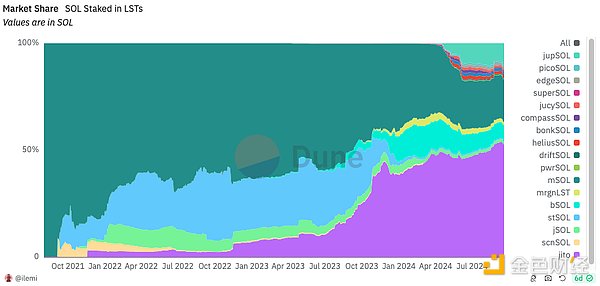
Now that we have a good understanding of Solana’s staking landscape, let’s dive into Solana Mantlets’ innovations in the re-staking space. Solana’s unique architecture opens the door to a new paradigm for AVS. One standout feature is Solana’s staking-weighted quality of service (swQoS), which introduces a new way to partition staking services. SwQoS rewards validators with over 15,000 SOLs, allowing them access to fast transaction channels for faster delivery to block leaders. This gives rise to two types of AVS: endogenous AVS and exogenous AVS.
Endogenous services enable faster transaction processing for a specific protocol. For example, a dApp can use the restaking layer to manage staked tokens and achieve faster transaction processing for its own operations. On the other hand, exogenous services are services that we are very familiar with in the Ethereum space, such as using external capital to secure the oracle network - in short, using restaking capital for purposes outside of the protocol. This further validates the idea that restaking on Ethereum and Solana may follow different long-term market dynamics.
So far, there are four major restaking providers on Solana. Here is our overview of who is most likely to be the ultimate winner.
(1) Jito
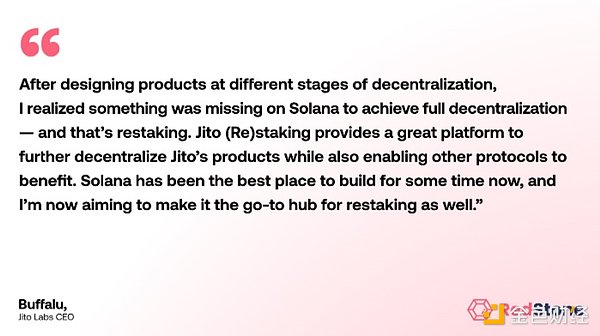
It’s hard to find anyone who denies that Jito is one of the strongest teams driving Solana forward. Initially described as “a combination of Lido and Flashbots on Solana,” Jito has dominated the chain’s LST market with its yield-generating jitoSOL, while also building its own Solana client. The Jito client has played a vital role in reducing extractable value on the network, enabling mass adoption and leading to significant growth in Jito validation earnings this year. But that’s not all, Jito continues to innovate, gradually launching its automated staking pool manager StakeNet and achieving rapid development in protocol governance.

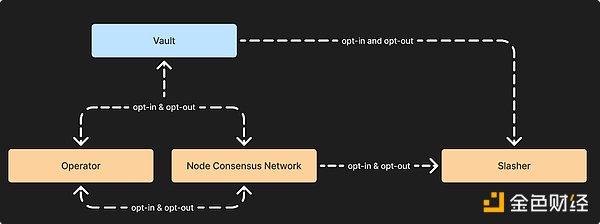
One of the most recent big projects of the Jito Foundation is re-staking. Jito Re-staking is the AVS multi-asset staking protocol, known as the Node Consensus Network (NCN). The modular setup allows NCN to customize the operators and vaults they support, while operators can customize the NCN they stake and the vaults they receive delegations from. The re-staking program also issues Vault Receipt Tokens (VRT), which are SPL tokens that represent a proportional share of the assets within the vault. VRT enhances liquidity, composability, and interoperability with other Solana programs.
Since Jito has captured a large portion of the LST market, the protocol has a built-in user base that can easily encourage users to further leverage their staked capital. In terms of collaboration, Jito has attracted technical teams such as Renzo, Squads, Switchboard, and Fragmetric. However, having already achieved significant growth and executed airdrops, Jito may not offer direct incentives to attract new users like new protocols. Instead, Jito's strategy may focus on increasing its re-staking adoption rate by integrating it with existing Solana client services. This may lead to the creation of MEV channels using swQoS, providing fast transaction channels and recapture MEV income, or the possible launch of an exogenous MEV service similar to MEV-Boost on Ethereum.
(2) Solayer
Solayer is emerging as the most powerful competitor to challenge Jito's dominance, recently raising $12 million in a seed round led by Polychain Capital. Since its official launch in May, Solayer has released jaw-dropping data: $200 million TVL, over 100,000 unique deposit addresses, and a mainnet launched before Jito, successfully attracting AVS such as Bonk, SonicSVM and HashKey to join. Solayer focuses on maximizing the return rate of re-stakers by providing multiple yield streams, including SOL native staking, MEV-boost and AVS yield. It also prioritizes optimizing swQoS block space for AVS. Currently, its solution is limited to native SOL and LST deposits, and Jito also plans to support various SPL tokens for economic security, which may be a significant advantage. However, Solayer also has some tricks up its sleeve: it recently announced a partnership with Binance to launch BNSOL derivatives and a partnership with Open Eden Labs to launch a yield-based SUSD stablecoin.
(3) Cambrian
Cambrian is another experienced team building re-staking infrastructure for Solana, with the goal of reducing costs, improving developer experience, and strengthening resource allocation for shared security beneficiaries. Cambrian’s strength lies in acting as a complementary middleware rather than competing with other providers. They are focused on solving the fragmentation problem of the re-staking layer by building an orchestration layer that automates AVS control policies. This allows builders to effortlessly manage the allocation of funds across nodes, lowering the threshold for dApp developers to navigate the complexity of AVS development. Cambrian aims to emulate the role of RaaS (Rollup as a Service) providers during the L2 boom, taking advantage of the growing demand for shared security while maintaining control through its re-staking track - providing them with a foothold to maintain control of direct relationships with all key participants. The platform’s first testnet is expected to be released this quarter.
(4) Picasso
Initially focused on seamless interoperability between Solana and Cosmos, Picasso has evolved into a full-fledged re-staking hub, supporting projects that want to outsource their economic security to the Solana network. Mantis is a prominent project using the Picasso re-staking layer, Solana’s own rollup. Leveraging the Cosmos SDK framework, Picasso not only connects IBC chains, enhancing their utility and security, but also serves as a universal re-staking hub. This full-chain re-staking layer pools liquidity from interconnected ecosystems to provide a more powerful shared security experience. It allows SOL and its LST to be re-collateralized between AVS that may not be directly aligned with the Solana ecosystem, but still value SOL’s asset attributes.
5. Re-stake Oracles in the Maze
Now that we have a solid understanding of the sheer size of the DeFi ecosystem, it’s clear that there are a ton of builders on all sides of the market, eager to create innovative products with this new technology. But no one wants to do it alone. The core value of the DeFi flywheel effect — interoperability — remains unchanged. Growth is not just about serving customers in a single dApp, but also about enabling other builders to build on your contracts and native assets (often called DeFi Lego). This requires an unbiased entity, one that specializes in pricing assets and distributing those quotes across multiple networks. Yes, we’re talking about Oracle providers.
If you look closely, one of the biggest strengths of the re-hypothecation industry, its diversity and widespread competition, also comes with a challenge: the pressing need to accurately price new crypto asset classes with different economic and technical properties. This requires a bottom-up evaluation framework, which we will discuss in depth in the next section. For example, consider the number of Ethereum LRT projects — there are more than a dozen projects competing for a piece of the Ethereum re-hypothecation pie. These LRTs are just the tip of the iceberg of re-hypothecation derivative assets. The re-hypothecation derivatives market is growing rapidly, with products like Pendle’s yield abstractions and Ebisu’s stablecoins backed by re-hypothecated assets. Each of these projects needs to provide an accurate price feed for their underlying product, which in turn improves utility, enhances liquidity, and creates new markets for their branded tokens.
(1) Re-pledged Asset Pricing Oracle
As mentioned before, staking and re-staking assets follow completely different dynamics compared to traditional crypto assets (BTC or ETH). Here are some of the key differences:
● On-chain market price discovery (based on DEX)
● Liquidity is the key mechanism for price stability, not trading volume.
● Advanced price modeling, i.e. basic price feed (exchange rate).
Now, let’s take a deeper look at why this is the case. Let’s take Ethereum’s LRT derivatives as an example to explain in detail.
● On-chain price discovery
Since restaking is truly DeFi native, the results are also DeFi native. Let’s look at LRT: The vast majority of LRT derivatives volume happens on-chain. Even for market leaders like Ether.fi eETH or Renzo eETH — tokens that are not listed on centralized exchanges — this means that all price discovery happens directly on their issuance chain. This means that in order to accurately price these DeFi native assets, DeFi calibration tools are needed. In the case of RedStone, this involves leveraging DEX liquidity to retrieve the most accurate exchange rate for a given block directly from the smart contract.
● Pricing by liquidity, not volume
Many yield assets, including re-hypothecation assets, are designed not for trading purposes, but for protocol and individual holdings. They provide a simple way to earn staking and re-hypothecation yields. Even for large LRTs, trading volumes are often too low to qualify as enterprise-level data providers (which rely on traditional financial methods such as volume weighting). However, the large amount of liquidity in the on-chain incentive pool has laid a solid foundation for the DeFi priority pricing model. Rather than relying on a volume-based valuation method, a more appropriate method is a slippage-based weighted method, which may cause long-tail asset orders to affect the accuracy of the valuation. The slippage weighted method monitors the skewness between DEX trading pairs and can provide a more accurate reflection of asset value.
● Advanced price modeling
Let’s say you’re an Ether.fi fan and decide to deposit a large sum of money into Gearbox’s weETH leveraged farming vault. In this case, determining the accuracy of the weETH/ETH exchange rate is critical to keeping your assets safe. But there’s a challenge here: defining the “correct” exchange rate is not as clear-cut as it sounds. You could aggregate weETH market quotes from relevant exchanges and update the exchange rate accordingly. But if your risk tolerance (or degen level) is high and your leverage is close to your liquidation point, even a slight market fluctuation lasting a few seconds (or more accurately, a few blocks) could force you to liquidate your position. On the other hand, you could consider a more basic approach that uses a contract-based exchange rate that reflects the amount of ETH locked in the Ether.fi contract relative to the issuance of weETH. This would certainly reduce the risk of short-term market manipulation, but may not be a perfect solution for all situations. For example, if Ether.fi withdrawals are disabled, it may be necessary to discount weETH tokens during a black swap event.
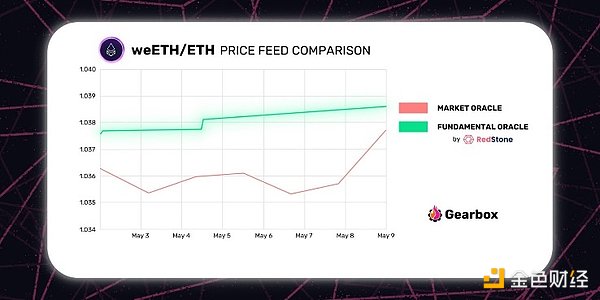
From there, you can go a step further and use a hybrid approach that combines market rates with base rates. This might require periodic snapshots of the contract rate, combining it with the market rate, and triggering an alert when the deviation between the two exceeds a certain threshold. Alternatively, you could use a TWAP (time-weighted average price) rate to smooth out volatility without relying on real-time market quotes.
You know where this is going — there’s a ton of complexity to all of these underlying factors. At the same time, there’s a lot of room for innovation in pricing this new and rapidly growing rehypothecation asset class.
At RedStone, we are very proud to be leading innovation in this area. We are working closely with top industry partners to establish the highest security standards and position ourselves as the market leader in the pricing of yield-generating assets such as LST and LRT tokens.
(2) Oracle to ensure the safety of re-staking
There are countless ideas for leveraging shared security to build applications that were not possible before. However, an important aspect of restaking is to enhance the security of existing protocols, allowing them to scale almost arbitrarily without compromising security, while achieving decentralization in a more economically sustainable way. There seems to be a consensus that securing oracle networks through restaking is one of the lowest hanging fruit and most impactful.
Why does an oracle need to re-collateralize security? Let’s review a use case where RedStone leverages shared security for a new feature.
● RedStone Push model AVS deployment
The RedStone AVS solution introduces a novel Push model deployment for delivering data to the blockchain. Traditionally, off-chain relayers collect data and send it to the network, where a verification process is carried out. While this approach is effective, it often results in higher on-chain data usage due to the need for a comprehensive verification process. With AVS, the verification process is moved off-chain, significantly reducing gas consumption. In this model, price data collected from Oracle nodes undergoes rigorous off-chain verification to ensure its accuracy and consistency. The verification process checks digital signatures to confirm the authenticity of the data. Afterwards, the AVS operator will verify the median price and timestamp to ensure that the calculation has not been tampered with. After the verification is completed, the results and signature confirmation are sent to the blockchain.
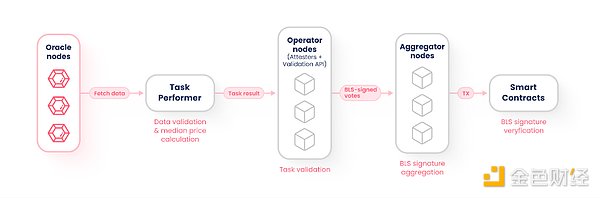
On-chain, only the BLS aggregate signature of the AVS operator is verified. This process greatly enhances the scalability of the solution because it allows data to be collected from an unlimited number of Oracle nodes. In the traditional model, the relayer selects a subset of prices close to the median to send to the blockchain. With the AVS approach, only the final median price and timestamp need to be submitted, so gas consumption remains low regardless of the number of Oracle nodes. This approach reduces on-chain costs and supports the system to process more data inputs without sacrificing efficiency.
This is just one of several re-staking deployments we are exploring to improve resilience and quality of service. Another area we are actively researching is increasing the cost of data manipulation in the RedStone Oracle Network by leveraging shared security in the data aggregation module. Our team is leading research at the intersection of re-staking and Oracle, working with industry leaders such as EigenLayer, Symbiotic, Othentic, etc. to maximize value, and making our lessons learned public in the hope of helping more friends.
6. Pledge the future again
With so much talent currently focused on the restaking space, it’s clear that this space will be in the news in the coming months. Here are some of our predictions for shared security within the ecosystem.
(1) No permission required for token support
We are already familiar with sourcing shared security from native assets like ETH, and more recently BTC, SOL, and their highly correlated equivalents like LST. However, the question of supporting permissionless tokens (supporting arbitrary crypto assets) remains unanswered. This trend is now being embraced by some of the major restaking platforms, such as EigenLayer, Symbiotic, Karak, and Jito. On the one hand, this greatly broadens the range of assets that can contribute to the security of decentralized networks, unlocking the cryptoeconomic potential of arbitrary tokens. In theory, this enhances the consistency and relevance of the entire ecosystem, bringing us closer to the goal of seamlessly abstracting security layers to meet a variety of needs. It also allows each AVS to have its own unique security profile that can be derived from any combination of tokens, and enables AVS to use its native token as a source of cryptoeconomic security, which may create a flywheel effect that was previously unattainable. On the other hand, this is still a relatively new concept, and for most restaking platforms, it is still an idea that has not yet been fully realized in practice. In addition, the potential for exploits needs to be carefully evaluated, as the attack surface may be much larger. Native blockchain assets tend to be larger than other tokens, which may create more opportunities for exploits.
(2) Confiscation
Slashing, the process of punishing validators for misbehavior, is a key part of the re-staking model. Slashing is like the popular prediction markets for expressing ideas. It’s easy to share your opinion on anything online, but unless your reputation is at stake, it’s not as important as “putting money behind your mouth.” Similarly, re-staking will have its “moment of truth” once the major players race to launch their solutions. Only then, after the test of time, will we see if re-staking can really live up to the high expectations. EigenLayer teases that its deployment is just around the corner, Symbiotic’s product is already in development and the team expects a release in Q4, and other teams are also busy behind the scenes.
(3) Fierce fighting
Restaking may not lead to a “winner take all” situation, but there certainly won’t be many platforms with a sticky, long-term user base. This is why the incentive mechanism of the protocol is crucial. Historically, as seen in the Curve war, the correct use of incentives has reshaped the DeFi landscape, or conversely, what might happen if the incentives are imperfect? As demonstrated by the legendary DeFi summer. We have seen similar signs of competition between shared security platforms, and we have carefully studied and conducted due diligence on the first version of Programmatic Incentives at EigenLayer. The following is for reference:
“At least 4% of the total EIGEN supply will be allocated to stakers and operators through upcoming programmatic incentives. These incentives will be distributed through a “rewards-boosts” approach, where stakers and operators will receive EIGEN in proportion to the amount of rewards allocated to them by AVS.”
It’s hard to imagine that there won’t be stakers trying to create their own version of the protocol incentives. We may soon see a flood of posts calling for a “re-staking war”.
(4) AVS becomes a reality
This feels like an inflection point where restaking is moving from a “cool theoretical concept” to a standard setting for cryptoeconomic protocols. Many protocols have been polishing for over a year now, and their work is almost ready to be released to the public.
The first iteration of EigenDA is already live, and other companies, including AltLayer, Witness Chain, Lagrange, and us at RedStone, have either already released their first versions of AVS products (although not permissionless) or are about to launch on mainnet. Soon, we will see other restaking providers launch AVS products, leading to a Cambrian explosion in the use of restaking security in practice!
7. Conclusion
Our team has been working on restaking since its early days, and a few things are clear: continued innovation and intense competition will continue. Restaking started as a way to build better decentralized products, enable new paradigms, and enhance existing protocols. Now, we see many restaking platforms moving towards a similar end goal. It will be very interesting to watch how the restaking ecosystem and its dynamics evolve in the coming years.