Interview: Blockmates
Translated and Compiled by: Sophon Asia

In October this year, Binance Labs announced an investment in Sophon, bringing its total funding to over $70 million. Sophon's mainnet is expected to launch next month, and its token will also be deployed soon.
So, how is Sophon unique compared to most of the new emerging public chains in the market? How will Sophon attract consumers' attention? Recently, the crypto media Blockmates had an in-depth conversation with Sophon's founder, SEB, to explore why Sophon is an important direction for the future consumer public chain.
The following is the full text of the podcast, approximately 7,000 words, with a reading time of about 5 minutes.
The Current State of the Crypto Industry
Host:
Today, we have invited Sophon's founder, Seb, to share his insights. Seb, how have you been recently? What are your goals? Can you introduce your project?
Before we dive deeper, I want to talk about the current state of the industry - we are at the peak of financial nihilism. The industry seems to be at a crossroads, and people feel confused, with MEME tokens currently being the hot topic. How do you view the current state of the industry? We can discuss both the current situation and future developments.
Seb:
Thank you for the invitation. In my conversations with friends around the world, I can feel the change in people's mindset. This year, the market's sluggish state has been quite evident, and although many new projects have been launched, the overall change has been minimal, especially after the ECC conference. This sentiment began towards the end of last year's bear market, and there were high expectations for 2024, but the market remains confused this year.
Although Web3 introduced many popular concepts in 2023, such as account abstraction and zero-knowledge proofs, the market vitality has not been as expected. Especially when I went to Asia, many people were asking, "What's next?"
The rise of MEME tokens is a product of this market atmosphere, as they provide a sense of excitement and new thrills for people, also reflecting the maturity of crypto culture, integrating various artistic and pop culture elements.
This culture is quickly manifested through MEME tokens, allowing people to express themselves and try to profit. This is similar to the previous NFT craze, with a constant stream of innovative projects. I believe that if we don't just take a nihilistic attitude, but explore the underlying motivations behind these phenomena, we will find many opportunities worth exploring.
The key is to focus on the infrastructure that supports these behaviors. In the previous cycle, platforms like OpenSea and Blur facilitated the financialization of NFTs. These were built on a solid infrastructure, and now tools like pump.fun make cultural expression even easier. We'll dive deeper into this later.
Sophon's goal is not to directly provide the final product, but to focus on building platforms and products that support user self-expression. Crypto users often have independent thinking traits and a desire for free expression. Therefore, by putting aside nihilism and seeing the potential of cryptocurrencies, we will discover many exciting opportunities.
Host:
From an external perspective, Sophon's performance is quite attractive. Through observing your brand presentation and interactions with the team, one can feel your unique style. Our brand and marketing team members are usually critical of projects, but they speak highly of you, indicating that your brand is indeed distinct.
Even in the current environment of constant change and challenges, we should not overlook the bright spots. These phenomena are precisely the areas that your team can delve into, especially the changes in on-chain user and consumer behavior patterns. Although it may seem tangential, it lays the groundwork for our subsequent discussion. Could you provide a brief overview of Sophon for readers who are not familiar with it? We will then dive deeper into the details.
Seb:
Thank you for the recognition of our brand and visual work. This is a deliberate strategy, where our creative team has full autonomy and collaborates with top design studios to create appealing works.
Sophon is a consumer and entertainment-focused public chain. Although technical discussions are inevitable, I prefer the public to understand its non-technical aspects. Sophon represents the next step in the crypto space, and my team is focused on leveraging selected technology stacks to build products.
I compare Sophon to the early days of Facebook, providing a unified account system and user interface where users can engage in comprehensive interactions. However, in the crypto space, the decentralization across various directions poses challenges for new users. Sophon's core goal is to bring the Web2 user experience and intuitiveness into Web3, creating a more valuable internet experience.
User Experience and Infrastructure Development
Host:
Why has the crypto industry been stuck in a cycle of infrastructure building? Have the developments in these infrastructures paved the way for projects like Sophon and helped achieve better user experiences?
Seb:
Although infrastructure can be dry, it is crucial. Just as submarine cables connect the internet or new building materials support skyscrapers, users focus on intuitive and wonderful experiences, not the technical details behind them. Our task is to leverage these infrastructures to provide users with a straightforward and simple experience. We hope that new users using Sophon can log in with a Google account, access a non-custodial wallet, and easily top up with a credit card, without needing to understand the technical details.
Our goal is to make everything simple and intuitive, just like Web2 applications. The crypto world often seems complex, and our job is to simplify the user experience while protecting their privacy and assets.
Host:
Just like the iPhone, through excellent UI/UX, users instinctively know how to operate it. How do you solve these problems? Do you have a vision and a team to achieve this goal?
Seb:
My background is in philosophy and history, and I've worked in the traditional finance sector. I focus on researching how crypto infrastructure can be applied intuitively, studying the interaction between users and technology, analyzing how tech giants' decisions impact user behavior, and aiming to apply these insights to the crypto field to make it more user-friendly and attract a wider audience.
Host:
Is Sophon's onboarding experience significantly different from existing crypto applications? For example, using Rabby to log in to an application may encounter various issues, such as concerns about website security and complex cross-chain operations.
These are the problems that crypto users currently face. How will Sophon simplify and optimize the onboarding process to address these issues? Can you solve these difficulties in the short term?
Seb:
There are multiple layers to the answer for this question. Through the use of the ZK Stack and the Elastic Chain, Sophon has achieved cross-chain asset consistency, such as USDC sharing the same contract across all environments using the Elastic Chain. This design simplifies multi-chain operations and enhances the user experience.
Nevertheless, users can still independently interact with the blockchain through tools like MetaMask. Tech-savvy users can delve into the underlying details, but we prefer to hide this complexity from the majority of users.
We plan to explore account abstraction and payment technologies to conceal the underlying complexity and attract more new users to the crypto space. We understand that early adopters are already present, but onboarding new users is key to achieving a sustainable business. These new users are our target audience, and they require a simple and intuitive experience.
Crypto-native users often switch quickly between different projects, and the market competition is fierce. To build a sustainable business, we need to focus on introducing new users. By creating an attractive user experience, we hope to convince more people to try the new crypto experience. This is the direction we are focusing on and working towards.
What Kind of Underlying Infrastructure Does Web3 Need?
Host:
Is Sophon more like a platform similar to Coinbase or Binance, rather than another L1 or L2?
Seb:
In the cryptocurrency field, Solana and Base are the most popular projects among retail users. Base is a Layer 2 project under Coinbase, serving as the gateway to cryptocurrency in North America, and it has enhanced the developer experience by leveraging the infrastructure provided by the OP Stack, demonstrating impressive performance. Solana is also constantly innovating, particularly in applications such as MEME coins.
While the protocols and network layers are developing well, there is still much room for innovation at the application layer. Sophon combines the efforts of protocols and networks to ensure a comfortable experience for crypto-native users and provide the necessary infrastructure.
New applications such as NFT auctions for space seats and AI girlfriends are being experimented with. Although not all innovations will succeed, they add diversity and interest to the field.
Host:
Do you think the core of public chains should start with financial applications and then build other content?
Seb:
I believe we can develop different business lines simultaneously. Some focus on short-term returns, while others focus on medium-term development. The initial users will typically be crypto-native users who participate in the early processes of the platform.
The initial users will be crypto-native users because they can exist on the platform from the beginning and participate in it.
For example, if Sony launches Sonium and integrates it into the PlayStation store or other platforms, they may attract non-crypto-native users, but this will need to be a focus in subsequent development.
When users interact with the front-end, they are actually interacting with a brand, an image, a culture, a community, and a concept. This is the most important thing, not the technology or system they are using. They care about the core platform and the applications built on that platform. Therefore, if you can provide consumer-friendly products related to consumers, you are more likely to attract non-crypto-native users on the first day.
For example, we are currently collaborating with some mobile game teams that have already released ready-made products on Google Play or the Apple Store, have product-market fit, and have user bases. They have already achieved downloads in the millions or even hundreds of millions. Now they are transferring their business logic to the blockchain. Collaborating with such companies and successfully converting their web 2 to web 3 business using the actual cryptocurrency infrastructure will change the game.
Prioritize Mobile Devices
Host:
Let's go a little deeper, are mobile devices important to you? People who often hear this topic may laugh, because I always bring it up, and there aren't many people in the crypto industry pushing for mobile devices, but as far as I know, most people in the Eastern world are using handheld devices.
Seb:
I don't know the exact statistic, so I don't want to fabricate anything, but from what I remember, 80% of the activity is now happening on mobile devices.
Just look at the advertising industry, traditional advertising has some difficulties because from the consumer's perspective, ads are now mainly appearing on platforms like Instagram, YouTube, TikTok, and content created by influencers in their bedrooms. The content production works are widely consumed. Therefore, if we are to build a product focused on consumer entertainment, we must consider people's current consumption habits.
Especially considering Generation Z, who are below the Millennials, and Generation Alpha who are below them. It's like the age of my nephew. If you want to build a forward-looking product, you have to consider the direction of the market in five years and ten years, who the customer base is, and how they consume the product. They are 100% consuming content on mobile devices.
Why Build on the ZK Stack?
Host:
Why choose ZK and Validium as the appropriate technology stack to achieve the invisible support of crypto infrastructure, can these technology stacks make you a more consumer-centric application, rather than opening the Phantom wallet in the browser extension and operating on Solana like others?
Seb:
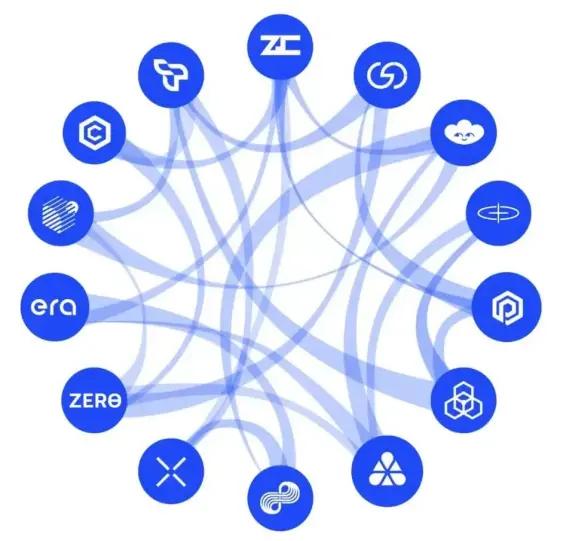
The ZK Stack has native account abstraction functionality, and account abstraction is the implementation of 4337 contracts, applicable to all blockchains except Starkware and ZK Sync, existing at the application level, and creating a second mempool. External accounts cannot use it like ZK Sync and Starkware.
The version of account abstraction they use is built into the core network layer, which means that everything that touches the network uses account abstraction. So in practice, when building something like a Paymaster, you can sponsor the gas fee, use different tokens to pay the gas fee, etc. This prepares the entire network to be more efficient, creating a mempool that external accounts can use.
This is particularly appealing because the chain's base token can be an ERC20, so Sophon's base token is the Sophon token. Few chains use their own token as the base token, such as BNB, Mantle, etc., and these tokens perform well because the token is the Gas Token.
This is very important for your token, because the token is part of the project, and of course you hope its value will rise. Therefore, Sophon's design is centered around consumer and entertainment applications that will generate a lot of transactions. So we hope to have applications that can generate a lot of transactions and directly use the Sophon token to pay. The ZK Stack allows us to achieve this goal. Although I have also researched the situations of other blockchain technology stacks, the efficiency is much lower and the cost is higher. We have to buy more ETH in the background, burn more of our tokens, which is not elegant enough.
User Registration and Usage Journey
Host:
So what will the Sophone user onboarding experience be like? Will you have your own native wallet, and can you describe the user flow so people can have a visual understanding?
Seb:
We are a bit different. No one will specifically visit Base.com to use Base, I'm doing the opposite, I want people to go to Sophon.xyz.
I hope the way Sophon is built is with wallet and network application functionality, including some chat features. The difference is that various features and characteristics will be provided to users to enable them to build a community culture and engage in goal-oriented interactions.
When you visit Sophon.xyz, you can use a Google account, a key, or a secure isolated login. All the content will be automatically created for you in the background, and of course you can also view settings or retrieve accounts if needed. But typically, the onboarding process will be very smooth.
Next, Sophon will be launched as a permissioned chain. This means that only protocols, companies, and projects approved by us can build on Sophon. Why? Because we are building a chain focused on consumers and entertainment, aiming to attract new users. I don't want users to face any risk of fraud, using the wrong protocols or sending to the wrong people. So the ecosystem must be closed, at least in the initial stage.
This way we can create a friendly and secure environment, allowing new users to experience cryptocurrency for the first time.
Sophon's First-Day Applications and Ecosystem Collaborations
Host:
So what will Sophon look like when it launches? Imagine the first day.
Seb:
In the initial stage, there will be a core DeFi ecosystem. Sophon is not a chain focused on DeFi, but DeFi is the foundation of the cryptocurrency field, so there will be an AMM, a lending market, and a perpetual contract protocol to ensure basic operation. Then we will focus on different vertical domains and sub-domains that we like, select some companies that we believe have potential, and support them as much as we can, including areas such as gaming, crypto technology, AI ticketing, sports betting, social betting, and so on.
The flagship protocol about to be launched is Aither, who are migrating all their infrastructure to the Sophon platform. Aither not only provides decentralized computing services, but also brings many potential features, such as supporting decentralized or open-source LLMs, which can be used for various purposes, which is exciting.
In addition, there are some other projects, including gaming, ticketing protocol Open, prediction protocol Rivalry, and social protocol Mirai, who will collaborate with us to launch. There are also some other plans that are about to be unveiled, which we plan to gradually roll out to showcase our continuous building and achievements, which is important for the community.
Here is the English translation of the text, with the specified terms retained and not translated:Recently, we announced that Binance Labs has invested in us, which has surprised many people, and the community feedback has been very positive, and we have also received more cooperation and construction requests.
However, I do not want to have 100 project ecosystems from the beginning, because I cannot effectively manage these projects. I realize this because I have done similar things before, and you cannot provide high-quality services, feedback and support for 100 projects at the same time.
Therefore, we plan to take it slowly, establish close cooperation with these projects one by one, and then consider the future development direction. For me, the most important thing is to have a platform that allows people to build applications on it. I think this is very important because it allows people to create their own communities, cultural circles and cultures. When building a culture, people will want to interact, so if the platform and products allow people to express themselves freely, it will be very powerful.
Host:
This approach is very reasonable. Choosing the right chain for deployment is challenging for partners and investment companies. There is often feedback that many chains have failed to deliver on technical support, core marketing, and it is unrealistic to manage 100 projects.
Teams usually want to connect directly with the chain, as the chain provides them with channels. If the chain builds its own community, these community members will be the first users. Users do not want to be exploited, so it is unrealistic to expect everyone to experience each project.
We can learn from the experience of Web2 on how to attract new customers, build communities and interact with users. These experiences can be applied to crypto, which is a huge opportunity. To increase user stickiness and retention, fresh content needs to be provided when a new ecosystem is launched. Sophon must go beyond the use cases of other chains and become an attractive platform.
Host:
Are there any interesting projects on the consumer side?
Seb:
There are many interesting projects emerging, such as AI virtual girlfriends, which show a dystopian trend, and some projects involve gambling, although some repeat similar concepts, but some are very bold.
A project called Sarah plans to send lucky winners on a space trip through a Non-Fungible Token (NFT) lottery, which is an interesting concept. This event is placed on the blockchain using NFTs as lottery tickets, ensuring the transparency and trustlessness of the event, and sparking people's imagination.
Although many novel ideas may not be feasible, I support this exploration of innovation, rather than investing in the tenth fork project of Uniswap v3. I look forward to collaborating with established brands to bring Web2 concepts and products into the crypto space. This innovation shows exploration and creativity for the future, which is exciting.
Host:
Do you have any understanding of the current interest in integration in the Web2 domain? Some small companies acquire global brand endorsements by paying fees, which may seem monotonous. However, some collaborative projects do bring more authentic experiences to people. Are you aware of the current interest in integration in this field?
Seb:
In 2021, we saw some unique situations, such as the craze for "Bored Apes". Celebrities like Snoop Dogg, Eminem, and Justin Bieber were involved, even showcasing them in music videos. Cryptocurrencies almost reached the mainstream consumer, and Polygon was also actively collaborating with Starbucks, Instagram, and Disney, although ultimately unsuccessful, but we did reach a certain peak.
This scenario may occur again, and it may be different in the next one or two years. The important thing is that brands and companies will have more choices, no longer limited to platforms like ETH, AVAX, Polygon, etc. Companies will consider different platforms, communities and cultures, understand users and have close user groups.
At Sophon, we are preparing for this moment, building a vibrant community and culture, allowing users to participate and enjoy our products. When big brands decide to transform, we can provide them with the best opportunities. Transformation may occur in industries such as automotive, fashion, music, and film. I think the gaming industry will undergo a huge transformation, and the play-to-earn concept will be realized and succeed.
Although the current model is similar to a scam, built by DeFi protocols, if it can provide a user experience equal to or better than regular games, and add play-to-earn elements, users will definitely choose this model. Just like social networks, users will only switch if the experience is equal or better. No one wants to have a worse experience. If the user experience and guidance experience of play-to-earn content is poor, gamers will not accept it. But if it can activate the economy and digital value in the game, and achieve it in the same way, this model will be more popular.
Host:
I often say that we cannot completely deny the play-to-earn model just because the initial attempts had problems. Now there are some attempts, such as tap-to-earn mini-games, but these projects are often crypto-first and game-second, which is the wrong logic. As you said, the development of the industry and your construction direction, users do not need to be aware that they are using crypto infrastructure.
Users only need to follow the steps, log in with a passkey or other means, and they can receive or trade items. Once a few people earn through this method, the message will spread, and the corresponding incentive and reward mechanism will come into play. I feel that this has not been firmly implemented in the gaming environment. Although there are breakthroughs like Godzilla and Off the Grid, it is not enough. Whoever can crack this market and potential will achieve amazing results.
Seb:
This market is huge. We have an unpublished partner company that meets all the criteria and is a mobile game, and I am looking forward to the upcoming announcement. This mobile game has a history of years and has hundreds of millions of downloads. The new version has integrated crypto infrastructure and is undergoing beta testing on the Sophon mainnet, with very good results. I believe that the successful collaboration with them will prove that the combination of Play-to-Earn and mobile games is feasible, and in the future it will expand from mobile games to console games.
Host:
Seb, what are your next plans? How is the progress going? Some have already started activities like token mining. Can you introduce the current progress?
Seb:
We are preparing to launch the mainnet, the specific date is not yet determined, but it will be released before the end of this year. The feature of the mainnet launch is no Gas fees. We will showcase the maximum potential of the technology, and then make arrangements for token listing, which is expected to be at the end of this year or the beginning of next year.
Host:
There is one thing I forgot to ask, about the flagship DeFi projects, are they all internally built native applications? Are there any other projects joining and building?
Seb:
Yes, they are all teams of existing products in the market who want to collaborate with us, and they are teams I trust.
Host:
Thank you, Seb, for participating in our program. For more information about Sophon, you can visit the following links:
- Website: https://sophon.xyz/
- X: https://x.com/sophon
- Documentation: https://docs.sophon.xyz/sophon