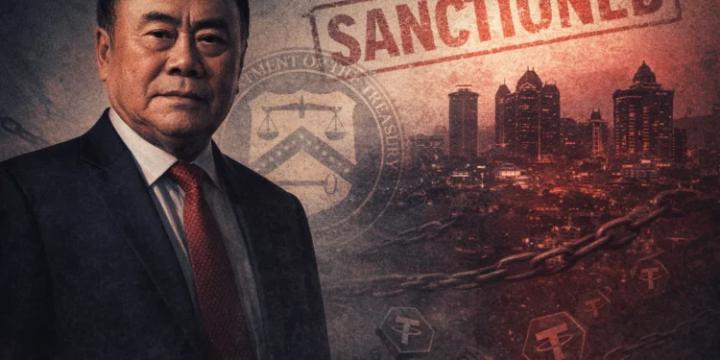
Is USDT too big to fail? Wall Street bond trading giant Cantor acquires 5% stake in Tether

This article is machine translated
Show original
According to the Wall Street Journal report today, the Wall Street bond trading giant Cantor Fitzgerald has reached an investment agreement with the leading US dollar stablecoin issuer Tether in 2023, acquiring a 5% equity stake in Tether, with the 5% equity stake valued at up to $600 million at the time of the agreement signing.
Given that the President-elect Trump just announced on the 19th that he will appoint Cantor Fitzgerald CEO Howard Lutnick as the Commerce Secretary, this may mean that Tether will receive more political support from the incoming Trump administration.
The report mentions that Howard Lutnick, as an advisor to Trump's transition team, is working closely with Trump to help select other potential high-level government positions responsible for overseeing Tether, and one of Tether's largest shareholders Giancarlo Devasini has privately claimed this year that Howard Lutnick will use his political influence to try to resolve the threats facing Tether.
Previously, there have been constant FUD about Tether, with its financial audits repeatedly questioned, and it has recently been reported that the US Attorney's Office for the Southern District of New York is conducting a criminal investigation into the use of Tether by third parties to fund illegal activities or money laundering, and as many global banks have severed ties with Tether, Cantor Fitzgerald has become one of Tether's most important banking partners.
Howard Lutnick has long been a supporter of cryptocurrencies, and his Cantor Fitzgerald has been managing Tether's US Treasury investment portfolio since 2021. According to Tether's latest Q3 2024 reserve report, Tether's asset reserves are $125.5 billion, liabilities are $119.4 billion, with excess reserves exceeding $6 billion.
Tether currently holds over $105 billion in cash and cash equivalents, of which $102.5 billion is directly and indirectly held in US Treasuries, making Tether one of the top 18 global holders of US Treasuries, ranking higher than Germany, Australia and the United Arab Emirates.
Howard Lutnick has publicly expressed confidence in Tether's financial soundness on multiple occasions, stating in January this year: "I manage a lot of Tether's assets, and we've done a lot of work. Tether has the money they claim to have... and we've seen that they do have that money."
In response to the Wall Street Journal report, a Tether spokesperson stated that the relationship between Tether and Cantor Fitzgerald is purely a business relationship based on reserve management, and the claim that Howard Lutnick's involvement in the transition team would somehow influence regulatory actions is unfounded.
Cantor Lutnick stated that after Senate confirmation, he will resign from his positions at companies like Cantor Fitzgerald, divest his interests in the company, in order to comply with US government ethics rules, and does not expect any arrangements involving the sale of stocks on the open market.
Nevertheless, the market's biggest concerns about USDT in the past have been its transparency, the authenticity of its reserves, and potential regulatory risks, with the view that Tether will eventually collapse. However, the current situation seems to indicate that as Tether's finances have become more robust and its connections to traditional finance and politics have deepened, Tether has become "too big to fail".
Sector:

Source
Disclaimer: The content above is only the author's opinion which does not represent any position of Followin, and is not intended as, and shall not be understood or construed as, investment advice from Followin.
Like
Add to Favorites
Comments
Share
Relevant content