Donald Trump's election as the new President of the United States has become the biggest political and economic topic in November. As expected, the impact of Trump's inauguration is huge, and his "Trump 2.0" economic policy line, which is different from other parties, and his strong support for cryptocurrencies, have reversed the previous market trading logic. Market liquidity has begun to flow to more sectors, and the crypto market's frenzy is also closely related to Trump, all of which seem to indicate that a new trading logic system is being born.

With the end of the US election, Trump has been re-elected as the President of the United States, becoming the 47th President of the United States. At this point, the election boots have landed, and the United States will return to the development path of the right-wing, which also relieves the global traders' concerns about the election risk.
As a traditional conservative, the Republican Party advocates tax cuts, reviving the manufacturing industry and traditional energy industry, reducing government regulation, and deporting illegal immigrants, and the "Trump 2.0" more embodies the policy ideas of the "MAGA Party".
From the policy perspective, Trump's policy ideas are very similar to Reagan's, both being a combination of "expansionary fiscal policy + deregulation + protectionism". Reagan's policy led the United States out of the economic environment of stagflation after the oil crisis, driving economic recovery, and ultimately realizing the "Reagan Revolution", which has continued to influence the subsequent US economic policies. Whether Trump can replicate Reagan's "successful" path and pull the US economy back from the brink of stagflation is the focus of attention during his term.

The similarity between Trump's policies and Reagan's policies may become the main trading logic of the subsequent "Trump trade", and investors can continue to pay attention to it.
Returning to the November inflation data and the Fed's policy. On November 26, local time, the Fed released the minutes of the Federal Open Market Committee (FOMC) meeting held on November 6-7. The minutes showed a 25-basis-point rate cut in November, in line with expectations. At the same time, the Fed emphasized that "participants expect that, if the data evolve in line with expectations, inflation will continue to run at or below 2 percent and the economy will remain at or close to maximum employment, it may be appropriate to gradually move the stance of monetary policy to a more neutral position over time." This "more neutral policy stance" means that the Fed will no longer deliberately pursue rate hikes or rate cuts, but will adjust based on the market economic situation, which undoubtedly suggests that the Fed is optimistic about the US economy's recovery from the recession and expects a future recovery.

The US stock market in November operated smoothly, with small steps breaking through historical highs. In the AI field, although Nvidia (NVDA) exceeded expectations in the third quarter, it fell 5% after the report was released due to not being "too much better than expected". The market's attitude towards AI seems to be "as long as it's not too explosive, it's not as expected".
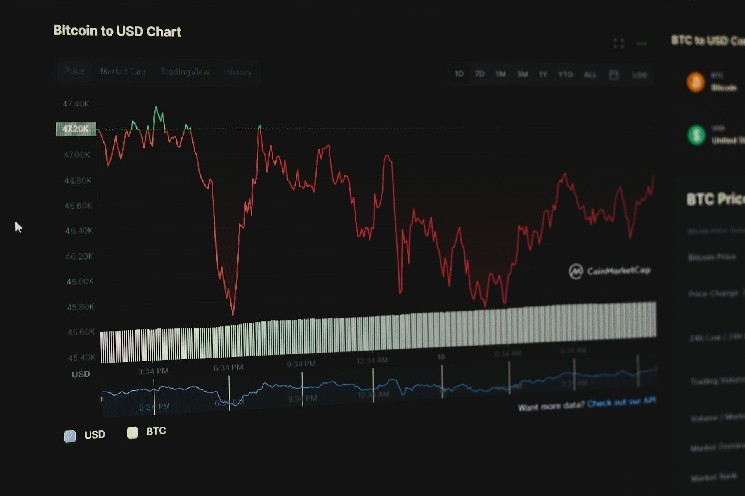
Since Trump's election, Bitcoin has been like an unruly wild horse, galloping towards $100,000. The market's FOMO sentiment was severe, until the last week of November. Against the backdrop of Trump's call for "Bitcoin strategic reserves", Pennsylvania became the first state to pass the "Bitcoin Rights Act", and the market seems to be entering the "Trump era" of cryptocurrencies, with cryptocurrencies becoming the object of legal protection in the traditional world and truly entering everyone's lives.
If Trump's election has taken Bitcoin to new highs, then Musk belongs to the one who has completely ignited the MEME track. With Musk joining the "Trump 2.0" government team, there were once 3 Musk concept coins that violently surged. The longer narrative behind this small episode is that Musk, as a leader in technological innovation, his potential political influence may accelerate the progress of crypto technology, such as promoting the integration of AI and blockchain.
Therefore, cryptocurrencies have rightfully replaced AI as the new darling of the stock market in November, and people have naturally been looking for opportunities related to cryptocurrencies in the secondary US stock market. And the biggest winner in the Bitcoin frenzy of the entire November was MicroStrategy (MSTR) - MicroStrategy's stock price rose more than 140% in November.

Source: StockCharts.com
MicroStrategy was originally a niche software company founded in the 1990s, and after surviving the 2000 tech bubble, it entered a period of business stability, but also had almost no further growth, until the company's CEO Michael Saylor became a Bitcoin believer around 2020, incorporating Bitcoin as a core strategic asset on the company's balance sheet, and successfully building a "Bitcoin-driven" company growth logic: Bitcoin accounts for a large proportion of the company's assets, and its value fluctuations directly affect the company's value, and as Bitcoin prices rise, MicroStrategy's stock price rises sharply due to the increase in assets, with daily trading volume exceeding Nvidia, and through leveraged capital operations, the company can issue more shares to sell and raise money to buy more Bitcoin, raising $460 million in November and reinvesting it all in Bitcoin, driving up Bitcoin prices, forming a cycle of buying Bitcoin - stock price rising - issuing debt or shares to buy more Bitcoin, tying shareholder interests closely to Bitcoin appreciation. The outperformance of MicroStrategy's stock price is essentially that some investors see it as an indirect way to hold Bitcoin and are willing to pay a premium for it.
Bitcoin has made MicroStrategy, and MicroStrategy has also made Bitcoin, its frantic debt issuance and stock sales to buy Bitcoin, as well as its high-profile market style, have pushed Bitcoin's rise from $70,000 to $90,000, just as Bitcoin ETFs have pushed Bitcoin from $40,000 to $70,000 in the previous stage. Therefore, MicroStrategy is also considered to be the biggest driver of Bitcoin's rise from $70,000 to $90,000 in this round.
Some investors believe that MicroStrategy has cleverly discovered a way to leverage the loopholes in the fiat currency system, fully utilizing the inefficiencies of the traditional capital market to gain leverage advantages against fiat currencies, and perfectly integrating it with the predictability of Bitcoin, thereby endowing itself with extremely significant upside potential. In short, it is to use cheap and constantly inflating capital to acquire scarce and potentially appreciating assets. Of course, the premise of this logic is to assume that Bitcoin will necessarily succeed in the long run. According to the latest data, MicroStrategy currently holds 279,420 bitcoins.

MicroStrategy's "digital gold standard" strategy and capital operation model provide us with a new experimental paradigm. If market conditions continue to rise, this model may become an industry pioneer, guiding other companies to adopt similar strategies, accelerating the penetration of Bitcoin on corporate balance sheets, and promoting Bitcoin's recognition as a top predator asset.
The market's rise has already caused retail investors to sell Bitcoin to pursue the high returns of so-called meme coins, and Bitcoin has now become the main battlefield of the whales. Some believe that the biggest risk for Bitcoin currently comes from the selling of the whales. As one of the largest whales, MicroStrategy's biggest selling risk lies in the forced liquidation of its bonds due to a drop in Bitcoin prices, which would lead to a self-reinforcing decline in Bitcoin prices.
However, this argument ignores the micro-strategy bond structure. The bonds issued by Microstrategy are convertible bonds, which belong to off-balance-sheet leverage. Even if Microstrategy is unable to repay the debt after three years, the creditors can only convert the debt into stocks and dump them in the stock market, which cannot shake the price of Bitcoin. Therefore, instead of worrying about Microstrategy being forced to liquidate and sell coins to repay debts, it is better to worry about the people who buy Microstrategy stocks in the US stock market.
Investor Victor Dergunov has clearly pointed out that although Microstrategy, as a company, has shown forward-looking vision, its stock is clearly in an overbought state and can be seen as a typical example of the bubble in the entire cryptocurrency field. Although Bitcoin is far from its peak, the reality has sounded the alarm, reminding us of what will happen when the market heats up too fast. The market will reach a more definite consensus on the valuation of Microstrategy, and this valuation should be significantly lower than the current level.
Of course, a more promising future is that we may see Bitcoin find a place on the balance sheets of thousands of companies, and then Microstrategy will be recorded in history as a financial pioneer of this generation.

In November, against the backdrop of Trump's election as US President, the economy has undergone multi-dimensional changes. The FOMC meeting cut interest rates by 25 basis points, and it is highly likely that the easing will continue in December, injecting liquidity expectations into the economy. The Trump economic team is being formed and promoted, and its policy proposals are expected to replicate the previous high-growth economic path. The US stock market continued to rise and hit new highs, and the cryptocurrency market went wild under Trump's positive news, with Bitcoin approaching $100,000, and Microstrategy rising to prominence due to its Bitcoin holdings and opening up a new capital operation experiment.Looking ahead, we need to pay attention to the intensity and pace of Trump's policy implementation, as well as the impact of interest rate cuts on the economic structure. If Trump's promises to the cryptocurrency industry are partially realized, $100,000 may not be the final price of Bitcoin, but just a stage marker in its upward process.The road is winding, but the future is bright.