


Author: AB Kuai.Dong
Recently, Binance finally welcomed its first DeSci project. Many seniors should have some impression of it, which is the BIO protocol. From 18 years to the present, the team has been continuously building in the field of bioscience, and has also launched new projects one after another, such as URO and RIF.
From the earliest Molecule to the current BIO, 7 years have passed. Apart from the fact that it is known to be invested by Binance, how is it?
This article will sort it out.
The founder of BIO is an early OG in the circle. He first did investment analysis in the private equity field, and after contacting Ethereum in 16 years, he started to build a developer community from South Africa to pave the way for Ethereum, during which he received funding from relevant organizations.
Later, he joined ConsenSys, serving as the Director of Business Development, and founded Molecule, which is the predecessor and affiliated company of BIO, in 18 years.
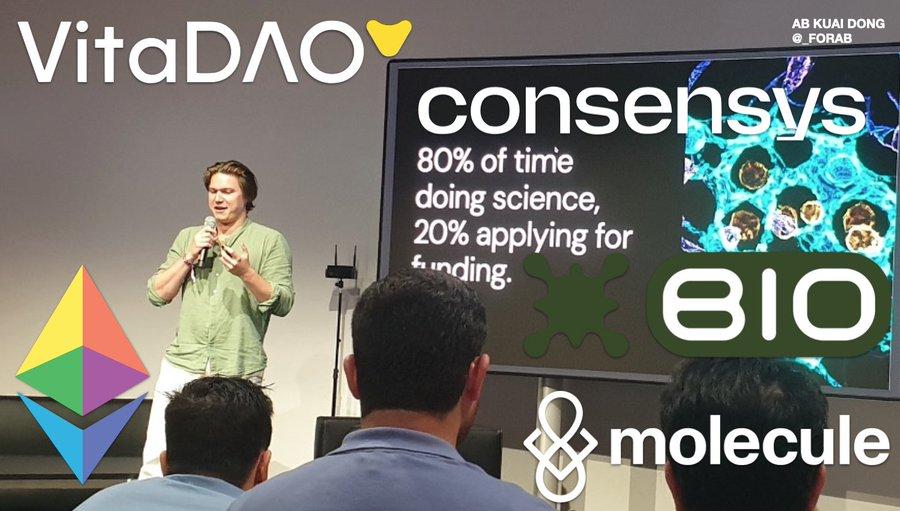
According to public information, Molecule initially wanted to try to build an IP trading platform, by tokenizing the patent IPs of biopharmaceutical and research companies, to build its own patent token trading exchange.
Later, with more external VCs joining and the market narrative changing, it began to focus on infrastructure, fundraising platforms and business support.
In September this year, the Solana Foundation provided a donation to Molecule, which ultimately built the Pump Science launch platform, ensuring that experimenters can raise funds for their ideas through MEME launches.
The platform has currently launched Uromycin URO and Urolith RIF, both of which are MEME blue chips on Solana.
In addition, BIO also plans to expand the project to the Solana ecosystem, to deploy the BIO token, establish a cross-chain bridge, and build related infrastructure. The entire Molecule system is also gradually migrating from Ethereum to Solana.
This may be inseparable from the continuous support of the Solana Foundation.
In terms of internal relations, Molecule is more like the role of BIO's parent company. In BIO's token whitepaper, 17.6% of the total tokens are attributed to the Molecule Foundation and related investors.
Some are also attributed to the holders of VitaDAO and VITA IPT, in response to the community's controversy about the team's continuous issuance of new tokens.
In terms of market capitalization estimation, BIO's path reminds people of CHZ, which once cooperated with various teams to continuously issue new fan tokens, making it a platform for IP trading and fan economy. BIO, on the other hand, cooperates with scientists to launch DAO tokens in the form of scientific funding.
Currently, BIO plans to launch 15-20 DAO organizations in early 2025. Therefore, the initial market capitalization will be relatively high, and the market will also have expectations for new tokens.
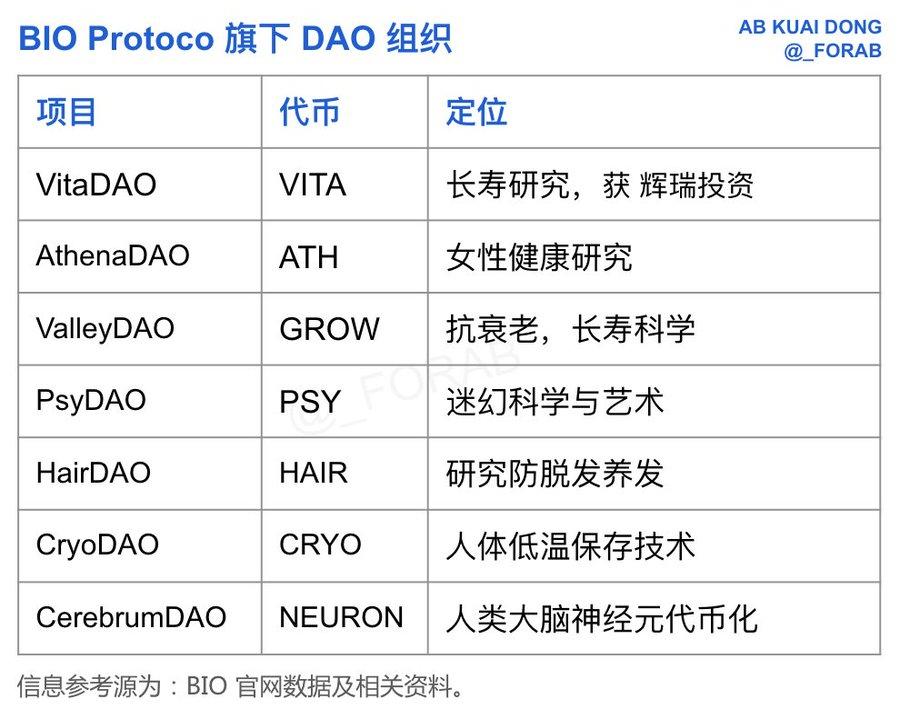
However, BIO also has a lot of community doubts, such as too many internal projects, and the empowerment and relationship between them are relatively chaotic. At the same time, too much funding and the launch of related DAO tokens may dilute the value of the original circulating tokens, such as URO, RIF and VITA.
It is inevitable to think of Animoca, which was in its heyday and invested and created projects crazily.
After all, there will be praise as well as doubts. The above is a brief review of BIO, Molecule, and related projects.
The current DeSci boom is actually inseparable from the strong support of CZ and the Solana Foundation. They have driven people's discovery of this narrative, and the market is about to enter a January market. In this intensive token issuance season, it will be a major test for token prices.
I hope this content is helpful to you. Thank you for reading.






