Who will be the first to venture into the "vast expanse" of on-chain asset management?
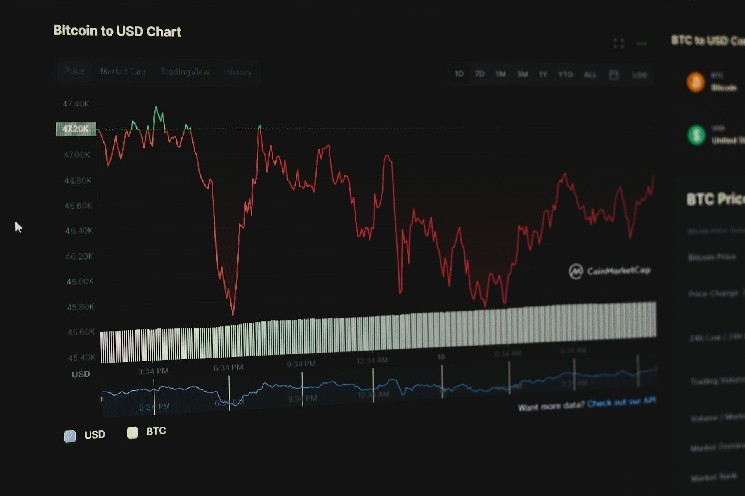
The price of Bitcoin has once again started with a 1, reaching six digits.
From the November 2022 low, Bitcoin has risen 570%, pushing its market capitalization to nearly $2 trillion, surpassing the government bond markets of countries like Spain and Brazil, and approaching the total market value of the entire FTSE 100 index (the top 100 companies in the UK stock market).
In this new wave of trends, one company has successfully seized the opportunity, rising from the crisis and completing a remarkable transformation. That company is MicroStrategy.
As of January 6, MicroStrategy holds 446,400 bitcoins, accounting for 2.12% of the global bitcoin supply.
Due to its high correlation with Bitcoin, MicroStrategy's stock price has formed a "Bitcoin shadow stock" phenomenon. In December 2022, when Bitcoin hit its low point, MicroStrategy's stock price fell to a low of $14.16, but today, two years later, its stock price has reached a high of $473, with a market capitalization of nearly $100 billion, an increase of over 3720%, making it a hot target for Wall Street hedge funds.
The source of all these miracles can be traced back to Michael Saylor's decision to implement a Bitcoin reserve strategy.
It is worth noting that the growth logic of MicroStrategy is based on its unique financial leverage in both the traditional market and the crypto market, using external capital to amplify the growth rate of the company's assets and increase shareholder returns.
In MicroStrategy's operating model, the increase in Bitcoin reserves will continuously increase the company's book value per share (net asset value per share). When the price of Bitcoin rises, not only does the value of its reserves increase, but the funds obtained through ATM and convertible bond financing can also accelerate the appreciation.
This phenomenon is called the "Davis Double-Click", where shareholder returns come from two aspects: one is the rise in Bitcoin prices, and the other is the effect of the company expanding its asset size through financing.
Michael Saylor has specifically stated that "MicroStrategy = Bitcoin Wealth Management + Bitcoin Reserves, where the wealth management business includes issuing securities, acquiring Bitcoin, adjusting leverage, and fund dividends."
Unfortunately, MicroStrategy's Bitcoin reserve model still has some limitations, as it has not fully utilized the dynamic income potential brought by the Bitcoin reserves.
It is against this backdrop that the emergence of the Solv protocol has opened up a new path for Bitcoin asset management, providing a more proactive solution than MicroStrategy's "buy and hold" model, becoming a more imaginative on-chain MicroStrategy.
Imagine if this financial leverage model could be replicated in the crypto market itself, creating a native crypto protocol similar to the MicroStrategy growth flywheel, what would we need first?
First, we need to understand the core elements of MicroStrategy's growth flywheel: the operation of financial leverage, Bitcoin as the value anchor, and the cycle of capital appreciation and re-investment.
Therefore, to successfully transform this model into an "on-chain MicroStrategy" in the crypto market, the key is to build a solid value anchor, such as Bitcoin or other crypto assets, as the foundation for supporting the company's assets and capital appreciation. Secondly, we need to design a flexible capital-raising and incremental capital mechanism, and drive the company's market capitalization growth through the appreciation of these assets. This continuous investment and reinvestment of capital will form a sustained "growth flywheel", enhancing the overall asset value and creating returns for investors. Finally, leveraging the innovation capabilities of the DeFi ecosystem, we can enhance the liquidity and income-generating capabilities of the assets, providing momentum for market expansion and financialization.
Solv Protocol is a native yield platform supported by a decentralized asset management infrastructure, dedicated to tokenizing and aggregating high-quality yield tokens across the industry, serving as a unified liquidity gateway to lower the barriers and costs for users to access quality investment opportunities. Users can deposit BTC into the platform to obtain SolvBTC, a token generated by pledging Bitcoin. SolvBTC holders can not only maintain their exposure to BTC, but also earn additional native BTC yields, including market-making strategies, delta-neutral capital rate strategies, and cross-exchange arbitrage.
Compared to MicroStrategy's growth flywheel, Solv provides a unique path for capital appreciation and capital expansion through its innovative pledging mechanism and cross-chain yield aggregation platform.
Specifically, Solv's "flexibility" in capital-raising is reflected in its pledging and liquidity strategies. Solv converts Bitcoin into SolvBTC, realizing the appreciation of Bitcoin while providing multiple income-generating mechanisms. This dynamic "buy and pledge" strategy model is more flexible than MicroStrategy's "buy and hold" approach, and can provide more application scenarios and appreciation paths for Bitcoin.
Through this mechanism, Solv has essentially created an "incremental capital" model: as the pledging and yield strategies of Bitcoin continue to advance, Solv can continuously expand its Bitcoin reserves, and also increase the capital value of its platform and the sustained attractiveness of its ecosystem through the dynamic income-generating mechanism. This means that in the management of Bitcoin as a reserve asset, Solv and MicroStrategy's strategies have essential similarities, both relying on the reserve value of Bitcoin to drive the growth of the company's market capitalization. But through a decentralized approach, the appreciation of capital becomes more diversified and has higher liquidity.
Furthermore, according to its latest announcement, Solv is creating a Bitcoin reserve product (BRO) to build the protocol's own Bitcoin reserves, with the proceeds used to purchase Bitcoin. The first BRO will be open to institutional buyers in the traditional finance (TradFi) sector, to be launched after the official release of the SOLV token. However, detailed information about the first BRO sale, including coupon, maturity, and conversion premium, has not yet been announced.
In other words, Solv not only has the same growth flywheel as MicroStrategy, but also through its pledging and yield aggregation mechanism, has transformed its Bitcoin reserves into continuously growing financial assets, greatly attracting Bitcoin holders to participate in its reserves and pledging, forming an even larger self-appreciating and capital-expanding growth flywheel.
On the other hand, if benchmarked against MicroStrategy, Solv's market capitalization will also grow significantly as its Bitcoin reserves increase.
According to Defillama data, Solv protocol's Bitcoin locked-in volume has exceeded 33,000, with a total locked-in value of nearly $3.3 billion. If Solv's Bitcoin holdings reach a scale similar to MicroStrategy's, assuming it holds 400,000 bitcoins, then based on the current price, its market capitalization could break through tens of billions of dollars, even approaching hundreds of billions of dollars.
Solv represents a breakthrough innovation in the management of Bitcoin on-chain reserves, enabling retail and institutional investors to access diversified yield opportunities without sacrificing liquidity, through the Pledge Abstraction Layer (SAL), SolvBTC, and SolvBTC.LST (Liquid Staking Token), seamlessly integrating Bitcoin into the DeFi ecosystem.
Compared to other homogenized projects in the BTCFi track, this project also exhibits some unique advantages, particularly in terms of liquidity integration and asset management innovation.
The key advantage of Solv over other projects is the introduction of a more efficient yield-generating mechanism within the Bitcoin ecosystem, as well as further optimization of user experience and capital management through the Pledge Abstraction Layer (SAL) and cross-chain yield aggregation platform. Within this framework, Solv has launched four SolvBTC LSTs: SolvBTC.BBN (Babylon), SolvBTC.ENA (Ethena), SolvBTC.Core, and SolvBTC.JUP (Jupiter Exchange on Solana).
On the one hand, Solv adopts its security system Solv Guardian to ensure the security of staking transactions. Guardian has dynamic adaptability and can optimize rules in real-time based on blockchain and staking protocol updates, collaborate with protocol developers to establish strict security standards and risk control systems, and ensure highly reliable operations. Its unified security mechanism runs through EVM smart contracts and Bitcoin mainnet transactions, providing users and developers with a consistent security experience. As the core component of SAL, Solv Guardian lays the foundation for the standardization and diversification of Bitcoin staking, expands the financial application scenarios of Bitcoin, and balances the flexibility and security of staking services, promoting the sustainable development of the staking ecosystem.
On the other hand, Solv has proposed an industry-standard Bitcoin yield product model, and launched SAL to provide standardized and diversified solutions for Bitcoin staking. SAL abstracts the technical differences of various staking protocols through smart contracts, builds a unified operation framework, and can support the flexible design of LST based on lock-up period, revenue distribution mechanism, and liquidity characteristics, providing users with diverse yield options and significantly improving capital efficiency and staking flexibility. With the help of SAL, users can not only obtain staking returns, but also apply LST to leverage staking, arbitrage trading, and other complex strategies, further realizing asset liquidity and yield optimization.
Based on this, Solv has currently established a broad ecosystem covering 15 mainstream public chains and more than 50 DeFi protocols, creating a highly interconnected staking network for users. By integrating multi-chain and multi-protocol resources, Solv provides strong technical support and rich application scenarios for Bitcoin staking, comprehensively enhancing user staking experience and capital management efficiency.
Currently, Solv Protocol has received support from investment institutions such as Binance Labs, Blockchain Capital, Laser Digital, and OKX Ventures, and has undergone comprehensive security audits by companies including Quantstamp, Certik, SlowMist, Salus, and Secbit. Recently, Solv announced the completion of a $110 million strategic round of financing, bringing its total financing to $250 million, which will be used for the development of Solv's staking abstraction layer products and ecosystem expansion.
In summary, Solv Protocol is gradually shaping its image as the "MicroStrategy 2.0" of the crypto industry through continuous Bitcoin reserve accumulation and technological innovation.
Recently, Binance announced that it will list the SolvProtocol (SOLV) token on the Megadrop platform. The maximum supply of SOLV is 9.66 billion (increased through the BTC reserve fundraising plan approved by governance voting), the initial supply is 8.4 billion, the Megadrop reward is 588 million (7% of the initial supply), and the initial circulating supply is 1.4826 billion (17.65% of the initial supply). The official arrival of the TGE will provide more capital support for Solv and accelerate its expansion in the crypto industry. The launch of the SOLV token not only provides strong financial ammunition for the project's Bitcoin reserve plan, but also lays the foundation for its position in the BTCFi field, making it a potential on-chain MicroStrategy.