Author: Crypto Frontline (Sugar Brother)
Recently, the Bitget platform token BGB has risen against the trend, with a surge that is astonishing. The author has people in several exchange groups who regret not getting on the train. On December 27, Bitgte announced that it would burn BGB worth more than $5 billion, and the news caused the BGB price to reach an ATH of $8.49, with its market value once exceeding $100 billion.
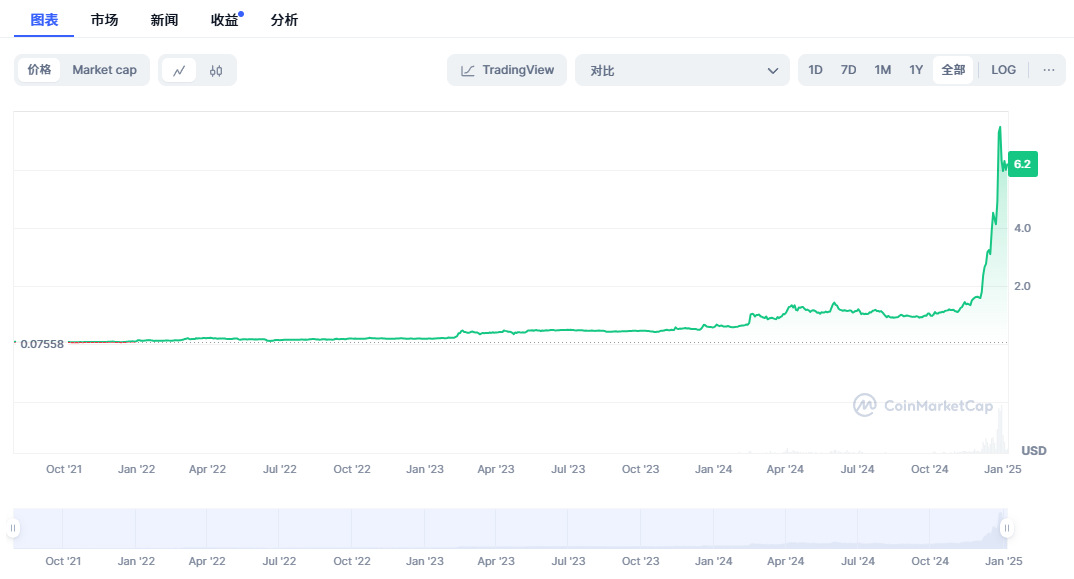
On December 30, Bitget announced the completion of the destruction of 800 million BGB (accounting for 40% of the total supply, worth more than $500 million), and the total market value dropped to around $8.9 billion. The BGB destruction plan is based on the newly released whitepaper, and the entire plan includes this destruction and a quarterly destruction plan, where 20% of the profits from Bitget's exchange and wallet business will be used to repurchase and destroy BGB in the future, to implement the BGB deflation model, which is further positive for the market.
This series of market performance and measures have made BGB a recent industry focus, attracting widespread market attention. This article will review the development history of platform tokens and the recent market performance data of BGB, helping readers analyze the logic behind the rise of BGB and analyze its future trend and whether there are still investment opportunities for profit.
I. The Co-evolution of CEX and Platform Tokens
In the complex ecosystem of cryptocurrencies, CEX (Centralized Exchange) and platform tokens are like spirally rising, mutually driving and synergistically developing. As the core hub of cryptocurrency trading, CEX provides investors with an efficient and convenient trading environment, gathering massive funds and trading volume. In the process of development, CEX has launched a series of innovative financial products to attract more investors, and platform tokens have emerged in this process.
Platform tokens were initially mainly used to meet the trading needs within the exchange, such as deducting trading fees. With the continuous development of the market, the functions and value of platform tokens have become increasingly diversified, endowed with more application scenarios. For example, users can use platform tokens to participate in various activities of the exchange, such as voting for token listing and subscribing to high-quality project tokens. In the token listing voting process, users holding platform tokens can vote for the proposed projects based on their token holdings, and if the project is successfully listed, users may receive certain rewards, which not only enhances the user's sense of participation in platform governance, but also provides additional income opportunities for users. In addition, some platform tokens have begun to venture into the decentralized finance (DeFi) field, providing users with financial services such as lending and staking.
The core value of platform tokens can be summarized as follows:
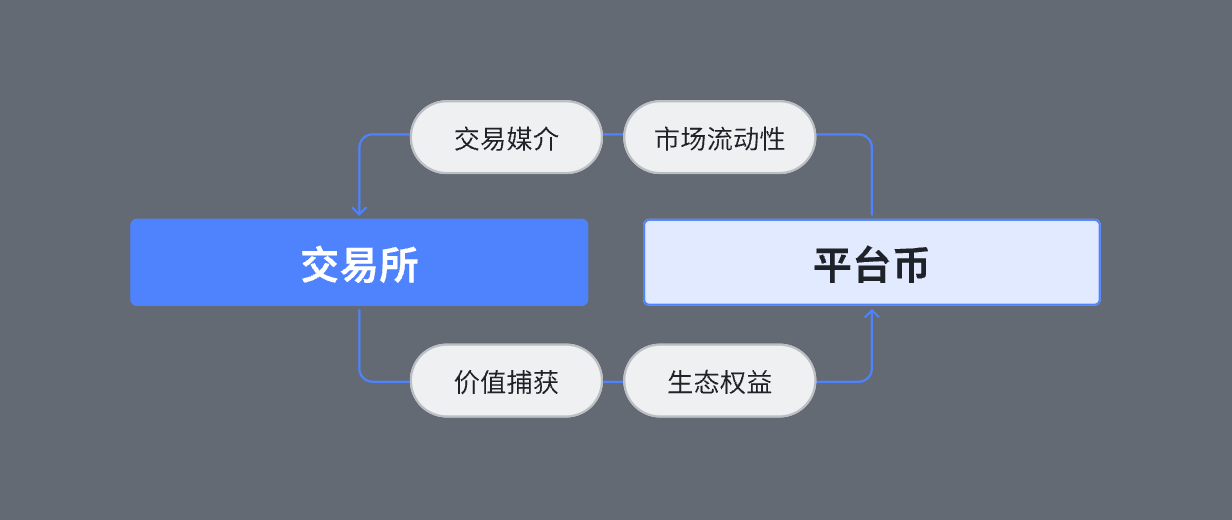
1. Trading medium: Platform tokens are widely used in the payment of trading fees and provide users with different levels of discounts. This forms a stable demand base for platform tokens within the exchange ecosystem, highlighting their value as a trading medium.
2. Ecosystem rights: Platform tokens are an important certificate for users to deeply participate in the exchange ecosystem and obtain various rights, such as participating in the subscription and voting of potential projects and obtaining rewards.
3. Value capture: As the exchange business expands, the user base grows, and market share increases, the profitability and market influence of the platform will continue to strengthen, allowing platform token holders to share the economic benefits of the exchange's growth.
4. Market liquidity: The high liquidity of platform tokens gives them the function of price discovery, which has an important impact on the allocation of resources and risk pricing in the entire market.
We can clearly see the mutually dependent and mutually promoting relationship between CEX and platform tokens. The development and growth of CEX provides a broad application scenario and solid value support for platform tokens, while the innovation and application of platform tokens further enhance the competitiveness and user stickiness of CEX.
However, this development process has not been smooth sailing. For example, there have been incidents where CEX has suffered hacker attacks due to security vulnerabilities, resulting in significant losses of user assets, and the prices of platform tokens have also plummeted. These events have sounded the alarm for the entire cryptocurrency industry and also reminded investors of the investment risks of platform tokens.
II. The Rise of BGB and Bitget
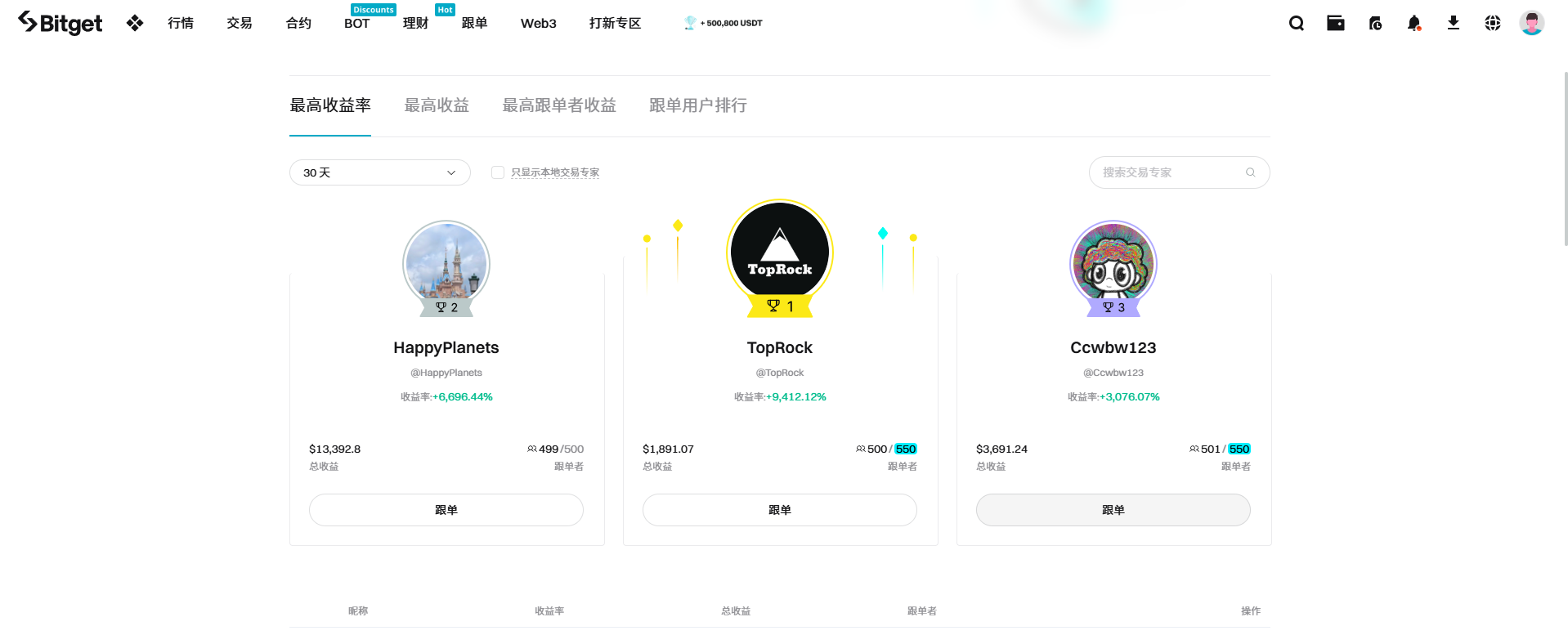
This part first introduces BGB and Bitget. Bitget is a cryptocurrency derivatives exchange established in 2018, providing spot, derivatives, and copy trading. After a period of exploration, Bitget temporarily suspended spot trading in 19 and launched U-based contracts, turning losses into profits. In 20, Bitget launched copy trading, which greatly reduced the threshold for cryptocurrency trading, allowing novice investors to trade by following the strategies of professional traders, thus attracting a large number of new users. Since then, "product innovation" has become the cornerstone of Bitget's existence.
After a few years of development, Bitget has transformed from a derivatives exchange to a comprehensive exchange, with multi-dimensional layout and operations. Since 22, Bitget has been expanding its team, focusing on operations and growth, opening up KOL channels in East Asia, and replicating the methodology to the Eurasia region, with the user base growing rapidly from 300,000 in early 21 to 20.2 million by the end of 23.
In 24, Bitget will focus on global expansion, compliance, and Web3 on-chain entry, and has disclosed high-level executives with corresponding backgrounds - COO Vugar Usi Zade with years of cross-border market experience, CLO Hon Ng responsible for compliance and legal GR, and CEO Gracy Chen who was previously an investor in BitKeep.
Currently, Bitget's team exceeds 1,500 people, serving over 45 million users in more than 150 countries and regions. The daily trading volume exceeds $10 billion, making it the world's largest cryptocurrency copy trading platform and ranking fourth in overall market share among cryptocurrency exchanges.
As Bitget's native token, BGB has experienced continuous evolution and expansion of its role and functions since its inception. On July 29, 2021, BGB was first launched and initially used mainly for deducting trading fees on the platform. Subsequently, as Bitget's ecosystem was gradually improved, the application scenarios of BGB have been expanded in an all-round way, such as LaunchPad for new project token subscription and LaunchPool for mining.
In Bitget's LaunchPad, users holding BGB can obtain priority rights to subscribe to new project tokens, providing them with opportunities to participate in high-potential projects and obtain generous returns. In the LaunchPool mining, users can participate in the distribution of new tokens by staking BGB, achieving indirect dividends. In addition, BGB also plays a role in Bitget's ecosystem governance, as a key tool to incentivize users to actively participate in platform decision-making and increase trading activity, further enhancing the interaction and stickiness between users and the platform.
In terms of price performance, after Bitget relaunched the spot product and released BGB in 21, the market was at the bull market top turning to bear, but with the rapid launch of various Bitget products and the rapid implementation of the brand strategy, the independent price of BGB has been soaring, with an average retracement of 30% after each new high and an average subsequent surge of 250%, showing a very bright performance, and finally staying around $0.2 at the end of 22. Subsequently, from 23 to 24, the bear market turned to bull, and with the release of Bitget Wallet and expansion in the Middle East and other regions, BGB has also risen to a new high of $1.486, followed by a slight correction. In December, BGB started to soar, reaching a new high of $8.49 on the 26th after Bitget's team announced the merger of BGB and BWB (Bitget Wallet token), and then corrected to around $6.
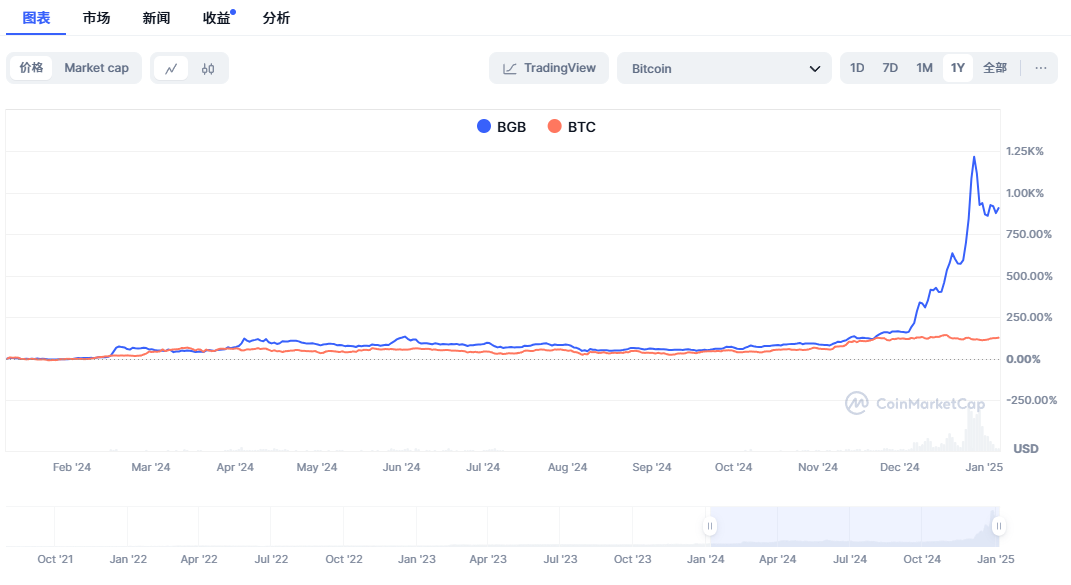
Regarding the BGB buyback and destruction mechanism, as of December 30, the core team's 800 million BGB have been destroyed for the first time. Thereafter, a quarterly destruction mechanism will be launched in 2025, using 20% of the profits from the exchange and wallets to repurchase and destroy BGB, and ensuring that the destruction records are publicly transparent. The current BGB circulation has been reduced from 2 billion to 1.2 billion. This demonstrates Bitget's commitment to the BGB deflationary model and the determination to accelerate the development of the ecosystem.
The two core attributes of a platform token are asset attributes and tool attributes. The former is the value projection of the exchange, and the latter is the "points-like" tool for the operation of the exchange. BGB is the asset that reflects the market value of the Bitget exchange ecosystem and is integrated into different products and businesses. The operational points that are integrated into the three-party relationship of the exchange, project parties, and users, borrow the B-end interests of the project parties. After BGB empowers the exchange to retain C-end users and their assets, the C-end's expected fixed dividend distribution using the "golden shovel" attribute of BGB forms a positive cycle of asset accumulation and asset increment, while helping the B-end obtain early liquidity and early users, and also benefits the C-end to co-build the ecosystem.
III. Comparison of BGB and mainstream platform tokens
In the cryptocurrency market, mainstream platform tokens such as BNB and OKB, backed by their respective exchanges, provide users with diversified rights and services, participate in the development of the ecosystem, and continuously innovate and optimize to consolidate their market position.
First, let's make some comparisons with the mainstream CEXs:
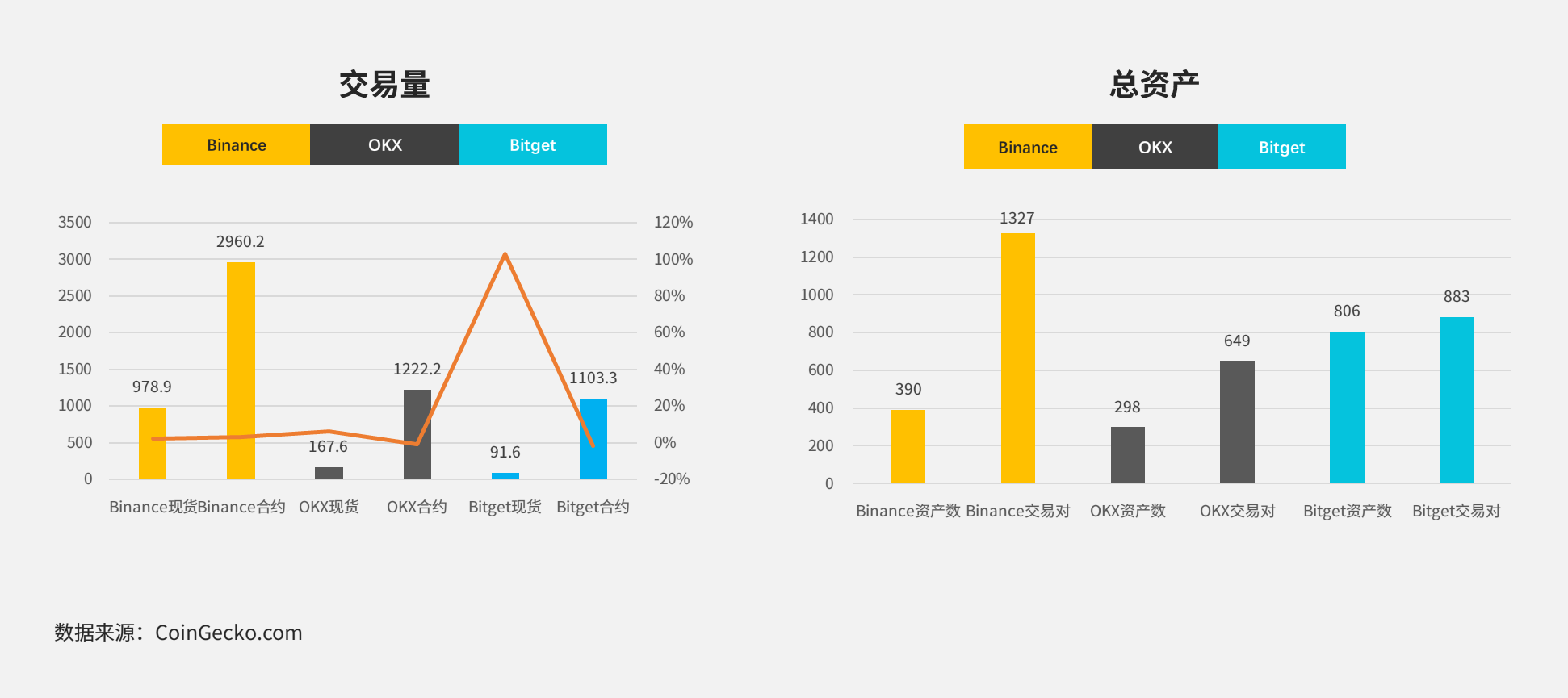
l From the chart, we can see that the month-on-month changes in trading volume of various exchanges in December were not significant, except that Bitget's spot trading volume increased by 102.7% month-on-month, with an outstanding increase, which is highly related to Bitget's important initiatives in December and the rise in BGB price, reflecting the market's recognition attitude;
l In terms of asset numbers, Binance and Bitget have relatively rich asset numbers and trading pairs, and the proportion of Altcoin assets dominated by platform tokens exceeds 45%, indicating that the assets are of higher quality and users have a higher willingness to hold them.
Next, the comparison of mainstream platform tokens is as follows:
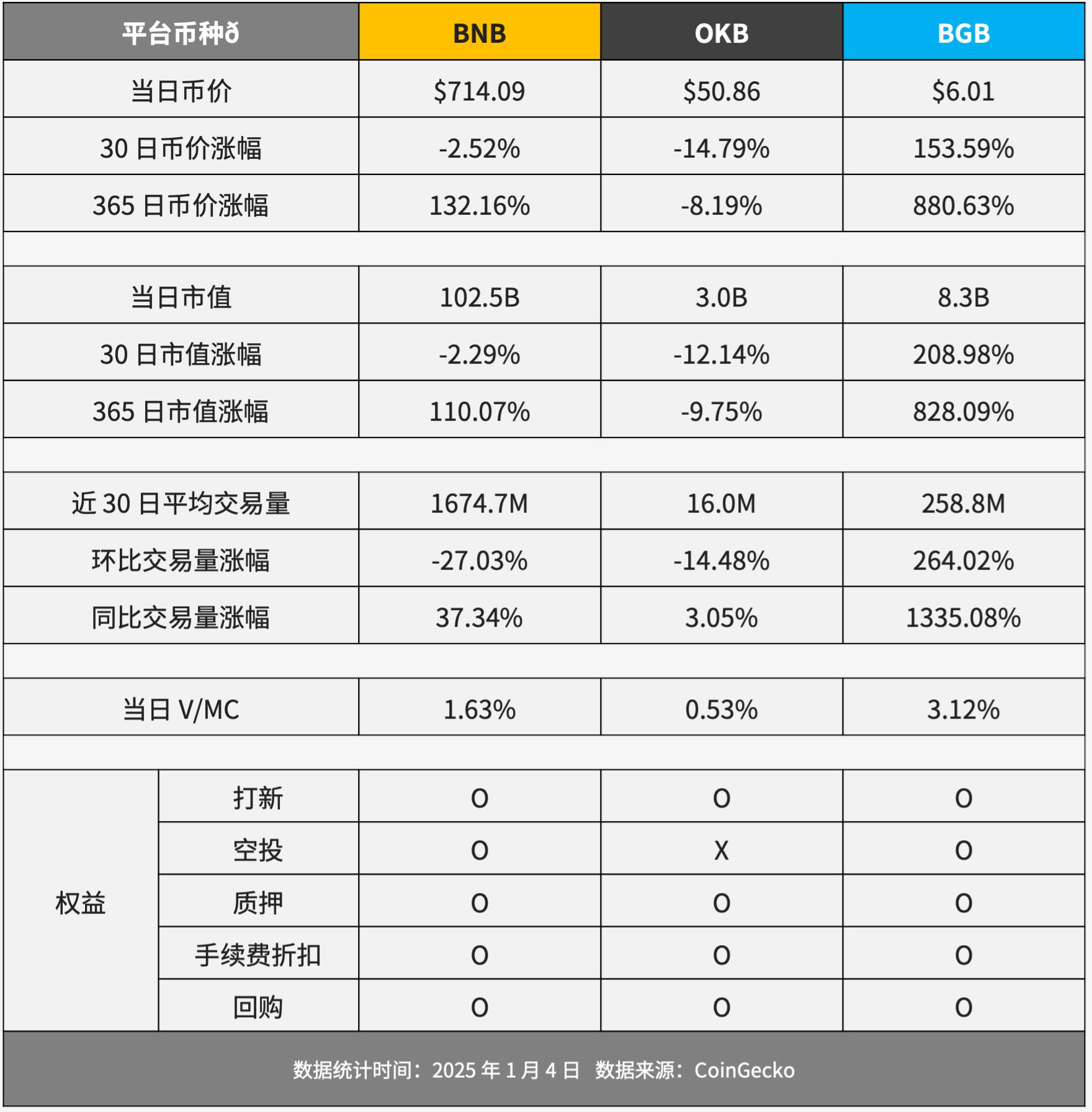
l In terms of coin price and market capitalization, BGB is leading the way: the 30-day price increase is 153.59%, and the one-year increase is 880.63%; the 30-day market capitalization increase is 208.98%, and the one-year increase is 828.09%. Both are far higher than BNB and OKB, reflecting the market's strong confidence.
l In terms of average daily trading volume, BGB's daily trading volume is lower than BNB but higher than OKB; but in terms of growth rate, BGB's month-on-month increase is 264.02%, and the year-on-year increase is 1335.08%, significantly leading other platform tokens. The sufficient turnover of chips not only means that the price discovery mechanism is more effective, providing more reasonable prices for investment, but also means that the increase in transaction fee income provides more financial support for Bitget's continuous operation and development, allowing it to do technology upgrades, security maintenance, and new business expansion.
l In terms of the V/MC ratio, OKB is less than 1% at 0.53%; BGB and BNB are both above 1%, with BGB reaching as high as 3.12%. The V/MC ratio can to some extent reflect the valuation status of the market value, and a relatively high V/MC reflects that BGB may still be undervalued by the market and has significant upside potential.
l In terms of rights and interests, BGB has completed the "buyback" part after launching the quarterly destruction plan, and BNB has also improved the airdrop function in the new wallet, making their ecosystem empowerment more comprehensive. BGB has more channels to obtain benefits in products such as LaunchPad, LaunchPool, and PoolX, as well as in the on-chain ecosystem of Bitget Wallet and Morph.
IV. Supporting factors for the current round of BGB rally
Next, we will try to analyze the reasons for the current round of BGB price increase, judge and understand whether its price is strongly supported, and what the favorable and unfavorable factors are, as well as whether there are still opportunities for profit.
The author believes that the following factors have provided support for the BGB price:
1. Continuous launch of innovative products. Whether it was the early launch of U-margined contracts and copy trading, or Launchpad, LaunchPool, and PoolX, Bitget has continuously attracted new users and increased platform activity through innovative products on the user end, and combined with BGB asset operations, it has continuously deepened user stickiness, jointly driving the market demand and price increase of BGB.
2. MCN-based differentiated approach and global channel control. Bitget has established its own global KOL channels through an MCN-based differentiated approach, similar to live streaming e-commerce, and released the advantages accumulated in the contract business through KOLs, relying on the low threshold to increase trading frequency and user stickiness. The rapid growth of new users in Europe and Asia has also further driven the demand for BGB.
3. Clear fulfillment of the deflationary model commitment. The Bitget team has fulfilled the commitment of the BGB deflationary model, destroying 40% of the circulating BGB held by the team and launching a quarterly destruction plan, demonstrating the team's determination for long-term development and eliminating market doubts about the team's token holdings. At the same time, the increase in BGB scarcity is also an important factor in driving up the price directly.
4. Merger of BGB and BWB. This move by the Bitget team clearly establishes the core position of BGB and further expands the function and value of BGB in the original wallet business incentive activities, while eliminating the confusion of new users between the two tokens in the exchange and wallet businesses, breaking down the barriers to participating in various activities within the ecosystem.
5. Continuous improvement of user experience. Bitget's continuous optimization of user services, such as providing multi-language customer service support and improving the user experience of the trading interface, has also enhanced user stickiness to the platform, making users more willing to hold and use BGB, thereby providing a solid user base support for the price increase of BGB.
It can be seen that many adjustments and optimizations related to BGB and Bitget have formed a flywheel: on the one hand, the optimization of the new user experience has formed a positive cycle with the rapid global user acquisition activities; on the other hand, the combination of BGB and asset management tools has continuously activated and consolidated deep users; the increase in BGB usage demand has driven the price increase, and the price increase space has further stimulated the entry of new users.
V. Analysis of BGB investment opportunities
Regarding the feasibility of BGB investment at the moment, the favorable and unfavorable factors will be summarized and supplemented here:
Favorable factors:
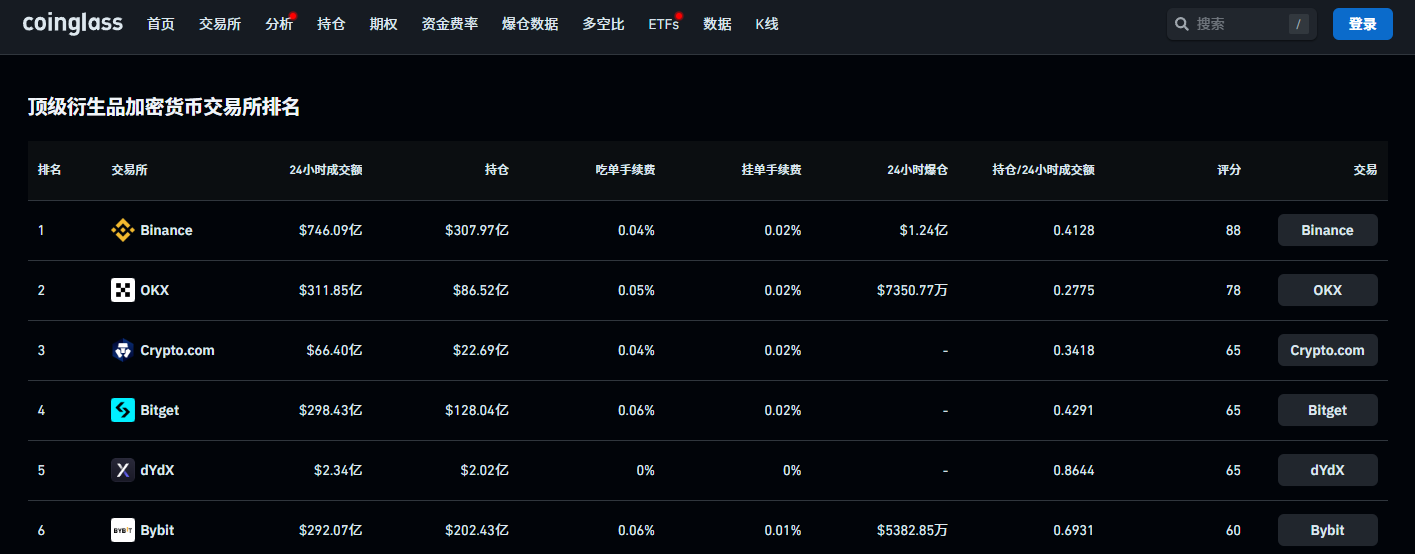
l Strong growth momentum: In the past month, BGB has shown strong growth momentum, with a cumulative high increase, far exceeding mainstream platform tokens such as BNB and OKB. The Bitget exchange behind it has performed outstandingly in the derivatives business, with a significant increase in market share. According to Coinglass data, it ranks among the top three in 24-hour contract trading volume for BTC and ETH.
l Abundant empowerment measures: Through measures such as Launchpad new coin offerings, Launchpool mining, VIP experiences, transaction fee discounts, preferential purchases of mainstream coins, additional income from financial management, and free withdrawals, it brings diverse benefits to holders. Among them, the wealth creation from Launchpad new coin offerings is particularly remarkable, with high frequency and high returns being one of its highlights.
l Expansion of application scenarios: In addition to using BGB as a way to pay gas fees, Bitget is also promoting its application in mainstream public chains and DeFi ecosystems, increasing on-chain liquidity, staking rewards, and opportunities to obtain airdrop tokens from cooperative projects.
l Deflationary mechanism: Bitget has promised to maintain the status of the BGB token and plans to allocate 20% of the exchange and wallet fee income quarterly from 2025 onwards to repurchase and burn BGB, and has recently burned 40% of the tokens held by the core team, which will reduce the circulating supply of BGB and may help increase its value.
l Application in the PayFi field: BGB is actively exploring applications in areas such as payments, DeFi, and NFTs, such as some merchants accepting BGB as a payment method, and some DeFi projects integrating BGB as a collateral asset. Currently, tools such as Bitget Card and Bitget Pay have been launched, and holding a certain amount of BGB can unlock specific merchant discounts, consumption rebates, fee rate discounts, and more service channels.
The market valuation is relatively low: Based on the V/MC ratio mentioned earlier, BGB may still be undervalued by the market and has significant upside potential compared to BNB and OKB, which is also a reference factor.
Negative factors:
l Insufficient on-chain pool depth: This may affect the execution efficiency and price stability of some transactions.
l Relatively low market capitalization: The market capitalization is relatively lower than BNB, which may lead to greater price volatility and relatively weaker market influence and liquidity.
l Overheating of prices: The recent sharp rise in BGB prices may have deviated from its fundamentals to some extent, showing signs of overheating. Once the market sentiment turns, the price may experience significant fluctuations.
It can be seen that its advantages, such as strong price growth, rapid platform development, active community, rich application scenarios, deflationary mechanism, and layout in PayFi and on-chain development, provide investment opportunities. However, the disadvantages of shallow on-chain pools and relatively low market capitalization cannot be ignored, as they may lead to greater price volatility and affect transaction efficiency.
VI. BGB Price Forecast for 2025
In 2025, there will be more positive factors, such as the support for cryptocurrencies by the Trump administration, the liquidity brought by the global interest rate cut cycle, and the greater recognition of cryptocurrencies by countries around the world. The first quarter of 2025 may be a stage of market outbreak.
Considering BGB's current burning actions and subsequent deflationary mechanism, its relatively undervalued market capitalization compared to BNB, and its stronger growth momentum and more comprehensive ecosystem applications compared to OKB, these factors provide a solid support for the price of BGB. The performance of BGB in 2025 may be more promising than that of BNB last year.
Therefore, in terms of specific price forecasting, the author uses the current price of BGB at $6 as the base, and based on the V/MC ratio, trading volume growth, and deflationary model, calculates the upside potential of the BGB price.
1. The annual price calculation mainly sets 3 relevant factors: the current V/MC ratio of BGB is 3.12%, and it is set to be appropriately adjusted to the ideal value of 2.5%; the trading volume growth rate in the past 365 days is 1335.08%, and it is conservatively assumed to reach 250% for the whole of 2025; the circulating supply of BGB is expected to decrease by 5% per year due to the deflationary plan.
2. V/MC = trading volume/market capitalization, so when V/MC decreases and trading volume grows, the market capitalization will correspondingly increase. As the V/MC decreases from 3.12% to 2.5%, and the trading volume grows by 400%, the market capitalization is calculated to increase by 4.38 times, recovering the part that was undervalued.
3. Combining the formula of market capitalization = price × circulating supply, as the market capitalization increases by about 4.38 times and the circulating supply decreases by 5% due to the deflationary model, the price can be expected to increase by about 4.61 times the current price.
4. Considering the value of BGB's LanuchPool, LaunchPad, PoolX, and other yield products, as well as the future application expansion of BGB and BWB in the Bitget Wallet and Morph chain ecosystem after the merger, an additional 10% weighting is added, resulting in a price increase of 5.071 times. With the optimistic investment sentiment brought by the price increase, the actual increase may be even higher.
5. In the short term (the first quarter of 2025), the factors involved are relatively few. The adjustment of the V/MC ratio and the decrease in circulating supply will not have a significant impact yet. Only the increase in trading volume and the first-time burning leading to a reduction in circulating supply are considered, and a conservative estimate of around a 1-fold price increase can be made.
Here is the author's final price forecast: New high of $12.34 in the first quarter of 2025, and $31.66 within the year.
When building a position, readers should also comprehensively consider their own risk tolerance and investment objectives, closely monitor BGB's recent performance in application expansion, on-chain construction, and market competition, weigh the pros and cons, and make decisions cautiously. It is advisable to include it in a diversified investment portfolio, but not to overweight it to prevent potential risks from having a significant impact on the investment portfolio.
The above is the author's review of BGB's development and future judgment based on public information. It is hoped that the analysis in this article can provide some valuable reference for investors. However, please remember that investment decisions should be based on comprehensive research and prudent judgment, and do not blindly follow the crowd. At the same time, we should also closely monitor the dynamics of the cryptocurrency market and industry development trends to adjust our investment strategies in a timely manner.