


Author: DC | In SF
Translated by: Block unicorn
The current trading price of Usual's USD0++ is below one dollar, but it is said to be part of the plan. Before the de-pegging event, I was writing an article about Usual because it has recently received widespread attention. It is one of the fastest-growing stablecoin protocols and has recently collaborated with Ethena and earned a lot of money for many YT miners on Pendle. However, if you ask people what Usual is for, you often get a variety of answers. "It provides you with yields based on RWA (real-world assets)." So the natural question is: how is this different from Ondo? "Oh, it decentralizes RWA yields," well, doesn't Maker or Sky do that too? And so on and so forth. If you look closely, @usualmoney's product is a token, not any actual product. Fundamentally, if the risk-free rate that users earn is higher than 4%, the source of the yield is the users themselves. But how did we get to this point? How did a protocol with over a billion dollars in TVL suddenly collapse so quickly? What is the mechanism behind Usual?
How do USD0 and USD0++ work?
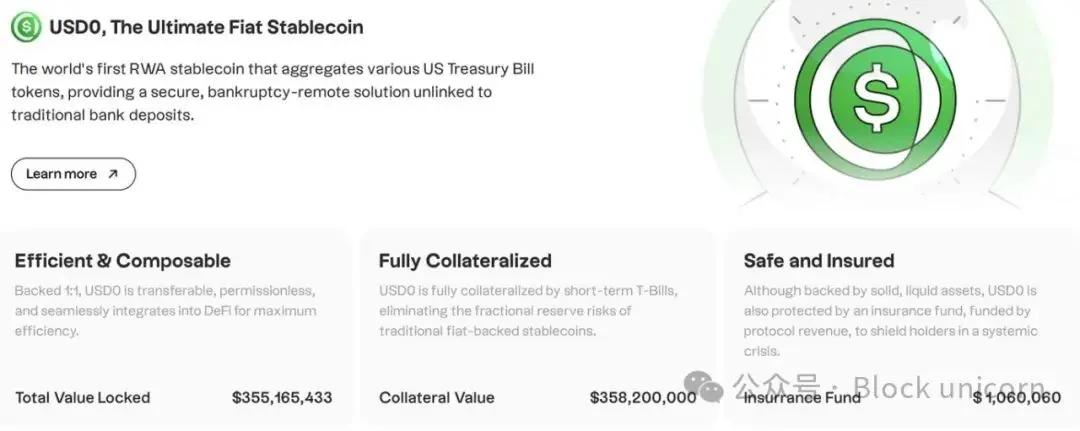
USD0 is Usual's standard, non-yielding stablecoin. There's not much to unpack here, but once you delve into USD0++, things get interesting. Despite the similar name, USD0++ is not a stablecoin at its core. Initially, USD0++ could be redeemed 1:1 for USD0, which in turn could be redeemed for $1. However, the project has indicated in its documentation that at some point in Q1 2025, this will change, and the function of USD0++ will become more bond-like, with a floor at the effective price of the 4-year US Treasury and a realized underlying yield of zero. Naturally, the community expects this change to be announced in advance, and there to be some process to allow users to exit if they no longer wish to engage in liquidity mining or choose to hold for longer and accept the higher risk that comes with it. Regardless of what happens in Q1 2025, the moment this change is announced, the value of USD0++ will plummet. USD0++ holders will no longer hold it simply for its dollar value, but because they believe the $USUAL tokens they will receive are worth being locked up for longer.

Conflicts of Interest
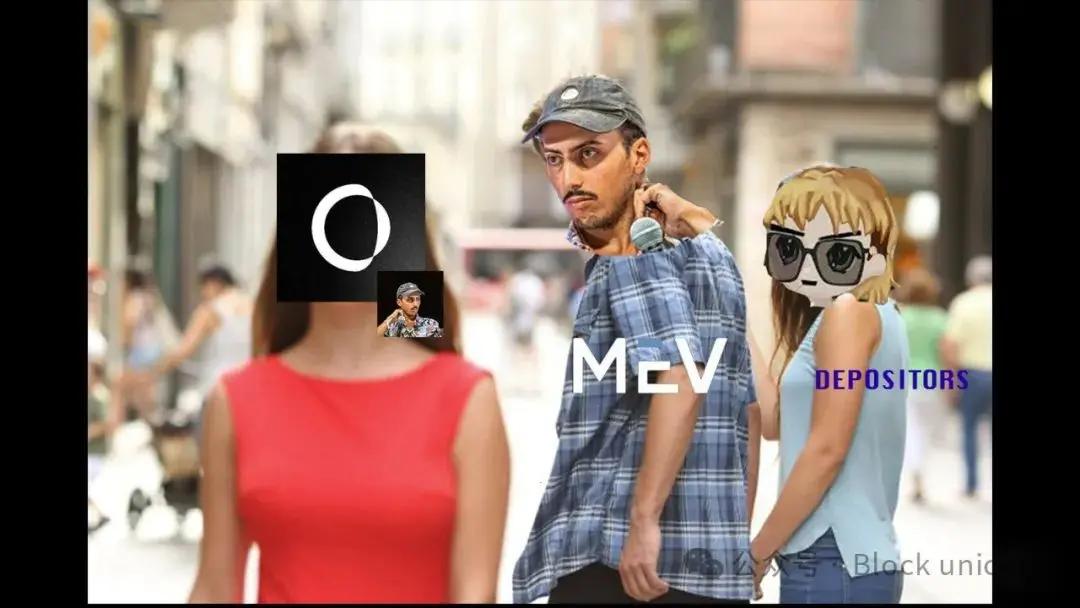
To facilitate liquidity mining, the USD0 and USD0++ liquidity pools have been deployed across multiple platforms, including Morpho and Euler. Morpho's risk management is outsourced to other managers, including MEV Capital, which is an important character in this story. MEV Capital's reputation in some circles is already well-known to be somewhat questionable - they have previously caused losses to investors and covered it up through dubious accounting practices. Additionally, one of MEV Capital's shareholders, @AdliTB, is also a co-founder of Usual, which is an obvious conflict of interest. MEV Capital's responsibility is to help lenders manage risk, not to recklessly funnel large amounts of capital into Usual. To achieve this, MEV Capital used an insurance vault that hard-coded the value of USD0++ to $1. In other words, its Oracle effectively assumes the value of USD0++ is always $1, regardless of the market price. Another well-known protocol that operated in a similar manner is Anchor, which played a key role in the UST collapse. While this approach may have had some rationale, it is irresponsible to adopt it on assets where liquidity will ultimately be removed. Euler's oracle used market prices, leading to liquidations, and many of Usual's liquidity pools now appear to be holding significant bad debt.
From $1 to $0.80: The De-Pegging Event
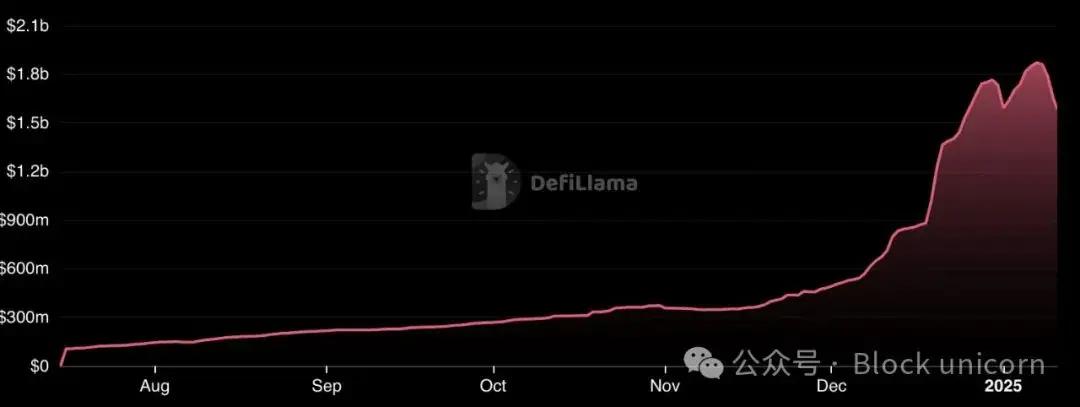
Rather than announcing liquidity mining users could exit, the Usual team actually chose to "raid" its users and all related parties using Usual assets. According to @GauntletXYZ, at 4:56 PM EST, Usual notified Gauntlet and other @MorphoLabs managers via Telegram chat that the unconditional 1:1 redemption mechanism for USD0++ in the primary market was immediately terminated. The team also posted a public tweet announcing the change and stating that two new mechanisms would be introduced: a price protection mechanism with a floor of $0.87, and a 1:1 early unstaking mechanism to convert USD0++ to USD0, expected to be available next week.
As soon as the news broke, USD0++ began to de-peg, dropping several percentage points within a few hours. With Euler's oracle correctly calculating that the debt position was becoming unhealthy, Euler began liquidations. Prices continued to fall, and MEV Capital's liquidity pools were hit hard by the rapid rise in interest rates, as borrowers withdrew and traders leveraged up to profit when USD0++ prices rebounded.
Reasons for Purchase and the Pyramid-like Supply Structure of $USUAL
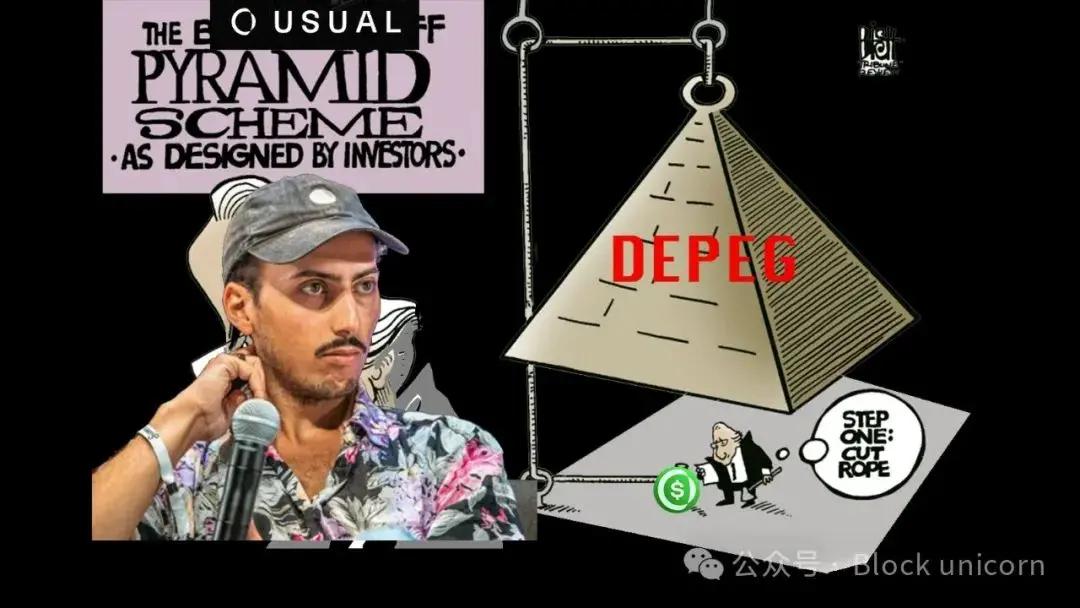
In my view, this situation and the potential for capital to become trapped in a blowup seems highly likely to have occurred at some point, but the team's extremely abrupt and unannounced changes, along with their shocking, misleading, and even completely false statements, are simply unbelievable.
In reality, most people participating in Usual are actually liquidity mining its tokens, and the team is well aware of this. If they had not operated in this manner, one could reasonably assume they were trying to build a positive flywheel effect. However, the way this announcement was made appears to be designed to catch users off guard and deprive them of the opportunity to choose between withdrawing or continuing to participate, making this situation look more like a "honeypot". The team's claim that this change will occur "at some point in Q1" is both dishonest and infuriating. We are barely 10 days into a 90-day quarter, and this is clearly an intentional attempt to catch people off guard.
Furthermore, the team clearly knew what was going to happen. This can be seen directly from Usual's announcement:
"Encourage high-leverage USD0++/USDC Chainlink Oracle Morpho market positions to increase their health factors to maximize safety during this volatility period, as arbitrage bots may not be able to effectively maintain the floor price effectively."
To compensate for and improve health factors, miners had to sell the now worthless USD0++!
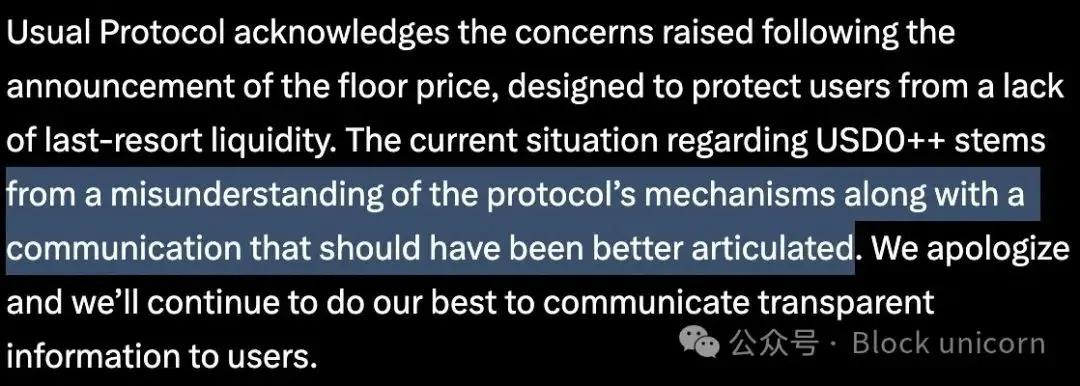
Although the team has started to back down in the face of a large number of objections, and even some miners have threatened legal action, they have not yet fully acknowledged the responsibility for failing to properly convey the change in the basic attributes of USD0++.
Some general thoughts
Many smart people I know were surprised by this. I believe that arbitrarily changing the redemption rules of USD0++ without any reasonable warning cannot be considered an act of good faith, and may be illegal (absolutely so in the US, and also in France), but this does not necessarily mean that there will be any consequences. This should not be used to attack Morpho, as the Morpho system is centered on administrators. One administrator directly colluded with the protocol, which has now strengthened the position of those administrators who did not collude, further consolidating Morpho, whose model was designed for such events. Different approaches do not mean wrong approaches.
Overall, caution is needed when pursuing profits and trading, especially in the crypto field. Do your own research, understand the team, and if there is no good system to generate profits (see @ethena_labs), then the source of profits is yourself, and if you are the source of profits, either participate in the game like Curve / Velo / Aero, or don't participate at all. Bad teams exist and should be exposed and condemned. In my view, even if the team is not bad, the way this decision was executed was very poor, bordering on criminal. However, the crypto and DeFi field is still the Wild West, do your own research, where there's smoke, there's fire.






