Faced with the "overwhelming traffic", Solana's official response was exceptionally calm and restrained.
Interviewee: Lily Liu, Chair of the Solana Foundation
Interview & Article: Anderson Sima, Executive Editor of Foresight News
If we conduct a background survey of entrepreneurs in the Web3 world, it is not difficult to find that the founders of the most prominent ecosystems and projects are basically new immigrants. The founder of Ethereum, Vitalik Buterin, is of Russian origin, the founder of Binance, CZ, is of Chinese descent, and Elon Mask, the world's richest person who has always been focused on the Crypto field, is of South African origin.
UC Berkeley scholar AnnaLee Saxenian once used a concept to describe this group of immigrants - "New Argonauts"; in Greek mythology, the Argonauts were a group of heroes who sailed the "Argo" ship on an adventure to find the Golden Fleece. Saxenian borrowed this metaphor to describe modern tech immigrants. They travel from their home countries to the "land of adventure", gain valuable knowledge, skills and resources, and then return to their home countries with the "Golden Fleece" to drive local innovation and technological progress.
Solana, which has been resurrected several times, is also like this. Of the two founders, Anatoly Yakovenko is of Ukrainian origin, and Raj Gokal is from India, while Lily Liu, who is responsible for the Solana Foundation, is also of Chinese descent.
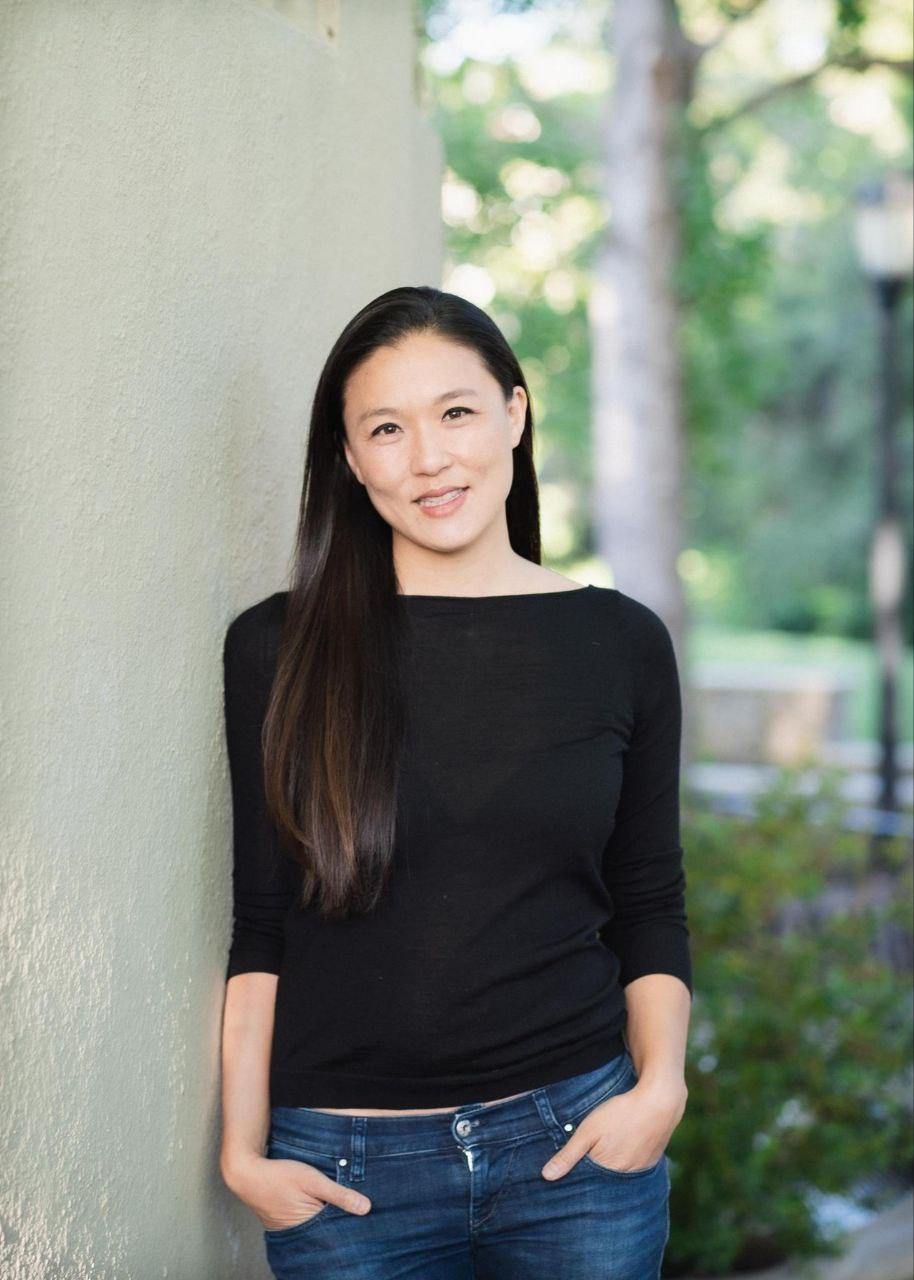
Lily's ancestral home is Changsha, Hunan, and her Chinese name is Liu Yuanli. Her parents left the mainland in 1949 and moved to Taiwan, and after studying in the United States, they settled there as first-generation immigrants. Lily was born in the United States, but she still retains the cultural symbol of a "spicy girl", which comes from the wok spirit of her grandparents cooking every day, which has accompanied her growth. After graduating from Stanford University, Lily entered the workplace and returned to the mainland again, where she has many years of work experience in Beijing, Shanghai and other places. By chance, she started to get in touch with Bitcoin and blockchain technology in 2013. In 2021, at the invitation of Solana founders Anatoly Yakovenko and Raj Gokal, she officially joined Solana and is responsible for foundation affairs.
At the beginning of 2025, Foresight News interviewed Lily, and in her view, the existing Solana ecosystem is not solely focused on a certain type of application innovation such as Memecoin, Solana's ambition is to become a new emerging financial infrastructure facing the global market, which also explains why the community has flocked to the Solana ecosystem in the Memecoin frenzy, and in the face of this "overwhelming traffic", Solana's official response has been exceptionally calm and restrained.
The following is the full text content, with some deletions:
Foresight News: What important progress has Solana made in 2024?
Lily: From any indicator, our ecosystem saw significant growth in 2024. Whether it's transaction volume, user volume or capital, they all show a strong upward trend. Around last September or October, we surpassed Ethereum on some key metrics. One is the economic value capture of the blockchain itself, we surpassed Ethereum in October. Also, if you look at the revenue of the application layer, we have also surpassed Ethereum. Also, according to the latest developer report, which has been published annually for the past 6 years or so with detailed statistics on the number of developers in various regions, the fastest growing is our developer community since last July.
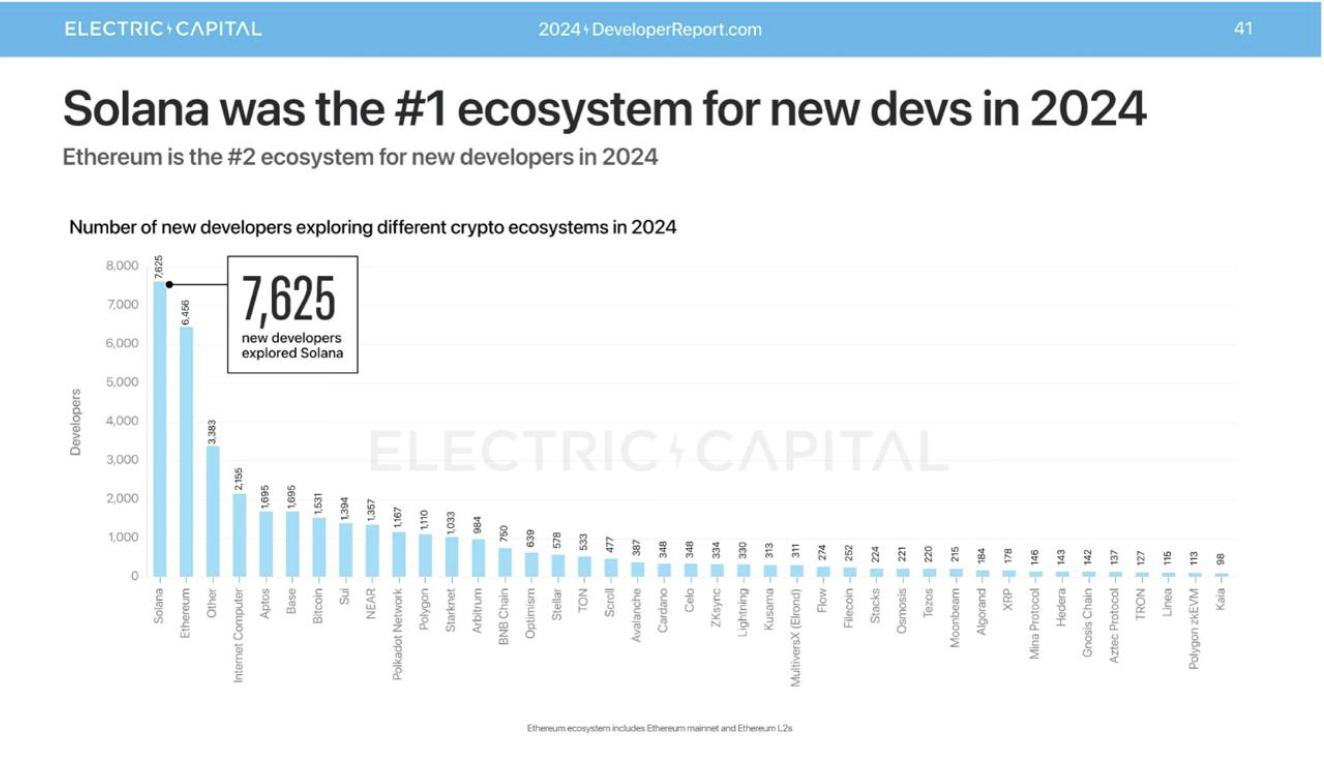
Ethereum now probably has around 20,000 developers, they started with smart contracts in 2015, an earlier start. We now have around 7,500 developers, although we started 5 years later than Ethereum, but our growth rate is also very fast.
Looking at these data, our blockchain ecosystem has become very rich and valuable, which has attracted more developers and community participants. The main purpose of application development is to attract users and build profitable products, thus forming a virtuous cycle.
In 2024, looking at these indicators, Solana has set historical highs in multiple data points.
Foresight News: If you had to summarize Solana's 2024 performance with one keyword, what would it be?
Lily: It wouldn't be Memecoin. (Laughs)
Foresight News: What will be the focus of Solana in 2025?
Lily: Actually, we have several plans internally. We have a framework for blockchain growth, similar to a three-layer structure. The most basic layer is the blockchain itself, it is the foundation of the entire ecosystem, like a piece of land, without the blockchain, developers and users cannot carry out their work.
The second layer is the application layer, which requires a developer community to build applications, just like you need land and houses, and you also need people to develop and operate them to form an economic society.
The third layer is the "city" layer, the ecosystem needs to form successful cities like New York, Hong Kong, and Singapore. On the one hand, it needs culture, and on the other hand, it needs a special economic model. In the development process, on the one hand, we need to innovate more on the blockchain network, and constantly push forward technologically, such as increasing bandwidth and reducing latency at the underlying network level.
At the application layer, our direction is to focus on founders, applications and tokens. In 2017, there was an industry article that mentioned that value capture on the blockchain is mainly at the application layer, just like Facebook, Google and others in Web2, they realized a lot of value at the application layer. In the blockchain industry, this has also formed a view that we need to focus on the development of the second layer.
The core asset of our ecosystem is talent, if we use the city as an analogy, the reason why New York is New York is because it has the international talent of New York. Blockchain needs technology, but talent is the key. Over the past 10 years, there have been many blockchain projects, but only Ethereum and Solana have formed a relatively large developer ecosystem, because building a successful ecosystem is a hundred times more difficult than doing a project.
We have always focused on developers, but now to build a successful application, you need a wider range of capabilities, not just developers, but also product, marketing and other talents. From the beginning, blockchain was like what the Bitcoin whitepaper described, its vision is to realize personal digital ownership, even community ownership, which is different from the current company or state ownership model, opening up the possibility of new ownership models.
To realize the vision of blockchain, there are a few conditions: one is a high-performance network, two is a developer community, and three is sufficient assets and reasonable ways to utilize the assets. At the application layer, we need to establish a good economic system, focusing on assets on chain.
At the same time, to build a good blockchain ecosystem, in addition to hard power, we also need "soft power", such as culture. If you want to explain why New York has a unique culture and atmosphere, it is because there is a kind of intangible feeling. To build a city, on the one hand, you need hardware, and on the other hand, you also need software, and here the software includes the culture between people. Like Abu Dhabi and Dubai, they have been constantly developing hardware facilities over the past 20-30 years, and at the same time, they have also attracted cultural institutions such as the Louvre Museum, in order to establish cultural attractiveness.
If we think even deeper, we hope to establish a huge economic system on the blockchain, to attract assets, we need to achieve some things on the chain that cannot be done in the traditional way. Up to now, the charm of blockchain has mainly been in speculation, but in the long run, the economic system is not just about transactions, but about an exchange system. Any economy has a trading part, but payment is not just buying and selling transactions, but a form of exchange.
In our industry, currently it is mainly speculation, such as an asset going from 0 to $10, which gave the industry an early market value proposition, but in the long run, we hope to have traditional applications focused on transactions, as well as a larger market focused on payments. We are not just doing transactions or payments, our goal is to become a general platform, just like the Internet is not just email or a single application. We hope to attract various assets and provide financial services for the entire asset range.
Foresight News: Trump is about to take office, how does Solana view the new U.S. government's crypto regulatory measures?
Here is the English translation:Lily: We are very concerned about Trump's inauguration. Over the past 4 years, the US government has not been very supportive of blockchain, and has even been somewhat opposed to cryptocurrencies, but the situation has changed now. The new government's emphasis and support for technology has changed, and we know that the US has been at the forefront of every technological development in Silicon Valley over the past 30 years, and we believe the new government will recognize the supporting role of blockchain in the US strategy. So we very much hope and have plans to cooperate with the US government in the future.
Foresight News: Wall Street funds significantly increased their holdings of Bitcoin spot ETFs in 2024, but the funds did not enter the ecosystem. Under the leadership of the new US government, will more talents and funds enter the crypto field?
Lily: Yes, each round will attract more and more people from different backgrounds to be interested in blockchain and enter this field. It depends on what the hottest application areas are in each round, which will attract the corresponding talents and assets.
Now this round is more focused on some new application directions, such as on-chain structured products combined with traditional finance's structured products, which have a lot of design space, and some talents from Wall Street can participate in this. We also see some new developments, like Ethena, which is a new stablecoin with its own technology and system, and some talents on Wall Street can learn from its development and apply some traditional finance designs to the chain, this combination will bring new products and visions, thereby driving the development of the ecosystem.
Foresight News: Vitalik has commented on Solana, saying that Solana is not decentralized enough, but I've also seen the other side, where many projects have recently said they want to move to Solana; how do you view the competitive relationship between them and Ethereum?
Lily: I highly value the original Ethereum team, they had the vision to build Ethereum in 2015 and realized the technology, which is remarkable. They truly focus on decentralization and know its importance. Last year, Vitalik also wrote an article outlining the relevant principles and vision, which is in line with the principles and vision of blockchain.
But now Ethereum and EVM have undergone major changes, and the EVM community has become very broad, with some indicators and actual situations no longer matching. We can't always look at it from the past perspective. There has been a big difference in the measurement of decentralization from 2020 to now. Many people's understanding of decentralization is too simple, believing that the more nodes and the more dispersed, the better the chain, but this is not the case.
We have made some technical choices, such as increasing the technical requirements and costs of nodes, about twice that of Ethereum (not 10 times), in order to better support products and user experience, and to reduce the tasks of users and developers. So the industry's views on decentralization are inaccurate and based on outdated information.
In addition, some L2 projects claiming to focus on decentralization actually have centralized operations, such as using a centralized sequencer, which is logically contradictory.
Foresight News: How do you view the relationship between the Sui ecosystem and the Base ecosystem?
Lily: I know many developers like Sui's language, and we welcome competition because competition will drive us to innovate faster and better. From the current perspective, Sui is a relatively successful ecosystem, they focus on products, have applications, products and users, and we also hope to learn more from them.
Regarding Base, going back to the original vision of Bitcoin, it is about community ownership, focusing on individual and community ownership. But the contradiction of Base is that, based on last year's data, most of its network fees have become Coinbase's profits, with very little going to the Ethereum mainnet, and most of it being retained by Coinbase.
If calculated on an annualized basis, Coinbase's earnings from Base are close to $100 million. As a company, serving shareholders is understandable, but from the original values of blockchain, it should be about individual and community ownership. Base mainly represents corporate ownership, which is not in line with the concept of blockchain.
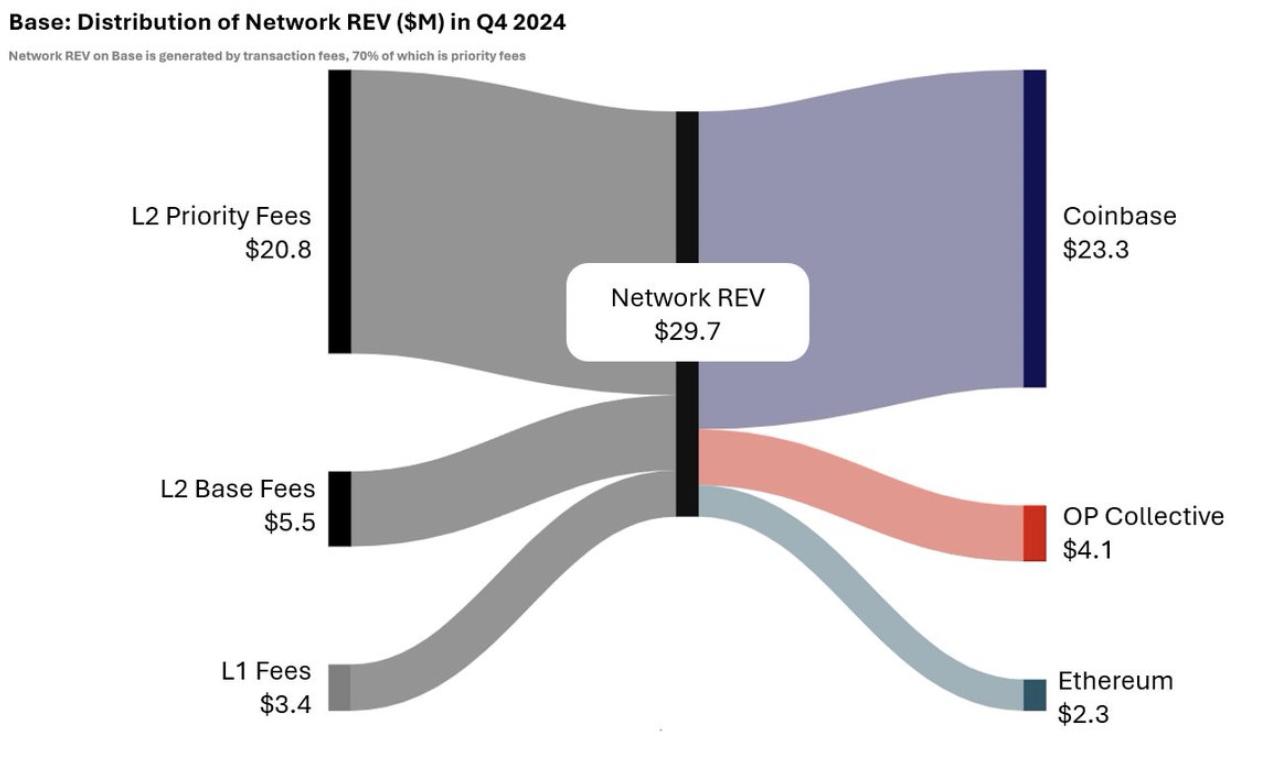
Coinbase 2024 Q4 revenue allocation, source from X
Foresight News: The two hottest sectors in 2024 are Memecoins and AI Agents, how do you view these two sectors?
Lily: In my view, Memecoins are a form of assets, and each cycle has different technical trends, such as NFTs, GameFi, DeFi, etc., but they all have one thing in common, which is the need for traffic. Where the traffic is, people will choose to go.
When I joined Solana, the community thought Solana was an NFT chain, then they saw it as a DeFi chain, and now they jokingly call it a "Meme chain". In fact, we never define ourselves as an ecosystem that only serves a certain track, we hope to become a general platform.
Now many AI technology projects choose to issue tokens on Solana because the performance is high, the speed is fast and the fees are low, and the most critical thing is that they can find traffic on Solana, and traffic is needed for pricing.
Just like no one says Ethereum is a chain that only focuses on a single track, because Ethereum was originally meant to be a general computer, and after several years of development, we have also become a general platform.
Foresight News: What are your thoughts on AI + Crypto?
Lily: I think any new technology has a "Gartner Hype Cycle". Each technology will have a very large growth when it is first discovered, then enter a trough, then rise, and finally enter a stable development period. The blockchain field has also developed in this way, with NFTs in the past and Memes and AI now. They will all exist in the long run, but they will go through this process.
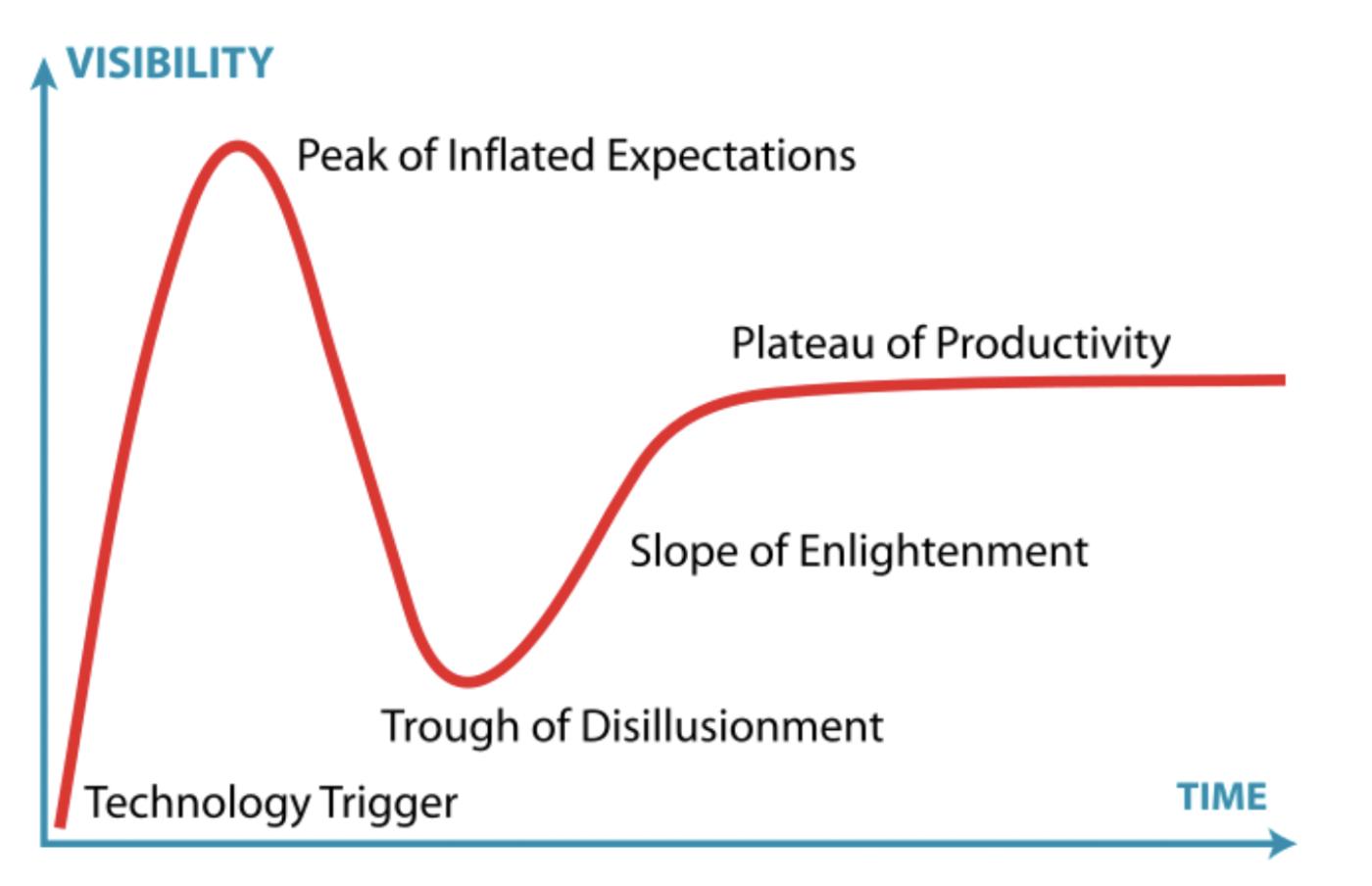
Technology Maturity Curve, source from Wikipedia
I think AI is now in the first stage, it has huge growth, and it will have uses in the long run, but there may be over-hype. In fact, many innovative concepts were discussed similarly 10 years ago, such as AI+ trading, and now some related applications are starting to realize these concepts.
Foresight News: Now let's talk specifically about the Solana ecosystem. Backpack Exchange recently acquired the derivatives license of FTX Europe. Did the Solana Foundation participate and play a role in this?
Lily: Not at all. To be honest, the news you mentioned, I only learned about it from you just now, I should go congratulate them. (Laughs)
Foresight News: In 2024, we launched Blinks, and the Solana hardware phone was also updated to the second generation, but after the hype faded, did they stagnate?
Lily: Blinks itself is a developer tool, it is not a product directly facing consumers, but is used to support developers to use this technology to create new products that consumers can enjoy and use. In the long run, we Solana have many different functions to integrate, and Blinks is an important developer function among them. It was released 6 months ago and is now an open source product, with many people using it behind the scenes to develop payment applications, issue tokens and other functions. Its uniqueness lies in that it can be manifested on any social media and used by consumers.
Foresight News: What about the Solana phone then?
Lily: The phone is not a product directly made by our foundation, but a project done by other teams. The second generation phone Seeker has not been officially released yet. From the perspective of the foundation and the entire ecosystem, mobile devices are very important for the development of our industry and Solana, because global consumers mainly use the Internet through mobile phones. Currently, the blockchain experience on mobile devices has problems, one is the security issue, and the other is the issue of Apple and Google's App Store policies, such as Apple taking a 30% profit, which involves business models and software solutions. There are teams trying to solve the problem of combining blockchain and mobile devices from scratch, and our foundation welcomes a variety of mobile hardware and software to support it. Currently there are different price range phone projects, such as $99 phones targeting the African and South American markets, and around $500 devices, we welcome different choices to meet the needs of different consumers.
Foresight News: Recently, the award-winning projects of the Solana Hackathon have been very popular in the community, how do you see this?
CZ: I think our hackathon is still mainly focused on technology and development. It is normal for some people to be concerned about the profitability of projects, but we are mainly cultivating from the perspective of the developer community's technological development. And I still hope that more representatives from the Chinese-speaking area will appear in the hackathon, because I have always believed that the Chinese-speaking area is an important market.
Our industry has two major main markets, one is the United States and the other is the Chinese-speaking area. Since I joined the Solana Foundation three years ago, we have been working on global growth, turning Solana into an international brand, and we have been working in about 20 countries. If the different markets are divided into talent markets and capital markets, only the United States and China have both.
In the past 4 years, both the Chinese-speaking area and the US market have been subject to regulatory restrictions, but now the US has become more open, and the Chinese-speaking area also has some room for technical cooperation, so I am very optimistic about the Chinese-speaking area and hope to attract talents from there, because talent is the most valuable asset of the ecosystem.
So our challenge is how to attract those talents, mainly looking at what our projects can offer, because attracting talents is hoping that they can leave their current jobs to start a business, which is a very high requirement. I also know that different regions have different considerations, so we are also constantly thinking about how to get more talents to recognize Solana.
Foresight News: There are many foundations in the industry, what is the difference between them and traditional foundations, and what roles do they play?
Lily: First of all, a foundation is an entity, which provides a practical possibility for blockchain projects to operate within the existing legal system, because the existing laws require us to have an entity. I remember that Ethereum was the first to choose to register a foundation in Switzerland, which was a beginning and an attempt, and then everyone started to follow suit and register a foundation in Switzerland.
Traditional foundations like the Gates Foundation obtain funds through Microsoft, mainly for tax optimization or tax avoidance, such as donating some of the money earned to reduce taxes, or donating everything and not paying taxes.
The purpose of blockchain foundations and traditional foundations are completely different. Although they are both entities, the assets of blockchain foundations are not earned by themselves, but are allocated to them by the project. So its role is to become part of the community ownership, helping to provide public facilities, just like the government providing public services, such as supporting the development and coordination of developer tools and other public goods. Because many companies focus on their own profitable products and will not be responsible for these public affairs, the foundation takes on this role. From this perspective, blockchain foundations are more like the government of a city, we are the civil servants in the technology field, serving the community.
Foresight News: In many industries, gender issues and related news are a sensitive topic. How do you view the topic of female practitioners in the blockchain field?
Lily: I have been working in this circle for 10 years, and I have never really thought that gender would affect my work efficiency or work situation. Maybe my experience is relatively fortunate, but I have always felt that this industry welcomes innovation and technological advancement from people of any background. Excellent 20-year-old developers and experienced 50-year-old traders on Wall Street can collaborate, blockchain doesn't care much about the background, but more about the contribution in this industry, regardless of gender, language, background, or age. Of course, there will be criminal behavior anywhere, like that person who harassed the girls is just an individual case, not representative of our industry.
I think blockchain provides an opportunity for many people, when you come into this circle from any background, you have an equal opportunity, not an equal result, but an equal opportunity. In fact, this is not achievable in all places, because many countries have economic, political, and employment constraints. So I think the concept of blockchain is very important, it attracts many people not only because of technology and making money, but also because of an equal vision, allowing people from any background to enter an international platform.